Interstellar Meaning: Why Love, Not Gravity, Endures
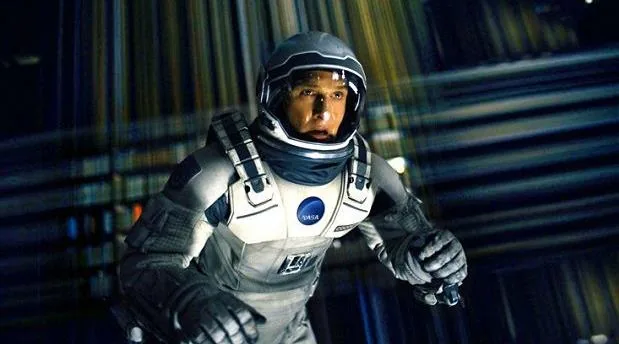
The Interstellar meaning has been debated since Christopher Nolan's film arrived in theaters in 2014, but the heart of the story is simpler than the physics. It is a father promising his daughter he will come back, and a daughter who refuses to let that promise die. The film wraps that promise in wormholes, time dilation, and a tesseract, yet the emotional engine never changes. Love, not gravity, is what carries Cooper home to Murphy.
Interstellar, released in 2014 and directed by Christopher Nolan, follows astronaut Cooper and his daughter Murphy as Earth becomes uninhabitable. The film's central argument is that love functions as a force that crosses time and space, and that human connection, not physics alone, is what ultimately saves them.
- Interstellar was released in 2014 and directed by Christopher Nolan, with Cooper and his daughter Murphy at the center of the story.
- Cooper leaves Murphy behind to join a mission through a wormhole, searching for a habitable planet as Earth grows harder to live on.
- Time dilation on the water planet Miller costs the crew years, so Cooper loses much of his daughter's life in a matter of hours.
- Inside the tesseract, Cooper uses gravity to send quantum data across time to Murphy through the bookshelf in her childhood bedroom.
- The promise Murphy keeps, that her father will come back, is the thread the whole film hangs on.
Interstellar Meaning: A Film That Only Looks Like Hard Sci-Fi
Christopher Nolan's Interstellar arrived in theaters in 2014, not 2013 as one popular Turkish essay about it claims. That small dating slip is fitting, actually, because this is a movie obsessed with time going sideways on us. Watch it once and you get rockets. Watch it fifty times and you get something else entirely.
The film begins as space adventure and slowly becomes a reckoning with what it means to be human. Quantum physics, black holes, wormholes: those are the shop-window concepts, the shiny things that pull you in off the street. The real subject sits further back in the room.
Hans Zimmer's score makes the pitch before a single line of dialogue lands. "Cornfield Chase," a track from the soundtrack, does not so much play as bend, and it whispers the thesis in your ear: this story is not about a rocket, it is about a heart.
So what is the film actually saying? According to the essay that inspired this piece, time here is not a measurement. It is a bond. Time does not move by the clock; it moves by longing. A few hours on one planet cost years back on Earth, and a father's promise can upend the entire mathematics of the universe. Science goes quiet. The person speaks.
Hans Zimmer's 'Cornfield Chase' Whispers the Real Subject in the First Second
Hans Zimmer wrote the score for Christopher Nolan's Interstellar, and "Cornfield Chase" sits on the original soundtrack album. Press play on that track and something odd happens before a single note lands: the music does not flow so much as it bends. Which is exactly the trick the film itself keeps pulling.
Listen to how the piece moves. It doesn't build a melody you can hum on the way out of the theater. It folds, it stretches, it leans forward into a moment that hasn't arrived yet. The original account of the film puts it plainly: the music doesn't flow, it bends time. That is the whole movie in miniature, and it is where the Interstellar meaning starts hiding in plain hearing.
Here is the claim that sticks with you. From its very first second, the source says, "Cornfield Chase" is whispering a single sentence: this isn't about a rocket, it's about the heart. Not a wormhole. Not a black hole. A father and a daughter.
Once you hear that, the rest of the film rearranges itself. Quantum physics, black holes, wormholes, all of it is the storefront window, the shiny stuff that gets you to stop and look. The actual merchandise is smaller and stranger: time treated not as a measurement but as a bond. Time in this movie doesn't run on clocks. It runs on longing.
Time as a Bond: A Few Hours on One Planet, Years Back on Earth
On Miller's planet, the surface sits so close to the supermassive black hole Gargantua that time itself slows down there, and every minute the crew spends wading through that shallow water is paid for in years of the lives they left behind. The film's own arithmetic is brutal: a short stay on that world costs the people back home years.
And that is the pivot the whole story turns on. The clocks in Interstellar are not really measuring seconds. They are measuring longing. Time in this film does not flow by the clock, it flows by how much you miss someone, and that is where the Interstellar meaning starts to show its real shape.
Think about what the arithmetic actually does to a father. Cooper steps onto a strange world for what feels like an afternoon, and when he climbs back into the ship, his daughter has aged past him. A promise he made in a farmhouse kitchen now has to travel across decades to reach her. The film says something almost reckless here: a father's promise can upend the entire mathematics of the universe. Science falls silent. The human speaks.
That is the inversion the story pulls off. Black holes, wormholes, quantum equations, all of it sits in the display case, polished and impressive. The thing that actually moves the plot is smaller and stranger. A bond between two people, stretched across light-years, refusing to snap.
So when the film later asks what force still works when everything else breaks down, the answer it reaches for is not gravity. As the original account puts it, the one force that stays valid even in that higher-dimensional space is the bond itself. That reading is interpretive, and the film never puts a neat label on it, but it is the emotional engine the whole story runs on.
Which is why the movie keeps pulling people back. Watch it at twenty and you see a space adventure. Watch it at forty, with someone you love asleep in the next room, and the same scenes land somewhere completely different. The film has not changed. You have.
The Bookshelf Messages Came From Cooper Himself, Out of Love, Not Knowledge
Here is the turn that reorganizes everything you thought you were watching. Those knocks on the bedroom wall, the dust arranging itself into lines, the books shoving themselves off Murphy's shelf: none of it came from a ghost, and none of it came from a stranger. It came from Cooper. He is the presence in his daughter's room, reaching backward from inside the tesseract to the years he left behind.
Watch what that costs him. In that place Cooper cannot speak. He cannot touch her. He cannot sit her down and explain, in plain sentences, what happened to him and what she needs to do. Stripped of voice, hands and argument, one thing is left to work with, and the source is blunt about naming it: love. The equations are all around him in that space, but the source insists the equations are not the key. Intent is the key. Not what Cooper knows, but what Cooper wants for her.
That is where the source locates the real meaning of Interstellar. Not in the physics on the chalkboard but in the stubborn refusal of a bond to dissolve. The source puts it this way: love does not get stuck inside time, it travels through time. And it goes further, arguing that even in that higher dimension, the force that still holds is not gravity but connection. Treat that as the source's reading rather than a line the film hands you outright, the same way the source's habit of calling the tesseract "the fifth dimension" is interpretation. The film never plants that label on the space Cooper falls into.
What the film does give you is Murphy. And contrary to the version that circulates in some retellings, there is no Turkish-language line in her mouth; the film is in English, and the promise she keeps is the one about her father coming back. The source reads that promise as a sentence written toward the future, one that existed before Cooper returned and kept existing after. Some promises, it suggests, are reminders left for a later version of yourself. Time cannot wear them down.
Why "Fathers Keep Their Promises" Outlasts Every Theory in the Film
Murphy Cooper's promise line lands like a door closing on every equation the film has spent two hours building. Christopher Nolan's Interstellar (2014) throws quantum physics, black holes and wormholes at the screen, yet it is a daughter's faith in her father's word that carries the most weight. The promise does not argue with the science. It simply outlasts it.
According to the original account, that line works like a sentence written ahead of time. It existed before Cooper ever came back through the bookshelf, and it kept existing after. Some promises, the piece suggests, are reminders left for the future, and time cannot wear them down.
One caution worth holding onto: the Turkish phrasing sometimes quoted as Murphy's line, "babalar sözünü tutar," is not a line from the film. Interstellar is in English, and Murphy never speaks Turkish on screen. Treat that sentence as a translation of the idea, not a transcript of dialogue. The sentiment survives the correction. The wording does not belong to the movie.
What makes the promise beat so stubborn is where it sits in the story. Cooper is stranded on the far side of a tesseract, unable to speak, unable to touch, unable to explain. All that remains is intent, and intent does not need a voice. The bond between father and daughter becomes the one force the film refuses to quantify, and the promise is that bond given words.
Every viewing seems to catch a different age, a different moment of your own life. The film stays the same. You do not. That is why the promise keeps landing harder than the physics.
What You Notice After the Film Ends: Fate Can Be Written on a Child's Bookshelf
The credits roll, the house lights come up, and the thing you carry out of Interstellar is not the wormhole or the black hole. It is a girl's bedroom. Christopher Nolan's 2014 film keeps pointing its biggest ideas back at the smallest room in the house, and the closing thought lands there: however vast the universe gets, fate can be written somewhere as modest as a bookshelf in a child's room.
Because the film's real argument is about what time actually is. The source essay behind this reading puts it plainly: the only thing that can truly grasp time is the heart more than the mind. That is the essay's claim, not a physics result, and it is worth saying so out loud. The tesseract is often described as a fifth dimension, though the film never labels it that way on screen, so treat the phrase as interpretation rather than canon. What the movie does show is Cooper inside that space, unable to speak, unable to touch, unable to explain. All he has left is love, and the message finally reaches Murphy.
From there the essay makes its larger leap, and this is where you should read it as theme rather than fact. According to the original account, the one force that stays valid even in that higher dimension is not gravity but bond, and a loving person intuitively knows the future while someone who cares leaves traces in moments not yet lived. Those are the essay's arguments about Interstellar meaning, and they are moving precisely because they cannot be measured. The film itself never makes that claim as science.
The essay closes on a line worth sitting with: whoever wants to understand time must first learn to love.
That is why the film rewards a rewatch years later. Same movie, different person watching it. And the bookshelf is still there, holding the message.

Frequently asked questions
What is the real meaning behind Interstellar?
The reading here is that Christopher Nolan's 2014 film uses quantum physics, black holes and wormholes as a shop window, not as the message. The real subject is love and human connection, and time as a bond rather than a measurement. Physics supplies the scenery; people supply the point.
Why are the messages in Murphy's room from Cooper himself?
In the tesseract, Cooper realizes he is the "ghost" who has been communicating with his daughter through gravity across time. The strange signs and the books falling from her shelf were never sent by an alien intelligence. They came from him, and the film is explicit about it.
How does the film show love as a force across time?
According to the original account, the key moment is Cooper's helplessness inside the tesseract: he cannot speak, cannot touch, cannot explain. Only love is left. That reading, that love travels through time instead of being trapped inside it, is an interpretation rather than a settled fact about the film.
What does the promise line mean?
The source reads the promise Murphy clings to as a sentence written ahead of time, one that existed before Cooper returned and after, so time cannot wear it down. Note that the Turkish wording often quoted for this line is the source's own phrasing, not a line spoken in the English-language film.
How does "Cornfield Chase" capture the theme?
Hans Zimmer composed the Interstellar score, and "Cornfield Chase" is one of its tracks. The source's claim is that the music does not simply flow, it bends time the way the film does, whispering in its first seconds that the story is about the heart, not the rocket. Editorial note: Any details that remain unconfirmed are presented as such, and the analysis here reflects interpretation rather than verified fact.
Got a take on this? Add your voice to the conversation below →
No comments yet. Be the first.