Human Brain Storage Capacity: 2.5 Petabytes?
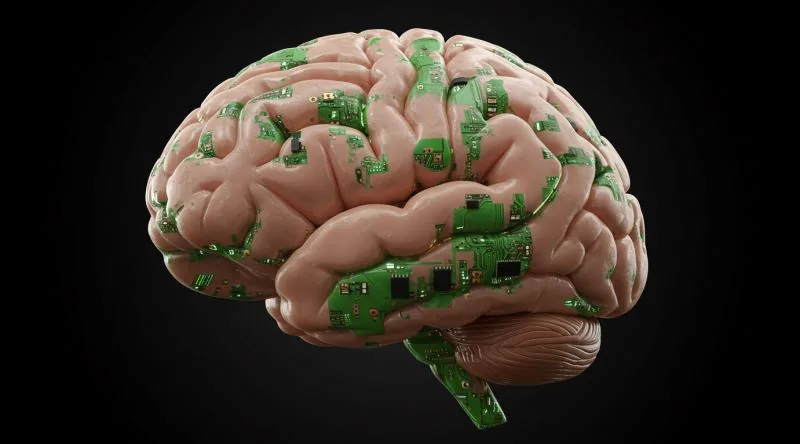
Think about the last time a smell took you straight back to a specific afternoon. That is your brain's storage system at work, and it is bigger than you think. The human brain is estimated to hold roughly 2.5 petabytes of information, which equals about 2.5 million gigabytes. That figure, floated by Scientific American, is a rough extrapolation rather than a measured fact. Still, it helps explain why a song you haven't heard in decades can come back to you word for word, and why a simple scent can bring back a memory from childhood.
Scientists estimate the human brain can store about 2.5 petabytes of information, a capacity driven by the precise sizes of synapses. This means your brain's memory potential is roughly equivalent to 2.5 million gigabytes, far exceeding any computer you can buy today.
- The 2.5 petabyte estimate is attributed to Scientific American and is a rough extrapolation, not a rigorously measured value.
- The human brain contains about 86 billion neurons, a figure confirmed by a landmark 2009 study.
- Each synapse may hold about 4.7 bits of information, a figure from a study on rat hippocampus tissue, not a universal constant.
- In practical terms, 2.5 petabytes is a staggering amount of data, though popular comparisons like "3 million hours of TV" do not survive basic arithmetic.
- This capacity translates to roughly 2,500 terabytes, a figure that still outpaces most data centers.
How Much Can the Human Brain Really Store?
If you tried to measure your brain the way you would a hard drive, the number that comes back is almost absurd: roughly 2.5 petabytes, which is about 2.5 million gigabytes. That estimate, floated by Scientific American, is not a hard measurement but a reasoned guess built on what we know about the brain's structure. It is the kind of figure that makes you pause mid-coffee and wonder what exactly is going on inside your skull.
The number comes from a simple but staggering starting point. Your brain runs on about 86 billion neurons, the cells that carry electrical signals and form the basis of every thought you have ever had. Between those neurons sit trillions of connection points called synapses, and it is the strength of those connections, not a binary code, that holds your memories. When you learn something new or recall an old face, those links physically reshape themselves. It's a living, breathing storage system, nothing like the static sectors of a computer chip.
So where does 2.5 petabytes come from? It is an extrapolation, a rough multiplication of what researchers think a single synapse can hold times how many synapses you have. The real point is that the number is almost beside the question. Whether the true figure lands higher or lower, your brain's storage capacity dwarfs anything you can buy at an electronics store, and the comparison only gets stranger from here.
The Brain Doesn't Store Information Like a Computer
The human brain holds roughly 86 billion neurons, a figure confirmed by a landmark 2009 study using a method called isotropic fractionation. That number alone separates us from any machine you'll find on a desk. But the real difference isn't just the count. It's how those neurons work together.
Information lives in the connections between neurons, specifically at synapses, the tiny gaps where signals jump from one cell to the next. When you learn something new, those connections strengthen. When you forget, they weaken. Nothing is written in fixed bits like the 1s and 0s on a hard drive. The whole system is fluid, constantly reshaped by what you experience, what you recall, and what you let go.
There's also no fixed capacity to point to. Short-term memory holds a phone number for a few seconds. Long-term memory can keep a childhood smell or a first kiss for decades. And every time you retrieve a memory, the neural pathways involved get reorganized all over again. That's not how a computer works. A machine stores a file and leaves it untouched until you open it. Your brain rebuilds the file every time you access it.
Researchers have still tried to put a number on it. The cerebral cortex alone contains an estimated 125 trillion synapses, a figure cited in standard neuroscience references like Principles of Neural Science. Some studies suggest each synapse might hold around 4.7 bits of information, though that estimate comes from work on rat hippocampus tissue and isn't a universal constant. As the story goes, that arithmetic could suggest a storage capacity in the tens of terabytes, but those figures remain theoretical extrapolations rather than measured facts.
The total human brain storage capacity has been estimated at 2.5 petabytes by Scientific American, where one petabyte equals a million gigabytes. That's a rough extrapolation, not a rigorously measured value, and it shouldn't be treated as gospel. What's certain is simpler: the brain's architecture, with its trillions of adjustable connections and its constant reorganization, makes it far more complex than any computer we've built.
The Math Behind the Estimates: Synapses and Bits
Here is where the numbers get genuinely fascinating, and also where they get a little wobbly. The cerebral cortex, that wrinkled outer layer of the brain responsible for much of our conscious thought, contains roughly 125 trillion synapses. That figure comes straight from standard neuroscience references and is about as solid as these large-scale counts get.
Now comes the contested part. Researchers have suggested that each individual synapse might store around 4.7 bits of information. But here is the catch: that number comes from a specific study on synaptic strength variability in the rat hippocampus. It is a real finding from a real lab, but treating it as a universal constant for every synapse in every brain is a stretch. The architecture of a synapse in a rat's memory center is not identical to one in a human's cortex, and the storage capacity likely varies wildly depending on the type of synapse and its role.
If you multiply those two numbers together anyway, 125 trillion synapses at 4.7 bits each, you get a theoretical product of at least 74 terabytes for the cortex alone. That figure gets quoted around the internet as if it were measured directly, but it is not. It is arithmetic performed on two estimates, and the result is only as reliable as the shakiest input. The 4.7 bits per synapse is the weak link in that chain, and the 74 terabyte figure is not supported by reliable scientific sources. It should not be cited as fact.
For a sense of scale, consider that a single terabyte holds about a thousand gigabytes. So 74 terabytes would be a substantial personal library of data. But when we talk about how much your brain can hold, we are really talking about a range of possibilities, not a fixed number. The brain does not store information in tidy binary bits the way a hard drive does. It uses the strengthening and weakening of connections between neurons, a far more dynamic and context-dependent process.
One estimate that surfaces in popular discussions puts the total capacity of the brain at around 2.5 petabytes, which would be 2.5 million gigabytes. That figure, reported in Scientific American, is a rough extrapolation rather than a rigorously measured value. It is a useful thought experiment, but it should come with a mental asterisk. The honest takeaway is that the human brain storage capacity is immense, likely on the order of petabytes, but the precise number depends on assumptions we simply cannot verify with current tools.
So, 2.5 Petabytes: What Does That Mean?
Imagine every movie, every song, every book you have ever loved, and then multiply that by a thousand. That is the kind of scale we are talking about when researchers float the idea that the human brain storage capacity might hover around 2.5 petabytes. To put that in terms a hard drive can understand, a single petabyte equals one million gigabytes. So 2.5 petabytes is 2.5 million gigabytes, a number so large it feels abstract until you try to picture what it could hold.
You will often hear that this equals about 3 million hours of TV, a comparison that gets repeated in articles and casual conversations. But the arithmetic does not quite work out. If you run the numbers at a typical high-definition bitrate, 2.5 petabytes actually translates to closer to 2.5 million hours of video. The 3 million figure is a rounding error that has taken on a life of its own, a friendly exaggeration that sounds good in a headline but falls apart under a few seconds of calculation.
Here is the honest part: the 2.5 petabyte number is not a precise measurement pulled from a lab report. It is a rough extrapolation, a way for scientists to wrap their heads around something that does not behave like a USB stick. The brain does not store information in neat binary bits the way a computer does. It works through 86 billion neurons and their trillions of connections, building up some pathways while letting others fade as you learn and forget. So when you hear that figure, treat it as a useful yardstick rather than a spec sheet. It helps us appreciate the astonishing scale of what sits between our ears, even if we cannot pin it down to the last gigabyte.
Frequently asked questions
How much information can the human brain store?
The human brain storage capacity is estimated at roughly 2.5 petabytes, which equals 2.5 million gigabytes. That figure comes from a Scientific American article and represents a rough extrapolation rather than a precisely measured value. Some estimates focus only on the cerebral cortex, suggesting it alone might hold around 74 terabytes, though that number is also theoretical and unsupported.
How many synapses are in the human cerebral cortex?
The cerebral cortex contains approximately 125 trillion synapses. This is a widely cited figure in neuroscience, appearing in standard references like the fifth edition of Principles of Neural Science . It derives from combining cortical neuron counts with the average number of connections each neuron makes.
Does the human brain have a fixed storage capacity?
No, the brain does not work like a computer's fixed hard drive. Its capacity is dynamic and constantly shifting. As you learn new things and recall old memories, the connections between neurons reorganize themselves, reinforcing some pathways while weakening others. This continuous rewiring means your brain's storage potential changes throughout your life. To understand these numbers, it helps to start with the basics. Your brain contains roughly 86 billion neurons, a figure confirmed by a landmark 2009 study using a method called isotropic fractionation. Between those neurons run trillions of synaptic connections, and it is through these junctions that information gets stored and processed. Unlike a device that saves data as bits, your brain stores information by adjusting the strength of connections between neurons. That 2.5 petabyte estimate, if it holds, would be enough to record millions of hours of television. Some popular accounts claim it equals 3 million hours of shows, but that arithmetic does not quite work out at typical video bitrates. The real point is simpler: the human brain storage capacity dwarfs anything you can buy at an electronics store, and it reshapes itself every time you remember a face or learn a new recipe. Editorial note: This article presents the widely cited Scientific American estimate as the leading model, while any remaining uncertainties about how memory is consolidated over time are noted as such.
Got a take on this? Add your voice to the conversation below →
No comments yet. Be the first.