Historical Films of the Middle Ages and Antiquity
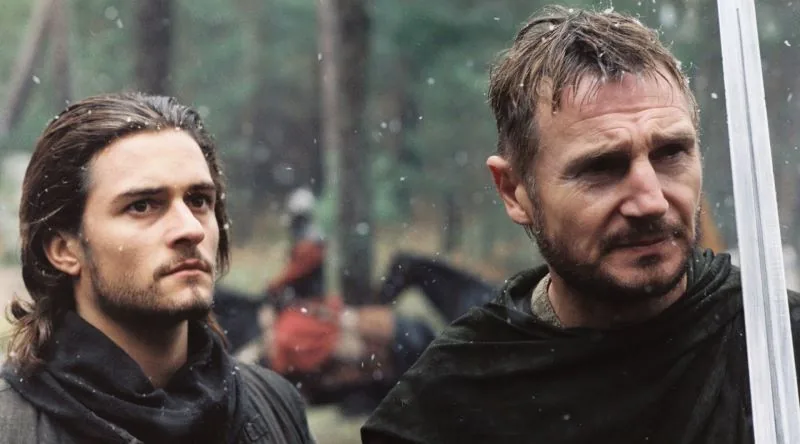
Five historical films set in the Middle Ages and antiquity stand out for how carefully they treat the past: The Name of the Rose (1986), Kingdom of Heaven (2005), Agora (2009), The Physician (2013), and Master and Commander: The Far Side of the World (2003). Each one chooses a different century and a different kind of conflict, from a monastery murder to a naval chase. What holds them together is patience. These are films that let politics, faith, and medicine unfold at the speed of the world they depict, and that is exactly why history lovers keep returning to them.
Across five films, directors have brought the Middle Ages and antiquity to the screen: a monastery mystery in The Name of the Rose, the fall of Jerusalem in Kingdom of Heaven, Hypatia in Alexandria in Agora, eleventh-century medicine in The Physician, and Napoleonic-era naval war in Master and Commander.
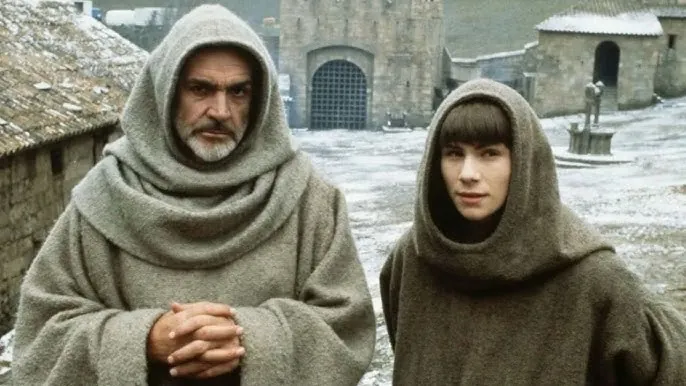
- The Name of the Rose, released in 1986, follows a Franciscan friar investigating deaths at a medieval abbey, weaving church politics and the inquisition into a detective-style mystery.
- Kingdom of Heaven, directed by Ridley Scott and released in 2005, dramatizes Jerusalem and the Crusades.
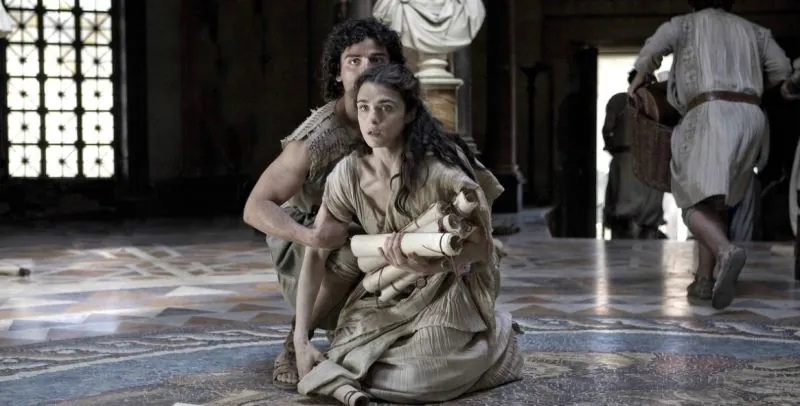
- Agora, released in 2009, follows the philosopher Hypatia in Alexandria, Egypt, with a strong focus on astronomy.
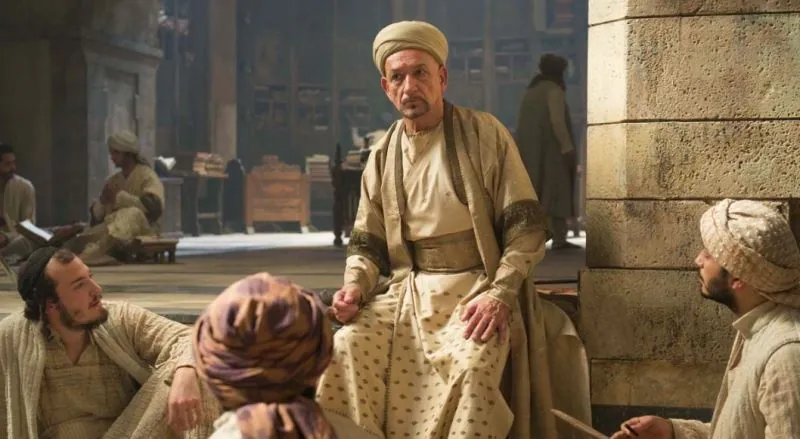
- The Physician, released in 2013, follows an Englishman who travels to Mesopotamia to study medicine under the physician Ibn Sina, known in the West as Avicenna.
- Master and Commander: The Far Side of the World, directed by Peter Weir and released in 2003, depicts ship warfare and life at sea.
Five Windows Into the Past: Historical Films Set in the Middle Ages and Antiquity
Some films don't just tell a story. They open a door and shove you through it, straight into a century that smells like candle wax and wet stone. That's the promise of the best historical films set in the Middle Ages and antiquity, and it's the thread running through a Turkish-language listicle published on 16 Aralık 2025 on Ekşi Şeyler. The writer, known on the platform as "el hierro," picked exactly five titles. Not a ranked canon, not a definitive top-ten. Just five films worth losing a night to.
The list opens with The Name of the Rose (1986), starring Sean Connery as William of Baskerville, a Franciscan friar who arrives at a medieval abbey where monks keep dying. It runs over two hours, and it earns every minute. The film folds a detective investigation into the machinery of the medieval church and the inquisition, and it doesn't soften what it finds there. The source calls it a masterpiece-caliber work, one that shows the bigotry and the brutal low quality of daily life in the Middle Ages with full, unsettling realism. Connery's friar gets the line that lingers: a life without love would be peaceful, safe, calm, and utterly bland.
From a damp abbey we jump to an 11th-century road. The Physician (2013) stars Ben Kingsley, Tom Payne, and Stellan Skarsgård, and it follows a young Englishman who travels from England all the way to Mesopotamia to study medicine. Ben Kingsley plays the Persian polymath Ibn Sina, known in the West as Avicenna, and according to the source his performance is astonishing. The writer calls the cinematography and the acting superb, and labels the whole thing underrated. A must-see, in their words.
Then the timeline swings backward to Alexandria, Egypt. Agora (2009) stars Rachel Weisz as Hypatia, the philosopher and astronomer, and the source describes its treatment of astronomy as magnificent. One correction worth making here: contrary to the popular version of this entry, the film is not set before the common era. Its Alexandria belongs to late antiquity, when the city's pagan and Christian worlds were colliding.
The most popular pick on the list is Kingdom of Heaven (2005), and the source is upfront about why. Bigger budget, more action, a real stir in theaters that year. Ridley Scott directs, and the cast is stacked: Orlando Bloom, Eva Green, Liam Neeson, David Thewlis, Jeremy Irons. Even the smaller parts carry weight. Iain Glen, whom many viewers know as Ser Jorah Mormont, appears in the film, and Nikolaj Coster-Waldau, the future Kingslayer, also turns up in a small role. The film's portrait of Saladin, played by Ghassan Massoud, is notably sympathetic, and the source argues every actor lands exactly where they should. The trade-off is honest: faster and louder than the others, but not as deep.
Last comes Master and Commander (2003), carried by Russell Crowe and Paul Bettany. The source flags its biggest departure from the rest of the list: this one belongs to the early 19th century, not the 18th, and it lives inside ship warfare and the cramped daily life aboard a naval vessel. Peter Weir, who also directed Dead Poets Society, sits in the director's chair. The writer's advice is simple. Watch it with a calm head.
Five films, five different centuries, one shared instinct: history as something you can feel on your skin.
The Name of the Rose (1986): Sean Connery in a Medieval Abbey
Sean Connery plays William of Baskerville in The Name of the Rose, a 1986 film that drops you inside a medieval abbey where the air smells of parchment, candle wax, and something far worse. Monks are dying. Nobody wants to say why.
That is the hook. The movie runs over two hours, and it earns every minute. What you get is not a sword-and-sandals spectacle but a slow, deliberate detective story, a Franciscan friar asking questions in corridors where questions are dangerous. The abbey is a closed world, and the deaths inside it are investigated the way a crime is investigated, except the suspect list includes theology itself.
Around that mystery sits the machinery of the medieval church and the inquisition, and the film refuses to soften any of it. The source calls this a masterpiece, and describes how it shows the bigotry of the Middle Ages and the miserable quality of daily life with full realism, in a way that leaves you disturbed rather than entertained. That is the point. The dread is not a monster in the dark. It is a system.
Connery's William of Baskerville gets the line that stays with you. He tells the young Adso: "How peaceful life would be without love, Adso. How safe, how tranquil, and how dull." It lands as a quiet joke and a confession at the same time, which is roughly what the whole film does.
For anyone hunting through historical films set in the Middle Ages and antiquity, this one belongs near the top of the list. It is long, it is grim, and it never once talks down to you.
The Physician (2013): Ben Kingsley as Avicenna and an 11th-Century Journey to Mesopotamia
In 2013, The Physician arrived with a cast that reads like a wish list: Ben Kingsley, Tom Payne, and Stellan Skarsgård. The film follows an Englishman in the 11th century who leaves his home country and travels all the way to Mesopotamia to study medicine. If you are hunting for historical films set in the Middle Ages and antiquity that actually respect their period, this one earns its place.
The real draw is Kingsley. He plays Ibn Sina, the Persian polymath the West knew as Avicenna, and he carries every scene he walks into. Payne anchors the journey as the young man chasing knowledge across continents, while Skarsgård adds another layer of weight to the cast. The film never got the loud reception it deserved. Call it underrated, because that is exactly what it is.
What stays with you is the look of it. The cinematography is gorgeous, and the performances match the visuals beat for beat. Then there is the setting itself: an 11th-century world where a traveler from England can end up studying under one of the greatest minds of the Islamic Golden Age. That alone makes it a must-see. If you have already worked through the better-known titles in this genre, this is the one waiting quietly on the shelf.
Agora (2009): Rachel Weisz as Hypatia in Ancient Alexandria
Here is where the list takes a sharp turn. Agora, released in 2009, stars Rachel Weisz as Hypatia, the philosopher of Alexandria, Egypt. The film is built around her astronomy, and that is where the story gets interesting.
If you have seen the movie described somewhere as a trip to antiquity "BC," that description is wrong. Contrary to the popular version, Agora is set in late antiquity, in Alexandria, Egypt, not before the common era. That single detail changes everything about how you watch it. Hypatia is a real historical figure, a mathematician and astronomer working in a city already tangled in religious and political conflict. The film leans hard into that tension, and Rachel Weisz carries the role with a quiet intensity that makes the astronomy feel personal rather than academic.
What makes Agora stand out among historical films set in the Middle Ages and antiquity is its focus. Most films in this genre give you battles, sieges, and armies. This one gives you a woman tracking the movement of celestial bodies while the world around her fractures. The astronomy is not decoration. It is the spine of the story, and the film treats it with genuine curiosity.
So when you see the film listed alongside medieval epics and Crusades dramas, remember what it actually is. A 2009 film. Rachel Weisz as Hypatia. Alexandria, Egypt, in late antiquity. Not BC, not the Middle Ages, but a story that still feels urgent.
Kingdom of Heaven (2005): Ridley Scott's Crusades Epic
Ridley Scott's Kingdom of Heaven arrived in theaters in 2005, and it is the biggest, loudest entry on this list. Orlando Bloom leads a cast that also includes Eva Green, Liam Neeson, David Thewlis, and Jeremy Irons, all of them working inside a story set in Jerusalem during the Crusades.
The film stages the events around Jerusalem itself, and Scott brings the kind of scale a Ridley Scott production can buy. Part of what makes it stand out among historical films set in the Middle Ages and antiquity is the depth of its supporting bench. Iain Glen, familiar to many viewers as Ser Jorah Mormont, appears in the film, and Nikolaj Coster-Waldau, the future Kingslayer, also turns up in a small role. That is a remarkable roster for parts most films would fill with unknowns.
Then there is Saladin. Ghassan Massoud plays him, and the film treats the Muslim leader with real sympathy and honor, a choice that gives the story a moral center beyond the battlefield.
Where it differs from the other picks here is in what it trades away. Kingdom of Heaven has more action and a bigger budget than the rest, but it does not carry the same depth of content or storytelling. It is a spectacle first, and it knows it.
Master and Commander (2003): Russell Crowe on the High Seas
Russell Crowe and Paul Bettany carried Master and Commander: The Far Side of the World onto screens in 2003, and Peter Weir, the director behind Dead Poets Society in 1989, sat in the chair. It is a film about wooden hulls, salt spray and the slow grind of life aboard a fighting ship.
One correction before we go further. Contrary to the popular version of this list, the story is not set in the 18th century. It unfolds in the early 19th century, and that shift matters, because the Napoleonic era is exactly when naval gunnery, ship design and the brutal logistics of keeping a crew fed at sea reached their punishing peak.
The film fills its running time with the texture of that world: cannon crews working in smoke, rigging groaning under sail, officers and sailors packed into a floating wooden world with nowhere to walk but the deck. Crowe plays the captain, Bettany the ship's surgeon and naturalist, and the two of them trade music, argument and quiet stubbornness between engagements.
What makes it stand out among historical films set in the Middle Ages and antiquity and their cousins is how rare a genuinely good entry in this genre really is. Naval warfare on screen barely existed before this, the way a stretch of PC games once tried to fill that same empty space and mostly left it empty. Weir's film is one of the few that got it right, and it rewards a calm, unhurried viewing rather than a distracted one.
Frequently asked questions
What are the best historical films set in the Middle Ages and antiquity?
The five films recommended here are The Name of the Rose (1986), The Physician (2013), Agora (2009), Kingdom of Heaven (2005), and Master and Commander (2003). Together they cover medieval abbey life, 11th-century medicine, ancient Alexandria, the Crusades, and Napoleonic-era naval warfare, a wide spread of periods and settings.
Who plays Avicenna in The Physician?
Ben Kingsley plays Ibn Sina, known in the West as Avicenna, in the 2013 film The Physician. He stars alongside Tom Payne and Stellan Skarsgård. The story follows an 11th-century Englishman who travels from England all the way to Mesopotamia to study medicine.
Was Agora based on a true story?
Agora centers on the philosopher Hypatia, played by Rachel Weisz, in Alexandria, Egypt. The 2009 film is set in late antiquity, not before the birth of Christ. So the story draws on a real historical figure and real events, though the film takes dramatic liberties.
How historically accurate is Kingdom of Heaven?
Ridley Scott's 2005 film depicts the Crusades and the events surrounding Jerusalem, starring Orlando Bloom, Eva Green, Liam Neeson, David Thewlis, and Jeremy Irons. It is generally sympathetic in its portrayal of Saladin, played by Ghassan Massoud. Like most historical epics, it compresses and dramatizes events for the screen.
What is Master and Commander about?
Master and Commander: The Far Side of the World is a 2003 film starring Russell Crowe and Paul Bettany, directed by Peter Weir. It is set in the early 19th century and depicts ship warfare and life at sea. Weir also directed Dead Poets Society.
Did The Name of the Rose star Sean Connery?
Yes. Sean Connery plays William of Baskerville in the 1986 film The Name of the Rose. The story follows a Franciscan friar investigating a series of deaths at a medieval abbey, weaving together church politics, the inquisition, and a detective-style mystery. Editorial note: details that remain unconfirmed are presented as such and hedged rather than asserted.
Got a take on this? Add your voice to the conversation below →
No comments yet. Be the first.