Erythema Ab Igne: Why Laptops Toast Your Skin

Erythema ab igne is a skin condition caused by prolonged exposure to moderate heat, and it is most often seen today on the thighs of people who rest laptops there. In the era of remote work and cold-weather comfort, more people than ever are developing this distinctive net-like rash without realizing their daily habits are the cause. The condition is usually harmless and reversible, but it can become permanent if the heat exposure continues for months or years.
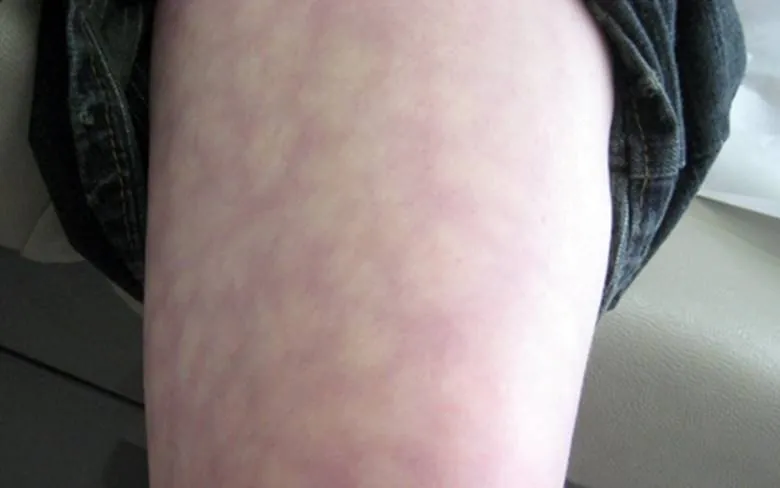
Erythema ab igne, often called toasted skin syndrome, is a rash caused by repeated exposure to heat sources such as hot water bottles, heating pads, and laptops. It appears as a net-like pattern of discoloration, usually on the legs, back, or abdomen. It is generally harmless and fades once the heat source is removed, though long-term exposure can leave permanent marks.
- Erythema ab igne is triggered by prolonged, repeated exposure to moderate heat, not by a single burn.
- Common sources include hot water bottles, heating pads, space heaters, and laptops resting on the lap.
- The rash typically appears as a net-like or reticular pattern of red, brown, or purplish discoloration.
- Most cases resolve on their own once the heat source is removed, but chronic exposure can cause lasting pigmentation.
- The condition is generally not dangerous, though it can occasionally signal an underlying health issue or chronic pain habit.
Kışın Sıcak Su Torbası Alışkanlığı Ciltte İz Bırakıyor
Soğuk kış akşamlarında battaniyenin altına bir sıcak su torbası almak çoğu insan için en ucuz ve en pratik ısınma yöntemidir. Ancak bu konfor alışkanlığının cilt üzerinde bıraktığı izler, çoğu zaman fark edilmediği için gözden kaçar. İşte bu noktada, dermatoloji literatüründe tanımlı ama halk arasında pek bilinmeyen bir tablo devreye giriyor: erythema ab igne, yani "kızarmış cilt sendromu".
Latince adı "ateşten kaynaklı kızarıklık" anlamına gelen bu durum, vücudun belirli bir bölgesinin sürekli olarak ısıya maruz kalmasıyla ortaya çıkar. Ciltte ağrısız ama belirgin bir ağ desenine benzeyen koyu renkli lekeler oluşur ve zamanla kalıcı hale gelebilir. İngilizcede bu tablo "toasted skin syndrome" olarak da bilinir; tıp kaynaklarında yerleşik bir halk adıdır.
Burada işin ciddiyetini gösteren bir veri var. Birleşik Krallık'ta 2014 ile 2023 yılları arasında sıcak su torbaları nedeniyle 5.944 yanık vakası kaydedildiği bildiriliyor. Bu rakam bağımsız olarak doğrulanamamıştır, dolayısıyla kesin bir istatistik gibi değil, aktarılan bir sayı olarak okunmalıdır. Yine de sıcak su torbalarının yalnızca konfor aracı değil, aynı zamanda ciddi yaralanma kaynağı olabileceğini gösteriyor. Ancak asıl mesele sadece akut yanık ya da haşlanma değil.
Isı kaynaklarına uzun süreli maruz kalma, ciltte kırmızımsı, balık ağı desenine benzeyen bir görünüm oluşturur. Bu görünüm, cildin küçük damarlarının ısıya tepki vererek genişlemesi sonucu ortaya çıkar. Sıcak su torbaları, ısıtıcı pedler, elektrikli ısıtıcılar ve hatta dizüstü bilgisayarlar bu tür izlere yol açabilir.
Bu noktada bir uyarı var: Çocuklar, ciltleri dış uyaranlara karşı daha hassas olduğu için dizüstü bilgisayarlarını kucaklarında kullanma alışkanlığı edinen ailelerin önlem alması önemlidir.
Genellikle ısı kaynağı uzaklaştırıldıktan kısa bir süre sonra bu görünüm kaybolur. Ancak ısının uzun süreli ve sürekli olarak aynı bölgeye uygulanması, ciltte incelme ve renk koyulaşması gibi kalıcı değişimlere yol açabilir. Ciltte incelmenin klasik bir belirti olarak görülmediğini, asıl belirgin değişimin renk koyulaşması olduğunu eklemek gerekir. Bu renk değişiminin, ciltteki elastik liflerin zarar görmesi ve cilt hücrelerinden melanin salınımının artmasıyla oluştuğu belirtiliyor. Sonuçta bazı cilt bölgeleri diğerlerinden daha koyu bir tona bürünür.
What Is Erythema Ab Igne, or "Toasted Skin Syndrome"?
Erythema ab igne is a skin condition with a Latin name that translates to "redness from fire," and English speakers know it by a friendlier nickname: toasted skin syndrome. It shows up when one patch of skin gets hit with heat again and again, and it leaves behind a mark that looks less like a burn and more like a net pressed into the skin.
That net is the signature. The discoloration runs dark and reddish, arranged in a fishnet or lattice pattern across the exposed area, and the strange part is that it usually does not hurt. You can run a finger over it and feel nothing unusual. The pattern itself is the whole clue.
What is happening underneath is simple enough. Small blood vessels in the skin dilate in response to the heat, and with enough repeated exposure, the skin's elastic fibers take damage while melanin release increases. Some patches end up darker than the skin around them. The most reliable description of the result is hyperpigmentation. Skin thinning is not a classic hallmark of erythema ab igne and should not be presented as a typical consequence.
Where does the heat come from? Hot water bottles, heating pads, electric heaters, and laptops all make the list. The pattern does not care whether the warmth feels pleasant. It cares whether the same spot keeps meeting it.
Children deserve a closer look here. Their skin is more sensitive to outside irritants than adult skin, so a laptop balanced on small legs for hours is worth watching. Parents who notice a faint net pattern forming should treat it as an early signal, not a curiosity.
Timing matters more than severity. The condition typically resolves shortly after the heat source is removed, provided someone catches it early and gets appropriate care. Keep the exposure going, though, and the discoloration can settle in permanently.
The people most at risk are not always the ones casually warming their laps. Individuals with sickle cell anemia or chronic pain are more susceptible to erythema ab igne or serious burns, because reaching for steady heat to soothe symptoms is part of their daily routine. That habit, repeated for years, is exactly the setup this condition needs.
Why Your Laptop Is a Heat Source You Sit On
A laptop is the one heat source most of us press straight against bare skin, and it runs hot enough to matter. Three components inside the case do the damage: the central processing unit (CPU), the graphics processing unit (GPU), and the lithium battery. Together they push the underside of the machine into the temperature range that can trigger erythema ab igne, the condition dermatologists also call toasted skin syndrome.
Think about where that heat actually goes. The CPU and GPU are working every second the screen is on, and the lithium battery adds its own warmth as it discharges. The ventilation fans are supposed to carry a share of that heat away. But the moment you settle the laptop onto your thighs, you block the free flow of air the cooling design depends on. The fans keep spinning, the heat keeps building, and the only place left for it to go is your skin.
That is the quiet irony of the lap position. The machine was engineered to shed heat through vents and gaps, and resting it on a soft, insulating surface defeats the whole arrangement. What you feel is a gentle warmth, nowhere near hot enough to burn you. It does not need to burn you. Repeated, sustained contact is the mechanism here, not a single dramatic exposure.
Why the Laptop Is a Different Kind of Culprit
Hot water bottles, heating pads, and space heaters all deliver heat to skin, and they can all leave the same reddish, net-like pattern behind. The laptop stands apart because of how naturally it fits the lap. Nobody holds a space heater against their legs for hours, but plenty of people work, stream, and study with a laptop balanced on their thighs without a second thought. Children do it too, and their skin is more sensitive to outside irritants, which is why parents are wise to watch the habit.
Heat is only one variable in the equation. How long the exposure lasts, how often it repeats, how warm the surface actually gets, and whether anything sits between the heat source and the skin all shift the risk. A few minutes here and there will not do it. For erythema ab igne to develop, the exposure has to be long and sustained, the kind that builds up across weeks of the same daily routine.
Some people are more vulnerable than others. Individuals living with sickle cell anemia or chronic pain often reach for heat again and again to soothe their symptoms, and that frequent, repeated use makes them more susceptible to erythema ab igne or to serious burns. The same logic applies to anyone who leans on warmth as a daily comfort.
The encouraging part is how the story usually ends. When the heat source goes away and the change is caught early, the discoloration typically fades over weeks to months. The skin has a chance to recover once you stop feeding it heat. What it cannot forgive is years of the same habit, which is why the simplest fix is also the most effective one: get the laptop off your lap, or put a barrier between the machine and your skin.
Who Gets Hit Hardest, and What Happens If You Ignore It
Not every pair of legs reacts to heat the same way. People living with sickle cell anemia or chronic pain are more susceptible to erythema ab igne and to serious burns, because they tend to reach for heat again and again to soothe their symptoms. A hot water bottle pressed against a sore hip, a heating pad tucked under a blanket every night, a space heater aimed at the same patch of shin: the relief is real, and so is the cumulative dose of warmth landing on one small square of skin.
That repetition is the whole problem. A single warm evening will not leave a mark. What leaves a mark is the same heat, on the same spot, for a long stretch of days and weeks.
What Long-Term Heat Actually Does to Skin
Keep the heat coming and the changes stop being temporary. The elastic fibers in the skin take damage, and skin cells release more melanin, so the affected area settles into a tone darker than the skin around it. The mottled net pattern that started as a faint reddish web can darken and stay that way.
The reported treatment options are limited. Laser therapy is a recognized approach for fading the pigmentation, and creams containing 5-fluorouracil have been described as another route. That cream is not a standard established treatment for this condition and should not be presented as one. Either way, the first move is the same: take the heat source away.
The Rare but Serious End of the Spectrum
Here is where the story turns. If exposure continues for years and nobody addresses it, case reports have linked long-standing erythema ab igne to skin cancers. The types named in the original account include basal cell carcinoma, neuroendocrine carcinoma, and low-grade lymphoma, but this list is genuinely contested in the medical literature. Case reports most consistently tie the condition to squamous cell carcinoma, and sometimes to Merkel cell carcinoma or cutaneous lymphomas. Basal cell carcinoma, in particular, is not well established as a consequence.
The honest summary: the cancer risk is real but rare, and the exact tumor types remain a matter of debate among dermatologists. What is not debated is that the skin changes themselves can become permanent.
This is why the condition matters beyond cosmetics. A mark you can cover with a sock is one thing. A mark that signals years of ongoing tissue damage is another. And for anyone already using heat daily for pain, the calculation is not "stop being warm." It is "stop being warm in exactly the same place, over and over, without noticing what it is doing."
The Fix Is Almost Embarrassingly Simple
Pull the heat away and the skin often does the rest on its own. That is the whole first move with erythema ab igne, the mottled, net-like rash that shows up when one patch of skin keeps meeting the same warm surface. Catch it early, see a doctor without dragging your feet, and the condition usually clears completely once it gets the right treatment. No surgery, no dramatic intervention. Just distance, time, and a clinician who knows what they are looking at.
What makes this so easy to miss is how ordinary the culprits are. A hot water bottle tucked against the belly during a cold snap. A heating pad left on the lower back through a long evening. A space heater aimed at the shins. A laptop resting on bare thighs while you work. Each one feels harmless in the moment, and none of them burns you outright. The damage builds quietly, exposure after exposure, until the skin starts to answer back.
The rule that matters most is the one people break without thinking: do not park continuous heat on the same spot of your body. Rotate where the warmth goes. Move the bottle. Shift the pad. Put a barrier between the laptop and your legs, or better, set it on a desk. The point is not that comfort and health are at war with each other. It is that long-term skin health belongs in the calculation, right alongside how good that warmth feels on a freezing night.
And if the pattern is already there, faint and reddish, that is the moment to act. Wait too long, keep feeding the same patch of skin the same steady heat, and the changes can settle in for good. The story here is a hopeful one, but only for the people who notice in time.


Frequently asked questions
What is erythema ab igne, also known as toasted skin syndrome?
Erythema ab igne is a skin condition whose Latin name means "redness from fire." It appears when one area of skin is repeatedly exposed to heat, producing dark, net-like patches that look a little like a fishnet pattern. In English it is widely called toasted skin syndrome, a well-established colloquial name in dermatology references.
Why does using a laptop on your lap cause it?
A laptop resting on bare skin is a heat source in direct contact with the body. Its main heat producers are the central processing unit, the graphics processing unit and the lithium battery. The ventilation fans normally disperse some of that warmth, but sitting the machine on your lap easily blocks the free flow of air around them.
How long does skin need to be exposed before it appears?
There is no fixed number of hours. The original account stresses that exposure has to be long and sustained before the rash develops, and that duration, frequency, temperature and whether anything sits between the heat source and the skin all shape the outcome. Brief or occasional contact generally does not trigger it.
Was it common before modern heating pads and laptops?
Heat-related skin damage is not a new problem. One cited article frames toasted skin syndrome as a real condition dating back to the age of wood-burning stoves, when people sat close to open fires and stoves for warmth. Heating pads, electric heaters and laptops simply gave the same reaction new sources.
Did hot water bottles cause thousands of burns in the UK?
According to the original account, 5,944 burn cases linked to hot water bottles were recorded in the United Kingdom between 2014 and 2023. That figure is reported rather than independently confirmed, so it is best treated as the number the source gives rather than a settled statistic.
How is it treated once the rash appears?
The first and most important step is removing the heat source. If the change is spotted early and a doctor is consulted without delay, the condition usually clears completely within a short time. Laser therapy is a recognized option, and creams containing 5-fluorouracil are reported in the source, though that cream is not a standard established treatment.
Can toasted skin syndrome turn into skin cancer?
Long, repeated heat exposure that goes unnoticed and untreated is reported to carry a risk of skin cancers, including basal cell carcinoma, neuroendocrine carcinoma and low-grade lymphoma. Case reports mainly tie the condition to squamous cell carcinoma, so the broader cancer list should be read as reported rather than proven.
Who is most at risk?
People with sickle cell anemia or chronic pain are more susceptible, since they often use heat repeatedly to ease their symptoms. Children are another group to watch, because their skin is more sensitive to outside irritants and they commonly rest laptops on their laps. Editorial note: Details that remain unconfirmed or vary by individual case are presented as such, and readers should consult a healthcare professional for personal medical advice.
Got a take on this? Add your voice to the conversation below →
No comments yet. Be the first.