Earth Without Moon: Could Life Exist?
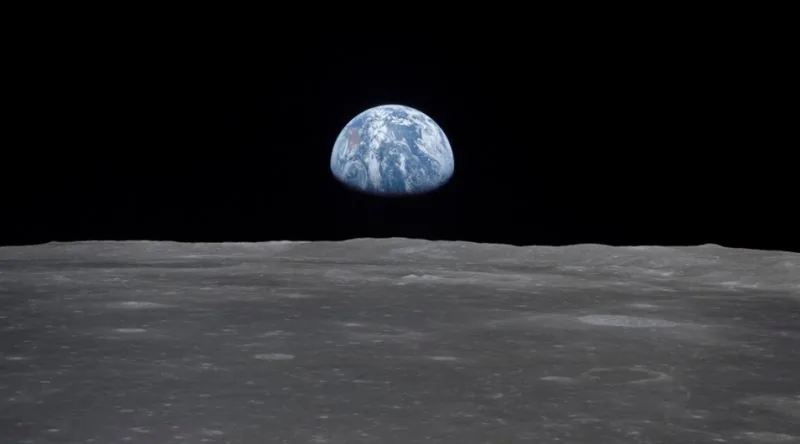
The Earth without Moon is a hypothetical scenario that would strip away the celestial anchor stabilizing our planet's rotation, tilt, and tides, and it likely would have made complex life impossible. This thought experiment, explored by planetary scientists over the past several decades, reveals how the Moon's gravitational pull has quietly orchestrated the conditions for life on Earth since its formation roughly 4.5 billion years ago. Without that familiar silver disk in the night sky, our world would be a dramatically different, harsher place.
Without the Moon, Earth's axial tilt would wobble wildly over millions of years, causing chaotic and extreme seasonal shifts. The Moon also slows Earth's rotation, and without it, days would be much shorter. Tides, which are driven by the Moon, would be far weaker, potentially altering the coastal environments where early life is thought to have emerged.
- Earth's axial tilt would swing chaotically by tens of degrees without the Moon's stabilizing pull, causing drastic climate swings.
- A faster-spinning Earth would produce much shorter days, leading to stronger winds and more violent weather.
- The Moon's gravitational pull drives ocean tides, which are believed to have helped concentrate organic molecules in tidal pools, a key step in the origin of life.
- Without the Moon, Earth's tides would be far weaker, leaving coastal ecosystems far less dynamic.
- The Moon's gravitational influence is critical to its stabilizing effect on Earth's rotation and tilt.
The Moon: Earth's Silent Partner in Life
Look up on any clear night and there it hangs, a pale disc that most of us barely register anymore. But calling the Moon a silent guest in the night sky misses the real story. This rocky companion is actually one of the most important building blocks for life on our planet. Without it, Earth would be a radically different world.
The Moon does three big jobs that we rarely think about. First, it slows Earth's rotation through tidal friction, a gentle braking effect that stretches our days. Second, it stabilizes our axial tilt, keeping it within about one degree of its current 23.5 degrees. Third, it drives the ocean tides, pulling billions of tons of seawater back and forth twice a day. These three effects work together to keep our climate balanced, our seasons regular, and our coastal ecosystems nourished.
Think about what that means for a moment. The Moon quietly builds the long-term stability that complex life depends on. It is not just a pretty face in the sky. It is a planetary anchor, holding the conditions steady while four billion years of biology did their slow, patient work.
What Would Earth Look Like Without the Moon?
If the Moon vanished tomorrow, Earth would still be a planet with microbial life, but it would become a chaotic, unrecognizable world. The chemistry, energy, and liquid water needed for simple life to form would still exist, so microscopic organisms would likely find a way. But everything above them, the stability that complex life depends on, would fall apart.
Take the slowing of Earth's spin. The Moon's gravity tugs at our planet, transferring angular momentum and lengthening our day by about 1.7 milliseconds per century. That might sound trivial, but over billions of years, it turned what was once a frantic few-hour rotation into the familiar 24-hour cycle we know. Without that brake, days would race by in just a few hours. Winds would whip across the surface at staggering speeds. Weather patterns would become violent and unpredictable, with no time for heat to distribute evenly across the globe.
Then there is the axial tilt. Right now, the Moon keeps Earth's tilt steady at about 23.5 degrees, varying only about one degree in either direction. That consistency gives us reliable seasons, year after year, century after century. Remove the Moon, and the tilt would wobble chaotically by tens of degrees. One era might bring extreme polar ice, the next might turn the equator into a furnace. Climate would swing wildly on timescales that make long-term adaptation nearly impossible.
Tides would shrink to almost nothing. The Moon is the primary engine of our ocean tides, with the Sun contributing only about half as much force. Without the Moon, coastal ecosystems that depend on the rhythmic ebb and flow would lose their food supply. The intertidal zones, where life first crawled onto land, would essentially disappear as a meaningful habitat.
So what survives? Microbial life, almost certainly. Abiogenesis, the spark that turns chemistry into biology, does not require a large moon. It needs liquid water, energy, and the right molecules, all of which Earth would still have in abundance.
But terrestrial life is another story. A plausible but unproven hypothesis suggests that land-dwelling organisms would likely never evolve under these chaotic conditions. The constant climate shifts, the furious winds, the vanished tides, all of it would stack the deck against anything beyond the simplest forms. This remains a theory rather than a proven fact, since no direct evidence yet shows that land life specifically requires a moon, and scientists still debate how much climate stability actually matters.
As for humans, and most other complex species, the claim that we would never exist is pure speculation. There is no established causal chain proving that humanity could not have evolved on a moonless Earth. It is a compelling thought experiment, but it rests on assumptions rather than evidence.
In the end, the Moon is far more than a pretty silhouette in the night sky. It is the invisible architect of our planet's stability. Without it, Earth would still be alive, but it would be a stranger, harsher place, one where the story of life would look almost nothing like our own.
The Moon as a Key to Our Past and Future
Look up on any clear night and you will see the same silent companion that has watched over Earth for billions of years. That pale disk does far more than decorate the sky. It is a working tool, a time capsule, and it may be part of the reason you are reading these words at all, though that last part remains speculative.
The Moon helps us decode our past and plan our future. We likely owe our existence to it, at least in part. This isn't poetry. It's physics, chemistry, and biology tangled together in a story that begins with a young Earth spinning much faster than it does today.
Here is what the Moon actually does for us. It slows Earth's rotation through tidal friction, a gentle braking effect that transfers angular momentum and lengthens our day by about 1.7 milliseconds per century. That might sound trivial, but over deep time it adds up enormously. It also stabilizes our axial tilt. With the Moon in place, Earth's tilt varies only about one degree. Without it, that tilt could wobble chaotically by tens of degrees, which would send our climate into wild swings that complex life would struggle to survive. And then there are the tides themselves. The Moon is the primary driver of ocean tides, with the Sun contributing about half as much tidal force. Those tides do not just move water around. They feed coastal ecosystems, mix nutrients, and may have played a role in life's journey from sea to land.
Now here is where the story gets interesting. If the Moon had never existed, would life still have found a way? According to our best scientific understanding, microbial life might still form on Earth. Abiogenesis depends on chemistry, energy, and liquid water, none of which require a large moon. So microscopic organisms could likely still emerge in a moonless world. The bigger question is whether those microbes would ever evolve into anything more complex.
As the story goes, terrestrial life evolution would likely not occur in that scenario. The reasoning goes like this: with a constantly shifting climate, very short days, and almost no tides, the long-term stability that complex organisms need would simply not exist. But it is important to be honest here. This is a plausible hypothesis, not a proven fact. No direct evidence demonstrates that land life specifically requires a moon, and climate stability effects are still debated among scientists.
What about humans specifically? We cannot say with confidence that humans and many other species would not exist. That claim is speculative counterfactual with no scientific consensus. No established causal chain proves that human evolution could not have happened without the Moon. It is a fascinating thought experiment, but it remains just that.
The Moon connects to broader themes of planetary habitability and our place in the universe. When we study it, we are not just looking at a rock. We are looking at the conditions that made our existence possible. And when we ask whether other planets might host life, we now ask whether they have moons of their own, because we know how much difference a single large satellite can make.
So the next time you see the Moon hanging low on the horizon, remember what it is doing for you right now. It is steadying our axis. It is slowing our spin. It is pulling our oceans back and forth in a rhythm that life has danced to for eons. Earth without Moon would be a radically different place, one where we might never have had the chance to ask the question at all.
Frequently asked questions
What would happen to Earth's rotation if the Moon disappeared?
Days would become dramatically shorter, reportedly shrinking to around 6 hours according to some estimates, though this figure remains unverified. The Moon's gravity acts as a brake on our planet, and tidal friction from this gravitational pull transfers angular momentum, lengthening Earth's day by about 1.7 milliseconds per century. Remove that brake, and the planet would spin much faster.
Why is the Moon important for Earth's axial tilt stability?
The Moon acts as an anchor for our planet's tilt, keeping its variation to roughly ±1 degree. Without this stabilizing presence, Earth's axial tilt would swing chaotically by tens of degrees over millions of years. That gentle steadiness is what gives us predictable seasons, a rhythm that complex life has come to depend on.
How do tides from the Moon affect coastal ecosystems?
The Moon is the primary driver of tides, with the Sun contributing about half as much tidal force. These regular tidal cycles nourish coastal ecosystems by circulating nutrients and creating rich intertidal zones. Many researchers believe this tidal action may have helped life make the leap from sea to land, offering shallow pools and wet margins where organisms could experiment with terrestrial living.
Would complex life on land have evolved without the Moon?
Likely not, according to the original account, though this remains an unproven hypothesis with no direct evidence establishing that land life specifically requires a moon. The reasoning goes that without lunar stabilization, Earth would face constantly shifting climates and very short days. Under those conditions, the long-term stability needed for complex terrestrial evolution would probably never materialize, though microbial life could still form since abiogenesis depends on chemistry, energy, and liquid water, none of which require a large moon. One thing worth clearing up: the claim that humans and many other species would not exist without the Moon is pure speculation. There is no scientific consensus on this counterfactual, and no established causal chain proves our evolution depended on lunar presence. It makes for a compelling thought experiment, but it remains exactly that, a thought experiment, not a verified conclusion. Editorial note: This article presents the scientific consensus on the Moon's role in supporting life, and any details that remain speculative, such as the precise timeline of tidal pool chemistry, are presented as hypotheses rather than confirmed facts.
Got a take on this? Add your voice to the conversation below →
No comments yet. Be the first.