Claude Shannon: The Quiet Genius Behind Information Theory
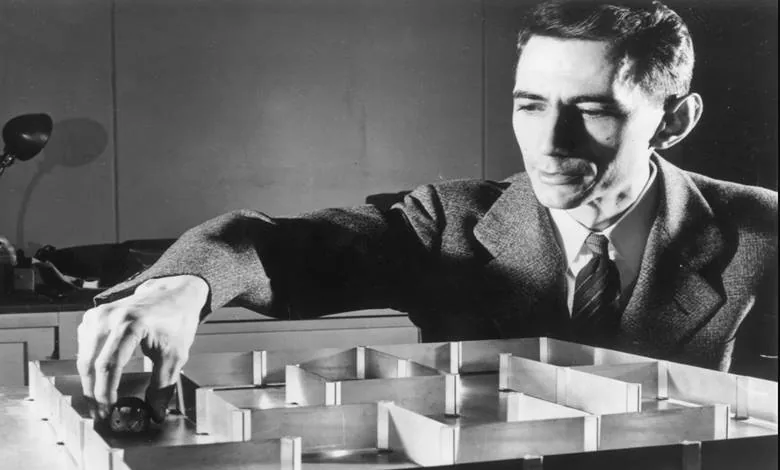
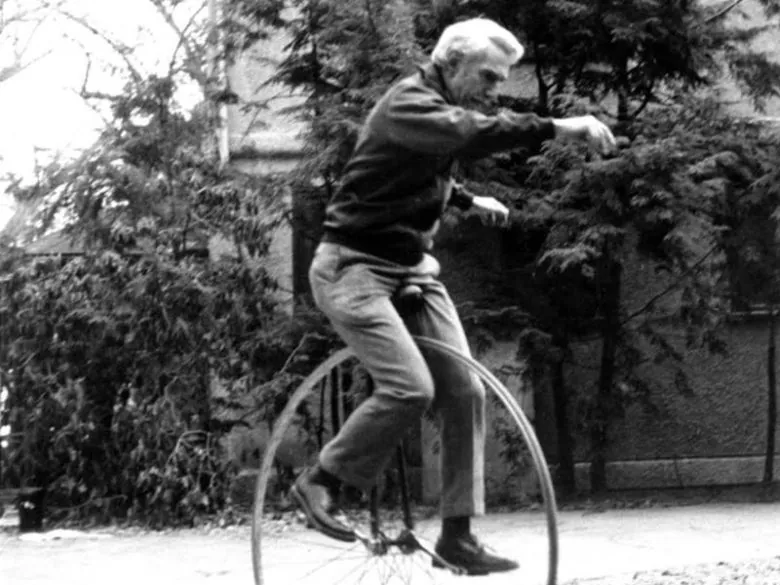
Claude Shannon, an American mathematician and engineer, founded information theory with his 1948 paper "A Mathematical Theory of Communication" while working at Bell Labs in New Jersey. That single paper gave engineers a way to measure information in bits and set the ceiling on how fast any channel could carry it. Long before that, his 1937 master's thesis at MIT showed that electrical circuits could express Boolean logic, a link that quietly became the foundation of every digital computer. He was also a playful tinkerer who built a mechanical mouse, wrote one of the first papers on computer chess, and juggled while riding a unicycle. His name rarely made headlines, yet the connected world runs on ideas he laid out.
Claude Shannon was an American mathematician and engineer who founded information theory with his 1948 paper "A Mathematical Theory of Communication." His 1937 MIT master's thesis linked Boolean logic to electrical circuits, and his later work at Bell Labs shaped how digital information is measured, stored, and transmitted.
- Claude Shannon published "A Mathematical Theory of Communication" in 1948, the paper that founded information theory and introduced the bit as a unit of information.
- His 1937 master's thesis at MIT demonstrated that Boolean logic could be implemented with electrical switching circuits, a result that underpins digital circuit design.
- Shannon spent much of his career at Bell Labs in New Jersey before joining the faculty of MIT.
- He built a mechanical mouse named Theseus that could solve a maze, and his 1949 work on chess led to one of the first papers on programming a computer to play the game, published in 1950.
- Shannon was known for playful inventions and hobbies, including juggling and unicycle riding, alongside his serious mathematical work.
The Quiet Genius Who Never Won a Nobel
Claude Shannon never won a Nobel Prize. That is not a slight against him, and it is not an accident of history. The Nobel simply has no category for what he did. There is no prize for mathematics, and none for engineering, the two fields where Shannon spent his entire working life. So the man who handed the modern world its theoretical blueprint finished his career with a long list of honors and not one of those famous gold medals.
He died on February 24, 2001, at the age of 84, and even then the wider public barely registered the loss. Albert Einstein and Richard Feynman became faces on posters and characters in documentaries. Shannon, who was born in Petoskey, Michigan, on April 30, 1916, stayed a name known mostly inside university buildings and research labs. More than 70 years ago he published a single landmark paper, "A Mathematical Theory of Communication," and that one 1948 article laid the theoretical foundation for modern communication. Every text message, every streaming video, every satellite signal and phone call still runs on the framework he sketched out on paper.
That is the paradox worth sitting with. The information age has a founding father, and most people who live inside his creation could not pick him out of a lineup. You are reading this on a device that exists, in a real sense, because a soft-spoken engineer from a small Michigan town asked a question nobody else thought to ask clearly: what is information, exactly, and how much of it can you push through a wire?
Shannon's story starts far from the blackboards of Bell Labs. It starts with a boy in Gaylord, Michigan, taking apart radios to see what made them tick.
Who Was Claude Shannon? From Petoskey to MIT
Claude Elwood Shannon was born on April 30, 1916, in Petoskey, Michigan, and grew up in the nearby town of Gaylord. His father ran businesses and served as a probate judge. His mother taught school and at one point served as principal of Gaylord High School. Shannon graduated from that same school at just 16 years old.
He was the kind of kid who took things apart to see what made them tick, then built his own versions. Radio-controlled model airplanes and boats came out of the family home. So did something even more telling: a working telegraph line strung between his house and a friend's nearby home, so the two boys could send messages back and forth.
By the time he reached the University of Michigan, Shannon had two clear passions pulling at him. He enrolled in both, earning dual bachelor's degrees in Electrical Engineering and Mathematics in 1936. Machines and circuits on one side, the abstract structures underneath them on the other. Most students pick one path. Shannon walked both at once, and that combination would define everything that followed.
After graduating in 1936, he headed east to MIT. A young man with a fresh diploma and an unusual double training was about to walk into a problem that would reshape how the world builds computers.
Relays, Boolean Logic, and the Master's Thesis That Built the Digital Age
At MIT, Claude Shannon became the research assistant of Vannevar Bush, one of the era's leading engineers, and it was this job that put him face to face with the problem that would change everything.
Bush was building the Differential Analyzer, a massive calculating machine designed to solve complex mathematical equations. The Analyzer represented numbers through the positions of gears and rotating shafts, and it carried out its calculations through mechanical motion. Shannon's job was the machine's electrical control systems. Electromagnetic relays opened and closed to switch motors and various parts on and off as needed. Back then, engineers designed those relay circuits largely by experience and intuition, not by any formal method.
Shannon noticed something far more general. A relay has only two states: open or closed. And that structure lined up exactly with the algebra George Boole had developed in the 19th century, an algebra built on true and false values. Shannon mapped the open and closed states of electrical circuits onto Boolean true and false. Suddenly, complex switching circuits could be analyzed and designed with mathematics instead of guesswork.
He developed the idea in his master's thesis, "A Symbolic Analysis of Relay and Switching Circuits," completed shortly after he arrived at MIT. That thesis became one of the cornerstones of digital circuit design.
For a while after finishing it, Shannon stepped away from engineering and turned to genetics. With Vannevar Bush's encouragement, he spent time at Cold Spring Harbor Laboratory, reported to have worked alongside the geneticist Barbara Burks, trying to describe mathematically how populations change across generations. That specific collaboration is reported but not reliably confirmed, so treat the pairing with a light hand. In 1940 he completed his PhD thesis, "An Algebra for Theoretical Genetics," which attempted to define inheritance and population change within an algebraic structure. It drew far less attention than his switching-circuits work and was never published. Shannon soon returned to the field where he felt more at home.
Genetics, Princeton, and the Birth of Information Theory
By 1940, Claude Shannon had already done the thing that made his name among engineers. His master's thesis, "A Symbolic Analysis of Relay and Switching Circuits," had shown that the open-or-closed states of a relay could be mapped onto the true-and-false values of George Boole's 19th-century algebra. That single insight turned circuit design from a craft of intuition into a discipline you could calculate. So it is a little strange that his next move took him away from wires entirely, and into biology.
With encouragement from Vannevar Bush, the MIT engineer whose Differential Analyzer Shannon had helped tend, Shannon turned to genetics. The story goes that he spent time at Cold Spring Harbor Laboratory working alongside the geneticist Barbara Burks, trying to describe mathematically how populations shift across generations. That specific collaboration is reported but not reliably confirmed, so treat the pairing with a light hand. What is certain is the output: in 1940 he completed his PhD thesis, "An Algebra for Theoretical Genetics," an attempt to fold inheritance and population change into an algebraic structure.
It landed with a thud. Compared to the switching-circuit thesis, the genetics work drew far less attention, and it was never published. Shannon soon drifted back to the territory where he felt more at home.
Bell Labs, Princeton, and a Fellowship Year
He started at Bell Labs in the summer of 1940, and it was close to an ideal fit. The lab pulled together many of the leading engineers and scientists of the day and handed its researchers wide latitude to chase communication problems wherever they led. Shannon picked up his switching circuits again, hunting for ways to design them more economically using the algebra he had built at MIT.
For the 1940-1941 academic year he held a research fellowship at the Institute for Advanced Study in Princeton. A direct collaboration with the mathematician Hermann Weyl is reported but not confirmed, so it is safer to say the two were simply in the same place at the same time. What matters more is the question forming in Shannon's mind, one that had nothing to do with any particular machine: how much information can a communication system actually carry?
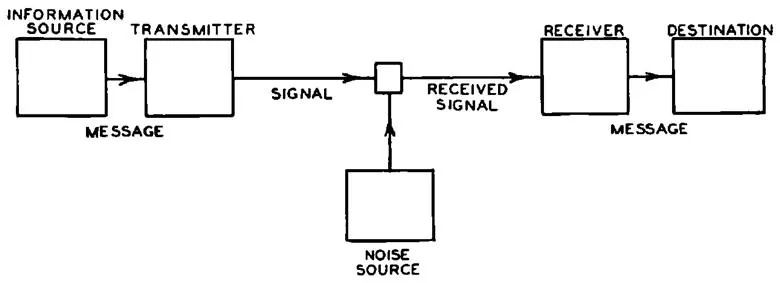
In 1941, with the war closing in, he returned to Bell Labs and worked on anti-aircraft systems. The communication puzzles never left him. Why did messages degrade on telephone and telegraph lines? How much damage could noise do? How much information could you push through a channel of limited capacity?
The 1948 Paper That Started Information Theory
Those questions led him to "A Mathematical Theory of Communication," published in 1948. In it, Shannon founded information theory. He treated information itself as a measurable quantity, something you could put a number on, and he defined the limits of communication channels in mathematical terms. Telephone line, telegraph wire, radio signal, it made no difference. All of them could now be handled inside one shared framework. That is the pivot: from the specific circuit in front of him to the fundamental question of how much a channel can carry, and it is the reason his name sits at the base of the digital age.
Could a Computer Play Chess?
In 1949, Claude Shannon asked a question that nobody in engineering had framed quite so plainly: could a computer play chess? He loved the game, and he had been circling computers since his MIT years. His paper on the subject appeared in 1950, and it did something unusual. It treated chess not as a curiosity for engineers but as a test case for a far bigger idea, whether a machine could reason.
First he had to prove the board could become numbers. Piece positions, the moves available from any square, the relative value of one arrangement over another, all of it could be written down and handed to a machine. From there the computer could calculate what might happen after a move, then examine the replies its opponent might give. In principle, the game was computable.
Then came the wall. Every move you look ahead multiplies the number of possible positions, and the branching possibilities quickly outrun any computer. Shannon's answer was not to brute-force it. A computer should throw out the unpromising lines early and spend its effort only on the options that look strong. Prune the bad branches, follow the good ones.
That single idea became one of the foundational methods behind later chess programs. But Shannon was pointing at something larger than checkers and rooks. If a machine could weigh options, discard weak paths and commit to a decision, then computers were not limited to crunching numbers. They could handle problems that demanded logical judgment. That is the frontier his chess paper quietly opened.
Theseus the Mouse and Shannon's Strange Machines
In the early 1950s, Claude Shannon built a robot mouse named Theseus that could solve a maze on its own. It was not a toy in any ordinary sense. The mouse itself was small and simple. The intelligence sat underneath it, inside the table.
Theseus's "brain" was a relay-based computer hidden below the maze floor. A magnet did the moving, steering the little mouse through the corridors from beneath. As it traveled, the machine remembered which paths it had already tried. When it found the goal, it knew the route. Run it again and it went straight through without a wrong turn. That combination of memory and search made Theseus a genuine landmark. It is widely regarded as a forerunner of the robot-mouse competitions that came along decades later, where students still build tiny machines to race through mazes.
But Theseus was only one piece of a much stranger collection. Shannon kept what visitors called a "toy room" at his home, and he loved showing it off. Inside were machines that served no practical purpose at all, and that was exactly the point.
- A computer that worked in Roman numerals
- Rocket-powered frisbees
- Motorized bouncing devices
- Machines built to juggle
Each one was a question dressed up as a gag. Could you compute without the familiar decimal system? Could a spinning disc fly on a small rocket? Could a mechanism learn to toss and catch? Shannon did not need these gadgets to do anything useful. He needed them to find out what was possible.
His most famous gadget may be the simplest thing he ever made. It was a small box with a single switch on top. Flip the switch on, and the lid opened. A mechanical hand rose out of the box, reached over, and turned the switch off. Then the hand withdrew and the lid closed. That was the entire performance. A machine whose only job was to undo what you had just done to it.
People often read that box as a joke about automation, or about the stubbornness of machines. It works either way. What it really shows is how Shannon thought. He was shy, unassuming, and completely uninterested in looking clever. But give him a problem, even a silly one, and he would attack it from an angle nobody else had considered. The toy room was not a distraction from his serious work. It was the same mind at play, and the play is where the ideas came from.
Return to MIT, Juggling, and His Final Years
In 1956, Claude Shannon walked back through the doors of MIT, the same campus where he had written his master's thesis on relay circuits two decades earlier. Two years later, in 1958, he became a full professor. The students and young researchers who crossed his path treated him with a kind of quiet reverence, though Shannon himself never seemed to notice or want it.
What he did not do was build a large research group. Rather than managing a crowd of graduate students, he nudged the young people around him to step back from the fine details of whatever problem had them stuck and to reframe the question itself. Change the question, and the answer often becomes obvious. That was his instinct, and he passed it along.
He also kept playing. The unicycle stayed. The juggling stayed. The mechanical toys kept coming out of his workshop, clever little contraptions that whirred and clicked and did something surprising. And because he was Shannon, he did not just juggle. He worked out a mathematical formula describing the motions of three-ball juggling, relating how long a ball rests in the hand, how long it spends in the air, and how many balls are in play.
Over his lifetime, the honors accumulated. He was elected to the Royal Society, to the American Philosophical Society, and to the US National Academy of Sciences. He never won a Nobel Prize, which is not awarded in his fields, and his name never carried the household fame of an Einstein or a Feynman. Yet the single paper he published more than seventy years ago laid the theoretical groundwork for the communication infrastructure that underpins the entire modern information age.
Then came the slow fade. In his later years, Shannon was diagnosed with Alzheimer's disease. He died on February 24, 2001, at age 84. A man who had spent his life explaining how messages travel from one mind to another, who had given the world the mathematics of communication itself, lost his own ability to communicate. It is a tragic irony, and it is the last thing anyone who studies him ever forgets.
His name may not be on everyone's lips today. But his ideas are running, right now, through nearly every corner of the digital world.
Frequently asked questions
Who was Claude Shannon and why is he important?
Claude Elwood Shannon was an American mathematician and engineer, born April 30, 1916, in Petoskey, Michigan, and died February 24, 2001, at age 84. He founded information theory with his 1948 paper "A Mathematical Theory of Communication," giving the digital age its theoretical foundation.
What did Claude Shannon prove in his master's thesis at MIT?
In his 1937 MIT master's thesis, "A Symbolic Analysis of Relay and Switching Circuits," Shannon showed that electrical relay circuits could be mapped onto George Boole's 19th-century algebra of true and false values. This turned circuit design from guesswork into mathematics and became a cornerstone of digital circuit design.
How did Claude Shannon's 1948 paper change communication?
Published in the Bell System Technical Journal in 1948, "A Mathematical Theory of Communication" treated information as a measurable quantity and described the limits of communication channels mathematically. Telephone, telegraph, and radio systems could suddenly be analyzed within one shared framework.
What was Theseus, Claude Shannon's maze-solving mouse?
Theseus was a maze-solving mechanical mouse Shannon built in the early 1950s. Its "brain" was a relay-based computer hidden beneath the maze, and a magnet moved the mouse while the system remembered routes it had already tried. It is considered a forerunner of later robot mouse contests.
Did Claude Shannon ever win a Nobel Prize?
No. Claude Shannon never won a Nobel Prize, during his lifetime or after his death in 2001. The Nobel categories do not cover his fields, so despite honors such as membership in the Royal Society, the American Philosophical Society, and the US National Academy of Sciences, that prize never came.
What did Claude Shannon contribute to computer chess?
In 1949, Shannon asked whether a computer could play chess, and his chess paper appeared in 1950. He showed that board positions, moves, and their values could be represented numerically, then argued that a machine should prune unpromising lines early instead of calculating every possibility. Editorial note: Details that remain unconfirmed are presented here as hedged, and no figures or claims have been invented.
Got a take on this? Add your voice to the conversation below →
No comments yet. Be the first.