Cevdet Bey and His Sons: Pamuk's Istanbul Family
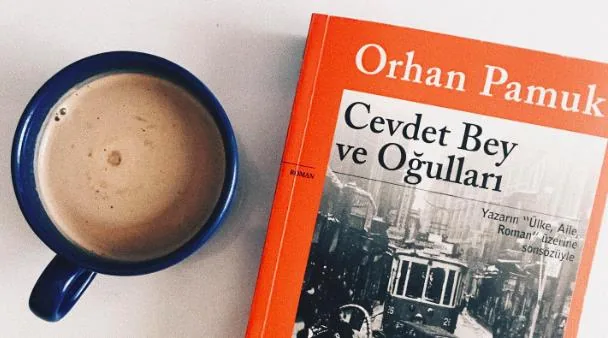
Cevdet Bey and His Sons is Orhan Pamuk's first novel. It follows the Işıkçı family across three generations, from a merchant's household through the early Republic and on to the restless grandchildren. Pamuk wrote it before he was famous, and it already carries the obsession that would define his career: what Turkey gained, and lost, by chasing the West. The book is less a family saga than an argument about a whole society, delivered through one household's furniture, silences, and disappointments.
Cevdet Bey and His Sons is Orhan Pamuk's debut novel about the Işıkçı family in Istanbul across three generations. It traces a wealthy Muslim merchant, his sons, and his grandson as they pursue Westernized, secular lives, and it critiques how Turkish society misunderstood what Westernization actually required.
- Cevdet Bey and His Sons was Orhan Pamuk's first novel, and it arrived well before the fame that followed.
- The story spans three generations of the Işıkçı family, beginning with Cevdet Bey, a prosperous Istanbul merchant.
- The novel's central theme is Westernization in Turkey, and how the family's pursuit of a European ideal shapes and damages its members.
- The book is set largely in Istanbul, moving from the late Ottoman years through the early Republic and onward.
- Cevdet Bey and His Sons is often named as perhaps Pamuk's finest novel, and it established him as a serious literary voice in Turkey.
Cevdet Bey and His Sons: The Novel That Started Orhan Pamuk
Before the Nobel medal, before the international fame, there was a family called Işıkçı. Orhan Pamuk built Cevdet Bey and His Sons (Cevdet Bey ve Oğulları) around that fictional Istanbul family, and the book follows three generations of its men: Cevdet Bey, then his son Refik, then his grandson Ahmet. If you have heard the title but never quite understood why people treat it as essential, you are in good company.
Many critics and longtime readers call it perhaps Pamuk's finest novel, and the strange part is how few can explain exactly why it lands so hard. The title itself almost went a different way. As the story goes, Pamuk toyed with calling the book Karanlık ve Aydınlık, meaning Darkness and Light, before settling on the family name at the center of it. That working title is reported rather than confirmed, but it hints at the axis the whole book turns on: east and west, shadow and brightness, and who gets to decide which is which.
Pamuk was awarded the Nobel Prize in Literature in 2006, and this novel is the ground floor of everything that came after. It is where a young writer staked out the territory he would spend a career mapping: a middle-class Istanbul household, a country mid-transformation, and characters who cannot stop asking what it means to be modern. The Işıkçı family, whose surname literally gestures at light, carries that question across decades.
So here is what this piece sets out to do. We will walk through the three generations, from Cevdet Bey's merchant ambitions to Refik's restless searching to Ahmet's artistic frustrations, and we will look at the quiet argument the novel makes about Turkish society's encounter with Westernization. Not a summary you could get from a back cover. Something closer to why the book still matters.
Three Generations, One Question: What Does It Mean to Be Modern?
Orhan Pamuk builds Cevdet Bey and His Sons around a single Istanbul family, the Işıkçı, and follows it across three generations: Cevdet Bey, his son Refik, and his grandson Ahmet. That structure is not decoration. Pamuk wanted the novel to show how the idea of "modernity" planted an inner contradiction inside Turkish life, and one lifetime was never going to be enough to hold it.
So he gave the contradiction three bodies. Cevdet Bey, the first, is a man who arranges everything around being modern. His house, his habits, even his marriage get designed in a certain direction, whether or not he enjoys it. The trouble is that if you sat him down and asked what being modern actually means, or what living a Western life really is, he could not answer you. He is modern the way a room is furnished: the shape is there, the meaning is somewhere else.
Pamuk made the family middle-class on purpose. Not aristocrats, not grand old money. That choice sharpens the critique, because it lets the novel examine how "being Western" was perceived by ordinary people who had money, a good neighborhood, and no idea what to do with either.
As the story goes, the comparison readers reach for is Ahmet Hamdi Tanpınar's Saatleri Ayarlama Enstitüsü, another canonical Turkish novel about modernization, though that parallel is more suggestive than settled. What is settled is the family name at the center of it all, and the question each generation inherits without ever being handed an answer.
Refik's Restlessness: Material Comfort, Spiritual Hunger
Refik is where the whole argument of Cevdet Bey and His Sons starts to ache. He is the middle generation of the Işıkçı family, and on paper he has everything his father Cevdet worked for: money, a mansion, a life in a district like Nişantaşı. None of it lands. The novel uses him to show how a person can be materially modern and spiritually starving at the same time.
Watch what he does with that hunger. He tries to quiet the voice inside his own head. He tries to be useful. He tries one thing, then another, and the result is the same each time, which is nothing. The book is careful about where it points the blame here: not at Refik, not at his father, not at the Republic. According to the account, his search eventually carries him toward Erzincan and Kemah, though that specific provincial detail is reported rather than settled.
Pamuk spreads the same condition across the whole family, and the effect is a kind of surface living. Disconnection between people gets praised as individual freedom. Modern architecture sits next to religious observance. Faith, taste, marriage, all of it gets worn lightly, like a coat put on for the weather. Cevdet Bey himself designed his life, down to his marriage, around whatever counted as modern, and the novel makes plain that he could not have explained what being Western actually meant if someone had asked him.
That emptiness is the inheritance. It passes down through the generations, and it is why money, the mansion, and a Nişantaşı address all read as meaningless to Refik. The contradiction at the center of Cevdet Bey and His Sons is not that modernity failed. It is that the people living it never quite understood what they were reaching for.
Ahmet: The Artist Who Cannot Create
Ahmet Işıkçı is the third generation of the family at the center of Orhan Pamuk's Cevdet Bey and His Sons, and he is the one who should have broken the pattern. He paints. He calls himself an artist. And according to the original account of the novel, what he actually produces is not work at all but imitation, and not especially good imitation at that.
There is a particular cruelty in the way this lands. Ahmet spends his energy quietly mocking Refik, his own father's restlessness, the searching, the running off after meaning. Then the realization arrives: he is not different. He is Refik with a brush in his hand.
His politics follow the same shape. Ahmet holds socialist ideas, yet reportedly takes no part in any socialist activity. He has a phrase ready for that gap. He calls himself an "independent socialist," which sounds like a position and functions like an excuse.
Step back and the three lives line up end to end. Cevdet Bey, the capitalist, builds and arranges and never asks what any of it means. Refik, the son, cannot sit still inside the comfort he inherited. Ahmet, the grandson, reaches for art and politics and gets a grip on neither. Three generations, three different vocabularies, one shared condition: a search that never arrives anywhere.
That is where the novel's real argument sits, and it is worth stating carefully. According to the reading the original account offers, the trouble is not the Republic, not the revolutions, not the modernization efforts themselves. The trouble is that Turkish society misunderstood what becoming Western and modern actually meant, and lived the misunderstanding as though it were progress.
Not the Republic's Fault: Pamuk's Real Target
Cevdet Bey and His Sons does not put the Republic on trial. Orhan Pamuk, who would go on to win the Nobel Prize in Literature in 2006, aims his critique somewhere else entirely: at a society that learned the vocabulary of Westernization without ever grasping its meaning. Read this way, the novel's real indictment falls on everyone, not on a single man, a single father, or a single regime.
That reading is an interpretation, and it should be offered as one. The book never hands you a verdict on a platter. But the evidence is hard to miss. Cevdet Bey, the family patriarch, arranges his life, his house, even his marriage along lines he calls modern, yet he could not explain what being modern actually demands if someone asked him point blank. He starts a modernity emptied of substance, and that emptiness travels down through the generations.
Money, the mansion, a life confined to a neighborhood like Nişantaşı: none of it satisfies Refik. He feels the hollowness and goes searching, reportedly drifting as far as Kemah in Erzincan, chasing a spiritual completeness he cannot name. His restlessness is not the Republic's doing. It is the inheritance of a borrowed idea nobody fully understood.
Ahmet carries the same fracture. As the story goes, he is a painter and a socialist, yet his canvases are imitations rather than works, and his socialism stays entirely on paper, a stance he dresses up as being an "independent socialist." He quietly mocks Refik while suspecting he is no different.
Three generations, three lives spent in a search that never lands. The novel's troubling suggestion is that the trouble was never the Republic, the revolutions, or the modernization efforts themselves. It was a whole society misreading what it meant to be Western and modern. The fault, Pamuk implies, belongs to all of them.
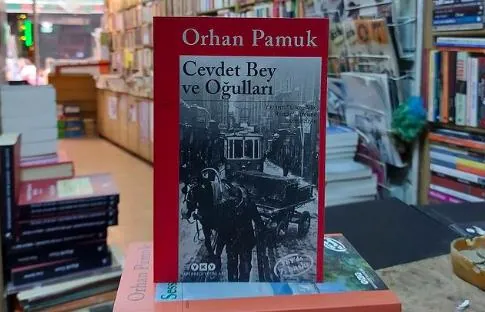
Frequently asked questions
What is Cevdet Bey and His Sons about?
Cevdet Bey and His Sons is Orhan Pamuk's debut novel, a family chronicle about the Işıkçı household in Istanbul. It follows the family across three generations, tracing how the dream of becoming Western and modern plays out in private life, and how that dream leaves each generation restless and unfulfilled.
Who are the three generations in the novel?
The novel is built around three figures: Cevdet Bey, his son Refik, and his grandson Ahmet. Cevdet Bey is the capitalist patriarch who arranges his whole life, marriage included, around being modern. Refik inherits the money and the Nişantaşı comfort but finds it meaningless. Ahmet is the artist figure of the third generation.
Was it Orhan Pamuk's first novel?
Yes. Cevdet Bey and His Sons was Orhan Pamuk's debut novel, and it is often named as perhaps his finest work. It arrived well before the international fame that followed, and it already carries the themes he would return to for decades.
Did Pamuk win the Nobel Prize for this novel?
No. Orhan Pamuk was awarded the Nobel Prize in Literature in 2006, an honor given for a body of work rather than for a single book. Cevdet Bey and His Sons belongs to the early part of that body of work.
How does it compare to Tanpınar's Saatleri Ayarlama Enstitüsü?
Readers often set it beside Ahmet Hamdi Tanpınar's Saatleri Ayarlama Enstitüsü, since both are canonical Turkish novels about modernization. One notable difference: Pamuk places his family in the middle class, which lets him examine what "being Western" actually meant to ordinary people rather than to an elite. Editorial note: Details that remain unconfirmed are presented as such, and any interpretation of the novel's themes reflects critical reading rather than the author's stated intent.
Got a take on this? Add your voice to the conversation below →
No comments yet. Be the first.