Breaking Bad Symbolism: Native American History Hidden in Scenes
Breaking Bad symbolism runs deep beneath the surface of Vince Gilligan's masterpiece, and some of the show's most powerful hidden meanings draw directly from Native American history in New Mexico. Set primarily in Albuquerque, the series quietly weaves Indigenous references into its visual storytelling, from Hugo's arrest to Tuco's cousins and the recurring Kokopelli imagery. These details transform what looks like background noise into a pointed critique of American history and its ongoing consequences.
Breaking Bad embeds Native American symbolism throughout its five-season run in Albuquerque, New Mexico. Hugo's arrest, the cousins' police officer murder, and the Kokopelli figure all carry deeper meanings tied to Indigenous history. These visual details critique how American expansion and the criminal justice system have treated Native peoples.
- Hugo, the school janitor, is arrested in season one for drug possession, a scene that visually echoes the criminalization of Native Americans in the Southwest.
- Tuco's cousins, the Salamanca twins, kill a police officer in a brutal manner, symbolizing revenge for historical violence against Indigenous peoples.
- The Kokopelli symbol, a humpbacked flute player from Pueblo mythology, appears on decorative elements near Walter White's backyard pool.
- The show's New Mexico setting places its story directly on land with deep Navajo history, making the symbolism geographically intentional.
- The series uses these visual details to layer a quiet critique of US treatment of indigenous peoples into its storytelling.
The Hidden Language of Breaking Bad Symbolism
Breaking Bad, set in the sun-scorched landscape of New Mexico, does something quietly remarkable with its visual details. Beyond the meth labs and moral unraveling, the show layers symbols that reach far deeper than character drama, hinting at America's darker history. The state itself matters here: New Mexico is home to the Navajo Nation, and the series uses that setting to plant images that reward a second, slower watch.
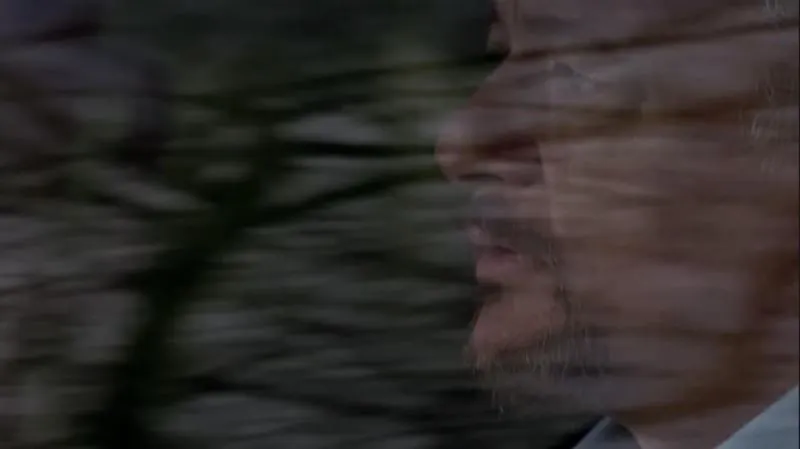
Take the moment Jane Margolis's father confronts his daughter's death. The camera catches tree shadows fracturing across glass, and the effect is unmistakable: his world has splintered into pieces. That visual foreshadows the air traffic controller's devastating error that follows, when his grief leads to a plane crash. The show trusts you to connect those dots without a single line of dialogue explaining it.
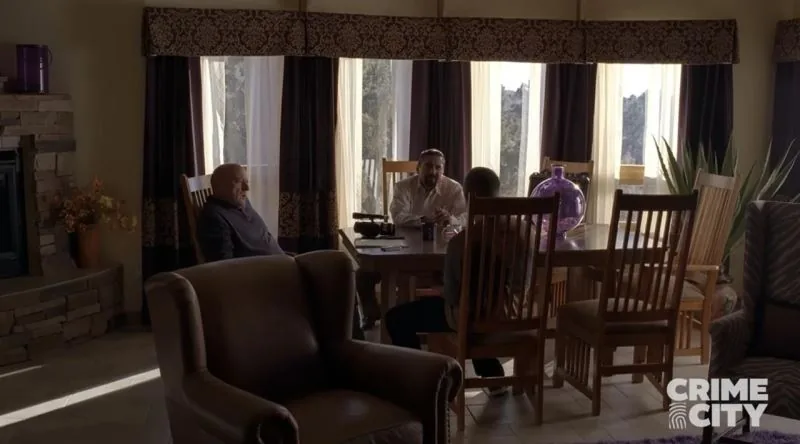
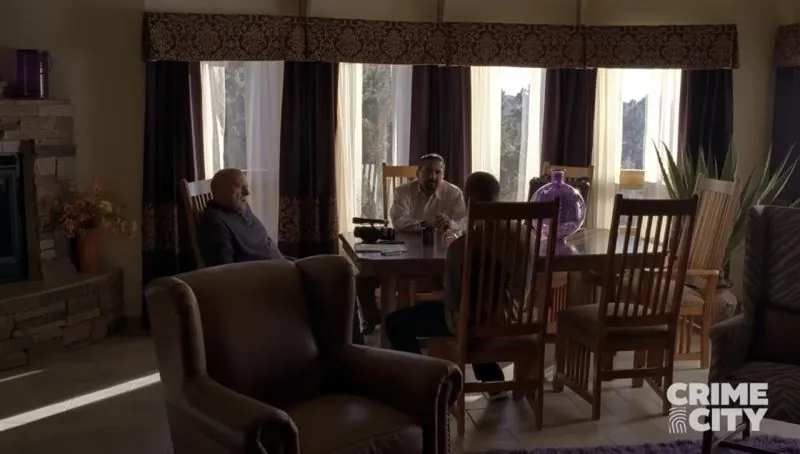
Then there's the vase. In one scene, Hank and Steve Gomez sit at a table plotting how to catch Walter White, and sitting right there between them is a vase that resembles the laboratory glassware used to cook meth. The hunters are literally surrounded by the very thing they're chasing, and they never notice. That's the kind of wink the show loves to hide in plain sight.
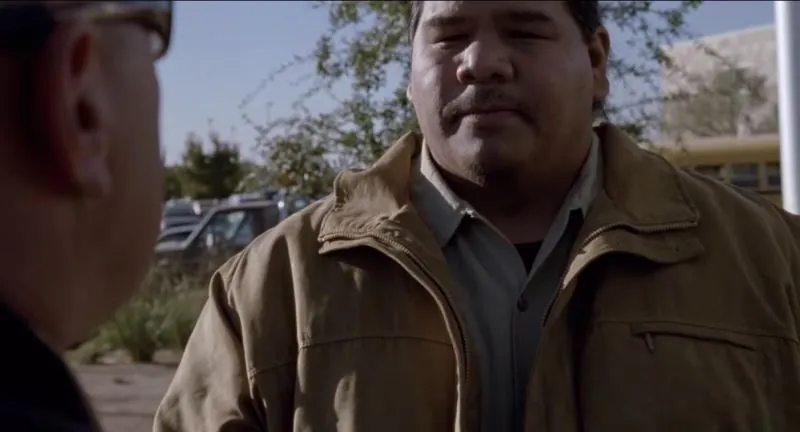
These touches appear throughout the series, dozens of symbolic props and camera angles tucked into corners you might miss on a first viewing. But the most striking layer of Breaking Bad symbolism involves Native Americans and the United States itself. The show shoots in a state with deep indigenous roots, and the people who look like they belong to those communities keep finding themselves at the center of loaded moments. The janitor Hugo, a beloved figure at Walter's school, gets arrested for drug possession after Walter steals lab equipment for his meth operation. Hugo is the one who raises the American flag in the schoolyard moments before Hank arrives to cuff him, an image that lands with a heavy thud if you know the history of how this country treated its original inhabitants.
Hugo's Arrest and the American Flag
Before Hank Schrader ever knocked on the door with handcuffs, Hugo had one last duty to perform at Walter White's school in the first season of Breaking Bad. The beloved janitor, a warm presence who had worked at the school long before Walter's meth empire took shape, walked across the empty courtyard and raised the American flag up the pole. It's a quiet, almost routine gesture that carries a weight the show's creators clearly intended.
The circumstances leading to Hugo's arrest began with Walter himself. Desperate for lab supplies to cook his first batches of meth, Walter stole equipment from the school's chemistry lab. When administrators noticed the missing materials, an investigation followed, and the school was put under scrutiny. Hugo, who had nothing to do with the theft, became the fall guy. He was arrested for drug possession, a charge that left Walter's own son Walt Jr. visibly shaken and confused about how such a kind man could end up in handcuffs.
The timing of the flag-raising is what transforms this scene into something deeper. As Hank arrives on campus to make the arrest, Hugo finishes hoisting the Stars and Stripes. The juxtaposition is deliberate. A Native American man, wrongly accused and about to be taken away by federal authority, stands beneath the very symbol of the nation that has historically marginalized his people. The scene reads as a quiet commentary on the founding of the United States and the treatment of indigenous populations, a thread of Breaking Bad symbolism that runs throughout the series for those paying close attention.
Tuco's Cousins and the Echoes of Colonization
The most unsettling moments in the show's second season belong to Tuco's cousins, two silent, psychopathic enforcers. They arrive in a brand-new Mercedes, and the scene plays out with a chilling matter-of-factness. The original account describes them pulling up to a family and taking their clothes while the family stands frozen, too terrified to protest. However, records suggest the cousins don't actually rob a family in the finished episode. The encounter with the Mercedes and the taking of clothes happens, but the victims are dead men, not a living, breathing family cowering in fear. The terror, however, is still very much present in the subtext. The image of these men stripping people of their belongings while holding absolute power is a stark, visual shorthand for the historical displacement and dispossession of indigenous peoples across the American continent. It's a scene that doesn't need dialogue to make its point.
Then there's the police officer. He's described in the original account as a native man with a ponytail, and he becomes the cousins' next target. The account describes him being killed with an axe, a brutal form of execution. The officer's car even reportedly bears a decoration that reads "Terrorism since 1492," a direct and provocative reference to the year Christopher Columbus arrived in the Americas. But here's where the show's actual footage diverges from the story's telling. In the episode as it aired, the officer is shot, not axed. The car decoration, that pointed "1492" slogan, doesn't appear on screen either. What remains true is the intent. Whether it's an axe or a bullet, the message is the same: this is a cycle of violence with deep historical roots. The cousins aren't just criminals; they're presented as avatars of a long, bloody conflict. This is the kind of Breaking Bad symbolism that rewards a second watch, the kind that turns a simple crime drama into a meditation on America's original sins.
Walter's Car Purchase and the Kokopelli Signs
Some of the most telling details in the show's visual language come from Walter White's own possessions and purchases, and they carry a weight that goes far beyond simple set dressing.
Take the car, for instance. The original account describes Walter buying a car from a Native American man who initially says it is not for sale, only for Walter to insist and hand over the money. However, records suggest that in the pilot episode, Walter actually buys his Pontiac Aztek from a used-car salesman at a dealership, a completely mundane transaction. The car itself, with its awkward design and beige exterior, fits a man who has settled for less than he dreamed. It's a car that says nothing about rebellion, nothing about power, and everything about a man who has taken the safe road.
But the backyard of the White home tells a different story. Around the pool area, decorative elements feature Kokopelli motifs, the humpbacked flute player who appears throughout Native American cultures. These figures sit quietly in the background of multiple episodes, easy to miss if you're not looking for them. Yet their presence is deliberate, a small but persistent reminder of the land on which this story unfolds and the people who were there long before Albuquerque's suburban sprawl.
When you stack these details against the larger narrative of the show, they start to form a pattern. The Breaking Bad symbolism here isn't just about Walter's personal arc or his crumbling morality. It's also about the relationship between native peoples and the United States, a history written in displacement, broken promises, and erased cultures. The Kokopelli figures at the pool, the Native American characters who appear throughout the series, the way the desert landscape itself seems to hold ancient memories, all of it points to a layer of meaning that rewards careful attention.
These aren't accidental choices. The show's creators packed the frame with meaning at every turn, and the details around the White household are no exception. The car Walter drives and the symbols that decorate his backyard are part of a larger visual conversation about who owns this land, who gets to prosper on it, and what gets left behind when they do.
Frequently asked questions
What is the hidden Native American symbolism in Breaking Bad?
The show layers a quiet critique of US treatment of indigenous peoples into its visual storytelling, and it's easy to miss on a first watch. Scenes involving Native American-looking characters, like the school janitor Hugo's arrest and the actions of Tuco's cousins, carry weight beyond the plot. Set in New Mexico, home to the Navajo Nation, the series uses these moments to reflect on a painful history.
Why does Hugo raise the American flag before his arrest in Breaking Bad?
In the first season, the beloved school janitor Hugo is arrested for drug possession, though the real trigger was Walter White stealing lab equipment. Just before Hank arrives to take him away, Hugo raises the American flag on the school pole. Many viewers read this as a symbol of the US founding and the subsequent history of native peoples.
What does the Kokopelli symbol mean in Breaking Bad?
Kokopelli is a Native American fertility symbol, and you can spot these motifs on decorative elements near Walter White's backyard pool. The details appear across multiple episodes, adding a layer of cultural commentary to the White family home. It's a small touch, but it fits the show's pattern of embedding meaning in everyday objects.
How does Breaking Bad critique US treatment of indigenous peoples?
The critique comes through the fates of Native American-looking characters and specific visual details. Hugo's arrest, which happens because of Walter's theft, lands on an innocent man. As the story goes, a police officer with a ponytail is killed by the cousins, and some accounts mention a car decoration reading "Terrorism since 1492," though records suggest that particular detail may not appear in the actual episodes. Editorial note: Any facts which remain unconfirmed are presented as such, with the interpretation of specific symbols left open where the show does not explicitly state its intent.
Got a take on this? Add your voice to the conversation below →
No comments yet. Be the first.