Why Women Live Longer: The 4 Key Reasons
Women live longer than men in nearly every country on Earth, a gap driven by a mix of biology, behavior, and healthcare habits that stacks the odds in their favor. This longevity advantage, documented across global populations and even in many animal species, means the average woman tends to outlive the average man by several years, a difference that shapes families, economies, and medical research. Understanding why women live longer is not just a trivia question; it is a window into how we might all age better, regardless of gender.
Women generally outlive men due to a combination of genetic protection from two X chromosomes, hormonal differences that lower heart disease risk, and behavioral patterns that include less risky activities and more consistent healthcare use. This advantage appears across cultures and is also observed in many animal species, suggesting deep biological roots.
- The global life expectancy gap consistently favors women, though the exact size varies by country and has shifted over time.
- Biological research points to the protective effect of having two X chromosomes, which provides a genetic backup system that shields women from certain inherited diseases.
- Estrogen, a primary female hormone, offers cardiovascular protection during reproductive years, lowering the risk of heart attacks and strokes in women compared to men of the same age.
- Behavioral differences, including higher rates of smoking and alcohol use among men, along with a greater willingness to engage in risky activities, contribute significantly to the mortality gap.
- Women are more likely to visit doctors for preventive care and to report symptoms early, leading to earlier diagnosis and treatment of chronic conditions.
The Opening: A Tale of Two Lifespans
If you are a man reading this, here is a sobering thought: you will most likely die a few years before the women in your life. It is not a guess, and it is not a stereotype. It is one of the most consistent patterns in human health, and it holds up in nearly every country on Earth.
Global health data from the World Health Organization and the United Nations tells the same story everywhere you look. Women outlive men in almost every part of the world. The pattern repeats itself with remarkable consistency across diverse regions. The size of the gap varies from place to place, but the direction never flips: women live longer.
Now, here is where the story gets interesting. Some popular accounts claim the gap between male and female lifespans has been widening in recent years. The data says otherwise. In most high-income countries, the sex gap has actually been narrowing since around the 1970s and 1990s. The distance between men and women is not growing; it is shrinking, and that shift is part of what makes this question so compelling.
To understand why women live longer, we need to look at the whole picture. Biology matters, from chromosomes to hormones. Behavior matters, from risk-taking to how we handle stress. And the way men and women move through the world, the jobs they take, the doctors they visit, and the social expectations they carry, all of it shapes how long we live. The following sections dig into each of those layers, one by one.
A Historical Leap: From 41 to 85 Years
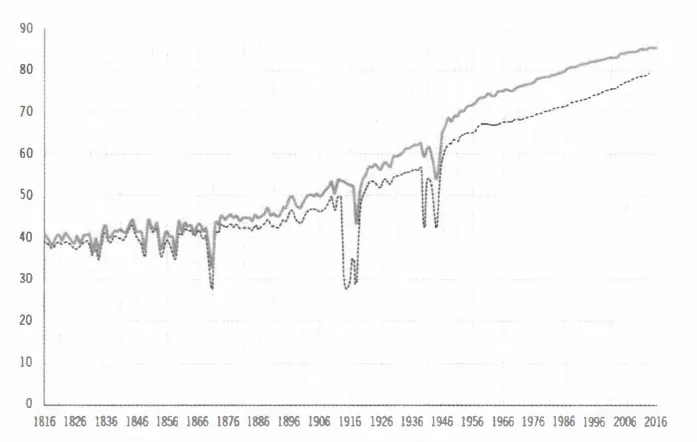
In 1816, a baby girl born in France could expect to live about 41.1 years, while a baby boy faced 39.1 years. Two centuries later, by 2016, those numbers had jumped to 85.3 years for women and 79.3 years for men, according to official French statistics from INSEE. That is more than a doubling of the human lifespan in a relatively short historical blink, and it reshaped everything about how we think about growing old.
The engine behind this transformation was not a single miracle cure but a series of quiet revolutions. Clean drinking water became available in cities, sewage systems kept waste away from where people lived, vaccines tamed diseases that once killed children by the thousands, and better nutrition gave bodies the fuel to fight off infections. Medical advances added their own layer of protection. Together, these changes crushed the infant and childhood mortality rates that had kept average lifespans brutally low for most of human history.
What is striking is that this progress did not lift both sexes evenly. Women and men both gained decades of life, but women gained more. The gap between them, which was about two years in 1816 based on those figures, had grown by 2016. Some readers might assume the gap keeps growing with each passing decade, but the historical record tells a different story. In most high-income countries, the sex gap in life expectancy has actually narrowed since the 1970s and 1990s, as smoking patterns and occupational hazards shifted. The story of why women live longer is not a simple straight line upward. It is a curve shaped by biology, behavior, and the changing conditions of daily life.
The Four Key Reasons
Women outliving men comes down to four intertwined factors: biology, how each sex copes with stress, how often they see a doctor, and the different worlds they work in. None of these works alone. Together, they stack the odds in women's favor from the moment of conception.
Biological Differences
Start with the chromosomes. Women carry two X chromosomes, while men carry one X and one Y. That second X acts as a backup copy. If one X carries a harmful mutation, the other can often compensate. Men have no such safety net, so X-linked genetic flaws hit them harder.
Hormones add another layer. Estrogen keeps blood vessels flexible, helps regulate blood lipids, and dials down inflammation. That is why heart disease typically shows up in women later than in men. The protection fades after menopause, when estrogen levels drop, and cardiovascular risk climbs to meet men's.
Even fat distribution tells a different story. Men tend to pack visceral fat around their internal organs, a type of fat strongly linked to heart disease and type 2 diabetes. Women, especially before menopause, store more subcutaneous fat in the hips and thighs. That kind of fat carries far lower metabolic risk.
Stress, Coping, and Risky Behavior
How people handle pressure also separates the sexes. Men, when stressed, are more likely to reach for cigarettes and alcohol. They drive faster, take bigger gambles, and get drawn into violence more often. Each of those choices raises the chance of an early death.
Women tend to do the opposite. They talk through problems with friends and family, building social bonds that absorb stress and soften emotional blows. Those connections are not just comforting. They are protective for long-term health.
Healthcare Utilization
Women also show up at the doctor's office more. From young adulthood through middle age, they schedule regular checkups, Pap smears, and mammograms. These screenings catch problems early, when they are still treatable.
Men, by contrast, often wait until a symptom is impossible to ignore. Preventive care gets postponed. Routine screenings get skipped. By the time many men see a physician, the condition has had years to progress.
Education and Working Conditions
Education and jobs round out the picture. In many countries, young women are now more likely to hold university degrees than young men. Higher education tracks with better health literacy, steadier income, and smarter lifestyle choices.
Men, meanwhile, dominate physically demanding and hazardous occupations. They also die more often from external causes: war, traffic accidents, and workplace fatalities. These are not abstract statistics. They are the concrete ways that gender shapes how long a life lasts.
Beyond Humans: The Animal Kingdom's Pattern
This isn't just a human quirk. When researchers look across the animal kingdom, they find the same female longevity advantage showing up again and again. Comparative studies have examined dozens of mammal species, and in the vast majority of them, females outlive males.
Why would a female elephant or a female orca consistently outlast her male counterparts? One of the leading explanations comes down to romance, or more precisely, the intense competition that often precedes it. In many species, males fight each other for access to mates. They clash over territory, they battle for dominance, and they pay a steep price for it. The injuries from these fights can be fatal. Even when a male survives, the energy he burns building a massive body, growing heavy antlers, and constantly defending his turf takes a toll on his health over a lifetime.
But here's where the story takes an interesting turn. The animal kingdom doesn't follow one single rule. Flip over to the birds, and the pattern reverses. In many bird species, it's the males who live longer than the females. That exception matters because it tells researchers that longevity isn't hardwired into a single chromosome or hormone. The gap between the sexes is shaped by a tangled mix of factors working together: the genetic makeup of each sex, the hormonal environment, the demands of competing for mates, the demands of parenting, and the environmental challenges each species faces.
So when we ask why women live longer, we're really asking about a pattern that runs deep through the natural world, one that adapts and shifts depending on the species in question.

Frequently asked questions
What are the main biological reasons women live longer than men?
Women carry two X chromosomes while men have one X and one Y, which gives women a backup copy if one X chromosome carries a harmful mutation. Estrogen keeps blood vessels flexible, regulates blood fats, and reduces inflammation, offering cardiovascular protection until menopause. Women also tend to store fat under the skin rather than around internal organs, which lowers their risk of heart disease and type 2 diabetes.
How do behavioral differences contribute to the lifespan gap?
Men are more likely to smoke, drink heavily during stress, drive recklessly, and engage in violent confrontations. Women more often cope by talking through problems with friends and family, which builds strong social bonds that buffer stress. These patterns show up in mortality data as higher male death rates from accidents, violence, and smoking-related diseases.
Why do men visit doctors less often than women?
From young adulthood through middle age, women see doctors more regularly than men do. Routine screenings like Pap smears and mammograms bring women into the healthcare system even when they feel fine. Men typically wait until a clear symptom appears before making an appointment, and they postpone preventive checkups more often.
Are there animal species where males live longer than females?
Yes, many bird species show the opposite pattern, with males outliving females. This stands in contrast to most mammal species studied, where females generally live longer. Researchers attribute these differences to a combination of chromosome structure, hormones, competition for mates, parenting demands, and environmental conditions.
What role do hormones like estrogen play in female longevity?
Estrogen protects the cardiovascular system by keeping blood vessel walls flexible, helping regulate blood lipids, and reducing inflammation throughout the body. This shield means women typically develop heart disease later in life than men do. The protection fades after menopause when estrogen levels drop, which is why the female advantage in heart health narrows in older age.
Why do men have a higher risk of death from accidents and violence?
Men face higher death rates from external causes including war, traffic accidents, and workplace injuries. They are more likely to work in physically demanding occupations with higher accident risks, and they tend to take more risks behind the wheel and in confrontations. Male competition for status and mates also drives some of this behavior, much as it does in other mammal species. Editorial note: Any facts which remain unconfirmed are presented as such, hedged to reflect that the underlying research is ongoing and subject to refinement.
Got a take on this? Add your voice to the conversation below →
No comments yet. Be the first.