Boltzmann Brain: The Mind That Exists by Chance
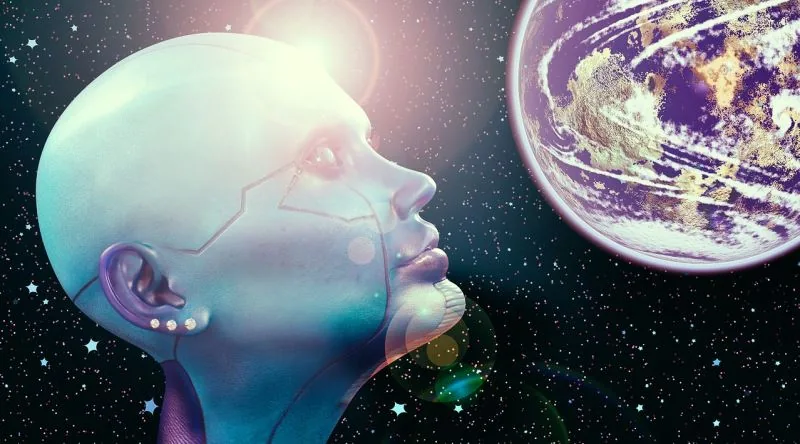
The Boltzmann brain is a startling thought experiment in cosmology: in an infinitely old universe, random collisions of atoms could eventually assemble a fully conscious, self-aware brain, complete with false memories, entirely by chance. Named after physicist Ludwig Boltzmann, this idea challenges our most basic assumptions about reality, memory, and why we trust that the world around us is real. It's a paradox that can make you question whether you are a person living a life, or just a fleeting flicker of organized matter in a vast, chaotic cosmos.
The Boltzmann brain hypothesis suggests that in a universe that lasts forever, random particle fluctuations are far more likely to produce a lone, momentary conscious brain with false memories than to produce an entire structured universe like ours. This creates a paradox because it implies we are statistically more likely to be those fleeting brains than real observers in a real universe.
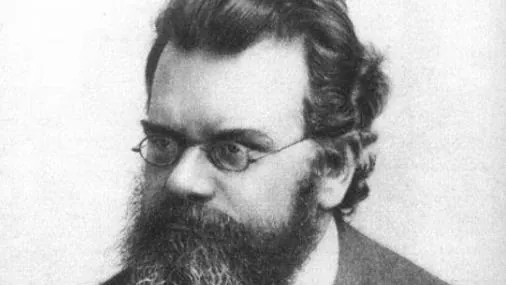
- Ludwig Boltzmann first proposed the underlying idea as a way to explain why we see order in the universe, using statistical mechanics.
- The paradox states that a single brain is vastly simpler and more probable to form spontaneously than a full universe with galaxies, stars, and planets.
- Some interpretations suggest that if the universe is eternal and infinite, such brains should vastly outnumber normal observers, making our current experience statistically improbable.
- The hypothesis has major implications for cosmology, forcing physicists to reconsider theories of eternal inflation and the nature of time.
The Dice That Never Stop Rolling
Imagine holding a single die in your palm. Roll it once, twice, a hundred times, and eventually a six will land face up. That is not luck, that is just time doing its patient work. Now picture a million dice scattered across a table. Roll them all, and somewhere down the line, in some far-off roll, every single one will show a six at the same moment. It might take longer than the universe has existed, but given infinite time, it becomes not a possibility but a certainty.
Ludwig Boltzmann, a physicist working in the 1800s, took this dice logic and applied it to atoms. His core idea was simple: systems drift toward probability over time. Randomness increases, and at the peak of that randomness, atoms constantly assemble and disassemble in every conceivable pattern. Given enough time, those random arrangements will eventually produce something meaningful. A fridge, a coffee cup, a pine tree, or even a working human brain.
This is the essence of the Boltzmann brain hypothesis. The term itself was coined by cosmologists Andreas Albrecht and Lorenzo Sorbo, building on an earlier thought by physicist Arthur Eddington, who suggested that a random observer like us could exist without needing an entire universe to produce one. The brain that forms this way, fully aware and complete, is what we now call a Boltzmann brain. It would have memories, a personality, the feeling of having lived a life. None of that would be real. The atoms would have just happened to fall into a pattern that made it all feel real.
Who Named the Brain That Thinks Without a Body?
The name "Boltzmann brain" did not come from Ludwig Boltzmann himself. Two physicists, Andreas Albrecht and Lorenzo Sorbo, coined the term in a 2004 paper posted on the arXiv preprint server. They were building on an idea that British astrophysicist Arthur Eddington had floated decades earlier, about a random observer existing without needing an entire universe to back them up.
Eddington's speculation was striking in its simplicity. He suggested that a fully formed, conscious brain could pop into existence as a random fluctuation, no planet, no stars, no evolutionary history required. Just the brain, floating in whatever chaos surrounded it, complete with the illusion of a life it never lived.
Albrecht and Sorbo took that strange thought experiment, gave it a name, and pushed it further. In their 2004 paper, they explored what it would mean for cosmology if such self-assembled brains were more likely to exist than the orderly universe we observe. Their work turned Eddington's philosophical musing into a concrete problem that cosmologists still wrestle with today.
The irony is that Boltzmann himself never used the term. The man who spent his career in the 1800s developing statistical mechanics, the physics of how atoms behave in bulk, had proposed the underlying logic about random fluctuations. But the catchy name, the one that now appears in physics papers and philosophy textbooks alike, belongs to Albrecht and Sorbo, two researchers who connected the dots between thermodynamics and the strangest possible version of a thinking being.
The Mediocrity Principle: Why a Brain Is More Likely Than a Universe
Here is the uncomfortable heart of the Boltzmann brain problem: if random atomic jostling can produce anything given enough time, then a single working brain is vastly more probable than an entire universe. The reasoning rests on the mediocrity principle, the idea that we should expect to be typical observers rather than special ones. And by that logic, you are far more likely to be a fleeting, self-aware flicker of particles than a person with a real past.
Think about dice for a moment. Roll one die and eventually a six will come up. Roll a million dice and, with infinite time, every single one will land on six at the same moment. It's not likely. It's not even close to likely. But it's possible, and with infinite time, possible becomes inevitable.
Ludwig Boltzmann applied this same thinking to atoms. He argued that in a universe with endless time, random fluctuations would eventually assemble something meaningful: a refrigerator, a pine tree, a functioning human brain. These spontaneous arrangements would appear, persist briefly, and dissolve back into chaos. Order is fleeting, but disorder lasts forever.
Here is where the mediocrity principle bites. A brain is not an ordinary object in the universe. But in total disorder, order appears as a temporary accident. And the more complex something is, the less likely it is to assemble itself by chance. A whole universe, with all its galaxies, laws, and planets, is far more complicated than a single brain. So if a Boltzmann universe can pop into existence, then a Boltzmann brain is practically mundane by comparison.
This is the paradox that keeps cosmologists up at night. Some interpretations suggest that if the universe is infinite, the probability of a Boltzmann brain forming approaches certainty, but this remains unresolved due to the measure problem in cosmology, a technical puzzle about how to count probabilities in an infinite space.
What makes this so unsettling is what it implies about you. Your memories, your personality, your sense of having lived a life, all of it could be a random accident of atoms. If physicalism holds, a Boltzmann brain would already have memories, a personality, and a sense of self, even though it never actually lived. You would believe you had a childhood, a morning coffee, a commute, none of which ever happened.
Boltzmann came up with his ideas before the Big Bang was confirmed, when most people still believed the universe was eternal and unchanging. Now we know the universe had a beginning, and that changes the odds. But the question of whether you are a Boltzmann brain remains open, and it is a question that refuses to go away.
Jupiter Brains, Simulated Minds, and the Big Bang's Shadow
Once you accept that random atomic jumbles can eventually produce a working human brain, the thought experiments start multiplying fast. One popular variation imagines a Jupiter brain, a computing entity the size of an entire planet, spontaneously assembling itself from stray particles. As the story goes, such a colossal structure might even be sophisticated enough to simulate every human brain function that has ever existed, all at once.
Some speculative thinkers push the idea even further. They suggest that after the universe finally winds down into complete disorder, a supreme being could randomly emerge from the chaos and fashion an entirely new cosmos. Others wonder whether all the atoms in existence might one day reassemble themselves into a fresh Big Bang, kicking off another cycle of creation. These are wild scenarios, but they follow logically from Boltzmann's original reasoning.
If physicalism holds true, meaning that consciousness is purely a product of physical matter, then a spontaneously formed brain would come complete with memories, a personality, and a sense of having lived a full life. It would feel as though it had grown up, loved, lost, and learned, even though none of that ever actually happened to it. The brain would simply contain those experiences as part of its random arrangement.
You may have seen recent headlines claiming that scientists proved we are living in a simulation. Those reports are often linked to this Boltzmann brain reasoning, though the connection is debated and rests on a different scientific foundation altogether.
It helps to remember the historical context. Ludwig Boltzmann developed his hypotheses before the Big Bang theory gained strong evidence. People in his era generally assumed the universe was eternal and infinite, stretching backward and forward without beginning or end. That assumption shaped how Boltzmann thought about probability and random fluctuations.
Today we know better. Atoms constantly come into and go out of existence, so the total number of atoms in the universe has not stayed constant since the beginning. The cosmos has a starting point, a history, and a trajectory, which changes the odds of any random brain forming at all.
Frequently asked questions
What is a Boltzmann brain?
A Boltzmann brain is a fully functional human brain that spontaneously assembles itself from random atomic fluctuations, complete with memories, personality, and self-awareness, without ever having lived a life. It is a thought experiment in physics, named after the Austrian physicist Ludwig Boltzmann, that emerged from his work on statistical mechanics in the late 19th century.
How does the Boltzmann brain hypothesis work?
The hypothesis works through probability and infinite time. Imagine rolling dice: with enough rolls, even a million dice will eventually all land on six. Similarly, if atoms randomly rearrange for eternity, they will eventually form a meaningful object. A working human brain is one possible arrangement, and with infinite time, its formation becomes not just possible but inevitable.
Who came up with the Boltzmann brain idea?
The term "Boltzmann brain" was coined in 2004 by physicists Andreas Albrecht and Lorenzo Sorbo. However, the underlying idea traces back to Arthur Eddington, who suggested that a random observer like us could exist without requiring an entire universe to form. Ludwig Boltzmann's own statistical mechanics work laid the foundation, though he never used the term himself.
Why is the Boltzmann brain paradoxical?
The paradox lies in what the hypothesis implies about our own existence. If random Boltzmann brains are more likely to form than a structured universe with planets and evolution, then statistically, most conscious observers in an infinite universe would be these spontaneous brains, not beings like us with histories. This creates a troubling conclusion: we might be more likely to be Boltzmann brains than products of a real universe.
What is the mediocrity principle in cosmology?
The mediocrity principle states that we should assume we are typical observers, not special ones. Applied to the Boltzmann brain, it means that if random brains are more common than evolved ones, then we should expect to be random brains. Since a full universe is far more complex than a single brain, the universe forming naturally is less probable than a brain assembling randomly.
What is a Jupiter brain?
A Jupiter brain is a hypothetical megastructure the size of a planet, specifically Jupiter, built to serve as an enormous computer. In Boltzmann brain discussions, some theorists suggest such a massive computing entity could randomly form and simulate the consciousness of every human who ever lived, making it another possible outcome of random atomic arrangements.
Did Ludwig Boltzmann believe in the Boltzmann brain?
No, Ludwig Boltzmann never proposed or believed in what we now call the Boltzmann brain. He developed his statistical mechanics theories before the Big Bang was even hypothesized. The concept was named after him decades later by Albrecht and Sorbo, building on Eddington's observations. Boltzmann himself was working on entropy and why the universe appears ordered, not on spontaneous brains. Editorial note: Some details of the underlying physics remain theoretical and unconfirmed, and any such speculative elements are presented as hypotheses rather than established facts.
Got a take on this? Add your voice to the conversation below →
No comments yet. Be the first.