Bluey: Why the Australian Puppy Show Conquers Parents
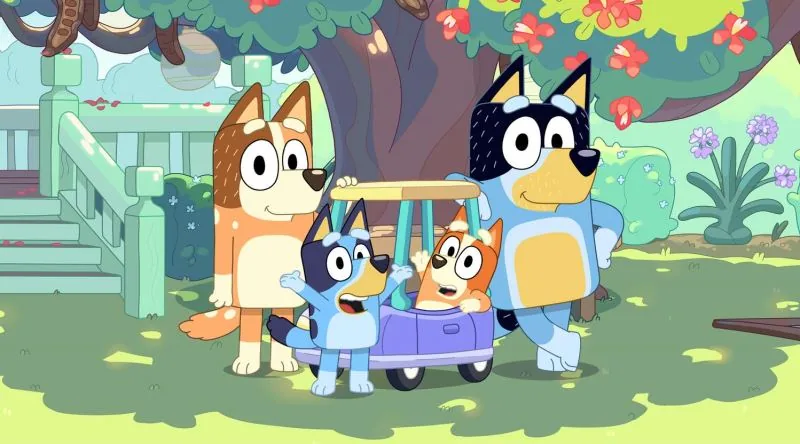
Bluey, the Australian animated series about a blue heeler puppy and her family, became a global phenomenon after its 2018 debut on ABC Kids in Australia. Parents who sat down to watch with their children found something unexpected: a seven-minute cartoon that took their lives seriously. The show treats games of keepy-uppy and grannies as matters of real consequence, and it treats tired, playful, imperfect parents the same way. That respect, aimed squarely at adults without ever excluding kids, is why so many families keep coming back.
Bluey is an Australian animated series that premiered in 2018 on ABC Kids. It follows a blue heeler puppy, her sister Bingo, and parents Bandit and Chilli through short episodes about family play. Its blend of humor, realistic parenting and emotional depth made it a worldwide hit with children and adults alike.
- Bluey premiered in 2018 on ABC Kids in Australia.
- The series centers on Bluey, her younger sister Bingo, and their parents Bandit and Chilli.
- Episodes run about seven minutes, a compact format that has helped the show travel to international audiences.
- Episodes such as Sleepytime, Baby Race and Camping are frequently cited by viewers for their emotional range.
- The show has won international awards and expanded into stage shows, books and merchandise.
A Six-Year-Old Blue Heeler and a Very Ordinary Family
Bluey is an Australian animated series that premiered on ABC Kids in 2018. At its center is Bluey herself, a six-year-old blue Heeler puppy with boundless energy and a vivid imagination that turns a living room rug into anything at all. Around her sits the rest of the Heeler family: her little sister Bingo, her father Bandit, and her mother Chilli. Four dogs, one house, and a whole lot of ordinary days.
Here is the thing that catches people off guard. There are no exploding spaceships. No dragon chases, no villains hatching schemes. The show goes to the park. It goes grocery shopping. It sits through a birthday party, gets through a day of being sick, works out how to share a toy, loses a game, and gets disappointed when things don't go the way a small puppy hoped. That's the material. And somehow it is riveting.
Watch an episode and you'll notice the rhythm: the stories stay small on purpose. A game of make-believe becomes the entire story. A trip to the grocery store turns into a lesson nobody announced out loud. Bluey and Bingo bicker, make up, and try again, and Bandit and Chilli are right there in the middle of it, tired and imperfect and trying.
The show isn't only for kids, either. Parents find themselves watching a little more closely than they expected, catching reflections of their own mornings in the kitchen. Small stories, ordinary family, and a six-year-old Heeler who makes all of it feel worth a second look.
Why Bluey Works: Sharp Scripts, Seven Minutes, and a Father Who Gets Tired
Strip away the pastel colors and the talking dogs, and the engine behind Bluey is something almost suspiciously old-fashioned: a genuinely well-written script. The show, which premiered on ABC Kids in 2018, never talks down to the child in the room and never bores the adult sitting next to them. Plenty of episodes leave a parent staring at the credits, thinking about something they hadn't quite put into words before.
Then there's the rhythm. A standard Bluey episode runs roughly six to seven minutes, a few specials a little longer, and that tight window does a lot of quiet work. There's no room for padding, no filler subplot, no scene that exists just to burn time. The message lands and the credits roll before anyone's attention starts to drift. It is a masterclass in pacing, knowing exactly how much story a young viewer can absorb.
The Parents Are Not Superheroes
Here's where Bluey separates itself from most children's television. Bandit and Chilli, the parents of Bluey and her little sister Bingo, are not the all-knowing grown-ups who always have the answer. They get tired. They mess up. They carry worries into the room with them. Bandit in particular has become a touchstone for what modern fatherhood can look like on screen: a dad who plays hard, loses his patience, apologizes, and tries again. When a parent on the sofa sees a cartoon parent fumble and recover, something clicks. The show works as a mirror as much as a cartoon.
Simple, Warm, and Carried by the Music
The drawings are deliberately uncomplicated, soft edges and flat warm colors, and that restraint is the point. Nothing on screen competes with the feeling of the scene. The music, meanwhile, often does the emotional lifting all by itself, swelling under a quiet moment and telling you what to feel before a single word is spoken. It's the kind of craft you notice only when it's gone.
And the subject matter stays stubbornly ordinary: a trip to the park, a grocery run, a birthday party, being sick, sharing, losing, being disappointed. No exploding spaceships, no dragon chases. Just everyday life, handled with enough care that it turns into something worth watching twice.
The Mirror Effect: Kids Learn, Parents See Themselves
Watch a Bluey episode with a child in the room and something quietly strange happens. The kid is laughing at Bingo, and the grown-up is suddenly staring at their own reflection. In episode after episode, the little events on screen help a child grow emotionally and socially, and at the very same moment they hold up a mirror to the mother and father on the couch.
That double job is the real trick of the show. The Heeler family lives out ordinary, teachable moments: a trip to the park, a grocery run, a birthday party, getting sick, sharing a toy, losing a game, the sting of disappointment. Nothing explodes. No dragons get chased. And yet both the child and the parent are learning at the same instant, which is a rare thing for a seven-minute cartoon to pull off.
Part of why the mirror works is that Bandit and Chilli are not the all-knowing figures parents so often get on television. They get tired. They make mistakes. They carry worries into the room. Bandit in particular has become a touchstone for modern fatherhood, a dad who plays hard and fumbles and keeps going. A parent watching does not see a lecture. They see someone a lot like themselves, trying.
The writers never make the lesson loud. Take Sleepytime, a dreamlike journey through a child's bedtime routine, where a mother's love is carried almost entirely by music and image. Or Baby Race, which turns the constant comparisons mothers make into a story about confidence and forgiving yourself. Or Camping, where a childhood friendship and a goodbye that was only meant to be temporary land with more weight than most adult dramas manage. The child feels the story. The parent feels the story. Neither gets talked down to.
So the next time you sit down for what looks like a harmless seven-minute cartoon, keep one eye on the kid and one on yourself. That is where Bluey does its quietest work.
Three Episodes That Break People: Sleepytime, Baby Race, Camping
If you want to understand why Bluey gets under adults' skin, skip the hype and watch three specific episodes: Sleepytime, Baby Race and Camping. All three are genuine episodes of the Australian series that premiered on ABC Kids in 2018, and each one turns an ordinary moment into something that lands far harder than a seven-minute cartoon has any right to.
Start with Sleepytime. On its surface it is just a child's bedtime routine, but the whole thing unfolds inside her imagination, and the mother's love is carried through symbol and image rather than a single speech. The episode has built a reputation that people sum up in one word: legendary.
Baby Race goes after something most parents feel but rarely say out loud. It is a superb, funny, quietly devastating look at the constant comparisons mothers make, at self-confidence, and at the harder work of forgiving yourself. Nobody wins a medal here. That is the point.
Camping sits with childhood friendship and the strange emotional weight of goodbyes that were only ever meant to be temporary. A childhood friend, a promise to meet again, and the ache that lingers after a goodbye.
| Episode | What it is really about |
|---|---|
| Sleepytime | A child's bedtime routine unfolding in her imagination, and a symbolic portrayal of a mother's love |
| Baby Race | Motherhood comparisons, self-confidence, and self-forgiveness |
| Camping | Childhood friendships and the emotional weight of goodbyes that were only meant to be temporary |
Watch all three in a row and the pattern is obvious. These are not plots built on spaceships or dragon chases. They are built on the stuff of an actual Tuesday, and that is exactly what makes them hit.
Bluey Is Not Just for Kids, and the Seven-Minute Trap
Bluey is not only for children. It is a small but powerful masterpiece about family, growing up, dreaming, losing, and getting up to try again. That is the quiet secret behind a show whose episodes run about seven minutes each, and it is why the audience stretches well past the preschool crowd.
So here is the practical advice, and it cuts both ways. If you have a child, watch it together. If you don't, watch it for yourself anyway. There is no membership card to show at the door. The Heeler family lives in an ordinary house, goes to an ordinary park, and deals with ordinary things, and somehow that is enough to reach adults who never expected a cartoon to get under their skin.
Then comes the trap, and it is a gentle one. One day you say, out loud, with total confidence, "what could possibly happen in a seven-minute cartoon?" The next day you find yourself in emotional collapse on the couch, undone by a story about a kid learning to ride a bike or a mother watching her child grow. Seven minutes. That is all it takes. You go in smug and you come out wiping your eyes, wondering who let a children's show do that to you.
That is the whole resolution, really. You do not graduate from Bluey. You just stop pretending you are above it.
Frequently asked questions
What is Bluey about?
Bluey is an Australian animated series that premiered on ABC Kids in 2018. It follows a six-year-old blue Heeler puppy named Bluey and her family through small, ordinary adventures: a trip to the park, a grocery run, a birthday party, a sick day. No exploding spaceships, no dragon chases. Just everyday life, and the lessons hiding inside it.
Who are the main characters?
The Heeler family is the whole show. Bluey is the six-year-old blue Heeler at the center. Her little sister Bingo tags along on nearly every game. Their father is Bandit and their mother is Chilli, and the four of them carry the series through playgrounds, kitchens and backyards rather than far-off worlds.
Why are episodes only about seven minutes long?
Standard episodes run roughly six to seven minutes, and that brevity is the engine of the show. A short episode lands its message without dragging, so kids stay locked in and parents never feel talked down to. Seven minutes turns out to be exactly enough room for one small story and one honest feeling.
How does Bluey portray modern fatherhood?
Through Bandit. He is not the all-knowing cartoon dad who always has the answer. He makes mistakes, he gets tired, he worries, and the show lets him feel all of it. That honesty is why Bandit is often held up as a strong example of modern fatherhood: a parent who is present and imperfect at the same time.
Which episodes are recommended for emotional depth?
Three stand out. Sleepytime turns a child's bedtime routine into a dreamlike meditation on a mother's love. Baby Race takes on the comparisons parents make between their kids, and the harder work of self-forgiveness. Camping explores childhood friendship and the quiet ache of temporary goodbyes.
Did Bluey start in 2018 and become a global hit?
Yes. Bluey began airing in 2018, and it has grown into one of the most popular animated series of recent years. The reach is unusual for a show built on such small domestic moments, yet that is precisely what travels: a family, a backyard, and stories that feel like your own.
How does Bluey help children's social-emotional development?
Many episodes quietly model the hard stuff: sharing, losing, being disappointed, trying again. Kids watch Bluey and Bingo work through those moments, and something clicks. Meanwhile the parents watching alongside get a mirror held up to their own reactions. Both generations end up learning in the same seven minutes. Editorial note: Any details that remain unconfirmed are presented as such, and claims about the show's reception reflect widely reported accounts rather than verified statistics.
Got a take on this? Add your voice to the conversation below →
No comments yet. Be the first.