Puritanism: The Faith Behind Salem's Witch Trials
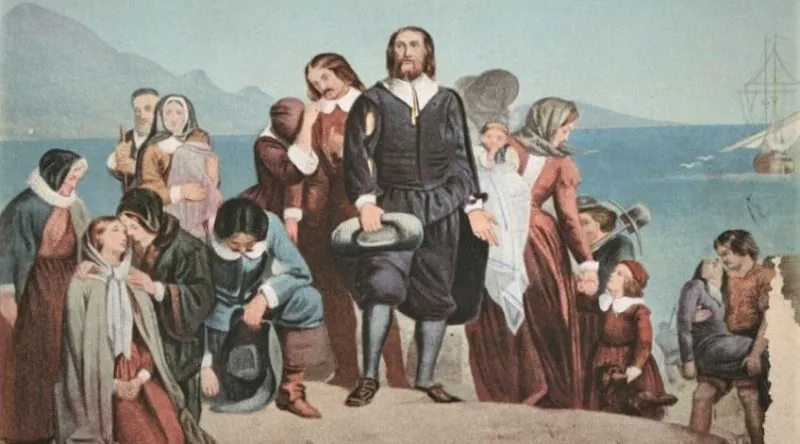
Puritanism was the strict Protestant movement that shaped early New England, and in 1692 it formed the backdrop to the Salem witch trials in Massachusetts. The story begins with families who crossed the Atlantic seeking freedom to worship as they saw fit. It continues in small wooden meeting houses where sermons lasted for hours and every neighbor was watched. And it ends with a legend about an enslaved woman named Tituba, whose name still echoes through American history.
Puritanism was a reform-minded Protestant faith that drove the Pilgrims and Puritans to New England in the 1620s and 1630s. Its intense focus on sin, discipline, and community purity helped set the stage for the Salem witch trials of 1692 in Massachusetts, where Tituba, an enslaved woman in the Parris household, was among the first accused.
- The Mayflower carried Separatist Pilgrims who wanted to worship outside the Church of England, and passengers first made landfall at Provincetown on Cape Cod before the settlement at Plymouth took shape.
- A larger wave of Puritans arrived in the 1630s, founding the Massachusetts Bay Colony around Boston.
- Puritans believed in predestination and a community bound by covenant to live according to God's law.
- The Salem witch trials of 1692 ended with nineteen people hanged and Giles Corey pressed to death, with Tituba among the first to be accused.
- The Bible Belt remains a recognized region of the American South, and some scholars see echoes of Puritanism there, though the connection is debated.
What Is Puritanism, and Why Did It Send People Across an Ocean?
Puritanism was a reform movement that took shape in England out of frustration with the Anglican Church, and its followers wanted a stripped-down, sincere faith. The name itself comes from the words "pure" and "purify," rooted in the Latin purus. These believers wanted to scrub the church clean of the leftover Catholic trappings they felt had crept back in.
Picture Salem, Massachusetts, and the trials that put 19 people to death. That grim chapter is the doorway most people walk through to reach this story. But the roots run back across the Atlantic, to a group of English Protestants who thought worship had drifted far from where it belonged.
Their core conviction was simple and stubborn: faith should be a private matter between a person and God. A church with too much say in the middle of that relationship, they argued, turned devotion into performance. So they pushed for something more honest, and the push earned them a label. Puritanism became the name for that hunger to purify.
That hunger eventually pointed west. Seeking religious freedom, they left England and crossed to America, and out of those settlements came the region known as New England. One honest footnote: the "freedom" they were after was freedom to practice their own strict version of the faith, not a broad tolerance for everyone else's.
A movement born from a wish to simplify faith ended up shaping the map of a continent.
And here is where the popular picture gets muddled. You have probably heard that Puritans banned playing, laughing and any kind of fun, or that they believed they were born only to suffer and be cleansed by pain. Those are caricatures. Their theology centered on predestination, covenant and sanctification, not on a life sentence of misery. The real story is stranger and more human than the cartoon.
The Salem trials themselves are usually traced, in the popular telling, to a woman named Tituba who taught three girls fortune-telling games, with an egg-white divination gone wrong and frightened girls pointing fingers to dodge punishment. Treat that version with care. Tituba does figure in the origins, but the egg-white detail is a legend with thin documentary backing, and the motive is oversimplified. What we can say plainly is that the trials ended with 19 people executed.
The Caricature: Did Puritans Really Ban Fun?
No, the Puritans did not ban fun. The popular image of a dour people who thought they were born only to suffer and who outlawed playing, laughing and enjoying life is a caricature, not the historical record. Puritan theology actually revolved around predestination, the covenant, and sanctification, a far cry from a religion built on misery for its own sake.
You have probably met this version of Puritanism somewhere: a grim figure in black, scowling at anyone who smiles. It is a convenient shorthand, and it is wrong. The claim that Puritans believed they were born to suffer, and that suffering cleansed them of sin, flips their actual beliefs almost upside down. Their God was not a celestial punisher keeping score of every laugh. He was a sovereign who had already decided the eternal fate of every soul before that soul drew breath, and the believer's life was spent not in earning relief through pain but in watching for signs of grace.
So where does the fun-hating reputation come from? It grew out of real restrictions, then got stretched into a stereotype. Puritans did regulate certain activities, especially on the Sabbath, and they frowned on excess. But a blanket ban on play, laughter and enjoyment is an exaggeration that hardened into myth. They were serious people, not joyless ones, and the difference matters.
It helps to remember what the word itself means. That instinct for a cleaner, more sincere faith is the real engine of the movement, not a craving for gloom. The caricature is easier to repeat than the theology, which is exactly why it has lasted so long.
The Salem Witch Trials and the Tituba Egg Story
The Salem witch trials, held in colonial Massachusetts in 1692, ended with nineteen people hanged, Giles Corey pressed to death, and others dying in prison. That death toll is solid history. The story of how it all started, though, rests on shakier ground, and the most famous version of that origin is a legend.
Here is the tale as it usually gets told. Tituba, described in the popular account as a nanny, taught three girls fortune-telling games to keep them entertained. One day the girls were playing at reading the future in egg whites, and the egg cup broke. Terrified of what their parents would say about the game, they took a shortcut: they accused other people of witchcraft. According to the original account, that fear of a scolding is what set the accusations in motion.
The egg story is one of many urban legends about Tituba. Different sources give different explanations for the actions that set Salem off.
That caveat matters. The egg-white divination episode has weak documentary support, and calling Tituba a simple nanny flattens a more complicated figure. Treat it as reported legend, not settled fact. The Puritanism that shaped Salem gives the story its gravity, but the egg cup is where the record gets thin.
The Mayflower, Plymouth Rock, and the Thanksgiving Story
The popular version says the first Puritan group packed onto the Mayflower and stepped off onto Plymouth Rock, celebrated as the first American soil they touched. That version is shaky. The Mayflower actually carried Separatist Pilgrims rather than the broader Puritan movement, and by most accounts the passengers first made landfall at Provincetown on Cape Cod before any settlement at Plymouth. The rock itself is a later piece of stagecraft, a symbol polished smooth by retelling.
What holds up is the hardship that followed. The first winter on that New England coast was brutal, and the settlers faced real starvation as food ran out and the cold set in. Wampanoag people stepped in, sharing food and teaching the newcomers how to work the land and what would grow in it. That rescue is the grain of truth under the Thanksgiving holiday, though the story has been dressed up considerably over the years.
So the migration beat runs like this: a people fed up with the Church of England, chasing the freedom to worship their own stripped-down way, crossing an ocean and landing on a shore they would rename New England. The landing story they told about themselves was already a little myth in the making. The hunger, and the help that answered it, were not.
What Came After: Land, Genocide, and the Bible Belt
The welcome did not last. The same Puritan settlers who had been taught how to plant corn by Wampanoag people soon turned on their hosts. Over the following decades they took Native land through lopsided deals, through force, and through outright seizure, and the conflicts that followed were savage on both sides. Whether the full campaign against Native peoples should be called genocide is genuinely debated by historians rather than settled, so treat that word with care. What is not in dispute is the result: dispossession on a vast scale.
One observer's personal note makes the aftermath feel less abstract. A writer who spent years traveling around the United States said he saw families of every color in restaurants, in shopping malls, in ordinary public places, yet never once came across a Native American family in those settings. Only the occasional lone figure, going quietly about his business. That is one person's impression, not a statistic, but it lands harder than any table of numbers.
And the strict faith did not simply fade. It left a long shadow. The American South still carries the name Bible Belt, a region known for devout, socially conservative Protestant Christianity, though the area is far more mixed inside than the phrase suggests. Some scholars see echoes of Puritanism in that world, and others are less sure, so hold the link loosely.
As for the old country, the Church of England did not collapse into reading gossip columns aloud at Sunday services, whatever the joke version says. It still opens the Bible in its liturgies. The contrast the story draws is looser than that. Puritanism crossed an ocean in search of purity, and the culture it planted grew into something far more complicated than its founders ever intended.
Frequently asked questions
What is Puritanism and what did Puritans believe?
Puritanism was an English Protestant movement that grew out of frustration with the Church of England. Puritans wanted to "purify" the church of what they saw as leftover Catholic ceremony, and the name itself comes from pure and purify . They held that faith should live directly between God and the individual, and that a church with too much say in that relationship made worship feel hollow and insincere.
Why did the Puritans leave England?
They left in search of religious freedom. Unhappy with the Church of England's direction, many Puritans crossed the Atlantic and settled along the eastern coast of North America, a region they called New England. Their exodus suited the crown too, which was glad to see these strict religious voices go.
How did Puritanism lead to the Salem witch trials?
A worldview this strict left little room for the unexplainable, and Salem's panic about witchcraft grew inside that tight, watchful atmosphere. The trials ended in the executions of 19 people. According to a popular but contested account, the trouble began with Tituba, an enslaved woman in the household, who may have taught three girls fortune-telling games.
Who was Tituba and what was her role?
In the popular account, Tituba was the woman whose fortune-telling games with three girls set Salem alight. Her exact role is reported and contested. Different sources describe her actions in different ways, so treat the tidy version with care.
Did the egg story really start the Salem witch trials?
The famous version says the girls were reading fortunes in egg white when the cup broke, and that fear of parental punishment pushed them to cry witchcraft instead. That egg tale is a reported legend, one of many city myths that have grown up around Tituba, not a settled fact.
What was the Mayflower voyage and Plymouth Rock landing?
The first group sailed on the Mayflower, but contrary to the popular version, they did not step first onto Plymouth Rock. Passengers made landfall at Provincetown on Cape Cod before the colony at Plymouth took shape.
How did Native Americans help the Pilgrims?
The settlers starved through a brutal first winter. Wampanoag people took pity on them, shared food, and showed them how to work the unfamiliar soil. That help is the traditional basis for the Thanksgiving Americans still celebrate, though the story is often romanticized.
What is the Bible Belt and its connection to Puritanism?
The Bible Belt is the region of the United States still dominated by devout, socially conservative Christians. Some scholars see the long shadow of Puritan settlement in it, though that link is debated. It remains a recognized, if internally diverse, part of American religious life. Editorial note: Details that remain unconfirmed, including specifics of Tituba's background and some accounts of the trials, are presented here as hedged and open to historical debate.
Got a take on this? Add your voice to the conversation below →
No comments yet. Be the first.