Block Universe Theory: Why Time Is an Illusion
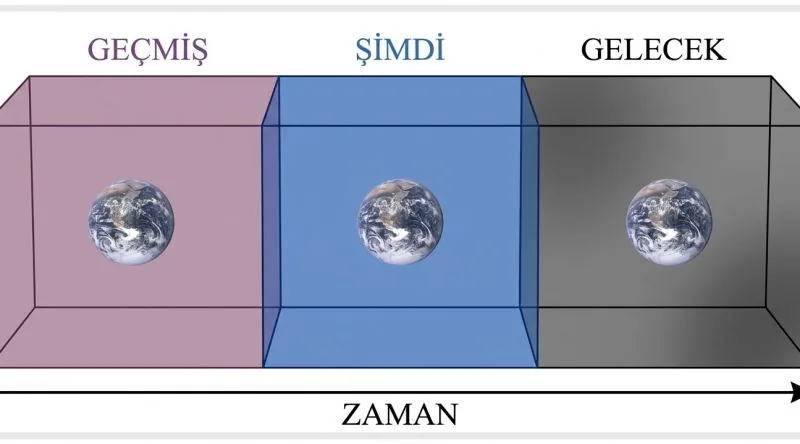
The block universe theory, drawn directly from Einstein's relativity, holds that past, present, and future all exist simultaneously, making time an illusion of human perception. Rooted in the physics of spacetime, this idea challenges how we think about free will and reality. It is a strange, humbling picture of the cosmos, one that can make you feel like a tiny passenger on a fixed track, yet it also offers a profound sense of order beneath the chaos of daily life.
The block universe theory says all moments in time coexist as a single, static block of spacetime. According to Einstein's relativity, the distinction between past, present, and future is not a fundamental feature of the universe, but a subjective experience shaped by motion and gravity. We simply move through this block, perceiving only a slice of it.
- The block universe theory emerges from Einstein's theories of special and general relativity.
- In this view, the present moment is not special; it is just the point in spacetime where your consciousness happens to be located.
- The Andromeda paradox, often attributed to physicist Roger Penrose, illustrates how two observers moving at different speeds can disagree on whether a distant event has already happened.
- Gravity slows time, a fact confirmed by GPS satellites, which must correct for time dilation to provide accurate location data on Earth.
- If the future already exists in the block universe, the question of whether free will is an illusion becomes a central philosophical puzzle for physicists and thinkers.
The Block Universe Theory: When Time Stops Flowing
Here is the short version: the block universe theory says the past, present, and future all exist at once, stacked together in a four-dimensional block of spacetime. Time does not flow like a river. It just sits there, like a frozen sculpture, and our sense of time moving forward is an illusion. Every moment you have ever lived, and every moment you ever will live, is already there, equally real.
This is not some fringe philosophy. According to many physicists, it is a direct consequence of Einstein's relativity, and it is one of the most mind-bending ideas modern physics has produced. Einstein showed that light speed is the universe's hard limit, and that space and time cannot be separated. They are woven together into a single fabric. And once you accept that, the old picture of time as a universal clock ticking everywhere at once falls apart completely.
Here is where it gets strange. Because time is tied to motion, two people moving differently do not share the same "now" for distant events. Imagine sitting on a bench in Çorum, Turkey. Someone walks past you at an easy strolling pace. You are both in nearly the same spot in space, but your motion states differ. And that tiny difference changes what "right now" means for each of you across the universe.
Now point that difference at the Andromeda galaxy, which sits about 2.5 million light-years away. That enormous distance amplifies the effect. The person walking past you, heading in Andromeda's direction, has a "now" that is shifted days ahead of yours. Not minutes. Days. While you sit there, an alien council in Andromeda might still be debating whether to launch a mission toward Earth. In the walker's "now," that fleet has already departed. One person's future is another person's past.
And that is the core of the block universe theory. If an event that has not happened for you is already real for someone else, then it is not really "in the future" at all. It is already written. It is sitting there in the spacetime block, waiting. The moment Fatih Sultan Mehmet entered Istanbul in 1453, the moment you are reading this sentence, and the moment our solar system finally goes dark billions of years from now, they all exist simultaneously. We just move through them one at a time, like frames on a film reel, and mistake our sequential viewing for the way time actually works.
The Andromeda Paradox: Your "Now" vs. a Stranger's "Now"
Picture yourself on a park bench in Çorum, Turkey. The afternoon is quiet, and you are simply sitting there, watching the world go by. Then someone walks past you at a slow, unhurried pace. That is it. That is all it takes to break the universe apart.
Because you and that walker are moving at different velocities, your "now" for distant events is no longer the same. The two of you might be standing in the exact same spot, but your simultaneity, your slice of what counts as happening right now, has already split. For most everyday situations, this difference is so tiny that it is meaningless. But aim that difference at something far enough away, and the numbers start to get wild.
Consider the Andromeda galaxy, sitting about 2.5 million light-years from Earth. That walker stepping past your bench is, in a very real mathematical sense, shifting their "now" in Andromeda by days. Not hours. Not minutes. Days. In your "now," an alien council on Andromeda might still be debating whether to launch a fleet toward Earth. In the walker's "now," that fleet has already departed. The same event is future for you and past for them, simultaneously.
This is the Andromeda paradox, a thought experiment often attributed to physicist Roger Penrose, and it cuts straight to the heart of the block universe theory. The paradox is not about what anyone sees through a telescope. Both of you would look at Andromeda and see the same ancient light, since it takes 2.5 million years for that light to reach Earth. The paradox is about what is actually happening in universal coordinates at this precise instant, regardless of what light reveals. And mathematically, the walker's universe contains alien ships already in flight, while yours does not.
So what does that mean? If an event can be in your future but already in someone else's past, then that event is not being created out of nothing. It is already there, waiting in the fabric of spacetime. The future is not unwritten. It is fixed, sitting in the four-dimensional block alongside everything that has ever happened and everything that ever will.
Spacetime, in this view, is a frozen block. Three dimensions of space and one of time, all coexisting at once. Fatih Sultan Mehmet entering Istanbul in 1453, you reading these words right now, the final moment of the solar system billions of years from now, all of it exists simultaneously within that block. We just happen to be conscious of one slice at a time, like frames on a film reel, and we mistake that sequential playback for the flow of time itself.
Gravity Slows Time: From GPS to Interstellar
Einstein tore up Newton's old picture of gravity as an invisible rope pulling objects together and replaced it with something far stranger: a flexible, four-dimensional fabric called spacetime. Massive objects like Earth or a black hole press down on this fabric, creating a depression, much like a bowling ball sinking into a trampoline. The heavier the object, the deeper the well, and the more dramatically time itself gets warped.
Here is the part that still makes physicists smile: time runs slower at the bottom of that gravitational well than it does higher up. You do not feel it. Your watch ticks at a perfectly normal pace no matter where you stand. But compare your clock with someone in weaker gravity, and the difference becomes very real, very measurable.
You are living inside this effect right now, every single day. GPS satellites orbit roughly 20,000 kilometers above Earth, far enough that our planet's gravity pulls on them less than it pulls on you at the surface. Because of that weaker pull, their atomic clocks tick about 45 microseconds faster each day than clocks on the ground. That is general relativity at work.
But there is a second twist. The satellites are moving fast, and special relativity says high speed slows time down. That effect shaves off about 7 microseconds per day. The two effects stack together, leaving the satellite clocks running 38 microseconds ahead of yours every single day. If the software did not apply Einstein's corrections daily, your map app would drift off by roughly 10 kilometers within a single day, turning turn-by-turn navigation into a guessing game.
So when Hollywood wanted to show time dilation on the big screen, they did not invent anything. In Christopher Nolan's 2014 film Interstellar, the crew descends to Miller's planet, a water-covered world orbiting the supermassive black hole Gargantua. One hour on that planet's surface equals seven years back on Earth. That ratio sounds like pure science fiction, but it is a physical possibility under general relativity for a planet in such an extreme gravitational environment.
The same logic that keeps your phone's maps accurate is the logic that lets a fictional astronaut age seven years in a single hour. Gravity bends spacetime, and where spacetime bends, time follows. The block universe theory holds all of it, every moment from the Big Bang to the last star's death, frozen together in one four-dimensional structure. But gravity and motion decide which slice of that block you get to call "now."
The Bent Block: An Astronaut's Swinging 'Now' Around a Black Hole
Forget the bench in Çorum. Let's push this paradox to its absolute limit, because the block universe theory gets far stranger when you add a black hole to the mix. Imagine two friends: Ahmet, floating perfectly still in deep space far from any galaxy's gravity, and Mehmet, an astronaut circling a massive black hole just outside its event horizon at nearly light speed. While Ahmet experiences a calm, steady "now," Mehmet's reality is about to become violently chaotic.
Mehmet is caught in a double bind of relativity. His incredible speed triggers special relativity, while the black hole's immense gravity pulls at him through general relativity. Both forces work on him at once, and here is where things get wild. As he orbits, his direction constantly changes. Every second he swings toward Andromeda, his "now" in that distant galaxy leaps millions of years into its future. The moment he rounds the bend and moves away, that same "now" snaps backward, millions of years into Andromeda's past.
According to the thought experiment, a single 5-minute orbit by Mehmet's own clock could sweep through the rise and fall of entire civilizations in Andromeda. It is a staggering image: one man, circling a hole in spacetime, swinging through eons of another galaxy's history like a pendulum. The exact numbers here are not verified by standard calculations, but the principle behind them is sound. The direction of your motion, combined with extreme gravity, genuinely tilts your simultaneity slice through the universe.
So what does this mean for the block itself? The block universe remains intact. Past, present, and future still coexist within that vast four-dimensional structure. But the "now" slices we cut through it are no longer neat, flat layers. Around black holes, stars, and moving galaxies, those slices bend, wrinkle, and fold into a chaotic topography. The future is still written, but gravity and velocity can shred the order in which we read it.
Frequently asked questions
What is the block universe theory?
The block universe theory holds that past, present, and future all exist simultaneously within a four-dimensional spacetime structure. Time does not flow; it simply exists as a static dimension alongside the three spatial ones. Every moment you have experienced or will experience is equally real, already present in the cosmic block.
How does the Andromeda paradox demonstrate the illusion of time?
The Andromeda paradox, often attributed to physicist Roger Penrose, shows that two observers moving relative to each other disagree on what is happening "now" in the Andromeda galaxy, located 2.5 million light-years away. If one person walks past someone sitting on a bench in Çorum, Turkey, their "now" in Andromeda shifts by days. This proves that simultaneity is not absolute.
Why does time pass slower near a black hole?
Massive objects bend spacetime, creating a gravitational well. The stronger the gravity, the slower time runs relative to a distant observer. Near a black hole's event horizon, gravity intensifies dramatically, so time nearly freezes from an outside perspective. In the movie Interstellar , one hour on Miller's planet equals seven years on Earth, a real physical effect.
How do GPS satellites correct for time dilation?
GPS satellites orbit about 20,000 kilometers above Earth, where gravity is weaker. Their atomic clocks run roughly 45 microseconds per day faster than clocks on the ground due to gravitational time dilation. The satellites' orbital speed slows time by about 7 microseconds per day. The net gain is 38 microseconds daily, corrected by software to prevent 10 kilometers of positioning error each day.
Does the block universe theory mean the future is predetermined?
Yes, in the block universe theory, the future already exists within the four-dimensional structure. Every event from the fall of Constantinople in 1453 to the distant future is equally real. However, gravity and speed distort how we experience the sequence of moments, making our perception of time subjective even though the future is fixed. Editorial note: Any facts which remain unconfirmed are presented as such, hedged to reflect the current state of scientific debate.
Got a take on this? Add your voice to the conversation below →
No comments yet. Be the first.