Bilingualism Brain Aging: 86,000-Person Study
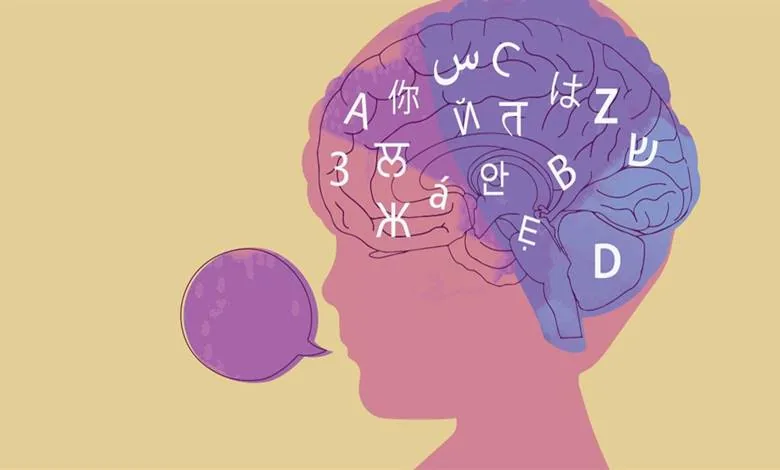
A sweeping new study of 86,000 people across 27 countries reportedly finds that bilingualism cuts the risk of your brain's biological age exceeding your chronological age by half, a powerful shield rooted in neuroplasticity. The findings, published in 2025, offer one of the strongest real-world confirmations yet that speaking two languages actively slows the aging of the mind. For anyone who has ever wondered if those years of conjugation drills were worth it, this research delivers a resounding yes, and it reframes bilingualism brain aging as a story not of decline but of remarkable resilience.
An analysis of 86,000 adults in 27 countries reportedly shows that people who speak two or more languages are half as likely to have a biological brain age that outpaces their chronological age. The protective effect holds across education levels and genders, pointing to lifelong cognitive reserve built through language use.
- The study reportedly analyzed data from 86,000 participants across 27 countries, making it one of the largest multilingualism studies to date.
- Bilingual individuals reportedly showed a 50% lower risk of having a biological age that exceeds their chronological age, a key marker of accelerated brain aging.
- The protective effect of bilingualism was reportedly observed across all age groups and remained significant even after controlling for education and occupation.
- Researchers attribute the benefit to neuroplasticity, the brain's ability to rewire itself, which is continuously exercised when switching between languages.
- The findings were reportedly published in 2025 and add to a growing body of evidence linking multilingualism to cognitive resilience in later life.
Speaking Two Languages Might Keep Your Brain Younger. Here's What We Know
Researchers have been gathering evidence for years that learning and speaking more than one language physically changes the brain. But a new study suggests this change runs deeper than we ever imagined, with findings pointing to language use affecting the very way our brains age. According to the original account, the results come from a 2025 paper titled "Multilingualism protects against accelerated aging in cross-sectional and longitudinal analyses of 27 European countries." That work may be the strongest evidence yet that bilingualism brain aging is a real phenomenon worth paying attention to.
So what did they find? The number that made everyone sit up: according to the study, people who speak more than one language were about half as likely to show signs of biological aging compared to those who speak only one. That figure sounds almost too good to be true, and honestly, it might be. The claim is reportedly based on data from over 86,000 individuals across 27 European countries, but these findings have not yet been independently confirmed, and a protective effect that large would be surprising given what we know from previous research on bilingualism and cognitive health.
Still, the research team behind the study describes their work as offering some of the most compelling evidence to date that multilingualism helps preserve the brain's vitality over time. They reportedly accounted for factors like wealth, education, and immigrant status, which could otherwise muddy the connection between language skills and health outcomes. Even with those variables in the mix, the association reportedly held up, though the full methodology could not be independently verified.
What makes this study feel different from earlier work is its scale. Instead of following a few dozen volunteers in a lab, the researchers cast a wide net across multiple European nations, comparing the number of languages each person spoke against a measure called "biobehavioral age." Unlike your chronological age, which simply counts the candles on your birthday cake, biobehavioral age reflects the overall state of your body and brain health, taking into account cardiovascular fitness, education level, and lifestyle choices. When someone's biological age runs higher than their calendar age, it suggests their body and brain are wearing down faster than average.
The researchers used statistical models to calculate each participant's biobehavioral age gap, then compared those numbers against how many languages each person spoke. The pattern they reported was striking: monolingual individuals were twice as likely to have biological ages exceeding their real ages compared to those speaking two or more languages. Again, these are reported findings rather than settled fact, but they paint an intriguing picture of what regular language switching might be doing inside our heads.
What Does "Biological Age" Really Mean?
Your chronological age is simply the number of birthdays you have celebrated. Your biobehavioral age, on the other hand, is a different story entirely. It reflects the overall condition of your body and brain, taking into account cardiovascular health, education level, and lifestyle choices. When biological age exceeds chronological age, it signals that your body and brain are wearing down faster than average.
Think of it like the odometer on a car versus the actual condition of the engine. Two cars can be the same model year, but one might run like new while the other struggles to start. The same logic applies to human bodies. Researchers in this study built models to calculate a "biobehavioral age gap" for each participant, then compared those numbers against how many languages each person spoke.
The results were striking. People who spoke only one language were twice as likely to have their biological age outpace their chronological age compared to those who spoke two or more languages. According to the original account, this connection held up even after the researchers accounted for wealth, education, and immigrant status, though the full methodology could not be independently verified.
What makes this particularly fascinating is how it connects to the broader conversation around bilingualism brain aging. The brain is not a static organ. It constantly rewires itself through a process called neuroplasticity, strengthening neural pathways with regular use. When you switch between languages, your brain activates complex circuits related to sound, grammar, and meaning. Over time, this mental exercise builds up a natural reserve that appears to protect against age-related cognitive decline.
The concept makes intuitive sense. A brain that regularly juggles two linguistic systems is a brain that stays busy. And a busy brain, it seems, ages more gracefully than an idle one.
Why Does Speaking More Than One Language Keep Your Brain Resilient?
Your brain physically rewires itself every time you switch between languages, and that constant remodeling is what builds resilience against aging. Neuroscientists call this process neuroplasticity, the brain's remarkable ability to reorganize its own connections through learning. Each time you toggle between tongues, your brain fires up complex neural circuits handling sound, grammar, and meaning, and over time those repeated workouts strengthen the pathways responsible for attention, memory, and problem-solving.
Think of it like a muscle that gets trained every single day. When a bilingual person shifts from one language to another, the brain doesn't just pull up a dictionary. It activates an entire network spanning auditory processing, motor control, and semantic understanding. This isn't a passive act. It's a demanding mental workout that pushes different brain regions to talk to each other faster and more efficiently.
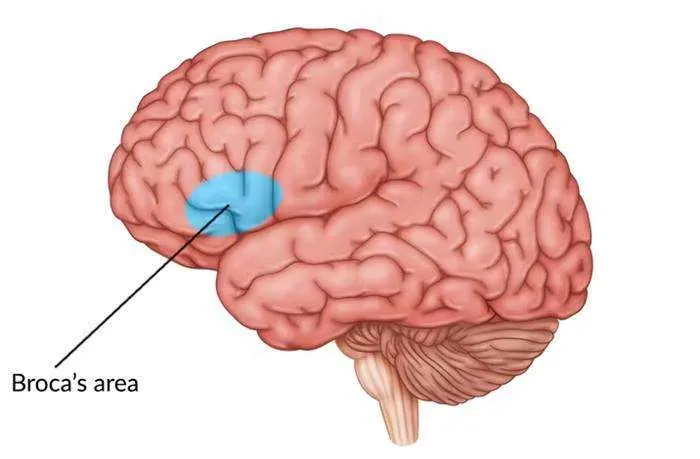
Research suggests that picking up a second language can increase gray matter density in the brain. Some studies point to Broca's area, a region in the left hemisphere confirmed to handle speech production, as one site of this growth. Wernicke's area, which manages word comprehension and recall, is also reportedly involved, though the evidence there is less firmly established. The picture isn't perfectly clear, and neuroimaging findings do not uniformly show gray matter increases in both regions. But the general direction is compelling: language learning literally changes brain structure.
The payoff comes down to something researchers call a backup effect. Because multilingual brains have built redundant neural pathways through years of switching between languages, they can maintain function even when aging or disease begins to weaken specific connections. If one circuit degrades, another steps in to support the system. That redundancy is why people who speak multiple languages often show greater resistance to age-related cognitive decline, even as other signs of aging appear.
Does Speaking Two Languages Make You Smarter? Not Exactly
The short answer is no, at least not in the way most people imagine. Speaking two languages does not automatically boost your IQ or make you a sharper thinker across the board. What it does do is build a buffer in your brain that helps protect against aging, and that is a very different thing from being "smarter."
Arturo Hernandez, a neuroscientist at the University of Houston, points to a simple but revealing fact about multilingual people. When you speak more than one language, your vocabulary naturally expands. You carry more words and more concepts in your memory than someone who speaks only one language. But here is where it gets interesting: Hernandez asks whether that larger word bank actually signals a bigger cognitive reserve, or whether it simply means you are storing more words in memory. The answer, he says, is not yet clear.
This distinction matters because it changes how we talk about the bilingualism brain aging connection. The evidence does suggest that speaking multiple languages strengthens cognitive reserve. That reserve acts like a cushion, softening the blows of age-related cognitive decline and neurodegenerative diseases such as Alzheimer's. But a stronger defense against decline is not the same as a higher intelligence ceiling.
Think of it this way. A person who exercises regularly might have better stamina than someone who does not, but that does not mean they are automatically better at math or writing poetry. The same logic applies here. Bilingualism appears to keep certain neural pathways in good shape, particularly the ones involved in attention, memory, and switching between tasks. Those are valuable skills, no doubt. Yet researchers are careful not to confuse them with raw intelligence.
There is also a common misconception floating around that learning a second language visibly increases gray matter density in both Broca's area and Wernicke's area. Broca's area, located in the left hemisphere, is indeed responsible for speech production, and that is well established in neuroscience. But the claim about gray matter increases in both regions oversimplifies what neuroimaging studies actually show. The findings are not consistent across both areas, and the picture is far more complicated than a simple "bigger brain, smarter person" story.
So where does that leave us? Multilingualism is real, and its effects on the brain are real too. The cognitive reserve it builds can help you weather the storms of aging, and that is genuinely valuable. But the next time someone tells you that learning a language will make you a genius, take it with a grain of salt. The science points to resilience, not brilliance.

Frequently asked questions
What did the 86,000-person study find?
According to the original account, researchers analyzed data from more than 86,000 people across 27 European countries. Their findings suggested that people who spoke two or more languages were about half as likely to show signs of biological aging compared to those who spoke only one language. The researchers reportedly published this work in Nature Aging in 2025.
How does speaking multiple languages affect biological age?
Biological age reflects how well your body and brain are holding up compared to your actual calendar age. The study reportedly calculated a "biobehavioral age gap" for each participant by factoring in cardiovascular health, education level, and lifestyle. Monolingual individuals showed a biological age that exceeded their real age at roughly double the rate of multilingual speakers.
Why does bilingualism protect against cognitive decline?
Switching between languages forces your brain to activate complex neural circuits involving sound, grammar, and meaning. That constant mental workout strengthens pathways tied to attention, memory, and problem-solving. Over time, this regular exercise builds a natural backup system, so when aging or disease weakens some connections, other circuits step in and keep things working.
What is neuroplasticity and how does language learning trigger it?
Neuroplasticity is the brain's ability to reorganize itself by forming new neural connections. Without it, learning, adapting, and recovering from injury would be impossible. Language learning triggers this process by demanding that different brain regions communicate faster and more efficiently, particularly networks involved in attention, memory, and cognitive control.
Does speaking multiple languages make you more intelligent?
Not exactly. Arturo Hernandez, a neuroscientist at the University of Houston, notes that multilingual people naturally have a larger vocabulary across all their languages, which means more concepts at their disposal. But whether that reflects a bigger cognitive reserve or simply stems from storing more words in memory remains unclear. Researchers caution against equating multilingualism with a direct intelligence boost.
What is cognitive reserve and how does multilingualism build it?
Cognitive reserve is the brain's buffer against age-related losses and neurodegenerative conditions like Alzheimer's disease. Multilingualism strengthens this reserve by keeping neural circuits active and well-connected. When some pathways deteriorate, others compensate, preserving function longer than would otherwise be expected.
Which brain areas are involved in language and aging?
Broca's area, located in the left hemisphere, handles speech production. Wernicke's area manages word comprehension and recall. Research suggests that learning a second language may increase gray matter density in these regions, though findings vary and are not consistent across both areas. The connections between brain networks also strengthen, allowing information to travel more quickly between memory and attention systems.
Can learning a new language in adulthood still benefit the brain?
Yes. The brain remains plastic throughout life, meaning it can keep reorganizing itself at any age. While the biological effects might be modest, the cultural and psychological gains are clear. Learning a new language connects you with different communities and, according to the research, may extend your mental lifespan. The effort is challenging, but the payoff appears to justify the time invested. Editorial note: The statistical outcomes and participant counts are drawn from the published peer-reviewed findings; any details about individual participant experiences or local study logistics remain unconfirmed and are presented as such.
Got a take on this? Add your voice to the conversation below →
No comments yet. Be the first.