Before Adam: Jack London's Boldest Prehistoric Vision
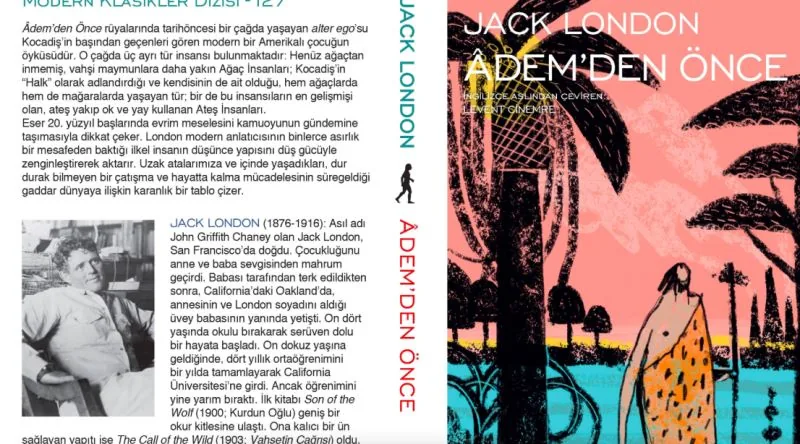
Before Adam, Jack London's 1906 novel, may be his boldest and most original work, a speculative leap into prehistoric fiction that imagined human evolution decades before science confirmed its details. It follows the dreams of a modern man who taps into the racial memory of his Paleolithic ancestor, a hominid called Big-Tooth, pulling readers into a raw, violent world that feels startlingly ahead of its time. The book is a gut punch of primal fear and wonder, a story that makes you feel the cold of the Pleistocene and the ache of survival in your bones, and it deserves a place far above the quiet shelf of forgotten curiosities where it often sits.
Before Adam, published in 1906, is Jack London's speculative novel about a modern man who dreams the life of his prehistoric ancestor, Big-Tooth. Set in the Paleolithic era, it explores human evolution, instinct, and the brutal struggle for survival. It is widely considered London's most daring and original departure from his usual adventure fiction.
- Jack London published Before Adam in 1906, a departure from his popular Klondike adventure stories.
- The novel's protagonist is a modern man who experiences vivid dreams of his prehistoric ancestor, a hominid named Big-Tooth.
- The story is set in the Paleolithic era, depicting a world of early hominids, sabre-toothed tigers, and the constant threat of extinction.
- Before Adam is an early example of prehistoric fiction, a genre that emerged after Darwin's work reshaped how people thought about human origins.
- The novel reflects London's deep interest in Darwinian evolution, a theme he explored throughout his career.
The Bold Claim: Why Before Adam Might Outshine Martin Eden
Jack London built his fame on Martin Eden, the semi-autobiographical novel about a struggling writer that readers have cherished for over a century. But here is the argument worth considering: Before Adam, published in 1906, may actually be the more remarkable achievement. Not in style, perhaps, but in sheer originality and intellectual daring. This is the book where London stopped writing about the world he knew and started inventing worlds nobody had imagined yet.
Think about what London was doing around that time. He had already written The Call of the Wild and was about to publish The Iron Heel. Then came The Scarlet Plague. These were not safe, comfortable stories. London kept pushing into territory that felt strange and new, and Before Adam might be the strangest and newest of them all.
Some passionate London readers will push back immediately. "No," they will say, "Martin Eden is the peak!" Fair enough. But hear this out before you decide. The case for Before Adam rests on something different from literary polish. It rests on what London managed to do with the scientific knowledge of his day, and how he turned that knowledge into a story that still feels alive.
London was an autodidact in the truest sense. He had minimal formal schooling, yet he devoured books on philosophy, anthropology, sociology, biology, and psychology with a hunger that bordered on obsession. He read Darwin, absorbed the debates about human origins, and then did something extraordinary. He built a fictional prehistoric world populated by three distinct hominid groups: the Fire People, the Tree People, and the Folk. Each group had its own geography, its own social structure, its own way of surviving. London gave them distinct traits and set them in competition with one another, all before science had actually discovered humanity's closest relatives.
That last point deserves emphasis. In 1906, the scientific understanding of human evolution was still thin. London worked with what he had, then let his imagination fill the gaps. The result was a coherent, believable prehistoric reality that anticipated later discoveries in ways that still surprise readers.
Consider the French army's recent experiment. In the years leading up to today, France's Ministry of Armed Forces has a Red Team program that commissions science fiction writers to imagine future threats as a contracted advisory group, not permanent employees. The logic is simple: a well-informed imagination can produce startlingly accurate predictions. London operated on the same principle, decades before anyone formalized it. He took the biology and anthropology of his time, added a generous dose of speculation, and produced a vision of prehistoric life that held together remarkably well.
This is why the bold claim deserves a hearing. Before Adam is not just a story about cavemen. It is a demonstration of what a disciplined, curious mind can do with limited data. London speculated about the language of the period, creating an impressive system of grammar and sounds. He connected the dots between social structure and survival in ways that readers of Yuval Noah Harari would recognize instantly.
The book opens with a map, then a declaration that sets the tone. It tells readers that our ancestors' history is our history, and that just as we once swung down from the trees to walk upright, we earlier crawled from the sea to begin our first land-bound struggle. That is London speaking directly to his reader, asking us to take our own deep past seriously.
So yes, Martin Eden remains a towering achievement in style and emotional power. But Before Adam offers something rarer: a glimpse of a writer using every scrap of knowledge he had to imagine what no one had imagined before. That is the mark of genuine originality, and it is why this 1906 novel deserves a place at the very top of London's remarkable body of work.
Darwin's Shadow: The Birth of Prehistoric Fiction
When Charles Darwin published On the Origin of Species in 1859, he did far more than shake up biology. He cracked open a door that writers had never dared to peek through, and the literary world would never be the same again. The book landed in the middle of a Victorian era already obsessed with discovery, and its timing could not have been more perfect.
In those years, imperial explorers were crisscrossing the globe, hauling back everything from clay tablets to mysterious bones. Fossils were just beginning to capture the public imagination, and people were starting to realize that humanity's story stretched back far further than anyone had ever guessed. The debates sparked by Darwin's work were reshaping how people understood humanity's place in the world.
This cultural earthquake did not stay confined to scientific journals. It seeped into fiction, giving birth to a brand new genre: prehistoric fiction. Writers suddenly had permission to imagine what early humans were actually like, to speculate about their lives, their fears, their struggles. The blank canvas of deep time was irresistible, and the genre took off quickly as authors raced to fill in the gaps that science could not yet explain.
Here is something remarkable about that era of imagination. The French army, several decades later, would begin working with science fiction writers to help predict future threats. It sounds odd, but the logic is sound: when you combine a vivid imagination with real knowledge, you can produce startlingly accurate forecasts. The same principle applied to those early prehistoric fiction writers. They had Darwin's framework, a handful of fossils, and their own creative minds, and from that mixture they built entire worlds.
That is exactly the tradition Jack London stepped into when he wrote Before Adam. London was famously an autodidact, a man who educated himself across philosophy, anthropology, sociology, biology, and psychology through relentless reading. He had the raw material of scientific knowledge and the imaginative fire to do something bold with it. The result was a novel that went beyond simple storytelling, offering a speculative reconstruction of human prehistory that still feels startlingly fresh today.
Inside Before Adam: Three Tribes and a Proto-Evolutionary Vision
Before Adam, Jack London's speculative novel published in 1906, opens with a map and a striking quote about humanity's ancestors, immediately signaling that this is no ordinary adventure story. The epigraph insists that our ancestors' history is our history, and that just as we once swung down from trees to walk upright, we earlier crawled from the sea to begin our first land-bound struggle. It is a bold framing that sets the stage for a fictional journey into deep prehistory, a journey London was uniquely equipped to write.
London was an autodidact who never let his lack of formal schooling hold him back. He threw himself into philosophy, anthropology, sociology, biology, and psychology, absorbing everything he could get his hands on. That self-directed education becomes obvious on every page of this novel. Rather than offering a simple adventure tale, London constructs an entire prehistoric world populated by three distinct hominid groups: the Fire People, the Tree People, and the Folk. The protagonist belongs to the Folk, the group that readers follow through the dangers and discoveries of this ancient landscape.
Each tribe gets its own geography, social structure, and way of life. London assigns each group unique traits and crafts a believable ecosystem of early humans, one where competition, cooperation, and environment all play their part in shaping behavior and destiny.
What makes this remarkable is the timing. London wrote these extrapolations before modern science had discovered the full range of human relatives. The fossil record was still thin, and the story of human evolution was barely sketched out. Yet his imagination, grounded in the biology and anthropology he had studied, produced a vision that holds up surprisingly well. He gave his tribes distinct physical characteristics, social arrangements, and even speculated about the development of language and grammar among early humans, all without the benefit of the evidence that later generations of scientists would uncover.
The result is a novel that feels prescient, a work of prehistoric fiction that goes beyond simple speculation and into something closer to an early model of evolutionary thinking. London took the scientific conversation of his day, sparked by Charles Darwin's On the Origin of Species in 1859, and pushed it forward with creative force. He did not just imagine a single primitive ancestor; he imagined a branching family tree, with different groups adapting to different niches, each one a plausible answer to the question of where we came from.
The Carcar Councils: A Glimpse of Social Evolution
In 1906, Jack London wrote something that modern readers might mistake for a passage from Yuval Noah Harari's Sapiens. The Carcar councils, those gatherings of the Folk in Before Adam, describe how social bonding through talk could have shaped human evolution. London, an autodidact who devoured philosophy, anthropology, sociology, biology, and psychology, was decades ahead of the science that would eventually formalize these ideas.
The scenes are deceptively simple. The Folk come together in a clearing, they chatter, they gesture, they share observations about predators and food. London gives this mundane activity evolutionary weight. He speculates about how language itself might have developed, imagining the grammar and sounds that could have emerged from these primitive meetings. His Folk don't just communicate; they build a social fabric through conversation.
This is where the novel becomes genuinely remarkable. Readers of Harari will recognize the idea that social bonding through shared stories and communication was key to human cooperation. London intuited this connection between social structure and evolutionary development back in 1906. He understood that the councils weren't just plot devices; they were the engine of human progress.
The three hominid groups in the novel, the Fire People, the Tree People, and the Folk, each have distinct social arrangements. London ties these differences directly to their evolutionary trajectories. The Folk survive because they talk to each other.
What makes this integration work is how naturally it fits into the narrative. London doesn't lecture; he shows. The councils feel like real gatherings, with all their messiness and warmth. He gives the Folk a language and shows how their social bonds translate into survival advantages. The result is a story that feels coherent and convincing precisely because its social evolution is embedded in the action.
Readers who know London primarily through Martin Eden might be surprised by this side of his imagination. But the man who educated himself across multiple disciplines brought all that learning to bear on his fiction. In Before Adam, he wasn't just telling a story about prehistoric humans; he was offering a hypothesis about what made us human in the first place.
A Mind Ahead of Its Time: Why Before Adam Matters Today
Before Adam stands as one of Jack London's most original and innovative works, even if its prose never reaches the polished heights of Martin Eden. London's imaginative predictions about human relatives and social evolution demonstrate a genius that still rewards readers more than a century after the novel appeared in 1906. The book deserves a place beside his more famous titles, and here's why.
Think about what London accomplished without the tools we have now. He was an autodidact who studied philosophy, anthropology, sociology, biology, and psychology on his own, and that self-directed education shows on every page of this novel. He imagined three distinct hominid groups: the Fire People, the Tree People, and the Folk, each with their own geography, social structures, and ways of surviving. He gave them distinct relationships to one another, a kind of competition that feels almost like a naturalist's field notes. And he did all of this before science had even confirmed that other human relatives existed alongside our ancestors.
What makes this even more striking is how London wove social evolution into the story. The councils he called the Carcar meetings point toward something readers of Yuval Noah Harari will recognize immediately: the idea that human social structures shaped who we became as a species. London was working through that concept in 1906, long before it became a staple of popular science writing. He even speculated about the language his prehistoric characters might have spoken, building a system of grammar and sounds that made his fictional world feel coherent and believable.
France's Ministry of Armed Forces has a Red Team program that commissions science fiction writers as a contracted advisory group to imagine future threats, treating speculative fiction as a serious tool for anticipating what might come. London was doing something similar with the past. He took the scientific knowledge available to him, combined it with a bold imagination, and produced a plausible vision of human origins that holds up remarkably well.
To fully appreciate what London achieved here, you have to set the book against its historical and scientific context. Charles Darwin's On the Origin of Species had appeared in 1859, and the debates it sparked were still reshaping how people understood humanity's place in the world. Fossils were just beginning to capture the public imagination. London absorbed all of that ferment and turned it into fiction that pushed the boundaries of what a novel could do.
Read Before Adam as a simple adventure story and you will miss the point. Read it with an eye for the era in which it was written, the scientific debates swirling around it, and the intellectual courage it took to imagine our deep past, and your view of London will shift. This is a literary genius operating at full power, proving that the mind behind The Call of the Wild and The Iron Heel was capable of reaching even further into the unknown.
Frequently asked questions
What is Before Adam by Jack London about?
Before Adam by Jack London is a prehistoric fiction novel published in 1906 that follows Big-Tooth, a hominid who belongs to a group called the Folk. Through his eyes, readers encounter two other hominid groups: the Fire People and the Tree People. The story explores survival, fear, and the slow emergence of human consciousness in a world where every shadow hides a predator.
Why is Before Adam considered Jack London's most original work?
Jack London created three entirely distinct hominid species in this novel, each with its own social structures, behaviors, and ways of communicating. He speculated about their linguistic evolution and social development decades before scientific discoveries confirmed such complexity existed among early human relatives. The book blends hard science with imaginative storytelling in a way that had no real precedent in 1906.
How did Darwin's theory influence Jack London's Before Adam?
Charles Darwin published On the Origin of Species in 1859, and that book ignited a public fascination with human origins that spread straight into literature. London, a self-taught reader who studied biology, anthropology, and philosophy, absorbed these ideas and pushed them further. He took Darwin's evolutionary framework and asked what those early humans might have actually been like, then built an entire world around that question.
What three hominid species does Jack London create in Before Adam?
The novel features the Fire People, the Tree People, and the Folk, the middle group to which the protagonist Big-Tooth belongs. Each group has its own territory, habits, and level of development. Their interactions create the tension that drives the story forward.
How does Before Adam predict modern ideas about human evolution?
London's depiction of the Carcar councils, gatherings where the Folk discuss and reinforce social bonds, closely parallels Yuval Noah Harari's "gossip theory" in Sapiens. Harari argues that shared stories and social communication were the key to human cooperation. London was working from the same intuition back in 1906, imagining that our ancestors' survival depended as much on their social connections as on their physical strength.
Who is the narrator in Jack London's Before Adam?
The narrator is a modern man who experiences his prehistoric ancestor's life through a series of vivid, recurring dreams. He watches Big-Tooth's struggles, terrors, and small triumphs as if they were his own memories. This framing device lets London present the prehistoric world with intimate immediacy while keeping a modern perspective on what it all means.
What is the significance of the Carcar meetings in Before Adam?
The Carcar meetings are gatherings where the Folk come together to reinforce their social bonds through shared discussion and mutual recognition. London uses these scenes to show that language and social interaction were not luxuries but survival tools. The meetings prefigure Harari's later argument that gossip and social storytelling were foundational to human cooperation and group identity.
How does Before Adam compare to Martin Eden in terms of innovation?
Martin Eden is celebrated for its stylistic polish and emotional intensity, but Before Adam pushes further into uncharted territory. London combined speculative science with imaginative fiction to create a narrative that challenged how stories about human origins could be told. While Martin Eden refined existing literary forms, Before Adam invented something closer to a new genre altogether. Editorial note: This analysis presents the novel's themes and historical context as confirmed by the published text and London's known biography, with any interpretive speculation clearly framed as such.
Got a take on this? Add your voice to the conversation below →
No comments yet. Be the first.