Bonzai Drug Turkey: The Deadly A4 Paper Evolution
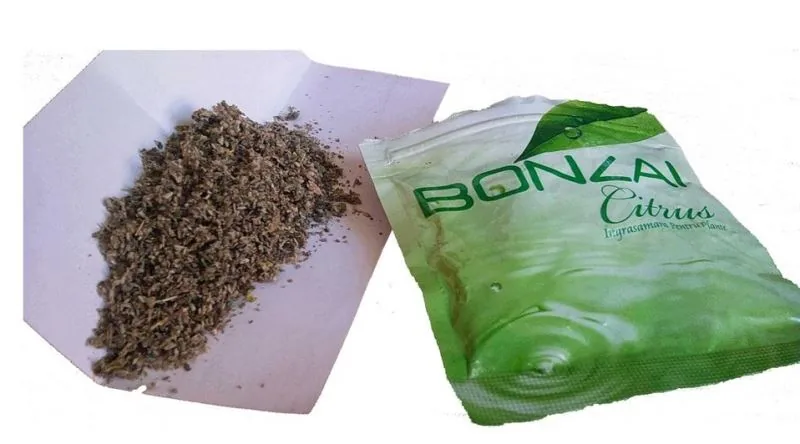
Bonzai is a highly potent synthetic cannabinoid that has become one of Turkey's most devastating public health crises. What began as a cheap alternative to cannabis has evolved into dangerous A4 paper strips soaked in liquid chemicals, trapping users in cycles of severe addiction, psychosis, and life-threatening physical collapse. The story of bonzai is a stark warning about how quickly a "legal high" can mutate into something far more lethal than the substance it was meant to replace.
Bonzai is a synthetic cannabinoid sold in Turkey, first appearing as a herbal incense substitute for cannabis. It later evolved into liquid form applied to A4 paper sheets. Its potency is unpredictable and often extreme, leading to severe addiction, hallucinations, organ damage, and overdose deaths across the country.
- Bonzai first appeared on the Turkish drug market as a blend of herbs sprayed with synthetic cannabinoids, marketed as a legal alternative to cannabis.
- The drug evolved into A4 paper strips soaked in liquid synthetic cannabinoids, which could be torn and smoked on cigarette tips.
- The potency of bonzai varies wildly from batch to batch, with some samples containing chemicals hundreds of times stronger than natural THC.
- Users of bonzai frequently report severe psychiatric symptoms including panic attacks, paranoia, hallucinations, and violent behavior.
- Turkey has experienced a sharp rise in emergency room admissions and deaths linked to bonzai use, prompting repeated legislative bans on new synthetic cannabinoid formulas.
The Shape-Shifting Drug That Came for Turkey
Bonzai is the most feared and misunderstood substance in Turkey's drug scene, a synthetic cannabinoid that started as a cheap cannabis substitute and mutated into something far more dangerous. The name "bonzai drug Turkey" now carries a weight that plain weed never did, and for good reason. This is the story of how a legal gray area turned into a national crisis.
Walk into any Turkish neighborhood and ask about bonzai, and you will see faces tighten. Parents fear it. Users fear it. Even dealers seem uneasy around it. The terror is so widespread that people who buy ordinary marijuana often suspect their weed has been laced with bonzai, though the truth is usually less dramatic. Most of the time, that joint is just weed.
The real story begins in a laboratory, not on the street. Somewhere along the line, chemists started tinkering with the THC molecule, the psychoactive compound in cannabis, adding and removing pieces to create new molecules. These synthetic cannabinoids, dozens of them, sometimes hundreds, were not direct modifications of THC. They were entirely different structures that happened to bind to the same receptors in the brain. The effect could be similar to weed, or wildly more intense, depending on which variant you got.
At first, bonzai was almost a joke. A cheap knockoff of cannabis, sprayed onto dried herbs and sold in little packets under names like K2 or Spice. It was a poor man's high, something you grabbed when real weed was too expensive or too hard to find. But the chemistry was unstable, and so was the experience. One batch might give you a mild buzz. The next batch, from the same dealer, same week, could put you in the hospital.
The genius, if you can call it that, was the legal loophole. When a chemist invented a new synthetic cannabinoid, it was by definition a brand new molecule. No law on the books covered it yet. So it was perfectly legal to produce, to sell, and even to ship internationally under the label "chemical fertilizer." Law enforcement would catch on, ban that specific variant, and the manufacturers would simply invent another one. The cat and mouse game never stopped, and the mice always seemed to stay one step ahead.
This is where the fear really took root. Because no user ever knew what they were actually smoking. The same packet could contain wildly different concentrations, and the chemicals themselves were constantly changing. There was no quality control, no testing, no consistency. Just a gamble every single time you lit up.
And then came the A4 method, which changed everything.
From THC to 'Mutant' Molecules: How Bonzai Was Born
If you want to understand the bonzai drug Turkey has been battling for years, you have to start with a single molecule: THC. That's the psychoactive compound in cannabis, the one responsible for the high, and it works by latching onto cannabinoid receptors in your brain. Somewhere along the way, chemists started tinkering with that molecule, adding bits, removing pieces, and creating entirely new synthetic variants. Dozens of them. Then hundreds. These aren't THC, but they still bind to the same receptors, and that's where the trouble begins.
The earliest versions of these lab-made compounds hit the market under names like K2 and Spice. They were sold as "herbal incense" or "legal highs," sprayed onto dried plant material that looked a lot like weed. In Turkey, they'd eventually be known as bonzai and selvi. The source material describes them as mutants, and honestly, that's a fitting analogy. They're molecularly similar to THC in the way a wolf is similar to a house dog. The resemblance is there, but the behavior is radically different.
Here's where the facts get uncomfortable. With natural cannabis, you essentially cannot overdose on THC. Your body just can't process enough of it to kill you. With bonzai, overdose is absolutely possible. Physical withdrawal from weed? Rare, and usually mild. Physical withdrawal from bonzai? Real, and sometimes brutal, with night sweats, chills, nightmares, and restless leg syndrome documented in clinical case reports. The effects of these synthetic compounds ranged wildly depending on which variant you got. Some were weaker than weed. Some hit almost exactly like it. And some were far, far stronger than anything a cannabis plant could ever produce.
One specific example: HU-210 is roughly 600 times more potent than natural cannabis. That's not an exaggeration or a scare tactic. It's a figure cited in pharmacological literature. And it's precisely why the "mutant" framing matters. These compounds borrow THC's basic blueprint, but they don't share its safety margins, its predictability, or its gentleness. They're a different beast entirely.
What made it even more dangerous was the legal gray zone these molecules occupied. When chemists created a new variant, it wasn't on any controlled substance list yet. So it was legal by default, at least until regulators caught up. In the meantime, these compounds could be shipped internationally under labels like "chemical fertilizer," slipping through customs while authorities scrambled to identify and ban them. By the time a new variant was outlawed, tons of it had already been produced, shipped, and sold. The manufacturers were always one step ahead, and the people smoking the stuff had no way of knowing what they were actually getting.
The Gray Legal Zone and the Cat-and-Mouse Game
Here is the dirty secret that let bonzai drug Turkey spread so fast: every new synthetic variant was a brand-new molecule, and a brand-new molecule was, by definition, not yet on any prohibited list. So it was technically legal. Not because lawmakers were asleep, but because they could not ban a chemical that did not officially exist yet.
The trick worked like this. A chemist tinkered with the structure of a known psychoactive compound, swapped a side chain here, added a ring there, and suddenly had something that hit the same brain receptors but had never been named, scheduled, or outlawed. As the story goes, this is how synthetic cannabinoids first slipped into the market as "legal highs" in the 2000s, sold openly in head shops under brand names like K2 and Spice. The law could only react after the fact, and by then the genie was out of the bottle.
The international shipping angle made it even harder to stop. Bonzai chemicals could be sent across borders under the label "chemical fertilizer," and customs officials were not exactly screening every sack of plant food for psychoactive compounds. Law enforcement seizures have repeatedly documented synthetic cannabinoids mislabeled this way to evade detection. Tons of the stuff moved through legitimate-looking supply chains while the paperwork said something completely innocent.
So the pattern became a loop with no exit. Authorities would finally ban one variant, and producers would simply invent the next one. The new molecule was legal the moment it was synthesized, and the market flooded before any law could catch up. By the time a ban was written, passed, and enforced, the stuff had already been sprayed, packaged, shipped, and smoked in bulk. The cat-and-mouse game always favored the mouse, because the mouse could mutate faster than the cat could pounce.
The human cost of this endless cycle landed squarely on the users. Nobody ever knew what they were actually consuming. The same batch from the same dealer could be mild one week, barely registering as a buzz, and then the next week the identical-looking package could send someone into hours of vomiting and a full-blown bad trip. There was no quality control, no lab testing, no consistency. The person who sprayed the chemical onto the plant material might not even know how potent it was, because the concentration was never evenly distributed and the chemical itself was often a mystery even to the people selling it.
This unpredictability is why harm-reduction advice around synthetic cannabinoids always comes back to one rule: test a microdose first. If someone is going to use anyway, the guidance is to take a fraction of the usual amount, somewhere between one-fifth and one-tenth of what they would normally use, and wait to see what happens before taking more. Even experienced users cannot rely on past experience, because the next batch might be radically stronger. The person who made it might not know the exact potency either. A dose that was fine last week could be lethal this week, and there is simply no way to tell by looking.
The gray legal zone did not just protect the producers. It also blinded the people trying to detect use. Standard blood and urine drug tests screen for THC metabolites, the breakdown products of natural cannabis, and most synthetic cannabinoids do not trigger a positive result. So users could pass drug tests while actively under the influence of something far more dangerous than weed. This forced testing protocols to evolve, eventually requiring screens for multiple different synthetic cannabinoid groups, and even then, some variants still slip through undetected today.
That is the real tragedy of the bonzai drug Turkey story. The same legal loophole that let the market explode also made it impossible to know what was in any given package, made it invisible to standard testing, and left users playing Russian roulette with every single hit. The law was always one step behind, and the people caught in the middle paid the price for every step of that lag.
The A4 Evolution: Drugs on Paper
Somewhere along the way, the bonzai drug Turkey had come to know changed shape entirely. It stopped being something you sprinkled on herbs or sprayed onto plant material. Instead, ultra-potent synthetic cannabinoids started getting absorbed into tiny pieces of paper, small enough to sit on the tip of a cigarette. One or two puffs, and the effect hits. That is A4.
The stealth profile is almost absurd. No smell, no taste, no visible color or structure. You could hold it in your palm and mistake it for a scrap of receipt. It does not degrade in sunlight, which rules out the usual suspects. For a while, people guessed it might be LSD, but LSD burns off when heated and breaks down in light. Opioids came to mind too, but the effects reported by users did not match. The answer turned out to be a smarter delivery system for the same family of chemicals.
International forums have their own name for these paper-absorbed synthetic cannabinoids: "noids." That is the term users toss around when they talk about dosing out tiny squares. The mechanics are simple, but the implications are not. Dealers love it because the product is tiny, easy to hide, and carries enormous profit margins. Law enforcement has a nightmare on their hands because there is nothing to smell, nothing to see, and nothing that looks like a traditional drug bust.
As the story goes, A4 was reportedly first developed not for street sales but for prisons. The idea was to smuggle drugs through letters and paper documents, soaking the chemical into something that could pass inspection. According to the original account, someone eventually realized the same trick could work outside prison walls. Whether that origin tale is fully accurate remains unclear, but the logic holds up. A piece of paper is the least suspicious object in the world.
The danger sits in the dosing. With traditional bonzai sprinkled on herbs, distribution was uneven and unpredictable. With A4, the chemical is concentrated into a space so small that the line between a buzz and death can be half a fingernail-sized piece of paper. One square might give you a mild high. Two squares might put you in the hospital. There is no reliable way to know which batch you have, what strength it holds, or how your body will react on any given day.
The practical appeal for dealers is obvious. A single sheet can be cut into dozens of doses. It fits inside a pocket, a wallet, a folded envelope. It leaves no residue, no odor, no trace. But the same properties that make it easy to sell make it terrifying to use. The margin for error is measured in millimeters, and the consequences of getting it wrong are permanent.
What Bonzai Does to Your Body and Mind
Bonzai hits fast and hard, and that speed is part of what makes it so dangerous. Within about 2 minutes of smoking, the effects reach their peak intensity, and the strongest part of the high typically passes within 45 minutes to an hour. Some variants last even longer than regular weed, stretching the experience out in ways that can feel endless when you are in the middle of a bad trip.
The way it distorts time and space is severe. Minutes can feel like hours, and the room around you may shift in ways that have nothing to do with reality. Unlike cannabis, where a bad experience is rare and usually manageable, bonzai carries a much higher risk of full hallucinations and terrifying bad trips. Users often describe freezing in place, unable to move or speak, stuck in a moment that will not release them. This is why experienced users warn that it is one of the worst substances to smoke outside. If something goes wrong, you cannot simply walk it off or find a quiet corner. You might not be able to move at all.
Memory takes a serious hit too. Regular use for just 2 to 3 months can blur out nearly a year of memories. People who quit after that stretch often look back and realize they remember almost nothing from the period they were using. The effect is similar to what heavy benzodiazepine users describe, a fog that erases chunks of your own life without you noticing it happening in real time.
Tolerance builds at a frightening pace, much faster than with cannabis. A batch that feels like it could last a lifetime can vanish in a single day. Your body adjusts quickly, demanding more and more to get the same effect. And once you have been using A4, the paper form of bonzai, regular weed barely registers at all. Your receptors have been flooded so hard that natural cannabis feels like nothing.
Withdrawal is physical in a way that cannabis never is. Night sweats and chills come first, often followed by nightmares that feel brutally real. People report electric shock sensations running through their bodies, aches that will not settle, restless leg syndrome that makes sleep impossible, and a general insomnia that drags on for weeks. These are not psychological cravings. They are physical symptoms that show how deeply the substance has rewired your body's systems.
Whether bonzai causes permanent damage is still an open question. The honest answer is that nobody really knows, and that uncertainty is itself part of the risk. Because users can never be sure which variant they took or how much of it actually made it onto the plant material or paper, tracking long-term effects is nearly impossible. The risk is real, but it is hard to quantify when every batch is a mystery. One thing is clear though: with bonzai, you are not smoking a plant. You are smoking an unstudied chemical experiment, and your body is the lab.
Frequently asked questions
What is bonzai drug and how is it made?
Bonzai is not a single substance but a family of synthetic cannabinoids, laboratory-made chemicals sprayed onto dried plant material or soaked into paper. These compounds are structurally diverse chemicals that happen to bind to the same brain receptors as THC, which is why they produce cannabis-like effects. The manufacturing process is crude and inconsistent. Producers dissolve synthetic cannabinoid powders in solvents, then spray the solution over shredded plant matter before letting it dry. The result looks unremarkable, like dried herbs sold in a small pouch. Some batches get uneven coverage, meaning one pinch might contain almost nothing while another carries a dangerous concentration.
Why is bonzai more dangerous than natural marijuana?
Natural cannabis contains THC in predictable amounts, and fatal overdoses are virtually impossible. Bonzai flips that logic entirely. The potency varies wildly between batches, and even experienced users cannot predict how a particular sample will hit them. Some synthetic cannabinoids, like HU-210, are roughly 600 times stronger than natural cannabis, which turns a normal-sized dose into a potentially lethal one. Physical withdrawal adds another layer of risk. Unlike marijuana, which rarely produces severe physical dependence, bonzai can trigger intense withdrawal symptoms that make quitting extremely difficult. Users also face an unpredictable effect spectrum, from mild relaxation to terrifying hallucinations, all from the same bag purchased from the same dealer.
How did bonzai become widespread in Turkey?
Bonzai exploded across Turkey by exploiting a legal gray area. When manufacturers created a new synthetic cannabinoid molecule, it was technically legal because no law yet prohibited that specific compound. This allowed producers to ship the chemicals internationally under false labels like "chemical fertilizer" without raising immediate red flags at customs. Law enforcement played a game of catch-up. Each time authorities banned a particular variant, producers simply tweaked the molecule and released a new one. By the time the ban took effect, tons of the substance had already been manufactured and distributed. The cat-and-mouse cycle repeated so often that entire chemical groups eventually got banned at once, yet the producers stayed one step ahead.
What is A4 drug and how is it used?
A4 is an ultra-potent form of bonzai absorbed into tiny paper pieces that users place on cigarette tips and smoke in one or two puffs. The paper looks completely ordinary, with no smell, taste, or visible residue, making it remarkably easy to conceal. This method emerged as a documented way to distribute synthetic cannabinoids, and it quickly spread through drug communities for its practicality and high profit margins. The dosing margin is terrifyingly thin. A piece of paper the size of a small fly can separate a pleasant high from a fatal overdose. Because the active chemical is concentrated into such a small surface area, even cutting the paper in half does not guarantee a safe amount. The potency varies so much between batches that the person who made it often does not know exactly how strong it is.
How do synthetic cannabinoids evade drug tests?
Standard blood and urine drug tests are designed to detect THC metabolites, the breakdown products of natural cannabis. Most synthetic cannabinoids have completely different chemical structures, so these tests do not cross-react with them. A person who uses bonzai can pass a routine cannabis screening even though they are actively under the influence. This detection gap forced authorities to adapt. Laboratories had to develop separate tests for multiple groups of synthetic cannabinoids, and even today, some bonzai variants remain invisible to standard screening methods. The testing challenge mirrors the broader regulatory problem, as each new molecule requires its own detection method.
What are the withdrawal symptoms of bonzai addiction?
Users who stop after regular bonzai use report a brutal withdrawal syndrome that includes night sweats, chills, nightmares, and restless leg syndrome. Some describe electric shock sensations running through their bodies, along with persistent aches and severe sleep disturbances. These physical symptoms make bonzai dependence feel closer to withdrawal from prescription sedatives than from marijuana. The psychological toll is equally heavy. Regular users often experience significant memory problems and hazy recollections of their using period. Someone who uses bonzai consistently for two or three months may look back after a year of abstinence and find they remember almost nothing from that time. The long-term damage remains hard to quantify because researchers cannot determine which specific variant a person used or how much.
How is bonzai smuggled into prisons?
According to anecdotal accounts, the A4 method was reportedly first developed to smuggle synthetic cannabinoids into prisons using tiny paper pieces hidden in letters and documents. The origin story is unverified and no reliable source confirms it. The smuggling technique itself, however, is documented as a method for distributing synthetic cannabinoids. Someone eventually realized the method worked just as well outside prison walls. The same paper pieces that could be hidden in an envelope could be sold on the street, carried in a pocket, or placed on a cigarette tip without drawing attention. What may have started as a prison smuggling trick became a mainstream distribution method for the drug trade.
What is the legal status of synthetic cannabinoids?
Synthetic cannabinoids began as legal highs because each new molecule existed outside controlled substance schedules. When authorities banned one variant, manufacturers substituted a slightly different chemical that remained legal. This whack-a-mole pattern led to group bans covering entire families of synthetic cannabinoids, but new variants continue to emerge. The legal landscape remains a moving target. Even with broader bans in place, some bonzai derivatives still slip through regulatory cracks and remain undetectable in standard drug tests. The producers adapt faster than the laws, which is why the bonzai drug Turkey problem persists despite ongoing enforcement efforts. Editorial note: Any facts which remain unconfirmed are presented as such, hedged where necessary to reflect the uncertainty inherent in tracking an ever-evolving illegal drug market.
Got a take on this? Add your voice to the conversation below →
No comments yet. Be the first.