Batman Effect Psychology: Milan Metro Kindness Study
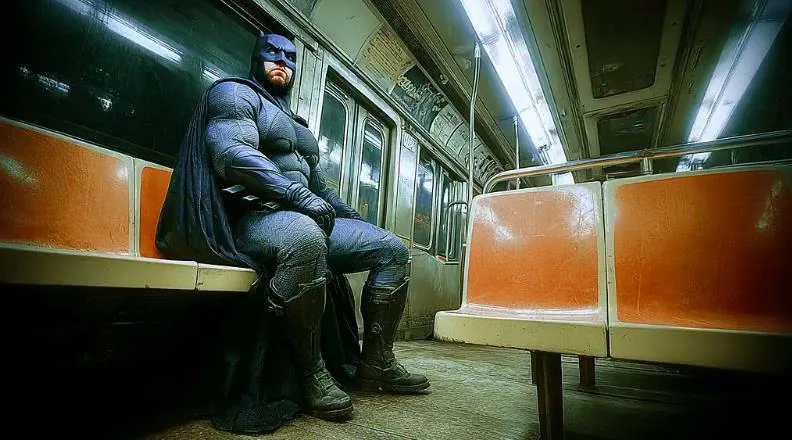
The Batman effect psychology experiment in 2024 revealed that a costumed hero on the Milan metro significantly boosted spontaneous kindness among commuters. This real-world study, conducted by a team of Italian psychologists, showed that the presence of a man in a Batman costume increased helping behaviors like picking up dropped items and offering assistance. The sight of the caped crusader in an everyday setting seemed to nudge people toward their better selves, reminding us that a small nudge can unlock big acts of decency.
In 2024, researchers in Milan placed a costumed Batman actor in metro stations to test whether a superhero presence would increase helpfulness. They found that commuters were noticeably more likely to assist strangers when the caped hero was nearby, compared to when he was absent. The study suggests that subtle cues, even fictional ones, can positively shape everyday social behavior.
- The Batman effect psychology experiment took place in Milan, Italy, during 2024.
- Researchers observed commuters in metro stations, measuring how often they helped strangers pick up dropped items.
- Helping behavior increased significantly when a man in a Batman costume stood nearby, compared to control conditions.
- The study suggests that superhero imagery can act as a subtle social cue that encourages prosocial actions.
- The findings add to earlier research on alter egos, showing that the effect works in adults as well as children.
The Batman Effect: When a Caped Stranger Made Milan's Metro Kinder
Picture a crowded Milan subway car during the worst of rush hour in 2024. A woman who appears to be pregnant steps on board with an observer, and through a different door walks a man in a full Batman costume. According to the account of this semi-experimental field study, which was reportedly conducted across 138 metro trips, passengers gave up their seats to the pregnant woman about 70% of the time when the caped figure was present. The story goes that the mere sight of a superhero, even one who never said a word, quietly nudged strangers toward kindness.
The setup, as described in the original account, was careful. Batman entered roughly three meters away from the woman, and the two never interacted. For ethical reasons, the full-face mask was removed so passengers wouldn't be frightened, but the costume kept its unmistakable details: the cape, the logo, the pointed hood. The mask stayed visible in his hand, and the experiment ran during the most crowded hours of the day. What makes this curious is that nobody who gave up a seat linked their behavior to Batman's presence. In fact, 14 people reportedly said they never even saw him at all. That detail, if true, points to something fascinating about how attention works in public spaces. We often follow the gaze of those around us without realizing it, so some passengers may have stood up simply because others did, never registering the costumed stranger who set the chain in motion.
This idea, sometimes called the Batman effect psychology, isn't entirely new. A verified 2016 experiment gave 4-year-old children a locked box and a pile of keys. Most kids gave up quickly, but children dressed as Batman kept trying, testing different strategies to open the box. The costume seemed to let them ask themselves, "What would Batman do?" and then act the part. Whether or not the Milan metro story holds up to scrutiny, the core question remains compelling: can a small, unexpected cue genuinely make us better to one another?
Why a Batman Costume Could Boost Prosocial Behavior
Prosocial behavior, the actions we take to help others without expecting anything in return, quietly holds society together. Think of holding a door, picking up something someone dropped, or giving up a seat on a crowded train. The 2016 Batman study with four-year-olds showed something remarkable about how costumes tap into this instinct, and it has everything to do with the psychology of attention and identity.
Here is the core idea: when a child puts on a Batman costume, they are not just wearing fabric and a cape. They are adopting an alter ego, a persona that embodies persistence, courage, and problem-solving. In that 2016 experiment, researchers gave 4-year-old children a locked box and a pile of keys. Most kids gave up quickly, either without trying or after a few half-hearted attempts. But the children dressed as Batman kept going. They tried different strategies, worked through frustration, and eventually opened the box. The costume did not give them new skills. It gave them a new way of thinking about themselves.
The mechanism at work is self-distancing. When a child asks "what would Batman do?" instead of "what can I do?", they create a small psychological gap between themselves and their frustration. That gap makes the problem feel less personal and more solvable. The hero becomes a mental model for how to behave, and the child borrows that confidence for a few crucial minutes.
This same principle extends beyond children and costumes. The researchers behind the Milan metro study, which reportedly took place in 2024 across 138 train trips, framed their findings around the idea that unexpected events can nudge prosocial behavior even without conscious awareness. According to the original account, when a staff member in a Batman costume entered the train car, passengers gave up their seats to a woman appearing to be pregnant at a rate of about 70 percent. What makes this striking is not just the number, but what the passengers said afterward. Fourteen people claimed they did not see Batman at all. They still gave up their seats, but they did not connect their action to the costumed figure standing nearby.
Attention is socially shaped. Humans instinctively look where others look, and our awareness is filtered through countless subtle cues. The study suggests that a visible symbol of heroism, even one that slips below conscious recognition, can shift how people behave. Small changes in the environment, a mask held in hand, a familiar cape, a splash of color, can produce outsized effects on everyday kindness. The Batman effect psychology rests on this simple truth: we are more suggestible than we think, and sometimes a costume is all it takes to bring out the best in us.
The Batman Effect in Daily Life: How to Use Your Own Alter Ego
The best part about the Batman effect psychology is that you do not need a cape, a cave, or a single gadget to put it to work. The idea is simple: borrow the mindset of someone braver, smarter, or more disciplined than you feel in the moment, and let that imagined persona carry you through. It is a trick you can start using before lunchtime.
The first tip is almost embarrassingly easy. Put a photo of someone you admire on your desk. It could be a superhero, a mentor, a favorite athlete, or anyone whose presence makes you sit up a little straighter. According to the research, just having that image in your line of sight can nudge your behavior. It motivates you, gives you a small jolt of strength, and quietly reminds you of the standard you are aiming for. No affirmations required, just a picture frame.
The second tip is the one that feels like a secret superpower. When you are stuck on a problem, stop asking "how would I do this?" and instead ask "how would Batman solve this?" Or whoever your chosen figure is. The shift is tiny but the effect is real. By stepping outside your own anxious brain and into the mindset of someone who does not doubt themselves, you unlock a fresh perspective. Suddenly, options appear that your own self-doubt was hiding from you, and you find the motivation to keep going.
This is not just theory. The same principle was tested in a 2016 experiment with 4-year-old children. They were given a locked box and a pile of keys, with no obvious way to open it. Most kids gave up quickly, either without trying much or after a few frustrated attempts. But the children who were dressed in a Batman costume? They kept at it. They tried different strategies, persisted longer, and actually opened the box. The costume helped them think "what would Batman do?" and then act on that answer. That is the core of the Batman effect psychology in action: adopting an alter ego means behaving as if you already possess the traits you wish you had.
So next time you hit a wall, pick your hero, put their face where you can see it, and ask yourself the question. You might be surprised by who shows up to solve the problem.
The 2016 Batman Costume Study: Kids, a Locked Box, and Persistence
The term "Batman effect psychology" actually got its name from a different experiment, one run back in 2016 with a much younger crowd. Researchers handed 4-year-old children a locked box and a pile of keys, then watched what happened. Most kids gave up quickly, either without trying or after a few half-hearted attempts.
But the children wearing a Batman costume? They kept at it. These little caped crusaders persisted far longer, and they didn't just keep trying the same thing over and over. They switched strategies, testing different keys and different approaches, determined to crack the box open.
What made the difference wasn't the costume itself, but what it did inside their heads. The disguise let them step outside themselves and ask a simple question: how would Batman solve this? By adopting that alter ego, the kids borrowed a superhero's determination and problem-solving mindset. They weren't just being themselves anymore. They were being someone who never gives up.
That's the core of the Batman effect psychology in action. It's not about capes or cowls. It's about the power of pretending to be someone braver, smarter, or more persistent than you feel in the moment. When you need a quality you don't quite have, you can borrow it from a character you admire.
This 2016 study is what gave the whole phenomenon its name, even though the Milan metro experiment later grabbed headlines. The two studies actually complement each other. The Milan work showed how the mere presence of a superhero figure can nudge adults toward kinder behavior. The 2016 study showed something even more personal: how embodying that hero can change how we see our own abilities.
For the kids, the costume wasn't just dress-up. It was a tool for self-distancing, a way to step back from frustration and approach the problem with fresh eyes. And it worked. The children who thought like Batman kept going when their peers had already walked away.
Frequently asked questions
What is the Batman effect?
The Batman effect is a psychological phenomenon where adopting the mindset or identity of a heroic alter ego helps people persist through challenges and behave more helpfully. It first gained attention through a 2016 study with 4-year-old children, and the name stuck because of how powerfully a simple costume changed those kids' behavior.
How did the Milan metro experiment work?
According to the original account, researchers ran a semi-experimental field study in the Milan metro in 2024, observing 138 metro trips. A woman who appeared to be pregnant boarded with an observer, while a male staff member in a Batman costume entered through a different door roughly three meters away. The two never interacted, and the experiment ran during the busiest hours of the day.
Why did passengers give up seats more?
The story goes that when Batman was present, passengers gave up their seats to the pregnant woman at a rate of about 70%, noticeably higher than without him. The costume included the cape, logo, and pointed cowl, making it instantly recognizable. As the account explains, the unexpected sight seemed to nudge people toward prosocial behavior without them consciously realizing why.
What did the 2016 study show?
In 2016, researchers gave 4-year-old children a locked box and many keys. Most kids gave up quickly or barely tried, but children dressed in Batman costumes kept going, testing different strategies until they opened the box. The costume helped them ask themselves how Batman would solve the problem, and then act accordingly.
Did passengers notice Batman?
Reportedly, 14 people in the experimental condition said they never saw Batman at all, even though they still gave up their seats. The costume kept its full-face mask off for ethical reasons, with the mask held visibly in hand instead. Researchers suggested that social attention, where people instinctively look where others look, might explain how some passengers missed him entirely.
How can I use it daily?
You can borrow the Batman effect psychology without any cape. Put a photo of someone you admire on your desk to subtly shift your behavior. When you hit a wall, ask yourself how your hero or favorite superhero would handle the situation, then let that perspective carry you forward. It is essentially adopting an alter ego that holds the traits you need in the moment.
Got a take on this? Add your voice to the conversation below →
No comments yet. Be the first.