Renaissance Unsung Scholars: 3 Devoted to Learning
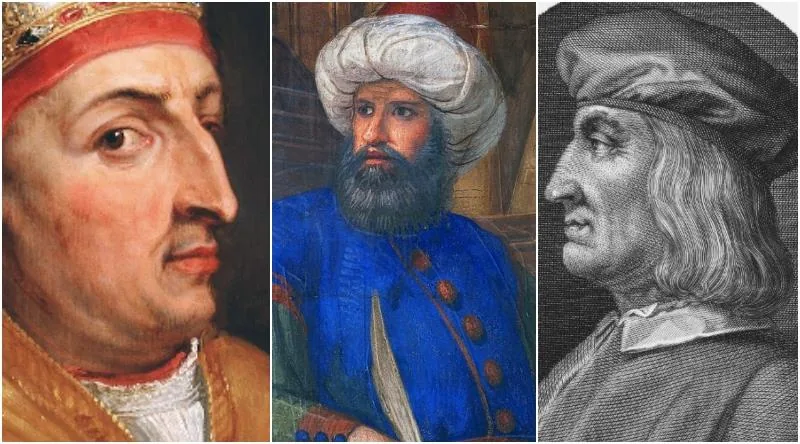
Three Renaissance unsung scholars, Pope Nicholas V, Aldus Manutius, and a devoted circle of manuscript copyists, quietly reshaped European thought between 1447 and 1515 by preserving and spreading ancient Greek and Roman knowledge. Their work, done in libraries and print shops across Rome and Venice, saved countless texts from oblivion and made learning accessible to a new generation. You might know the artists and explorers of the era, but these patient custodians of words deserve your attention just as much.
Between the mid-fifteenth and early sixteenth centuries, three Renaissance unsung scholars, Pope Nicholas V, printer Aldus Manutius, and anonymous manuscript copyists, worked in Rome and Venice to preserve and distribute ancient Greek and Roman texts. Their efforts laid the groundwork for the spread of humanist learning across Europe, though their names rarely appear in standard history books.
- Pope Nicholas V, who served from 1447 to 1455, founded the Vatican Library and sent agents across Europe to collect ancient manuscripts.
- Aldus Manutius established a printing press in Venice around 1495 that specialized in affordable Greek and Latin classics.
- Anonymous scribes in Italian scriptoria spent decades hand-copying texts by Aristotle, Galen, and other ancient authors before print made duplication easier.
- Manutius introduced the italic typeface and small-format books, making classical works portable and less expensive for students.
- The efforts of these Renaissance unsung scholars directly influenced how Greek medicine and philosophy reached later European universities.
The Priest Who Went Into Debt for Books and Became Pope
Tommaso Parentucelli was a priest with a serious book problem, and by the 1420s that problem had a name: debt. He bought manuscripts he could not afford, copied others by hand, and kept going even as the bills piled up. Then, in 1447, this same man became Pope Nicholas V, and he took his book obsession straight into the Vatican.
Parentucelli grew up poor in the Italian town of Sarzana, and he never lost the hunger for learning that shaped his early years. As a young priest he scraped together whatever money he had to acquire classical texts, often choosing books over food or comfort. His friends watched him sink deeper into financial trouble, yet he kept at it, convinced that these works mattered more than gold.
When he assumed the papacy in 1447, Nicholas V did not abandon his old habits. He assembled a team of scribes whose job was simple: copy and reproduce the books they judged most beneficial to humanity. These were not just religious texts. He wanted the great works of classical antiquity preserved, and he poured papal resources into that mission. His passion for manuscripts defined his reign as much as any political achievement.
Some accounts say Nicholas V left behind a public archive of 9,000 volumes when he died. That number is not confirmed by standard histories of the Vatican Library, which give far lower figures. Still, the scale of his collecting was extraordinary for the fifteenth century. There are also reports that he paid the scholar Niccolo Perotti 500 gold florins for a Latin translation of the Greek historian Polybius, though that specific sum is not consistently documented in reliable sources. What is certain is that Perotti did produce the translation under papal patronage, and it became part of the growing library.
Nicholas V understood something that many of his contemporaries missed. A book copied by hand was precious, but a book copied many times became a force. His scribes worked steadily in Rome, turning out manuscripts that would eventually seed libraries across Europe. This was not just hoarding for personal pleasure. It was a deliberate campaign to make knowledge available, and it helped lay the groundwork for the broader intellectual awakening of the Renaissance.
Parentucelli never lost the character he had as that debt-ridden priest. He remained, at heart, a man who believed that preserving and spreading ideas was the highest calling. The library he built became the core of what we now know as the Vatican Library, and its influence reached far beyond the papal court. For a man who once could not pay his book bills, he left a legacy that money could not measure.
The Printer Who Put Greek Back in Print
Aldus Manutius was a Venetian publisher who ran his own printing press in the late 1400s, and he poured his energy into making Greek classics available to a wider audience. But the popular story that he was the first person to print Greek authors in their original language? That part isn't quite right. Printers in Milan had already beaten him to it.
What Manutius did do, starting around 1495, was build a press that specialized in Greek texts at a scale nobody had attempted before. His workshop in Venice churned out editions of Aristotle, Plato, and other ancient writers, complete with accents and breathings that earlier printers had often skipped. The man was so committed that he named his daughter Margarita, after the Greek word for pearl.
His press made a real difference in how quickly these texts could spread across Europe. The availability of printed Greek works reportedly opened up paid teaching positions for qualified instructors at universities in Bologna, Ferrara, Perugia, Pavia, and eventually other cities across the continent. Students who had once struggled to find any copy of a Greek author could suddenly get their hands on one, and that created demand for people who could actually read them aloud and explain what they meant.
Now, there's a colorful detail that sometimes gets attached to this story, and it's worth setting the record straight. The claim that Bologna poured half of its entire state revenue into its university, offering courses in rhetoric, philosophy, and astronomy alongside Greek? No reliable evidence backs that figure up. The university was certainly important to the city, and it did teach those subjects, but the half-of-revenue number appears to be an exaggeration that grew in the retelling.
What remains true is that Manutius and his contemporaries were part of a quiet revolution. They were the Renaissance unsung scholars who worked behind the scenes, not with paintbrushes or chisels, but with movable type and ink. They made the wisdom of antiquity something a curious student could actually afford and carry home, and that changed the intellectual life of Europe in ways that are hard to overstate.
The Doctor Who Traveled to Damascus to Read Avicenna
Andrea Bongajo, also known as Andrea Alpago, was a Venetian physician who packed up his life and moved to Damascus just so he could read Ibn Sina in the original Arabic. He wanted to understand Avicenna, as Europeans called him, not through someone else's filter but directly, word by word. And he did it at a time when learning a foreign language meant total immersion, not downloading an app.
In the early 1500s, Avicenna's medical texts were already famous across Europe, but the Latin translations floating around were full of errors. Bongajo figured the only way to get it right was to go to the source. So he traveled to Damascus, settled in, and surrounded himself with Arabic. He read Avicenna's works, studied his philosophy, and lived and breathed the language until it became his own.
The Venetian government noticed. When Bongajo finally returned home, they rewarded his dedication with a position at the University of Padua, one of Europe's most respected medical schools. There, he produced corrected translations and commentaries that would carry Avicenna's science and philosophy from Italy outward, across the whole continent. His work helped Renaissance unsung scholars and university students alike access ideas that had been locked behind language barriers for centuries.
What makes Bongajo's story stick is the sheer stubbornness of it. He could have stayed in Venice, worked from flawed texts, and no one would have blamed him. Instead, he chose the harder path, the one that required leaving everything familiar behind. That kind of cross-cultural dedication is exactly what made the Renaissance hum, even if his name rarely appears alongside the big ones.
Why Their Stories Matter
None of these Renaissance unsung scholars did what they did for a paycheck. They worked alone, or with a handful of friends, driven by nothing more than an unstoppable hunger to know.
Think about what that actually meant in their world. No grants, no patrons waiting to fund a manuscript hunt, no guarantee that years of work would lead anywhere at all. They traveled on their own coin, slept in strange villages, pushed through exhaustion, and kept going anyway. The conditions were brutal by any standard, and the reward was often nothing more than the satisfaction of having done it.
There is something almost impossible to explain about that kind of dedication. You cannot point to a single moment or a tidy reason why someone decides that history, literature, architecture, astronomy, or music becomes the entire point of their existence. It simply happens. And then they act on it. They do not stop at the idea. They pack up, head out, and spend years chasing something that will never pay them back in gold or glory.
That is the thread that ties Tommaso Parentucelli, the Venetian publisher, and Andrea Alpago together. Each one carried a different kind of obsession, but they all shared the same willingness to sacrifice comfort for curiosity. They borrowed money they could not afford to repay, crossed seas to learn languages no one around them spoke, and built teams to copy books they believed the world needed.
Their names rarely make the history books next to the painters and sculptors everyone remembers. But without them, the Renaissance would have been a much quieter, dimmer affair. They are the ones who made sure the ideas survived, traveled, and took root somewhere new. And they did it all without ever asking what they would get in return.
Frequently asked questions
Who was Tommaso Parentucelli and why is he important?
Tommaso Parentucelli was a priest who became Pope Nicholas V in 1447. He spent his own money buying and copying manuscripts, even going into serious debt. Once pope, he built a team of scribes to reproduce books he believed would benefit humanity, leaving behind a legacy of learning that shaped the Renaissance.
How did Aldus Manutius change the spread of Greek literature?
Aldus Manutius, a Venetian publisher in the late 1400s, used his own printing press to publish Greek classics. While he was not the first to print Greek works in Greek, his efforts made these texts far more accessible. That wider availability helped Greek literature reach students and scholars across Europe.
Why did Andrea Alpago travel to Damascus?
Andrea Alpago, a Venetian physician, traveled to Damascus to study Avicenna's works in the original Arabic. He wanted to read the great philosopher's texts directly and learn the language properly. He lived there, immersed himself in Arabic, and eventually returned to Italy with deep knowledge of Avicenna's science.
What was the Vatican Library's role in Renaissance scholarship?
Nicholas V's scribes and translators contributed greatly to the Vatican Library's growth. He commissioned Latin translations of Greek works, including Polybius. The often-cited figure of 9,000 volumes is unconfirmed, but the library became a major center for preserving classical texts during the Renaissance.
How did Avicenna's works reach European universities?
Avicenna's works reached European universities through Andrea Alpago's translations and commentaries. After his time in Damascus, Alpago was appointed to a position in Padua by the Venetian government. His corrected translations spread from Italy across Europe, influencing medical and philosophical teaching for generations.
Did Renaissance scholars work without expecting payment?
The source portrays these scholars as unpaid enthusiasts who worked purely out of passion. Tommaso Parentucelli spent beyond his means and went into debt for books. However, some like Andrea Alpago were later rewarded by the state, receiving a position in Padua for his scholarly efforts.
Got a take on this? Add your voice to the conversation below →
No comments yet. Be the first.