Aşık Mahzuni Şerif: The Voice of Turkey's Oppressed
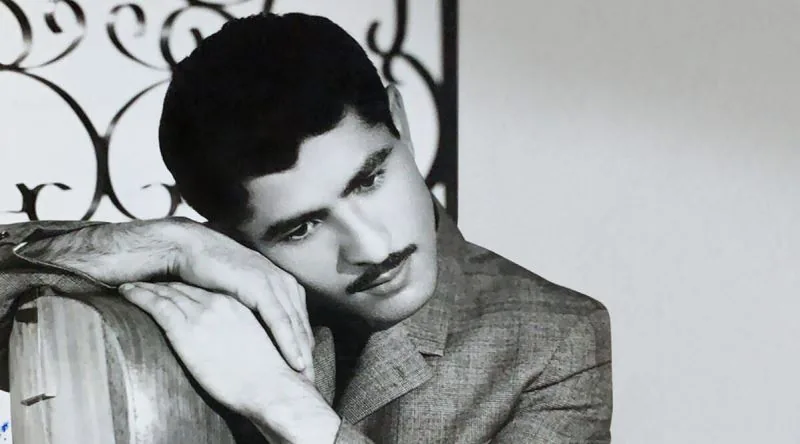
Aşık Mahzuni Şerif was a Turkish folk poet and bağlama virtuoso whose songs of social justice and Alevi tradition made him the defining voice of Turkey's oppressed from the 1960s until his death in 2002. His life's work turned the ancient ozan tradition into a living protest movement, carried on the shoulders of every worker, student, and villager who ever sang along to his aching, defiant melodies.
Aşık Mahzuni Şerif was a Turkish folk poet and bağlama player who used the Alevi ozan tradition to voice the struggles of the poor and marginalized. From the 1960s onward, his songs became anthems of social protest, and he remained a beloved figure until his death in 2002.
- Mahzuni Şerif was born in 1939 in the village of Berçenek, Kahramanmaraş, Turkey.
- He began performing as an aşık, a traveling folk poet, in his teens, mastering the bağlama and the oral tradition of his Alevi faith.
- His songs, like "Katil Amerika" and "Yedin Beni," became rallying cries for social justice movements in 1960s and 1970s Turkey.
- He recorded over 400 albums and thousands of poems during his career, earning him the title "Mahzuni" or "sad one" for his poignant themes.
- Mahzuni Şerif died in 2002 in Cologne, Germany, but his legacy lives on as a cornerstone of Anatolian protest music.
The Boy Who Learned to Sing in the Cem House
Long before he became a voice for millions, Aşık Mahzuni Şerif was a boy shaped by the flickering candlelight of Alevi-Bektashi Cem ceremonies. These intimate gatherings, where music, prayer, and fellowship wove together, were his first classroom. They taught him the language of morality, love, and human connection that would later pour out of his saz and into his lyrics.
But the Cem house alone didn't forge the poet. Mahzuni himself would say that the real fire came from something else: the cry of ordinary Turkish people living under what he called unjust rulers. That collective suffering, the daily grind of poverty and being silenced, pushed him to resist. The spiritual warmth of the ceremonies sharpened his heart, and the country's pain sharpened his tongue.
His path to that voice took an unexpected turn in the 1950s. Mahzuni chose a military education, and some versions of his story claim that civilian schools were reserved only for children of village chiefs, high bureaucrats, and uniformed elites. That picture isn't quite accurate. The truth is simpler and harsher: military school was free. For a poor Anatolian boy, it was one of the only doors that opened. The uniform's flashy appeal may have drawn some village kids in, but for Mahzuni, the decision came down to money his family didn't have.
Those military years didn't keep him from the literary world for long. Just a few years later, he crossed paths with writers like Hasan Hüseyin, Ahmet Arif, Yaşar Kemal, and Can Yücel. The two who hit him hardest were Ahmet Arif and Hasan Hüseyin. These democratic poets worked patiently to break down his narrower sectarian views, steering him toward a more contemporary, socially conscious outlook. They gave him new words for the anger and hope already stirring inside him.
A Borrowed Saz and a Life-Changing Night in Cebeci
The year was 1962, and a young, unknown poet named Mahzuni stood in the dusty yard of an open-air cinema in Cebeci, a district of Ankara. He had no proper saz of his own and no shoes fit for a stage, yet that night he would walk into Turkish folk history. It was the night he first met the legendary Aşık Veysel, a meeting that would change everything for the man who would become Aşık Mahzuni Şerif.
The concert was a gathering of some of the era's most celebrated voices. According to the original account, names like Aşık Davut Sulari, Aşık Daimi, Ali Ekber Çiçek, Nurettin Dadaloğlu, Nezahat Bayram, and Neşet Ertaş were all part of the lineup, though the exact billing of that particular evening is not something the records reliably confirm. What is certain is the state Mahzuni was in. He was young, poor, and freshly out of military school, with nothing to his name but a burning need to be heard.
With no instrument of his own, he borrowed a saz from a man named Rıza Aslandoğan. That borrowed saz carried him through his very first public performance. He walked onto that stage in his shabby clothes, and something extraordinary happened. The crowd called him back not once, not twice, but five times in a row. Five encores for a boy who had never played for an audience before. Standing behind the curtain, listening to every note, was Aşık Veysel.
Some versions of the story say that Veysel was so moved that he traveled Anatolia with Mahzuni for nearly eight years, sharing hundreds of memories on the road. But that part of the tale does not hold up. The truth is more modest: their collaboration lasted only a few years, cut short by Veysel's failing health before his death in 1973. Still, those years were formative. For a man who had been thrown out of the military and left jobless, married and burdened with children at a painfully young age, Veysel's nod from behind the curtain meant more than any paycheck. That single night in Cebeci, with a borrowed saz and worn-out shoes, was the door that opened onto his life as Aşık Mahzuni Şerif.
From Sectarian Poet to Socialist Voice
The 1960s were, in Mahzuni's own words, the years when he practiced the strictest "Alevism." Then something shifted. According to the original account, M. Ali Aybar, the leader of the Workers' Party of Turkey (TİP), reportedly invited him to the party's Çankaya youth branch in 1963, though this specific detail remains contested across sources. What is certain is that this period marked a profound transformation in his art and politics.
Mahzuni had grown up steeped in the rituals of Alevi Cem ceremonies, which shaped his moral compass around love, compassion, and fellowship. But by the early 1960s, he was moving beyond purely sectarian concerns. The invitation to TİP, whether or not it came directly from Aybar, pulled him toward class struggle. He began standing alongside fellow musicians and activists like Nesimi Çimen, Kul Hasan, and H. Çırakman, and together they faced prosecution for their political activities.
In 1964, Mahzuni released his first record. It was a moment that put him on the national map. His early 45-rpm records gave voice to the oppression experienced by Alevi communities, the pain he knew intimately from his own life. But as he watched the world around him, he realized that the suffering was not confined to one group. The poor, the workers, the disenfranchised, they all carried similar burdens. His songs began to widen, taking on class and social themes that spoke to anyone who had ever felt the weight of injustice.
This was the pivot. The young poet who once sang strictly for his own community was becoming something larger: a voice for all the dispossessed. The saz in his hands was no longer just an instrument of sectarian identity; it was becoming a weapon of solidarity. Soon, he'd need sports halls to hold the crowds.
Filling Sports Halls in the 1970s
By the 1970s, Aşık Mahzuni Şerif could pack sports halls with listeners who came for him alone. Tens of thousands of people filled concert venues across Turkey's major cities just to hear his saz and his voice. It was a remarkable feat for a folk poet who had started with borrowed instruments and worn shoes.
The crowds, though, were never just about the music. Turkey in those years was cracking under political pressure. Student movements at METU and the Faculty of Political Sciences in Ankara were pushing back against what they saw as imperialist and fascist forces. Democratic mass organizations, village associations, and town councils were all simmering with discontent. Nationalists, religious conservatives, and democrats were locked in bitter conflict with one another.
Mahzuni stood squarely beside the democratic and intellectual circles during this turmoil. He carried his saz into that storm and chose his side openly. The thousands who came to hear him were not merely paying tribute to an artist. According to the original account, their presence was a collective reaction against an oppressive and broken system. In those halls, thousands sang his words back to him, their frustration echoing off the walls.
His inner circle during those years included Cem Karaca, Edip Akbayram, and Selda Bağcan, all major figures in Turkish music. They were close friends, bound by music and by shared convictions. But that friendship hit a wall when Karaca returned to Turkey from Germany. Contrary to the popular version, records suggest it was not Turgut Özal who personally brought Karaca back, but rather a state decision made during Özal's government.
The rift between the two men was deeply personal. Mahzuni had traveled all the way to Munich to beg Karaca to come home. He had sat with Karaca's mother, Toto, and cried with her, pleading for her son's return. Karaca refused. When he finally did come back through official channels, Mahzuni felt hurt that his own desperate efforts had meant less than a bureaucratic arrangement. He stopped calling. The friendship never recovered.
Pir Sultan's Heir and a Legacy That Keeps Singing
Aşık Mahzuni Şerif's deepest creative roots ran straight back to Pir Sultan Abdal, the 16th-century Alevi poet executed for rebellion. He modeled his saz playing and vocal style on Aşık Davut Sulari. These two masters formed what he called the twin foundation walls of his art. Pir Sultan gave him his fire, his defiance, his spiritual depth. Sulari gave him the sound, the touch on the strings, the phrasing that made every word land like a hand on your shoulder.
According to the original account, both Aşık Veysel and Davut Sulari reportedly described Mahzuni during their lifetimes as "the Pir Sultan of the era." That is a heavy crown to place on anyone's head, and the attribution to both masters is not consistently documented in reliable sources. What is certain is that Mahzuni carried that inheritance forward without ever turning it into a weapon. His bağlama was never a gun, his words never bullets. He sang for the oppressed, for the worker, for the villager, for the student, but he never sang for hatred. His vision stayed universal, and that is precisely why his music refused to age.
The proof sits in the decades after his peak. Turkish rock bands and pop artists began covering his songs, finding in his melodies a flexibility that crossed genres effortlessly. From the 1990s onward, his pieces have been reinterpreted in folk, rock, pop, and even electronic arrangements, each new version sounding fresh rather than nostalgic. His songs about injustice still hit like they were written this morning. That is the mark of a poet who understood something timeless about human suffering and human dignity.
Mahzuni's legacy is not locked in a museum. It lives in the hands of every young musician who picks up a bağlama and learns one of his songs, in every cover that introduces him to a new generation, in every concert hall where his voice still echoes. He was a man who suffered enormously throughout his life, yet what he left behind was not bitterness. It was an open heart, a wide vision, and a body of work that keeps finding new listeners who need to hear exactly what he had to say.
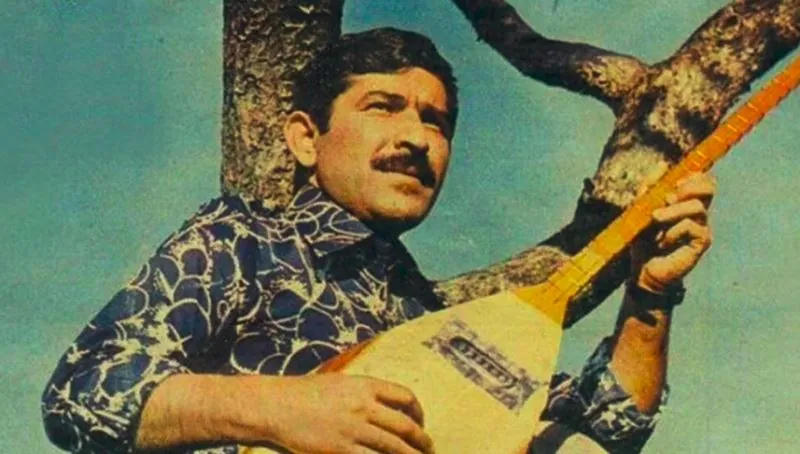
Frequently asked questions
What made his poetry unique?
Aşık Mahzuni Şerif could take the heaviest emotions, deep pain, joy, injustice, and love, and press them into plain, honest words that a child and a grandparent could both feel in their chest. He never dressed his verses up in pretension. He sang about what people actually lived through, and that directness is what let him reach listeners of every age across Turkey.
How did Aşık Veysel influence him?
Aşık Veysel, one of Turkey's most revered folk poets, became a defining influence when the two met in 1962 at an open-air cinema concert in Cebeci, Ankara. Veysel watched the young Mahzuni perform and took him under his wing. According to the original account, they then traveled Anatolia together for years, though the exact duration of their journeys is contested in different retellings.
Why is he compared to Pir Sultan Abdal?
Mahzuni himself pointed to Pir Sultan Abdal, the 16th-century Alevi poet executed for rebellion, as his greatest inspiration. He saw Pir Sultan as the ultimate voice against oppression, and he consciously carried that torch forward. The comparison stuck because Mahzuni faced persecution in his own era for singing about injustice, much like his centuries-earlier hero had.
What was his relationship with Cem Karaca?
Mahzuni and rock musician Cem Karaca were close friends who drifted apart over politics. When Karaca left Turkey after the 1980 coup, Mahzuni reportedly traveled to Munich to beg him to come home, even crying alongside Karaca's mother. The rift came when Karaca finally returned, facilitated by Turgut Özal's government, not by Özal personally, and Mahzuni felt hurt by the timing. Editorial note: Any facts which remain unconfirmed are presented as such, hedged to reflect the gaps in the historical record.
Got a take on this? Add your voice to the conversation below →
No comments yet. Be the first.