Another Round Film Analysis: Kierkegaard & Alcohol Theory
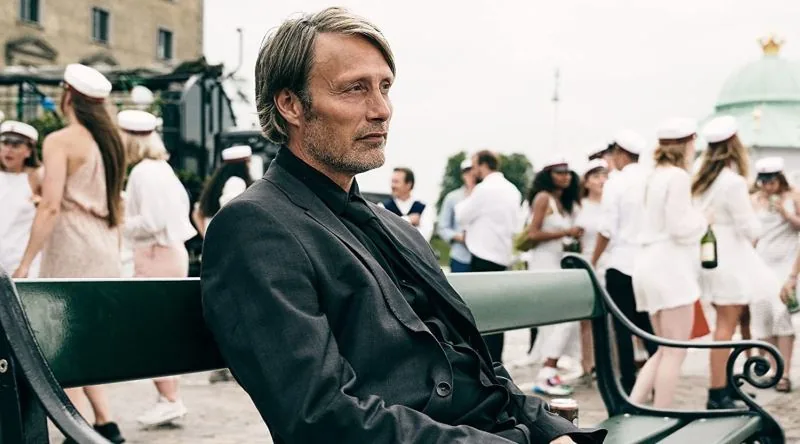
Thomas Vinterberg's 2020 drama "Another Round" uses a radical alcohol experiment to probe existentialist philosophy, directly inspired by Kierkegaard's ideas and a real-world theory from Norwegian psychiatrist Finn Skårderud, yet its celebratory surface masks a profound tragedy rooted in the director's personal loss. The film follows four Danish high school teachers who test the hypothesis that a constant blood alcohol level of 0.05% can unlock creativity and joy, but what begins as a lark spirals into a harrowing confrontation with midlife despair. The story grips you because it dares to ask whether we need intoxication to feel alive, and it does so with a reckless, heartbreaking honesty that lingers long after the credits roll.
In 2020's "Another Round," four Copenhagen teachers test Skårderud's theory that 0.05% blood alcohol unlocks freedom and creativity. Martin, played by Mads Mikkelsen, leads the experiment, which initially revitalizes his life but ultimately collapses into tragedy. The film, directed by Thomas Vinterberg, channels Kierkegaard's existential movement and the Apollonian-Dionysian conflict, ending with Martin's iconic, ambiguous dance.
- The film premiered in 2020 at the Toronto International Film Festival.
- Director Thomas Vinterberg's daughter Ida died in a car accident during production.
- Mads Mikkelsen's final dance scene, set to the song "What a Life," has become a defining cinematic moment.
- The film's Danish title, "Druk," reflects the central experiment's escalation.
- The narrative draws heavily on Søren Kierkegaard's existentialist writings, particularly his ideas about anxiety as a trigger for movement and existence.
The Premise That Started It All: A 0.05% Theory
In 2020, Danish director Thomas Vinterberg released Another Round (originally Druk), starring Mads Mikkelsen as Martin, a high school teacher whose life has quietly deflated. The film opens in the thick of a midlife rut. Four teachers, Martin, Nikolaj, and two others, shuffle through the same loop day after day: home to work, work to home. They are competent but hollow, going through motions that once felt meaningful. Martin's marriage has gone cold, his students barely register his presence, and he has become, by his own admission, a boring man.
Everything shifts at Nikolaj's birthday dinner. Over drinks, Nikolaj brings up a provocative idea from Norwegian psychiatrist Finn Skårderud. The theory holds that humans naturally run a blood alcohol level of 0.05 percent, and that maintaining that slight buzz actually boosts creativity, confidence, and general well-being. It is a real concept Skårderud has floated as a deliberately provocative thought experiment, not a clinical prescription. But the four friends latch onto it. They decide to test the theory on themselves, keeping a steady low-level intoxication throughout the school day and documenting the results as a pseudo-scientific experiment.
The plan sounds reckless, and it is. But the film's early scenes make you understand why they try it. These are men who have stopped feeling anything at all. A little alcohol promises to wake them up. The experiment begins modestly enough, with carefully measured doses, and the immediate payoff is unmistakable. Their lessons become livelier, their jokes land, their students actually pay attention. For a while, the theory seems to work. The classroom scenes crackle with newfound energy as the teachers rediscover what it feels like to be present, to be sharp, to be liked. It is a dangerous kind of success, and the film knows it. This is the setup for a story about how a small, seductive idea can take over a life before you notice what you have traded away. The premise is deceptively simple, but the questions it raises about boredom, freedom, and what we numb ourselves against are anything but.
The Experiment Works (Until It Doesn't)
The first phase of the experiment delivers exactly what the four teachers hoped for. Within days of maintaining a steady, low-level buzz, Martin and his colleagues find themselves loosening up in ways they had forgotten were possible. Their classroom voices grow warmer, their jokes land with actual charm, and the heavy fog of routine that had settled over their marriages and friendships starts to lift. Students who once seemed distant now lean in during lessons. Spouses who had grown accustomed to silence suddenly have someone worth talking to again. The theory, borrowed from the Norwegian psychiatrist Finn Skårderud, appears to be holding up in practice.
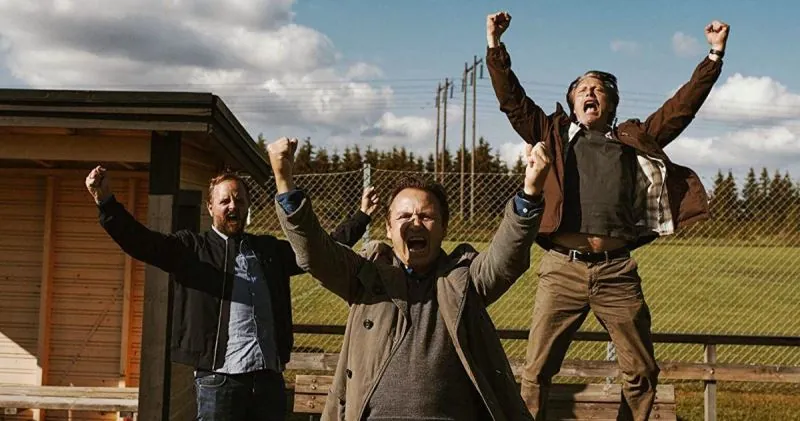
Emboldened by these early wins, the group decides to push further. They raise their target blood alcohol level, convinced that if a little helps, a bit more will help even more. This is where the film's tragicomic heart begins to beat. Watching these middle-aged men try to maintain professional composure while visibly tipsy is genuinely funny, but the laughter gets caught in the throat. They are drinking illegally on school grounds, in broad daylight, and every near-miss with a colleague or administrator sends a jolt of tension through the scene. The viewer is torn between grinning at their antics and wincing at the inevitable exposure.
The third phase leaves comedy behind entirely. The goal shifts to reaching peak intoxication, the point where consciousness blurs and control dissolves completely. Martin hesitates at first, sensing the danger, but he eventually surrenders to what the film frames as the Dionysian path. He adopts a "let whatever happens happen" attitude that feels less like liberation and more like a quiet slide into dependency. The experiment stops being a study and starts becoming an escape. What began as a playful inquiry into creativity and well-being now carries the weight of real consequence, and the audience watches the four friends cross a line they cannot easily cross back over.
Kierkegaard, Anxiety, and the Dance of Existence
At the beating heart of Another Round film analysis sits a philosophy that is anything but academic. In one of the film's classroom scenes, the Danish teacher Martin, played by Mads Mikkelsen, brings Søren Kierkegaard directly into the conversation. The 19th-century Danish philosopher argued that anxiety is not something to flee from but rather a trigger for movement and, ultimately, for existence itself. That idea becomes the quiet engine driving everything you watch on screen.
Martin's journey is not about reaching a destination. He moves through the film because staying still feels like dying. Kierkegaard's insight, that we exist precisely by moving, by stepping into the uncertainty that frightens us, plays out in every choice Martin makes. His walk toward the final dance is not a commute; it is an act of being. The film keeps returning to this tension between standing frozen in a comfortable, dull life and leaping into something unpredictable.
That tension takes shape through a series of vivid oppositions. You have Apollonian order, named after the Greek god of harmony and restraint, set against Dionysian chaos, the god of intoxication and abandon. The film weighs risk against security, anxiety against letting go, perfection against acceptance. These are not abstract categories. They are the lived realities of four high school teachers who decide, midlife, to test a theory proposed by Norwegian psychiatrist Finn Skårderud that humans carry a natural blood alcohol level of 0.05 percent, and that maintaining this level sharpens creativity and well-being.
Director Thomas Vinterberg never tips the scales. He refuses to tell you which side is right, whether the orderly life is a prison or the chaotic one is a trap. The audience is left to sit with the question, much like Martin himself must. There are no easy answers, only the uncomfortable freedom of choosing.
By the final scene, Martin has surrendered to the Dionysian pull. He dances a jazz ballet to the song "What a Life" by Scarlet Pleasure, on a day that should feel sorrowful, and yet his movement feels weightless. In that moment, Kierkegaard's words land with full force. Anxiety, the philosopher wrote, is the dizziness of freedom. Martin stops fighting that dizziness and simply dances within it.
The Final Dance: What a Life!
Martin finally gets his dance. After a year of controlled drinking experiments, chaos, and a brush with tragedy, the Danish history teacher from the 2020 film Another Round (known as Druk in its native language) steps onto a harbor promenade and lets loose in a way he never could in the film's opening scenes. The jazz ballet he has been quietly yearning for happens in the movie's final moments, set to Scarlet Pleasure's "What a Life."
The moment lands on a day that should feel heavy. His students are celebrating their graduation, and there is an undercurrent of loss running through the scene, a nod to the grief that shaped the production itself. Yet Martin moves with a lightness that feels earned. He has stopped performing the role of the stiff, emotionally frozen teacher. He has embraced the Dionysian side of himself, the spontaneous, messy, joyful part that his carefully ordered life had squeezed out.
That is the emotional payoff of this Another Round film analysis: the film does not moralize about alcohol, and it does not pretend the experiment ended neatly. Instead, it leaves us with Martin dancing, fully present in his body, unbothered by who might be watching. The choreography is not polished. It is exuberant, slightly uncoordinated, and completely sincere.
The scene quietly echoes Soren Kierkegaard, the 19th-century Danish philosopher referenced throughout the film. His line about anxiety being "the dizziness of freedom" hangs over Martin's journey. He has felt that dizziness, the vertigo of too many choices and too much fear. Now, in this final sequence, he moves through it rather than away from it.
There is one detail worth noting about the film's backstory, because it adds weight to that dance. Contrary to what some popular retellings claim, director Thomas Vinterberg did not change the plot from an alcohol-free alternate reality after a personal tragedy. The tragedy was real: his daughter Ida died in a car accident four days into filming, not four days before it began. The grief reshaped the production, and Vinterberg dedicated the film to her. Martin's final dance, then, carries a double meaning. It is liberation for the character, and a tender, defiant celebration of life from a filmmaker who knew exactly how fragile it is.
The Tragedy Behind the Camera: Vinterberg's Loss
The story behind Another Round carries a weight that most viewers never feel while watching it. Director Thomas Vinterberg poured personal grief into this project, and the details of that loss have been widely shared. But the way the story usually gets told is not quite how it actually happened.
According to the popular version, Vinterberg originally conceived the film as an alternate reality where alcohol never existed in human history. Then, four days before filming began, his daughter Ida died in a traffic accident, and he supposedly scrapped that concept to write the alcohol experiment story instead. That account circulates widely online, and it is the version many fans of the film have come to accept as fact. The truth, however, is different. Ida died four days into filming, not before it started. And the plot was not rewritten from an alternate-reality premise. The film was always going to be about the alcohol experiment that audiences see on screen. The tragedy did not reshape the story so much as it gave it a deeper emotional current.
What is true is that Ida's death hit the production hard. Vinterberg dedicated the finished film to her memory. Some accounts suggest that certain scenes were shot in her actual classroom with her real classmates, though these details have not been independently verified. What is certain is that the film carries a dedication to Ida, and that grief lives somewhere inside the finished work, even if it is not visible on the surface.
The loss also explains something about the film's emotional texture. Another Round is not a celebration of drinking. It is a film about middle-aged men who are stuck, who have lost their spark, and who try to find it again through a dangerous experiment. The joy in the film is always tinged with sadness, and the final dance sequence feels less like triumph and more like a desperate grasp at life. Knowing what Vinterberg was going through while making it, that tone makes a painful kind of sense. The film asks whether we can truly live fully, and it was made by a man who had just been reminded how fragile life is.

Frequently asked questions
What is the main theory behind the movie Another Round?
The film centers on Norwegian psychiatrist Finn Skårderud's provocative idea that humans naturally have a blood alcohol level of 0.05%, and that maintaining this level can enhance creativity and well-being. In the 2020 Danish film "Another Round" (Druk), four teachers test this theory on themselves, drinking during work hours to see if it improves their lives.
Who is Finn Skårderud and what is his alcohol theory?
Finn Skårderud is a real Norwegian psychiatrist who proposed the concept that humans have a natural blood alcohol level of 0.05%. His theory suggests that keeping this level in the bloodstream makes people more creative, relaxed, and better able to enjoy life. In "Another Round," the character Nikolaj introduces this idea to his teacher friends during a birthday dinner.
How does Kierkegaard's philosophy relate to Another Round?
The film explicitly references Danish philosopher Søren Kierkegaard's concept that anxiety serves as a trigger for movement and existence. Martin's journey embodies this idea, as his midlife crisis and existential unease push him toward action rather than stagnation. The film suggests that we exist more fully when we keep moving, even when the path feels uncertain.
What is the significance of the final dance scene in Another Round?
Martin's jazz ballet performance to the song "What a Life" by Scarlet Pleasure represents his liberation and embrace of the Dionysian side of his personality. After spending the film torn between order and chaos, he finally lets go completely, dancing with abandon. This moment captures the lightness of being that Kierkegaard wrote about, showing a man who has stopped worrying about perfection.
How did Thomas Vinterberg's daughter's death affect the film?
The story circulating online claims Vinterberg changed the film's plot after his daughter died in a traffic accident four days before filming began, supposedly shifting from an alternate reality without alcohol to the current story. However, records show his daughter actually died four days into filming, and the plot was not altered in the way described. The film remains dedicated to her memory.
What does the Apollonian and Dionysian dichotomy mean in Another Round?
The Apollonian and Dionysian dichotomy represents the tension between order and chaos, named after the Greek gods Apollo and Dionysus. In "Another Round," this tension plays out through the teachers' experiment, as they balance structured lives against the liberating effects of alcohol. The film leaves it to viewers to decide which approach leads to a more fulfilling existence.
Why do the teachers in Another Round decide to drink at work?
The four teachers decide to drink at work because they are seeking to escape midlife monotony and test Skårderud's theory about creativity and well-being. They feel stuck in the routine of going from home to work and back again, disconnected from their students and families. The experiment begins as a way to reignite their passion for teaching and life itself. Editorial note: Any facts which remain unconfirmed, such as the precise details of the real Skårderud theory's application, are presented as such, hedged within the analysis.
Got a take on this? Add your voice to the conversation below →
No comments yet. Be the first.