Anime and Manga: A Beginner's Guide to Demystify
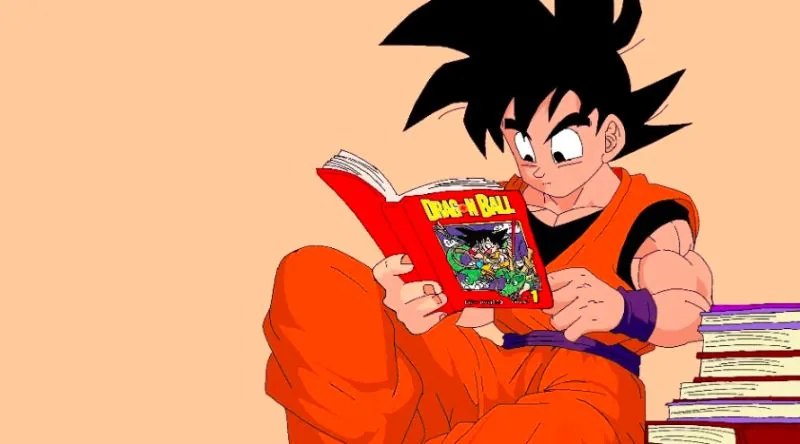
Anime and manga are Japan's twin storytelling industries, and they have been crossing into American life for decades. Manga is the printed page, anime is the animated screen, and both run on genres and audience labels that reward a little decoding before you dive in. If you have ever wondered why a friend swears by subtitles or why a show suddenly detours into filler episodes, this beginner guide to anime and manga is built for exactly that moment. No prior knowledge required, just a willingness to try something new.
Anime is Japanese-style animation and manga is Japanese-style comics, and the two are closely linked, with many anime adapted from manga. Demographics like shoujo, shounen, seinen and josei describe target audiences, not quality. Beginners can choose subbed or dubbed freely and should treat recommendations with mild caution.
- Manga is read right to left in the original Japanese format, which surprises many first-time readers.
- The demographic labels shoujo, shounen, seinen and josei indicate intended audience, not genre or merit.
- Filler episodes are anime-only storylines that do not appear in the source manga, and they can be skipped.
- Subbed and dubbed versions both exist for most popular titles, so viewers can pick whichever suits them.
- Vocaloid is a singing synthesizer software, not an anime genre, though its characters appear in anime-style media.
Anime and Manga: What They Actually Are
Strip away the branding and the merch shelves, and the answer is almost embarrassingly plain: anime is animation, and manga is comics. That is the whole of it. The words are Japanese, the drawing habits are Japanese, but the medium underneath is the same one that gave the world Looney Tunes and the Sunday funnies.
Why lead with something so obvious? Because a huge number of people will argue the opposite, and they will argue it hard. To them, anime and manga are a separate species, a thing apart from "cartoons" and "comic books." The author of a July 25, 2025 guide on Ekşi Şeyler opens by refusing that framing outright. His point is that the difference lives in style, subject matter and vocabulary, not in the art form itself.
Different drawing styles, different typical stories, Japanese names for everything: none of that lifts anime and manga out of animation and comic art. It makes them a subculture within it.
Here is where the argument gets slippery, and where it is worth being careful. The author's stronger claim, that anime and manga are produced with essentially the same techniques as Western animation and comics, is his framing rather than a settled fact. It is a fair way to think about the medium, but treat it as a starting position, not a verdict.
His next move is the one people remember, and it lands a little crooked. The general assumption, he says, is that anything animated or drawn must be for children. Not so. He points to Western series that were never made for kids, and this is where the list needs a correction: South Park, The Simpsons and Family Guy genuinely earned their adult reputations, but Gravity Falls is a Disney children's and family show, so it does not belong in that lineup. The broader point still stands on its own. Animation has never been a children's-only art form, in Japan or anywhere else.
That single misunderstanding is what the whole guide is built to unpick. Once you accept that anime and manga are animation and comics, just with their own conventions, the rest of the world stops looking like a locked door and starts looking like a shelf you already know how to browse.
Don't Feed the Troll: How Beginners Get Burned by Recommendations
If you have never watched a single anime or read a single manga, the people handing you recommendations are the single biggest risk to your first week. Not the art form. The list. A stranger, a classmate, a friend of a friend can name a title, skip the plot entirely, and lie about what it contains. And the "recommendation" waiting at the end of that sentence may turn out to be hentai, sexual content dressed up as an innocent suggestion.
So here is the rule, and it costs you thirty seconds: look the title up online before you press play or turn a page. Read what it actually is. Then decide for yourself whether you want it in your evening. Nobody else gets that vote.
Set the trolls aside and a quieter problem remains. The crowd tends to recommend the same handful of titles to everyone, the popular hits of the moment or the old "cult" classics that get passed around like a secret handshake. Those lists are not useless, but they are repetitive, and they rarely match where you personally are starting from.
My own advice runs against the grain. Stay away for a while from never-ending series like One Piece. Start with short, snackable shows, at most two seasons, something you can finish in a weekend and walk away from clean. If the format clicks with you, graduate to the longer sagas at your own pace. If it doesn't, you've lost a weekend, not a decade of your life.
Shoujo, Shounen, Seinen, Josei, Kodomo: Demographics, Not Genres
Shoujo, shounen, seinen, josei and kodomo are demographic categories, not genres. Each word simply names the audience an anime or manga was built for: shoujo means young girl, shounen young boy, seinen young adult man, josei adult woman, and kodomo child. None of them tells you what kind of story you are about to get, and none of them locks a work into one type of plot.
You will see these five words stacked in the genre list on almost any anime and manga database, right next to "action" or "romance," which is exactly why beginners assume they belong in the same family. They don't. One labels who the publisher or studio is aiming at; the other labels what happens on the page. A shounen or seinen title does not have to contain superpowers or a single fight scene. A shoujo or josei title does not have to be a love story. A josei or seinen title does not have to lean on sexuality, dark themes or heavy drama. The demographic is a shelf, not a script.
In practice, most people barely glance at these labels at all. The two places they still get enforced are kids' anime on one end and hentai or gore on the other. Outside those edges, the lines blur and nobody minds. A girl reading shounen and seinen is so ordinary that no one raises an eyebrow, and a guy working through a shoujo or josei series isn't going to hear a word about it from anyone worth listening to.
Real genres, meanwhile, work in anime and manga exactly the way they work in any other art form. Science fiction, romance, action, thriller, drama: all of it shows up, all of it gets mixed, and all of it lives independently of who the target reader is supposed to be. Once you separate the demographic question from the genre question, those confusing Japanese words shrink down to what they actually are, a small piece of publishing shorthand.
Subtitles or Dubs? The Seiyuu Factor
If you refuse to watch anything with subtitles, anime may feel like torture, because the audience reportedly rejects essentially every non-Japanese dub and says those performances do not reflect the anime's spirit. The practical consequence is simple: dubbed anime, and Turkish dubs in particular, are about as easy to find as an oasis in the desert.
That "largely dislike" framing is a generalization, not a measured survey, so treat it as the community's loud opinion rather than a verdict. What you can bank on is the scarcity. Hunt for a Turkish-language version of a series and you will spend more time searching than watching.
Now the part that makes the fork worth understanding. In Japan, voice acting has its own word, seiyuu, and it is a genuinely developed industry. The original account frames it as a career people dream about as much as becoming a mangaka or an animator, though that ranking is one writer's impression rather than a documented fact.
Here is where the author gives ground and then takes it back. Turkish voice actors, in that view, can hold their own on sheer vocal range. Where the Japanese performers pull ahead is emotional transmission. The studio culture reportedly asks them to imagine the scene from the inside, to live the voice rather than fake it, and that difference reaches you through the speakers even when you do not speak the language.
So the fork is real: subtitles open the whole library, dubs narrow it to a handful of titles. Pick your side with your eyes open.
Filler, Toxic Fans, and the Vocaloid Confusion
Three things trip up almost every newcomer to anime and manga: the strange word "filler," the loud fans who ruin a series before you even press play, and a blue-haired virtual singer who keeps getting mistaken for an anime character. None of them is hard to untangle once someone explains them plainly.
What Is Filler, and Why Does It Exist?
Filler is anime-original content written from scratch, material that simply does not exist in the manga the show was adapted from. Studios usually stitch it in to slow down a plot that is racing ahead of its source, or to buy time while the manga catches up. Compared with the real episodes it can feel flatter, and if you happen to be reading the manga and watching the anime at the same time, it gets genuinely maddening. You know that scene never happened on the page, and there it is on your screen anyway.
There is a counterargument worth hearing, though. Would you really want a series you love to end abruptly, gone in an instant like a bag of chips you were enjoying? I wouldn't. A little padding beats a sudden void.
The Fans Who Poison the Well
Here is a rule that will save you a lot of grief. If someone says they hate a work regardless of its actual content, they probably don't hate the work at all. They hate its fanbase. You can spot the toxic type a mile off: they insist their favorite is the best series ever made and its characters the strongest in existence. Back in my day those arguments sounded like "Kaneki one-shots everyone" or "Goku one-shots, the man destroys planets." Keep your distance from that crowd, and if you catch yourself becoming one of them, straighten up.
And hold on to this: there is no such thing as the best anime or manga. There are only works that get called the best because more people happen to love them.
So Is Hatsune Miku an Anime Character?
No, and the confusion is understandable. Vocaloid is voice-synthesis software released by Yamaha. Producers use voicebanks, the vocal files inside the software, to build vocal recordings from lyrics or tones and then arrange full songs around them. Each voicebank gets personified with a name and an anime-style design: Hatsune Miku, Kaito, Luka, and Teto, though Kasane Teto is actually tied to UTAU rather than strictly Vocaloid. Artists are free to redraw those characters however a song demands, changing their look and even their personality.
Anime-style art does not make someone an anime character, even if anime adaptations have since been made. And for the newer generation, one warning: Hatsune Miku is not an original Fortnite character. She arrived in the game through a collaboration.
You Already Watched Anime as a Kid Without Knowing It
Here is the punchline of the whole guide: you are not a beginner. If you grew up in front of a television, you almost certainly spent years watching anime and manga adaptations without ever calling them that. The shows that filled your afternoons after school were often Japanese productions, dubbed into your language and slipped into the kids' block between commercials.
Take the oldest example. The 1963 version of Astro Boy is widely credited as the first Japanese TV anime series, and it set the template for everything that followed. Long before streaming, cartoons were already crossing borders.
Think back to the titles that had you glued to the screen. Şeker Kız Candy. Heidi, the hand-drawn one, not the 3D remake. Kaptan Tsubasa, with its impossible curve shots. Yu-Gi-Oh and Beyblade, the playground arguments that followed. Pokemon and Digimon, Yokai Watch, Bakugan. Every one of those is anime. If you ever sat through Komşum Totoro or any other Studio Ghibli film, you were watching some of the most celebrated anime ever made.
A few entries on that list need a footnote. Voltron is not strictly anime, though it was adapted from some Toei Animation productions. Transformers is an American-Japanese co-production, and the 1984 first version is the clearest case of that partnership. And according to the original account, One Piece reportedly aired with a Turkish dub on Star TV in the early 2000s, though the channel and timing cannot be reliably confirmed.
So the next time someone tells you anime and manga are some foreign hobby you have to "get into," smile. You were already in. You just did not know the name for it.
Frequently asked questions
What is the difference between anime and manga?
Anime is animation and manga is comics. They are often described as using broadly similar techniques to Western cartoons and comic books, though that is a simplification. The divide is stylistic and cultural, not medium-based: different drawing styles, different subject matter, and Japanese naming turned them into their own subculture rather than a separate art form.
Are shoujo and shounen genres or demographics?
They are demographics, not genres. Shoujo (young girl), shounen (young boy), seinen (young adult man), josei (adult woman) and kodomo (child) describe the age and gender a title targets. None of them dictates what happens inside: a shounen story does not have to be action, and a shoujo story does not have to be romance.
Should I watch anime with subtitles or dubbed?
Subtitles are the safer bet. Japanese audiences reportedly dislike most dubs in languages other than Japanese, saying they miss the spirit of the original, though that is an unverified generalization. In practice dubbed anime is scarce and Turkish-dubbed anime especially hard to find. Watching subtitled avoids that hunt, though it is a chore if you dislike reading along.
What is filler in anime and should I skip it?
Filler is anime-original material written from scratch that never appeared in the source manga, often added to slow down a fast-moving plot. It can be less exciting than the real episodes, and it stings if you are reading the manga alongside. Skipping is not mandatory, and some viewers are glad a beloved series lasts longer.
Is Vocaloid considered anime?
No. Vocaloid is voice-synthesis software released by Yamaha, and its voicebanks are personified as anime-style characters with names like Hatsune Miku, Kaito and Luka, though Kasane Teto is associated with UTAU rather than strictly Vocaloid. Those designs do not make them anime characters, though anime adaptations have been made over time. Miku reached Fortnite only through a collaboration.
Why do people say anime is not a cartoon?
That claim does not hold up. Anime is animation, just as manga is comics, and both are often described as using broadly similar techniques to their Western counterparts, though that is a simplification. The real distinction is style, subject matter and the subculture around them. Plenty of Western animation, after all, is not made for children either.
What anime did I watch as a child without knowing?
Probably more than you think. The list includes Astro Boy, whose 1963 version is widely credited as the first Japanese TV anime series, along with Heidi, Pokémon, Digimon, Yu-Gi-Oh, Beyblade, Bakugan, Yo-kai Watch and Captain Tsubasa. Transformers counts too, particularly the 1984 original, an American-Japanese co-production.
How can I avoid toxic anime fans?
Research any recommendation online before you commit, since a stranger may hand you a title without telling you what it actually is. Start with short shows of two seasons or fewer instead of endless series like One Piece. And keep one thing in mind: there is no objectively best anime or manga, only the one more people happen to love. Editorial note: Details that remain unconfirmed are presented as such, and readers should verify specifics before relying on them.
Got a take on this? Add your voice to the conversation below →
No comments yet. Be the first.