Yörük Aydaş Rituals: Protecting Babies from Evil Eye
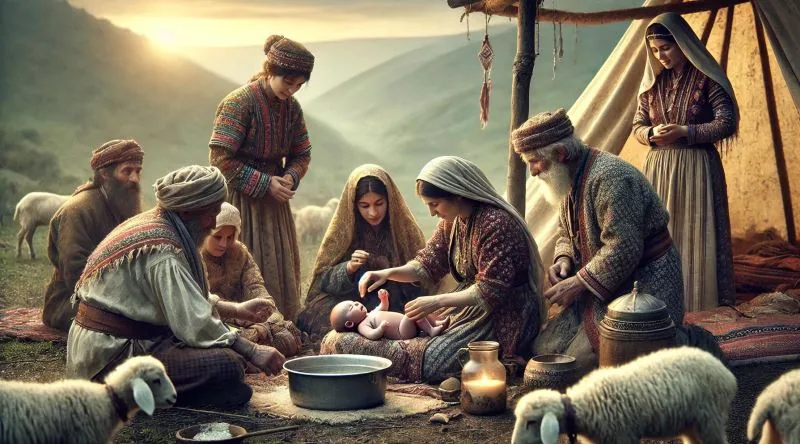
The Yörük aydaş rituals are ancient Anatolian nomad practices used to protect newborn babies from the evil eye, involving salting infants, washing them at crossroads, and preparing a special ceremonial meal called aydaş aşı. These shamanic-rooted traditions have been carried by Yörük families for centuries as they migrated between highland pastures and coastal plains, and they remain a deeply emotional expression of a community's fierce love for its most vulnerable members. When a baby is born into a Yörük tent, the entire encampment rallies around the mother and child, weaving a protective web of ritual and belief that feels both ancient and urgently personal.
Yörük aydaş rituals are traditional baby protection practices among Turkish nomadic communities, involving salting newborns, washing them at crossroads, and sharing a special meal to guard against the evil eye. These customs blend pre-Islamic shamanic beliefs with Anatolian folk traditions and remain active in some Yörük communities today, though exact regional variations are unconfirmed.
- The Yörük are nomadic pastoral communities in Anatolia who have preserved aydaş rituals for generations.
- Salting a newborn is believed to strengthen the baby against illness and malevolent spiritual forces.
- Washing an infant at a crossroads is a symbolic act meant to confuse and divert evil spirits.
- Aydaş aşı is a ceremonial meal prepared and shared to mark the baby's safe passage into the community.
- These practices reflect a blend of shamanic and Islamic folk beliefs common across rural Turkey.
I Was the Salted Baby: A Personal Entry into Yörük Aydaş Rituals
My grandmother salted me like a piece of animal hide when I was a newborn, rubbing me down the same way she would cure a goat skin. She wasn't just preserving me for winter. In the Yörük tradition, salting a baby was believed to keep body odor away, prevent jaundice, and shield the child from the evil eye. I was that salted baby, and I only found out years later that this odd practice belonged to a much larger web of beliefs called Yörük aydaş rituals.
The word "aydaş" won't appear in today's standard Turkish dictionary, but the Turkey Turkish Dialects Dictionary, also known as the Derleme Sözlüğü, lists it with a simple meaning: "weak, frail child." The term carries weight in the Yörük world, where a baby who suddenly loses strength, refuses to nurse, or starts wasting away is said to have become "aydaş." It's more than a fever or a cough. It's the kind of serious decline that makes a grandmother reach for old remedies.
I was born in February 1988, and reportedly, a few months later, my grandmother took me to a crossroads and washed me there. The story goes that I was a plump, well-fed baby boy, and she feared the evil eye would find me. So she performed the washing as a kind of preventive cure, a ritual bath before we migrated to the high plateau. I have a photograph from that day, though not from the salting. She used to tell me, "Son, fire won't touch you, you are yünük," using an old word for being washed clean or purified.
In Yörük tents, babies didn't sleep in fancy cradles with lace and welcome banners. A mattress went straight on the ground, and the swaddled baby lay there. That's why a strict rule developed: never step over a baby lying on the floor. If a child accidentally hops over a baby, the child is grabbed and walked backward over the baby again to undo the harm. Stepping over, the elders believed, could make the baby aydaş.
This is where the tradition deepens. In the Mediterranean regions where Yörüks settled, from Fethiye to Kaş, Demre, Antalya, Manavgat, Akseki, Alanya, Gazipaşa, Anamur, Mut, Silifke, Mersin, and across the Çukurova plain, these beliefs survived the transition from nomadic life. The rituals took different shapes depending on the village, but the fear behind them stayed the same. A baby's sudden illness was rarely just illness. It was a sign that someone's gaze had landed too heavily, or that an unseen force had brushed against the child.
The Yörük World: From Nomadic Tents to Settled Life
The Mediterranean coastline stretching from Fethiye through Antalya and Alanya down to Mersin and the Çukurova plain is old Yörük country, where Turkmen nomads finally traded their centuries-old wandering for fixed homes. These settlements along the southern Turkish shore became the permanent addresses of families who had followed pasture and season for as long as memory reached.
A very small number still live the old way, in goat-hair tents, moving with their herds between lowland winter pastures and high summer yaylas. But for the vast majority, transhumance is now a habit or a hobby rather than a survival strategy. Technology changed the equation: a journey that once took three days of slow migration by foot and animal can now be done in two hours by vehicle, which means people can keep their animals and their routines while sleeping in a proper house.
The shift was not entirely voluntary. From the 18th century onward, the Ottoman state pushed hard for Yörük settlement, applying pressure through a policy called iskân so these mobile populations could be taxed and controlled. The pressure was real and it shaped collective memory. The poet Dadaloğlu is remembered for voicing defiance in Çukurova with the line "ferman padişahındır, dağlar bizimdir" (the decree belongs to the sultan, the mountains are ours), though there is no record of an actual armed uprising led by him. His resistance lived in verse, not in battle.
Melih Cevdet Anday, the Turkish poet, took up this same settlement wound in his poem "Yörük Mezarlığı" (Yörük Cemetery), writing about nomads who weep among the graves, missing the old days before iskân scattered them. The poem captures what the forced change cost: a people cut off from movement, their defining trait taken away.
Yet the tents came down while the traditions stayed up. The beliefs, the remedies, the rituals, they all traveled from the goat-hair tents into the stone houses. The Yörük aydaş rituals for protecting babies are part of that stubborn inheritance, carried along the same routes the herds once walked.
What Makes a Baby 'Aydaş'? Folk Beliefs and Causes
Aydaşlık is not a simple cold. In Yörük folk belief, a baby becomes "aydaş" when it falls into a serious decline: refusing the breast, losing weight, or failing to thrive entirely. This is a condition that carries real weight in the community, and certain specific triggers are believed to bring it on.
The word "aydaş" itself does not appear in the current Turkish dictionary, but the Turkey Turkish Dialects Dictionary (Derleme Sözlüğü) records it with the meaning "weak, frail child." That definition captures the heart of the matter: an aydaş baby is one who has lost its grip on health and vigor, not merely one who coughs or runs a fever.
Three circumstances are traditionally blamed for causing aydaşlık. First, if a mother becomes pregnant again before weaning her child, and the nursing continues, the baby is said to become aydaş. Second, if a child who has not completed its 40-day postpartum period is brought into a home where a newborn lives, the older baby is believed to fall ill. Third, if a postpartum woman visits another postpartum woman, the child in that household is thought to suffer. These are recorded folk beliefs from Anatolian tradition, passed down through generations of Yörük families.
Another documented cause involves stepping over a baby lying on the ground. In Yörük tents, babies do not sleep in fancy cradles with lace and ornate carvings. Instead, a mattress is spread directly on the earth, and the infant is placed there, swaddled. If another child accidentally hops or skips over a baby lying in this way, the child is immediately grabbed and passed back over the baby in reverse. This reversal is the remedy, believed to undo the harm.
These beliefs are part of the broader Yörük aydaş rituals that have survived centuries of cultural change. The causes themselves read almost like practical wisdom wrapped in superstition: the first rule gently discourages closely spaced pregnancies, the second keeps unwashed visitors away from fragile newborns, and the third simply gives postpartum women a reason to keep their distance from one another's households. Whether understood as folk medicine or social guidance, these triggers have shaped how Yörük families protect their smallest members for as long as anyone can remember.
Rituals of Cure: Crossroads Washings and Shamanic Circles
When a baby in Gazipaşa, Antalya, fell weak and listless, the cure began with forty ordinary stones. Each stone was dropped into a container of water while the healer spoke aloud the name of someone who might have cast the evil eye, and then the child was washed with that water at a crossroads. The spot was chosen deliberately, because the locals reasoned that the person who cast the gaze would likely pass through that intersection eventually.
The ritual comes from a documented folk practice recorded in a DergiPark article on Anatolian healing traditions. In Gazipaşa, on the Mediterranean coast where Yörük families settled after generations of nomadic life, the crossroads washing was one of several ways to break aydaşlık, the wasting illness that made infants refuse milk and lose weight. The article describes the stones as a kind of accounting, one name per stone, forty chances to identify the source of the harm.
Further west, in the Yerkesik neighborhood of Muğla, the cure took a different shape. There, a woman would place the aydaş child inside a cauldron and walk around it three times, chanting "al ateşini, ver çocuğumu!" which means "take its fever, give me my child." The circling motion, the spoken incantation, the cauldron itself, all of it echoes older shamanic practices that survived centuries of settlement and change. A TRT Avaz video reportedly shows women in a Silifke village preparing "aydaş aşı," a special meal for the same purpose, though that footage is harder to verify.
These Yörük aydaş rituals belong to a wider web of belief. Stepping over a baby lying on the ground was thought to cause aydaşlık, and if a child did it by accident, the remedy was to pass the child back over the baby in reverse. The same DergiPark article lists other triggers: a mother becoming pregnant again before weaning, a newborn visiting a home where another baby had not yet completed its forty-day postpartum period, or a postpartum woman visiting another in the same condition. Each rule carried practical wisdom, spacing births, limiting exposure to infection, and keeping new mothers from each other's homes.
The Deeper Meaning: Shamanic Roots and a Grandmother's Charm
My grandmother never once told anyone her age. Ask her how old she was, and she'd smile and say, "yaşım yaylasına erdi evladım", "my age has reached its highland pasture, my child." She wouldn't utter a single number, terrified that naming it would invite the evil eye to find her.
That fear wasn't hers alone. It ran through generations of Yörük women who carried ancient shamanic traditions in their everyday movements: the blue glass nazar beads strung over doorways, the molten lead poured into cold water to diagnose a curse, the whispered prayers over a fretful baby. These weren't superstitions to them. They were survival instincts passed down through blood and memory, remnants of a belief system that placed nature at the very center of existence.
The more I learned about my own roots, the more I realized my grandmother's rituals weren't backward at all. They were the fossilized wisdom of a people who had lived so close to the earth that they'd forgotten where their bodies ended and the soil began. Nâzım Hikmet captured this perfectly in his poem "Türk Köylüsü" when he wrote that the Turkish peasant "learns from the soil, knowing without books." That's exactly what my grandmother was doing every time she washed me at a crossroads or salted my newborn skin like cured leather.
These customs are what scholars call "belief remnants", the surviving fragments of a shamanic worldview that once governed every aspect of Yörük life. The rituals around Yörük aydaş rituals are among the most vivid examples. When a baby fell ill and refused to nurse, losing weight and fading before the family's eyes, the diagnosis was aydaşlık. And the cure was never a doctor's visit. It was a ceremony.
In Gazipaşa, Antalya, the remedy involved forty stones dropped one by one into a container of water, each stone named for a person who might have cast the evil eye. The baby was then washed with this water at a four-way crossroads, chosen because the person who'd cast the gaze would likely pass through there eventually. In Yerkesik, Muğla, a woman would place the aydaş child in a cauldron and circle it three times, chanting "al ateşini, ver çocuğumu!", "take its fever, give me my child." Pure shamanic ritual, straight from the steppes of Central Asia.
My grandmother believed I was immune to such afflictions. "You're yünük," she'd tell me, using an old word meaning cleansed or purified. "Fire won't touch you." She'd washed me at a crossroads when I was just a few months old, in the spring of 1988, not because I was sick but because I was healthy, too healthy, too chubby, too likely to attract envious glances. It was her way of buying spiritual insurance against a world she knew could be cruel.
When I think about her now, I understand that she wasn't just protecting me from curses. She was protecting a way of life that had survived centuries of forced settlement, Ottoman pressure, and the slow erosion of nomadic identity. The Yörüks had been pushed off their migration routes and into villages, but they'd carried their tents and their beliefs with them. And in those beliefs, in the salt, the stones, the crossroads, the refusal to speak one's age, lay the memory of a people who had once moved freely across mountains, following the seasons like the birds.
Aşık Veysel, the blind folk poet, understood this bond with nature better than anyone. His verses about returning to the earth speak to the same instinct that made my grandmother wash me in running water and fear the evil eye:
"When I mix with my origin and become soil,
I'll become flowers and decorate my grave.
Mountains dress in green, clouds weep,
My voice ripples across the sky."
That's the deeper meaning of all these rituals. They remind us that we came from the earth and will return to it. My grandmother's charms, the nazar beads, the lead pouring, the crossroads washings, they were all ways of staying connected to that fundamental truth. She's gone now, but she left me something more valuable than any heirloom: the knowledge that our traditions aren't just old customs. They're the threads that tie us to our ancestors, to the soil, and to each other.
Frequently asked questions
What is the aydaş tradition in Yörük culture?
Aydaş is a folk belief system among Anatolian Yörüks centered on protecting babies from illness, weakness, and the evil eye. When a baby becomes "aydaş," it means the child has fallen into a serious state of decline, refusing to nurse, losing weight, or growing frail. These protective practices trace back to ancient shamanic traditions and remain part of Yörük cultural memory today.
How are babies protected from the evil eye in Turkish nomad culture?
Yörük families protect newborns through several layered practices: salting the baby's body, washing the child at a crossroads, attaching evil eye beads, and performing rituals like the forty-stone washing. In Gazipaşa, Antalya, for instance, forty stones are placed in water, each thrown while naming a person who might have cast the evil eye, then the baby is washed with that water at a crossroads. These customs blend practical hygiene with spiritual protection.
Why are newborn babies salted in Anatolian tradition?
Newborns are salted to prevent body odor, guard against jaundice, and ward off the evil eye. The practice involves rubbing salt over the baby's skin much like curing leather, a method one grandmother described as salting a child "like a hide." Beyond hygiene, families believed the salt created a protective barrier against harmful spiritual influences during the vulnerable first months of life.
What causes a baby to become aydaş according to folk belief?
Folk tradition identifies several triggers for aydaşlık: a mother becoming pregnant again before weaning her current child, someone bringing an un-40-day-old infant into a home with a newborn, a postpartum woman visiting another postpartum woman, or someone stepping over a baby lying on the ground. Each scenario involves crossing boundaries of postpartum purity or physical space, disrupting the baby's protective field.
How is aydaş aşı prepared and used in traditional practice?
Aydaş aşı is a special meal cooked in certain western Mediterranean regions like Fethiye to cure aydaşlık. Women in a Silifke village demonstrated the preparation in a TRT Avaz video, showing the dish being made communally with specific ingredients meant to restore the afflicted child's strength. The meal functions as both nourishment and ritual remedy, combining food with spiritual intention.
Where are crossroads used for baby washing rituals in Turkey?
Crossroads washing rituals appear in Gazipaşa, Antalya, and other eastern Mediterranean areas including Alanya and surrounding districts. Families bring the aydaş baby to a four-way intersection, believing that the person who cast the evil eye is likely to pass through that spot, thereby returning the negative influence to its source. The crossroads serves as a liminal space where spiritual exchange can occur.
What are the shamanic origins of Yörük baby protection customs?
These customs, including evil eye beads, lead pouring, and the crossroads washing, descend directly from ancient shamanic practices of Central Asia. The Yörüks carried these traditions through centuries of nomadic life across Anatolia, adapting them to new landscapes while preserving their core structure. The ritual circling of a cauldron in Muğla's Yerkesik neighborhood, where a woman walks around the child three times saying "al ateşini, ver çocuğumu" (take its fever, give me my child), mirrors classic shamanic healing ceremonies almost exactly.
Got a take on this? Add your voice to the conversation below →
No comments yet. Be the first.