Yaprak Dökümü: Why Ali Rıza Bey Was the Most Guilty
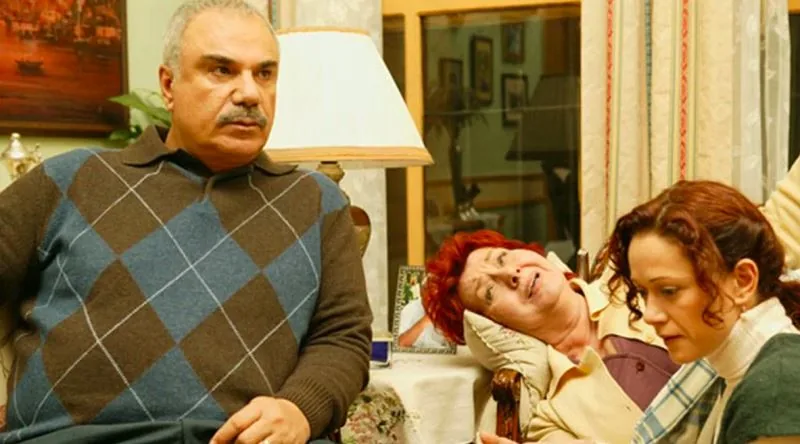
Yaprak Dökümü is a Turkish television drama about the slow unravelling of the Tekin family, and its central figure, Ali Rıza Bey, is often remembered as an honest man destroyed by a changing world. Yet the 2006 to 2010 Kanal D adaptation quietly builds a harder case against him. His rigid traditionalism, his refusal to bend, and his habit of seeing his children as reflections of his honour rather than as people all feed into the collapse he spends years mourning. The question the story keeps asking is not whether Ali Rıza Bey suffered, but whether he helped cause the suffering around him.
Yaprak Dökümü, adapted from Reşat Nuri Güntekin's 1930 novel, follows the Tekin family's decline. Ali Rıza Bey, the patriarch, is often read as a victim of changing times, but his inflexible traditionalism and refusal to adapt arguably make him the most responsible figure in his family's collapse.
- Yaprak Dökümü began as a 1930 novel and became one of the most-watched Turkish family dramas of its era on television.
- Ali Rıza Bey is the patriarch of the Tekin family, a man defined by his insistence on traditional values and family honour.
- The series traces the family's financial and emotional decline across multiple seasons.
- Characters such as Ferhunde and Leyla represent the younger generation's rebellion against the constraints Ali Rıza Bey imposes.
- The show is widely discussed as a study of tradition versus modernity in Turkish society.
The Father Everyone Trusts, and the Collapse Nobody Blames Him For
Ali Rıza Bey is the most trusted man in Yaprak Dökümü, and that is exactly the problem. Reşat Nuri Güntekin's 1930 novel, and the Kanal D adaptation that ran from 2006 to 2010, both build their tragedy on a father who looks beyond reproach. Honest, principled, a former civil servant who prizes integrity above comfort. And yet the argument here is simple and uncomfortable: he carries the largest share of blame for what happens to his family.
Because Yaprak Dökümü is not really a story about one villain. It moves through social change, the slow disintegration of a family structure, and the private conflicts that tear at people from the inside. Everyone in the household makes mistakes. Everyone has a breaking point. Ali Rıza Bey is the one whose mistakes arrive dressed as virtue.
He treats traditional values as absolute truths. Not as guidelines, not as a heritage to negotiate with, but as fixed laws that cannot bend. When the society around him shifts, he refuses to shift with it. His moral code is rigid, and rigidity, in a house full of young people, is its own kind of pressure.
That is the core of the case against him. Ali Rıza Bey represents a generation that resists the new norms of a modernizing society and tries to preserve the old order intact. The trouble is that social norms do not wait for anyone's permission. While he holds the line, the conflict inside his own home grows, and his children end up wedged between the tradition he demands and the modern life pressing in from every side.
It is worth being careful about how far that blame stretches. The claim that his authoritarian personality directly produced Ferhunde's and Leyla's destructive behavior is an interpretive reading, not a settled fact, and Ferhunde in particular is an outsider whose own manipulative nature drives much of the damage. The sharper version of the argument, that he suppressed the emancipation demands of the women around him and pushed them toward secret rebellion, is likewise a reading rather than a proven mechanism. What the story does show, plainly, is a man who could not accommodate change, and a family that paid for it.
So the destruction at the heart of Yaprak Dökümü rests on individual failings, yes, but also on something larger: the unquestioned sanctification of tradition, and resistance to change itself. Ali Rıza Bey's wrongs were committed in good faith. That is precisely why nobody saw them coming.
A Man Who Treated Tradition as Absolute Truth
Ali Rıza Bey, the patriarch at the center of Yaprak Dökümü, is a man who adopts traditional values as absolute truths and refuses to adapt to a changing social structure. On the surface he reads as an honest, principled father figure, a former civil servant who prizes integrity above nearly everything. Reşat Nuri Güntekin built him that way in the 1930 novel, and the 2006 to 2010 Kanal D adaptation kept that dignified surface fully intact.
But look at the family around him and the warmth drains out of the picture. His rigid moral code and his complete lack of flexibility function as the story's quiet mechanism: they press down on the individual freedoms of the people closest to him, and that pressure has to go somewhere. It goes into hypocrisy and escape. His children learn to hide what they want rather than argue for it, because arguing with Ali Rıza Bey is not a conversation, it is a verdict.
He is not a villain who schemes. He is something harder to watch. He represents a generation that resists the new norms of a modernizing society and tries to preserve the old order exactly as it was handed to him. That resistance is the tragedy's engine. As social norms shift around his household, his refusal to bend does not protect the family. It widens the gap between what the household pretends to be and what it actually is.
The destruction in Yaprak Dökümü rests on individual mistakes, yes, but also on something larger: traditions treated as beyond question, and a stubborn resistance to change. Ali Rıza Bey's well-intentioned errors act like invisible charges set under the family's foundation. He never sees himself as the cause. That is precisely what makes him so difficult to forgive.
Readers of the story often argue over who deserves the most blame. The case against Ali Rıza Bey is that his authority left no room for his family to grow into the world they actually lived in, only into the world he wished still existed.
The Authoritarian Father and the Rebellion He Reportedly Fed
Ali Rıza Bey, the upright former civil servant at the center of Yaprak Dökümü, holds his traditional values as absolute truths and refuses to bend them for a changing world. That much is settled. What is far less settled is the charge that this rigidity is the hidden engine of his family's collapse.
The popular reading goes something like this. His unbending moral code, the argument runs, smothered the individual freedoms of everyone under his roof and pushed them toward secrecy and escape. On this view, his authoritarian personality planted guilt and pressure in his wife and children, and in doing so laid the ground for the rebellious, self-destructive turns taken by Ferhunde and Leyla. It is a tidy chain of cause and effect, and it is exactly the kind of tidy chain that real families rarely obey. Ferhunde, after all, arrives from outside the household, and her manipulative streak is often treated as a force in its own right, not merely a symptom of the father she married into. The causal claim deserves to be read as interpretation, not verdict.
There is a second, related charge, and it carries the same caveat. Ali Rıza Bey, the reading goes, suppressed the emancipation demands of the women around him, driving them into secret rebellions and what the piece calls social deviations. Plausible as a broad theme, yes. But as a strict cause it flattens a story that runs on many motors at once: money trouble, social ambition, the pull of a modernizing city, and plain individual weakness.
What survives the scrutiny is the symbolic weight he carries. Ali Rıza Bey represents a generation that resists the new norms of a modernizing society and tries to preserve the old order intact. When those norms shift anyway, the resistance does not protect the family. It widens the fault line inside it, until the very values meant to hold the household together become the thing pressing down on it. Whether that makes him the guiltiest character in the story or simply the most rigid one is a question the story leaves open.
Why the Real Guilt May Lie in the Sanctification of Tradition
Look past the betrayals, the debts, the bad marriages. The deepest damage in Yaprak Dökümü comes from something quieter: a family that treats its own traditions as sacred and refuses to let them bend. Ali Rıza Bey, the honorable former civil servant at the center of Reşat Nuri Güntekin's 1930 novel and the Kanal D series that ran from 2006 to 2010, clings to traditional moral codes as absolute truth. He cannot make room for a society that is changing around him, and that rigidity is the tragedy's engine.
On the surface he looks like the one blameless man in the house. Honest, principled, dignified. That is exactly what makes him so dangerous. His good intentions work like invisible dynamite packed under the family's foundation, and he never hears the ticking.
Ali Rıza Bey stands for a whole generation that resisted the new norms of a modernizing society and tried to preserve the old order intact. As those norms shifted anyway, the resistance inside his own home grew. The story follows that pressure through social change, the unraveling of the family structure, and the private conflicts it produces.
The harder question is what his authority did to the people under it. One reading holds that his authoritarian personality bred guilt and oppression in his household, and that this prepared the ground for Ferhunde's and Leyla's rebellious, destructive turns. That causal chain is an interpretation, not a settled fact, and Ferhunde arrives as an outsider whose own manipulative nature drives plenty of the damage on its own. A related reading says he suppressed the emancipation demands of the women in his family and pushed them toward secret rebellion and social deviation. Plausible as a theme, though the strong causal wording flattens causes that were never that simple.
What the story does insist on is this: the destruction resting on individual faults alone is too easy an answer. Unquestioning reverence for tradition, and resistance to every change, carry their own share of the guilt. By that measure the heaviest blame settles on Ali Rıza Bey, a man who slowly and unknowingly suffocated the family he meant to protect.
Frequently asked questions
Why is Ali Rıza Bey considered the most guilty character in Yaprak Dökümü?
Ali Rıza Bey, the principled former civil servant at the center of Reşat Nuri Güntekin's 1930 novel Yaprak Dökümü, treats traditional values as absolute truths and refuses to adapt as society changes around him. That rigidity, not malice, is why readers and viewers single him out: his inflexible moral code leaves his family no room to bend, and the household slowly breaks under the pressure.
Was Ali Rıza Bey a villain or a victim of social change in Yaprak Dökümü?
He is neither a schemer nor a passive casualty. Ali Rıza Bey represents a generation that resists the new norms of a modernizing Turkey and tries to preserve the old order, so he is a symbol of tradition under strain. Yet his choices still carry real weight, which is what makes him tragic rather than simply sympathetic.
How does Yaprak Dökümü portray the conflict between tradition and modernity in Turkey?
The story unfolds through social change, the disintegration of family structure, and individual conflict. Ali Rıza Bey clings to the old codes while the world outside his door moves on, and that gap becomes the fault line running through his household. The drama lives in that squeeze between inherited duty and a society that no longer rewards it.
Did Ali Rıza Bey's good intentions make his mistakes more destructive?
That is the cruelest irony of the book. His intentions are decent, and he genuinely believes he is protecting his family, but good faith does not soften the outcome. As the story goes, his well-meant errors work like hidden charges under the family's foundation, and the collapse comes from within rather than from any outside blow. Editorial note: Any details that remain unconfirmed are presented here as such, and interpretation of character motivation is offered as analysis rather than established fact.
Got a take on this? Add your voice to the conversation below →
No comments yet. Be the first.