Why Electric Cars Won't Kill Gas Engines Soon
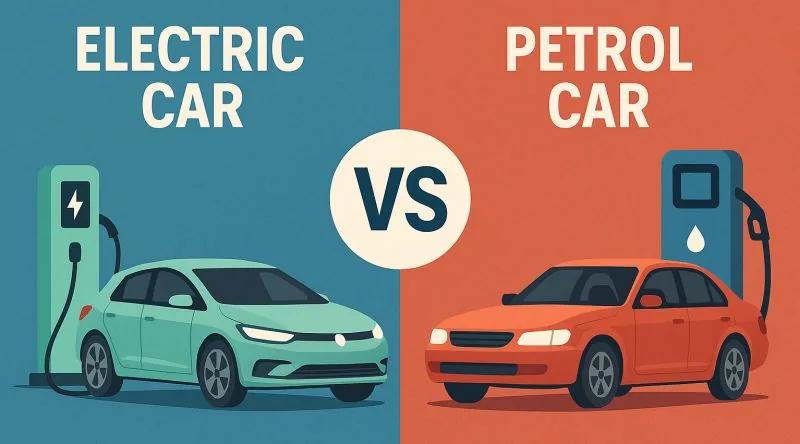
Electric vehicle adoption is accelerating, but the internal combustion engine will remain a common sight on roads for years to come. The shift away from gas is real, yet it is happening at a pace that frustrates enthusiasts and surprises skeptics alike. For the average driver, the transition feels less like a revolution and more like a slow, steady evolution.
Gas engines will not disappear soon because the infrastructure, costs, and consumer habits that support them are deeply entrenched. Electric vehicle adoption is growing steadily, but the complete phase-out of combustion engines will take time, as charging networks expand and prices gradually fall.
- Electric vehicles still represent a small fraction of the total cars on the road, despite growing sales numbers.
- Public charging infrastructure remains unevenly distributed, with rural areas and many developing regions lacking reliable fast-charging options.
- The average new electric car still costs more than a comparable gas-powered model, a gap that narrows slowly each year.
- Automakers have announced plans to phase out new gas car sales in some markets, but used gas cars will remain on roads well into the future.
The Nokia Analogy Doesn't Work for Cars
No, the gasoline car is not about to become the Nokia of the road, and here is why: the phone comparison collapses the moment you look at how long people actually keep their vehicles. A Turk buys a car expecting it to serve for 15 to 20 years, while a smartphone is lucky to survive three. Those are fundamentally different relationships with technology.
The quote that started this whole conversation is a great hook, though. Someone walking to work one morning looked at the rows of internal combustion cars parked on the street, most of them over five years old, and thought: these are going to be the new Nokias and Ericssons. It sounds poetic, tragic even. But the author of the piece is quick to poke a hole in it.
Here is the thing about Nokia: its dramatic rise and fall in the mobile phone market was actually a longer arc than people remember. The decline phase alone stretched over five or six years, but the company's dominance lasted much longer than that. You cannot take that full cycle and compress it into a quick analogy for a century-old automotive industry. Cars simply do not move at the speed of consumer electronics.
Think about the purchase itself. A phone is an impulse buy compared to a car. You swap your handset every couple of years without losing sleep. A car, on the other hand, is a hard, expensive, long-lasting investment. In Turkey, you are already thinking about the resale value before you even sign the papers, because the taxes sting. That changes your whole mindset. You are not buying a gadget; you are buying a decade and a half of daily life.
A close friend of the author drives a 2015 Golf that is still in great shape. The car runs beautifully, looks clean, and serves its purpose without complaint. Now, who do you know still using a 2015 phone? Exactly. Nobody. That single image captures why the analogy falls apart. The Golf will keep rolling for years, while that old handset is probably sitting in a drawer somewhere, forgotten.
EVs Are Still a Luxury in Turkey
Hearing someone say "I'll never go back to internal combustion" sounds bold, even exciting. But in Turkey today, that sentence is really a luxury statement, not a practical one. The models everyone actually wants carry hefty price tags, and while entry-level electric vehicles do come in lower, that gap between aspiration and affordability defines the whole conversation.
Walk down any street in Istanbul and you will see what I mean. The cars parked bumper to bumper are mostly five years old or older, running on gasoline or diesel. My close friend drives a 2015 model Golf and it runs beautifully, no complaints at all. Now think about phones from 2015. Would anyone use one today without frustration? That contrast shows why comparing cars to Nokia's fall misses the point entirely. The mobile phone market turned over in a few years, but a car in Turkey has a lifespan of 15 to 20 years. People hold onto vehicles because buying one is expensive, taxing, and a long-term commitment. Before even purchasing, you are already calculating the resale value because the taxes sting.
Then there are the practical hurdles that no amount of enthusiasm can erase. Range anxiety is real, charging stations remain sparse outside major cities, and the second-hand market punishes EV owners with steep depreciation. These are not solved problems, they are daily realities. So being an EV user in Turkey means being part of a select group with the income and patience to absorb those costs. That is very different from saying everyone is switching over. The infrastructure, the economics, and the energy systems all need to transform before electric vehicle adoption becomes a mass movement rather than a privileged choice.
Why "Waiting" Isn't the Same as Resisting Progress
Hesitation gets a bad reputation, but there is a world of difference between blocking the future and pausing to check the ground beneath your feet. The people who say "let's wait and see" about electric vehicle adoption are not Luddites trying to smash the machinery of progress. They are looking at real, measurable gaps in infrastructure, doing honest cost-benefit math, and questioning whether the energy transition can actually sustain itself.
The printing press analogy gets thrown around a lot, and it sounds clever at first. Religious scholars supposedly resisted the spread of printed books because they wanted to hoard knowledge. The implication is that anyone skeptical of new technology today is playing the same backward role. But the comparison falls apart the moment you look at what modern skeptics are actually worried about. In Turkey, a car is built to last 15 to 20 years, a fact that changes the entire calculus. A phone gets replaced every couple of years, and Nokia's dramatic fall in the mobile market took about half a decade. Nobody expects to drive a combustion engine for two years and then swap it out like a SIM card.
The real issue is that we are not just swapping an engine for a battery. The whole system has to change: how energy is produced, how it is consumed, how raw materials flow through global supply chains. That is not a weekend project. That is a generational transformation, and pretending otherwise does not make it arrive faster.
Range anxiety and the shortage of charging stations are not imagined complaints. They are daily realities for anyone considering the switch. Government incentives can shift with a single tax adjustment or a spike in electricity prices, and those are exactly the kind of variables that make a cautious buyer think twice before committing a large portion of their savings. Waiting, in this context, is not stubbornness. It is the rational response to a system that is still under construction.
The "Discount" Window Could Slam Shut
The attractive pricing you see on electric vehicles right now is not a natural market condition. It is built on government incentives that can be adjusted with a single policy decision. A small change in Special Consumption Tax (OTV) or a spike in electricity prices could reverse the opportunity overnight.
Incentives have been adjusted before, and they sit entirely at the government's discretion. What is clear is that the math can shift quickly.
Electricity prices are already climbing month by month. Every new tariff makes the cost of charging a little heavier. When you combine that with the fact that a car in Turkey is expected to last 15 to 20 years, you are making a long-term bet on a short-term price structure.
Think about what that means for your decision. The purchase price looks good today, but the running costs are tied to a utility bill that keeps rising. The resale value depends on what the next buyer thinks about future electricity rates and tax policy. None of that is in your control.
This is why the smart move is to treat the current moment as a test drive, not a marriage. Renting or leasing an EV lets you enjoy the benefits without locking yourself into a 15-year commitment that could sour when the incentives fade. The technology is improving every year, and waiting gives you better options at better prices.
Don't Buy, Lease, Wait for the Future
If you're tempted to sink serious money into an electric car right now, here's the honest advice: don't buy one, lease one instead. The electric vehicle adoption curve is real, but it's moving slower than the hype suggests, and better, cheaper models are arriving every single year. Waiting a couple of years before committing to a purchase could save you money.
Think about what happened to Tesla owners just last year. People who bought their cars watched a refreshed version roll out at the exact same price point, with better insulation, a stronger entertainment system, and a more modern look. That's not a one-off event. It's the pattern. Every year brings meaningful upgrades, and prices keep trending downward as manufacturing scales up.
This is why the smartest move right now is to test-drive the electric experience through a lease rather than locking yourself into a long-term purchase. You get to enjoy the instant torque, the quiet cabin, and the low running costs without the sting of watching your car's value drop when the next generation lands. In Turkey, where a car typically stays in a family for 15 to 20 years, that's a big deal. Committing to today's technology for two decades means you'll be driving something that feels ancient long before its time is up.
The other side of this coin is the charging infrastructure. Range anxiety and spotty charging station coverage are still genuine concerns, even if modern EVs have improved on both fronts. Those issues will get solved, but they're not solved yet. Leasing gives you flexibility while the network catches up.
There's also the question of government incentives. The current discounts and tax breaks that make electric cars look attractive are the result of state policies that have been adjusted before. If taxes shift or electricity prices climb, that "great deal" could reverse quickly. A lease protects you from that uncertainty in a way an outright purchase never can.
So here's the practical takeaway: the future belongs to electric vehicles, but that future arrives at its own pace. Right now is not the moment to rush into a decades-long commitment. It's the moment to lease, enjoy the technology, and let someone else eat the depreciation while the industry figures out its next move.
Frequently asked questions
Why won't electric cars replace gasoline cars quickly?
Electric vehicle adoption will take time because cars in Turkey typically last 15-20 years, the charging infrastructure is still incomplete, and the upfront cost remains out of reach for most households. A car is a long-term investment, not an impulse purchase. People keep their vehicles for nearly two decades, so the existing gasoline fleet will dominate roads for years to come. Think about what you see on any Turkish street. Most of those cars are more than five years old, and they run perfectly fine. A friend of mine drives a 2015 model Golf, and it works beautifully. Now ask yourself: who still uses a 2015 model phone? Nobody. That contrast explains everything about why the transition to electric won't happen overnight. Cars are simply built to last much longer than consumer electronics.
How does car lifespan compare to smartphone lifespan?
People replace their phones every 2-3 years, but cars stay on the road for 15-20 years in Turkey. That makes the popular Nokia analogy misleading. When Nokia dominated mobile phones, the entire rise and fall cycle in that market was much faster than what we see with automobiles. The car industry simply doesn't move at the same speed. The comparison breaks down further when you consider the decision-making process. Buying a car involves serious financial planning, thoughts about resale value, and anxiety about taxes. In Turkey, the tax burden on vehicles is heavy, so people think twice before making a switch. A phone is a disposable gadget. A car is a family asset that gets passed down, shared, and kept running for as long as possible.
Why might leasing an electric car be better than buying?
Leasing makes sense because electric vehicle technology improves every single year. Tesla owners who bought last year watched a refreshed model arrive at the same price with better insulation, stronger entertainment features, and a more modern look. Why lock yourself into owning a machine that will feel outdated within months? The financial logic is straightforward. When you buy, you absorb the depreciation. When you lease, you stay current with the latest improvements. Government incentives for electric vehicles have been adjusted before and could shift again with changes in taxes or electricity prices, so committing to a purchase right now carries real risk. Renting lets you test the waters without betting your savings on a technology that keeps evolving. Range anxiety and insufficient charging stations remain genuine concerns, though modern EVs and expanding networks have improved the situation. The infrastructure gap is still a major barrier, especially in Turkey where charging points are not yet everywhere. Until that changes, electric vehicle adoption will proceed gradually, not with a sudden revolution.
Got a take on this? Add your voice to the conversation below →
No comments yet. Be the first.