Alexander Selkirk: The Real Robinson Crusoe of 1704
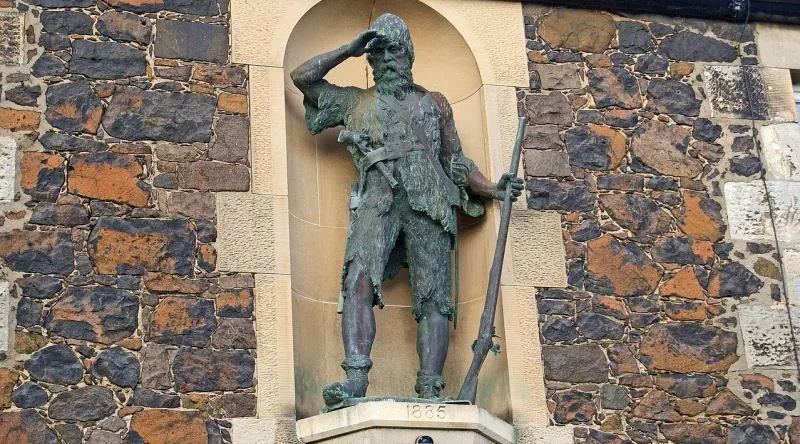
Alexander Selkirk, a Scottish sailor, was marooned alone on a remote Pacific island in 1704, surviving for over four years before his rescue in 1709. His ordeal on the Juan Fernandez Islands off the coast of Chile became the real-life inspiration for Daniel Defoe's famous novel, Robinson Crusoe. It is a tale of isolation, resilience, and the raw human instinct to survive against overwhelming odds, a story that still captivates us centuries later because it actually happened.
Alexander Selkirk, a Scottish sailor, was left behind on the uninhabited island of Mas a Tierra in the Juan Fernandez archipelago in 1704 after a dispute with his captain. He survived alone for over four years until he was rescued by privateer Woodes Rogers in 1709, and his story later inspired Daniel Defoe's Robinson Crusoe.
- Alexander Selkirk was marooned on the uninhabited island of Mas a Tierra in the Juan Fernandez archipelago in September 1704.
- The island is located in the Pacific Ocean off the coast of Chile.
- Selkirk was rescued in January 1709 by the privateer ship Duke, commanded by Captain Woodes Rogers.
- His survival skills included hunting feral goats and using his ingenuity to build shelters and fire.
- Selkirk returned to England and his story was widely publicized before Daniel Defoe published Robinson Crusoe in 1719.
A Sailor Who Outlived His Own Legend
Alexander Selkirk was a real man, born in 1676 in the coastal region of Fife, Scotland, and he spent four years entirely alone on a deserted Pacific island beginning in September 1704. His ordeal became the blueprint for one of the most famous novels ever written, yet the man himself slipped into near-total obscurity while his fictional counterpart became a household name.
Selkirk was a Scottish sailor who knew the sea intimately. In 1704, he was part of an expedition led by the English navigator William Dampier, a man who had already circled the globe for England in the 17th century and turned his voyages into popular books. Dampier took his ships around the cape south of the Strait of Magellan and into the vast, empty expanse of the Pacific Ocean.
That ocean, as anyone who has seen it from a ship's deck can tell you, stretches endlessly. Push north and you'll find only a scattering of tiny islands. One of those clusters, the Juan Fernández Islands, became the pivot point of Selkirk's life. Dampier left Selkirk there, on one of those islands.
Why would a man choose to be marooned? The reasons are murky. Some say Selkirk believed the ships were in such poor repair that sailing on was suicide, and indeed one of the vessels did sink afterward, though the main ship stayed afloat. Others point to a bitter, personal hatred between Selkirk and Dampier. Dampier was not an easy man to serve under; his conduct on voyages was so contentious that he later faced legal proceedings back in England.
Whatever pushed Selkirk ashore in September 1704, he survived. He was finally rescued in January 1709 by Captain Woodes Rogers, who was out on a new expedition. Rogers kept notes describing Selkirk's condition: his athletic build, his skill at making fire, his hunting prowess, and clothes that had fallen to rags. Those notes, published later, caught the attention of the writer Daniel Defoe.
Defoe took Selkirk's real story and spun it into Robinson Crusoe, a novel so successful that it eclipsed the man who lived it. The fiction outshone the reality so completely that when Chile renamed Selkirk's island in 1966, they did not call it Selkirk Island. They called it Robinson Crusoe Island.
The Navigator Who Left Him Behind
William Dampier was already a legend by the time Alexander Selkirk crossed his path. The English navigator had circled the globe in the 17th century, and he wrote popular books about his voyages that people actually read. In 1704, Dampier set out on yet another world tour, this time steering his ships around the cape south of the Strait of Magellan and into the vast, open Pacific.
The Pacific on that route looks like an endless expanse of water. Sail north and you'll spot a few scattered islands, and one cluster in particular mattered for this story: the Juan Fernandez Islands off the coast of Chile. That's where Dampier dropped off Selkirk, a Scottish sailor from Fife who had signed on for the voyage.
Why Selkirk ended up alone on that island remains a puzzle. Some say he thought the ships were too leaky and unsafe, that pushing on across the Pacific would be suicide. One of the vessels did go down after he was left behind, though the main ship stayed afloat. Others claim Selkirk simply hated Dampier so intensely that he couldn't bear another day aboard the same vessel.
The hatred theory carries weight. Dampier had a reputation as a difficult, disliked captain, and his conduct during expeditions later landed him in a court-martial back in England. Whatever the real reason, in September 1704 Selkirk began an island life that would stretch on for more than four years. The exact date of his departure from the ship is unclear, but the month is well documented.
Four Years Alone: Survival and Rescue
Alexander Selkirk stepped ashore on the uninhabited island in September 1704, and he would not see another human face for over four years. The Scottish sailor, born in 1676 in Fife, had chosen this fate himself, reportedly asking to be left behind rather than continue aboard a ship he believed was unseaworthy. When rescue finally came in January 1709, it arrived in the form of Captain Woodes Rogers, who was leading a new privateering expedition through the Pacific.
Rogers kept detailed notes about what he found, and his account paints a remarkable picture of a man who had refused to let isolation break him. Selkirk had grown athletic during his time alone, his body hardened by constant hunting and climbing. He had mastered the art of making fire without tools, a skill that meant the difference between cooked meat and raw flesh. His hunting abilities had kept him alive on an island teeming with goats and other game that earlier visitors had left behind.
The clothing Rogers described was a study in desperation and ingenuity. Selkirk's garments hung off him in tatters, reduced to shreds after years of hard wear. His beard had grown wild and untamed, and his skin had darkened to leather under the Pacific sun.
What strikes any reader of Rogers' notes is how functional Selkirk remained. He had not descended into madness or given up on life. Instead, he had built a routine, a daily rhythm of hunting, cooking, and keeping watch for ships that might never come. He lived off the island's resources, finding food and shelter while maintaining his health through constant activity.
The rescue itself came almost by accident. Rogers' expedition had stopped at the islands when his men spotted Selkirk. The sight that greeted them was both pitiful and impressive: a ragged, weathered figure who had survived against every odd. Selkirk boarded Rogers' ship in January 1709, ending an ordeal that would later inspire Daniel Defoe to write Robinson Crusoe, though that famous novel would take liberties with the true story.
The Book That Erased the Man
Alexander Selkirk came home expecting to be a hero. Instead, he watched another man become one.
After his rescue in January 1709, Selkirk returned to Britain and shared his story. The Scottish sailor, born in 1676 in Fife, had survived four years alone on a Pacific island. He had hunted goats and learned to live with the rats that gnawed at him while he slept. His story was remarkable. It just was not the story people remembered.
Woodes Rogers, the privateer captain who pulled Selkirk off the island, had kept detailed notes during the rescue. Those notes found their way to Daniel Defoe, a London writer always looking for a good subject. In 1719, Defoe published Robinson Crusoe. The novel borrowed the bones of Selkirk's ordeal: the shipwrecked sailor, the lonely island, the struggle to survive. But Defoe's version had a fictional hero, a man who built a kingdom from nothing and tamed a native companion named Friday.
The book became a sensation. It was translated across Europe, reprinted endlessly, and turned into one of the most famous stories in the English language. Every schoolchild learned about Robinson Crusoe. Almost nobody learned about Alexander Selkirk.
The irony is sharp. Selkirk's real survival was arguably more impressive than anything Defoe imagined. He had no shipwreck to blame. According to some accounts, he chose to be left behind, stepping off his vessel in September 1704 because he could no longer stomach the ship's captain. He spent four years alone, not on a lush tropical paradise but on a rugged, windswept island in the Juan Fernández archipelago off the coast of Chile. He made fire from friction, and stitched clothes from goat hides when his own fell apart. When Rogers finally arrived, Selkirk was so wild that he could barely speak.
None of that mattered in the end. The real man faded while the fictional one grew immortal.
Even the geography surrendered to fiction. The island where Selkirk actually lived, known for centuries as Más a Tierra, was officially renamed Robinson Crusoe Island by Chile in 1966. The place where a real human being fought for survival now carries the name of a character who never existed. Alexander Selkirk died in 1721, two years after Robinson Crusoe appeared, and by then the public had already forgotten him. The man who inspired the greatest castaway story in literature ended up erased by it.
His story survives only as a ghost inside someone else's book.
Frequently asked questions
Who was Alexander Selkirk?
Alexander Selkirk was a Scottish sailor who lived from 1676 to 1721. He is remembered as the real-life castaway whose adventures on a remote Pacific island inspired the famous novel Robinson Crusoe, written by Daniel Defoe in 1719.
Why was he left on the island?
The exact reason Selkirk was marooned in September 1704 remains a matter of dispute. According to the original account, he had serious doubts about the seaworthiness of his vessel and argued with his captain, William Dampier, before choosing to stay behind on the Juan Fernandez Islands. Some versions of the story claim he simply could not bear another day sailing with Dampier, who was widely disliked for his harsh behavior toward his crew. Dampier had already faced legal trouble in England over his conduct during earlier voyages. Whatever the true motivation, Selkirk watched the ships sail away without him, and one of those vessels reportedly sank later, which seemed to validate his fears about their condition.
How did he survive?
Selkirk survived through a combination of hunting, fire-making, and remarkable physical fitness. Woodes Rogers, the privateer who would eventually rescue him, wrote detailed notes describing Selkirk's athleticism and his skill at starting fires and hunting game on the island. His clothing had worn to tatters by the time he was found, but his body had adapted to the harsh conditions. He lived off the island's natural resources, finding food and shelter while maintaining his health through constant activity and resourcefulness.
Who rescued him?
Woodes Rogers rescued Selkirk in January 1709. Rogers was leading a new expedition when his crew spotted Selkirk on the island and brought him aboard, ending more than four years of solitude that had begun in September 1704.
How did he inspire Robinson Crusoe?
Daniel Defoe used Rogers' published notes about Selkirk's ordeal as source material for his novel. The book became so famous that it overshadowed the real man's story, and today most people know the fictional character rather than the actual Scottish sailor who lived through the experience.
Where is Robinson Crusoe Island?
Robinson Crusoe Island is located in the Juan Fernandez Islands, a small archipelago in the Pacific Ocean off the coast of Chile. In 1966, Chile officially renamed the island where Selkirk was marooned from Mas a Tierra to Robinson Crusoe Island, cementing the connection between the real castaway and the fictional character he inspired.
What happened after rescue?
After his rescue, Selkirk returned to his homeland and published his memoirs, hoping to share his incredible story with the world. Unfortunately for him, the publication of Robinson Crusoe in 1719 captured the public's imagination so completely that Selkirk's own account was largely forgotten, leaving him overshadowed by the fictional hero who bore no resemblance to his real name. Editorial note: Any facts which remain unconfirmed are presented as such, hedged clearly in the text above.
Got a take on this? Add your voice to the conversation below →
No comments yet. Be the first.