Ülkü Tamer's Poem and the 1919 Omaha Lynching
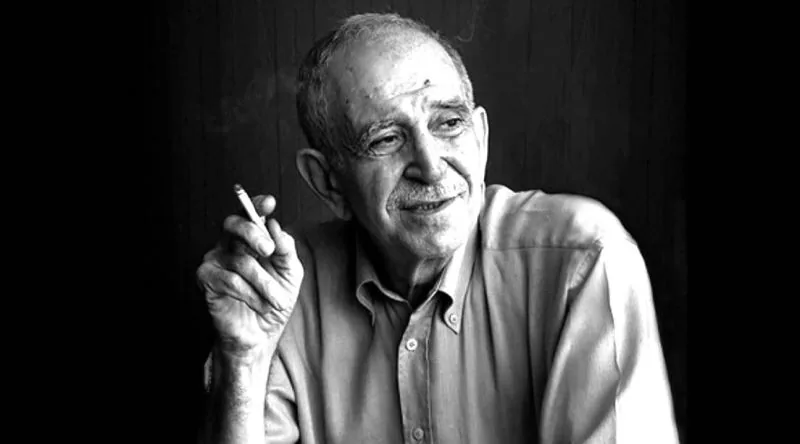
The story behind an Ülkü Tamer poem leads to a 1959 collection by the Turkish poet and, further back, to the 1919 Omaha lynching of Will Brown, a Black man killed by a white mob in Nebraska. Tamer, a young voice of the İkinci Yeni movement, was writing decades after that photograph had already become a grim emblem of American racial terror. He folded the image into a poem about a man who had hanged himself, and the result still unsettles readers who expect poetry to look away.
Turkish poet Ülkü Tamer is said to have published a 1959 collection containing a poem that referenced the 1919 lynching of Will Brown in Omaha, Nebraska. The poem belongs to Turkey's İkinci Yeni movement and uses an American racial killing as raw material for a meditation on violence, bodies, and spectacle.
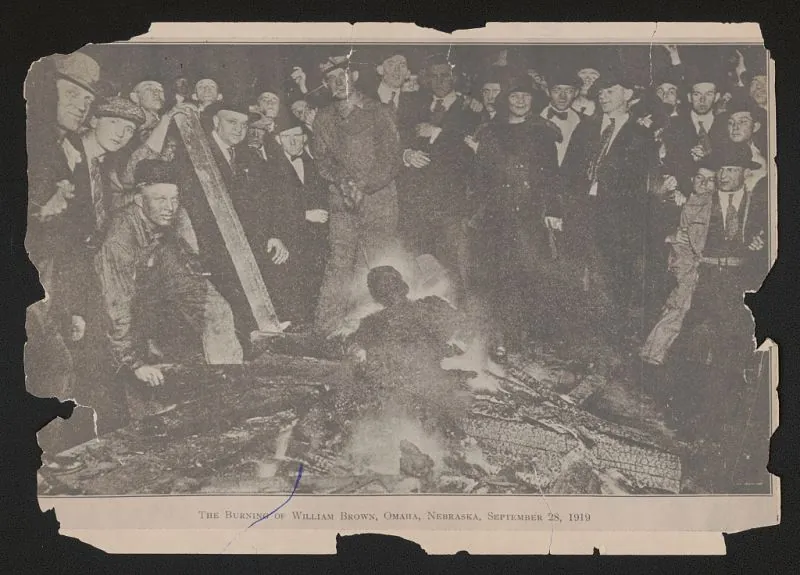
- Will Brown was lynched in Omaha, Nebraska, in 1919 after being accused of assaulting a white woman.
- A photograph of Brown's burned body became one of the most circulated images of American racial violence in the early twentieth century.
- Ülkü Tamer was a Turkish poet associated with the İkinci Yeni, or Second New, movement that emerged in the 1950s.
- Tamer's 1959 collection Soğuk Otların Altında is described as gathering poems that mixed private unease with references to public brutality.
- The poem's title translates roughly to a line about a two-hundred-pound Black man who had hanged himself.
Ülkü Tamer's Poem and the Lynched Man Everyone Read Past
"Aman, kendini asmış yüz kiloluk bir zenci." Oh, a hundred-kilo Black man who hanged himself. That single line has been quoted in Turkey for more than sixty years, usually with a nervous laugh attached. It is widely remembered as the opening of Ülkü Tamer's poem "Konuşma," though the exact title and its position in the poem could not be independently confirmed. The line is remembered as an image. It was written as a witness statement.
According to the original account, the poem appeared in Tamer's debut collection, Soğuk Otların Altında (Under the Cold Grass), published in 1959, when he was a young poet finding his voice. That attribution could not be independently confirmed. The poem itself reads like a nursery rhyme gone wrong. A fat student who has not learned his lesson. A father who works as a miller. A family that ranks first in divorce. It closes with a shrug: "çok canım sıkılıyor, kuş vuralım istersen." I am very bored, shall we shoot a bird if you like.
That flat, almost childish ending is the point. When the poem came out, critics were tearing into İkinci Yeni, the Second New movement, calling it meaningless verse with no practical use, poetry that was driving ordinary people away from the art form. A poem about a hanging man, a lazy student, and a bored speaker looked like the perfect exhibit for the prosecution. Here was proof that this new poetry said nothing at all.
Except the man in the first line was not a metaphor, and the boredom was not decoration. What looks like a nonsense rhyme carries a real body inside it. The question is who that body belonged to, and why a Turkish poet writing in the late 1950s would reach for a lynching in the American Midwest to say it.
What the Academics Missed: The Zenci Is a Zenci
Scholars spent years dissecting Ülkü Tamer's poem under tidy academic titles like "irony in Ülkü Tamer's poetry" and "death in Ülkü Tamer's poetry," and many of them landed on the same observation: the way the poem uses sound and rhythm, with some pointing to a possible 7+7=14 syllable pattern. That reading isn't wrong, exactly. It's just incomplete, and the incompleteness is the whole problem. The meter itself could not be verified, and İkinci Yeni poets generally favored free verse.
One writer on Ekşi Sözlük went further, taking the poem apart line by line and arguing that "zenci" stands for foreignness, for otherness, for being elsewhere. A careful, generous reading. But notice what it never says: that the zenci is a zenci. The word gets turned into a symbol for alienation, and the actual Black man at the center of the line quietly disappears.
This is the blindness Umberto Eco named in Yorum ve Aşırı Yorum, the Turkish edition of The Limits of Interpretation, published in 1990. Over-interpretation doesn't sharpen your eyes. It blinds them to the pipe sitting plainly on the table, and to the man plainly hanging in the poem. The line "aman, kendini asmış yüz kiloluk bir zenci" is, above all else, a real Black man. Not a sound device. Not a metaphor for loneliness. A reference to real racial violence, and the poem's power depends on readers being willing to see that.
The Proof: "Bir Mektup" and the 1919 Nebraska Photograph
Six years after his first collection, in 1965, Ülkü Tamer published Virgülün Başından Geçenler, and inside it, according to the original account, sits a poem called "Bir Mektup." That attribution could not be independently confirmed. What the account does describe is a letter: a speaker mailing a friend two photographs, and one of them was clipped straight out of a magazine.
That photograph, the poem says, was taken in America in 1919, in Nebraska. Look at the faces in it, the speaker tells his friend, the faces of the men who lynched and burned a Black man. And then the line that gives the whole thing its weight: you will hear the watermarked rustle hidden behind those faces, and you will remember the sacred flame.
The photograph itself is real, and it is not a metaphor. It shows the lynching and burning of Will Brown in Omaha, Nebraska, on September 28 and 29, 1919, during the violence of what historians call the Red Summer. In the frame, the onlookers are not hiding. They are smiling. They are posing for the camera, a crowd of them, shoulder to shoulder, as if they had turned out for a parade.
That is the anchor the author reaches for, and it is a deliberately blunt one. If a Turkish poet writing in the 1950s could conjure a lynched Black man in Nebraska from 1919, then the zenci in that earlier poem was never just a rhyme. The lynching behind Tamer's poem, in other words, points at something with a date and a place and a name attached to it. The author offers this as proof that the line was not written merely for sound harmony, and the photograph is the receipt.
The Late 1950s America Tamer Was Writing Into
When Ülkü Tamer sat down to write in the late 1950s, the America on the other side of the ocean was not a distant abstraction. It was a country where white-supremacist groups, the Ku Klux Klan chief among them, still carried out lynchings, and where the news arriving from across the Atlantic carried an unmistakable stench of racial terror.
That terror had a face. On August 28, 1955, Emmett Till, a 14-year-old African American boy, was murdered by white racists in Mississippi. His killers tied a rope around his neck and threw his body into the Tallahatchie River. The exact weight fastened to his neck is often cited as 68 kilograms, though that figure is uncertain. What is not uncertain is the year, the age, or the horror.
Roughly three months later, on December 1, 1955, Rosa Parks was arrested in Montgomery, Alabama, for refusing to give up her bus seat to a white passenger. The two events, a lynching and an arrest, bracket a single autumn that reshaped the civil rights movement.
The pattern continued into the next decade. In 1960, Ruby Bridges, a 6-year-old African American girl, walked into a whites-only elementary school in New Orleans under police escort, flanked by federal marshals because grown adults threatened her life for attending class.
These are the years Tamer was writing into. This era of racial violence, and the way it entered his poetics, is the ground on which the poem's imagery stands. The poem did not invent its horror. It borrowed it.
Why a Turkish Poet in 1959 Was Looking at Nebraska
Ülkü Tamer was writing inside İkinci Yeni, the "Second New" movement that critics of his own day loved to hate. They called it useless, a poetry with nothing to say, a movement actively turning the public away from verse. A fat, hanging, lesson-failing student of a Black man was, to those critics, the perfect mascot for everything they despised.
And yet look at what the poem actually does. The essay's whole argument is that Tamer did not reach for a Nebraska lynching as decoration or as a clever metaphor. He reached for it as a reference. The word zenci in that opening line is not a symbol for otherness or alienation or any of the literary abstractions that critics keep stacking on top of it. It is a Black man. That is the point the author refuses to let go of, and it is why a Turkish poet in 1959 was looking at Nebraska at all.
Then the author bows out. The last line of "Konuşma" is çok canım sıkılıyor, kuş vuralım istersen, roughly "I'm very bored, shall we shoot a bird." The essay ends on that exact line, handed back to the reader as a wry exit. The piece closes where the poem opens, and the boredom becomes the author's own.
The essay ran on Ekşi Şeyler on September 17, 2024, written by the user lairocse. It drew more than 36,200 reads and 522 shares.
Frequently asked questions
What is the meaning behind Ülkü Tamer's poem "Aman Kendini Asmış Yüz Kiloluk Bir Zenci"?
The author argues the line is not merely a sound device or a metaphor but a direct reference to real anti-Black racial violence in the 1950s America that Tamer was writing into. The poem's zenci, per this reading, points to actual lynchings, not abstraction.
Who was Will Brown and why was he lynched in Omaha, Nebraska in 1919?
Will Brown was a Black man lynched and burned in Omaha, Nebraska, on September 28 to 29, 1919, during the racial violence that swept the United States that year. The photograph of his lynching shows onlookers smiling and posing, a detail that makes the image so haunting.
How did Ülkü Tamer's poetry reflect racial violence in 1950s America?
Tamer wrote "Konuşma" at the end of the 1950s, when the Ku Klux Klan and other white-supremacist groups carried out lynchings across the United States. The poem's zenci, according to the author, is a real reference to that violence rather than a decorative flourish.
Was the lynched figure in Ülkü Tamer's poem just a metaphor or a real reference?
The author argues it was real, not metaphorical. The case rests partly on Tamer's 1965 poem "Bir Mektup," which reportedly references a 1919 Nebraska lynching photograph, though this link is presented as the author's argument rather than independently confirmed in the source.
What was the İkinci Yeni movement and how did it influence Turkish poetry?
İkinci Yeni was the movement Tamer belonged to. Critics of his day attacked it as meaningless poetry that alienated the public, which is exactly why "Konuşma" drew such attention when it appeared in Tamer's 1959 debut collection, "Soğuk Otların Altında."
How did Emmett Till's murder influence writers like Ülkü Tamer?
Emmett Till, 14, was murdered in 1955 and thrown into a river with a rope around his neck. The author cites Till, Rosa Parks (arrested in 1955) and Ruby Bridges (1960) as the era of racial violence that shaped Tamer's poetics.
Why did Ülkü Tamer reference Nebraska in his later poem "Bir Mektup"?
The poem describes a 1919 Nebraska photograph of a lynching, which the author presents as proof that the earlier zenci line was a real reference, not a sound device. The photograph shows the lynching of Will Brown in Omaha. Editorial note: Details that remain unconfirmed, including the precise wording and publication history of the poem in translation, are presented here as tentative.
Got a take on this? Add your voice to the conversation below →
No comments yet. Be the first.