Total Recall Dream Theory: Quaid's Mars Trip Explained
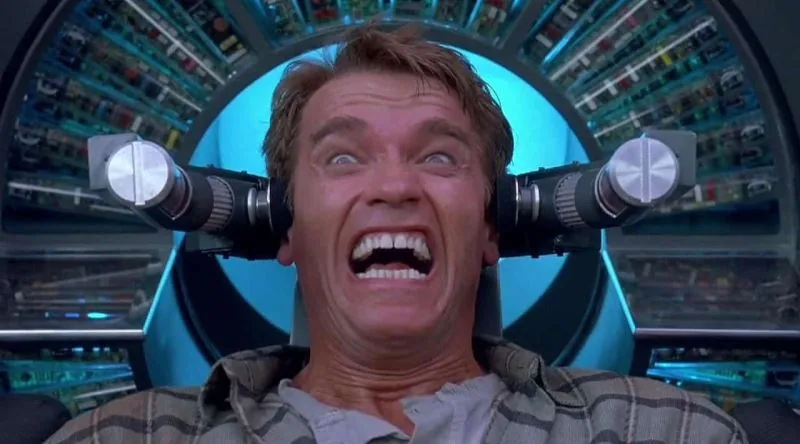
What if the entire second half of Total Recall never actually happened? The 1990 sci-fi classic starring Arnold Schwarzenegger has sparked decades of debate about what is real and what is imagined. Many fans point to a reported statement from director Paul Verhoeven as confirmation that Quaid's Mars adventure is a virtual reality fantasy triggered at Rekall, though his public remarks on the matter have been contradictory over the years.
The dream theory holds that Quaid's Mars mission is a fantasy generated by the Rekall memory implant. This reading is widely attributed to director Paul Verhoeven, but his statements have been ambiguous. The film's final shot was designed to keep viewers guessing, and the honest conclusion is that the dream interpretation is strongly supported, even if it was never definitively settled by the director.
- The dream theory is widely attributed to Paul Verhoeven, though his public statements on the matter have been contradictory.
- The 1990 film Total Recall stars Arnold Schwarzenegger as Douglas Quaid, a construction worker who visits Rekall to buy a virtual Mars vacation.
- The story is adapted from Philip K. Dick's 1965 short story "We Can Remember It for You Wholesale," which also leaves the dream question open.
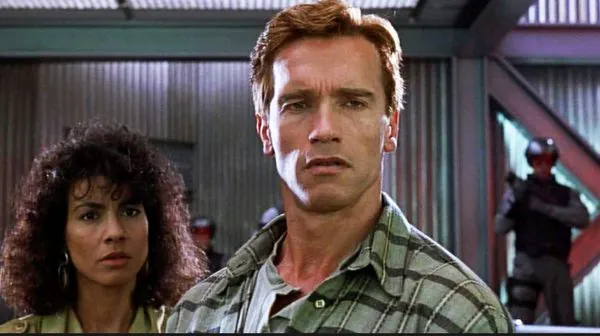
- The film's final shot shows Quaid and the dark-haired woman watching the alien reactor activate, with a flash that suggests the dream may still be running.
- The ambiguous ending was intentional, allowing audiences to decide whether Quaid's adventure was real or imagined.
Was Quaid Really a Secret Agent, or Just a Dreamer at Rekall?
Quaid is not a secret agent. The 1990 film Total Recall, starring Arnold Schwarzenegger, tells the story of an ordinary construction worker who visits Rekall, a company that sells implanted memories, and the entire adventure that follows is a dream he experiences during that session. The film, adapted from Philip K. Dick's 1965 short story "We Can Remember It for You Wholesale," leaves more clues than you might expect for this interpretation.
The setup is deceptively simple. Quaid is bored with his life and wants excitement, so he walks into Rekall looking for a vacation memory. The salesperson offers him four packages, and the last one catches his eye: a secret agent mission to save Mars. Quaid insists on this option, even though the staff hesitates. Their reluctance is not because they know something about him. They warn that this particular scenario is too violent, packed with enough conflict and gore that it could damage his brain. That warning is the first real clue that what follows is a product, not a memory.
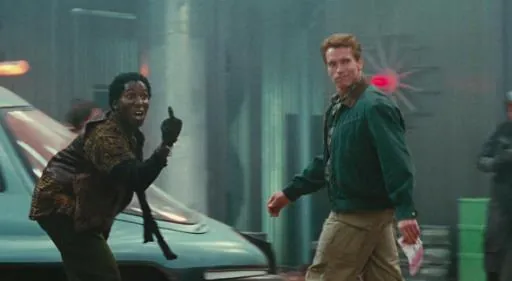
Once the dream begins, everything Quaid encounters is designed for maximum thrill. The woman he meets on Mars matches the one he saw in his recurring nightmares before he ever walked into Rekall. The company built the fantasy around his deepest desires, pulling from the dreams he had already been having. The outlandish characters, the three-breasted woman, the mutant cab driver, the resistance leader Kuato, they all exist to make the adventure bigger and more exciting. None of them are real. They are set dressing for a premium entertainment package.
According to the original account, director Paul Verhoeven reportedly explained that once Quaid falls asleep in the Rekall chair, everything after that point is pure dream. The company's genius, as the story goes, is that they pick up exactly where your real life left off and make it impossible for you to realize you have slipped into a fantasy. The dream reading holds that the film's brilliance is how seamlessly it hides the seam between reality and the implanted experience.
The Rekall Employee's Hesitation: Why Did He Try to Sell Quaid a Different Package?
The hesitation you see on screen in the 1990 film Total Recall is not a sign that the Rekall employee recognizes Quaid as a real secret agent. The clerk's reluctance comes down to a much simpler, more practical concern: the Mars mission scenario is so violent that it could literally damage the customer's brain.
When Quaid walks into the Rekall office, the sales representative walks him through four vacation packages. The last one on the list is the secret agent mission on Mars, the fantasy of saving a colony and its mutants from oppression. Quaid's eyes light up. He wants that one. The employee, however, visibly stalls. He tries to steer Quaid toward the other three options, nudging him toward something tamer, something safer.
Here is where the film plants its first clever seed of doubt. A first-time viewer might wonder if the clerk knows something. But the dialogue makes the real reason explicit: the technician warns that the secret agent scenario is too violent and may cause brain damage. The Mars package is packed with gunfights, explosions, and constant combat. It is a destructive adventure by design, and the company does not want to fry a customer's neural pathways to sell a thrill.
Quaid insists. He pushes past the warning, and the employee reluctantly processes the order. That moment of resistance, so easy to misread as hidden knowledge, is actually just good customer-safety protocol in a world where memories are merchandise.
The Sweating Rekall Official: A Case of Misinterpretation
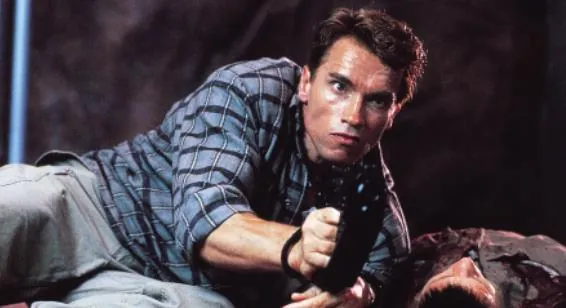
Here is where the popular version of the dream theory starts to sweat under scrutiny. The story goes that when Quaid reaches Mars in the 1990 film, he encounters a Rekall representative who tries to convince him that none of it is real. According to the original account, Quaid notices the man sweating and takes that as proof he is lying, so he shoots him on the spot.
But here is the problem. Watch that scene again and you will see something different. Quaid does not kill the official because of perspiration. The man draws a weapon first, and Quaid reacts in self-defense. The sweating detail, so vivid in the retelling, simply does not appear as a motivation in the actual film. It is a detail that has been added somewhere along the way, perhaps to make the dream interpretation feel more airtight than it really is.
The original source argues this sweating was deliberately programmed by Rekall. The company supposedly designed the Mars package to be so violent and gore-filled that Quaid would constantly be surrounded by death and conflict. Making the official sweat was, in this reading, a way to trigger Quaid's paranoia and push him toward violence, fitting the aggressive design of the secret agent fantasy. It is a clever theory, but it rests on a scene that does not quite exist as described.
What the film does show is that the Rekall technician back on Earth hesitated before selling Quaid the Mars package. The employee warned that the secret agent scenario was too violent and could damage the brain. That hesitation is real, and it plants a seed of doubt in the viewer's mind. But whether the sweating official on Mars was part of some grand programmed design remains, at best, a contested interpretation rather than settled fact.
Quaid's Wife, the Dream Woman, and His Seamless Adaptation to Mars
The most telling piece of evidence sits right in Quaid's own living room. His wife Lori, played by Sharon Stone in the 1990 film, tries to kill him. On the surface, this looks like a shocking betrayal. But look closer, and it reads like a deliberate script beat. Rekall needed Quaid to believe his ordinary life was a lie. What better way to sell that illusion than to make his own wife part of the conspiracy? The program convinced him that everyone around him, including the person he slept next to every night, was in on the secret that he was actually an agent.
Then there is the woman from his dreams. Before Quaid ever steps foot in the Rekall office, he dreams of Mars and of a dark-haired woman. She appears again on the red planet, and he feels an instant connection. The source argues that Rekall pulled her from his pre-existing dream and inserted her into the simulation because she matches his ideal type. Tough, dominant, wild, and alluring. The kind of woman Quaid would want to save the world with. He mistakes this programmed attraction for a shared history, convinced they must have a past together. That misunderstanding is the program working exactly as designed.
Watch how Quaid handles himself on Mars. He has never been there, yet he picks up weapons and operates futuristic technology without a moment of hesitation. No fumbling, no learning curve, no awkwardness. He moves through the Martian colony like he has lived there his whole life. That level of seamless adaptation does not happen naturally. It happens when someone is following a pre-written program, playing out a virtual reality game designed specifically for his brain.
The supporting cast on Mars reinforces this reading. The three-breasted woman, the mutant driver, Kuato the resistance leader, the dwarf prostitute. They are all too colorful, too perfectly placed to be coincidental. The source describes them as Rekall's creations, characters written into the Mars universe to enrich the customer's adventure. None of them have any reality outside the simulation. They exist to keep Quaid engaged, to push him toward the next set piece, to make his fantasy feel alive and dangerous and thrilling.
Every piece of this puzzle fits together. The wife who turns on him, the dream woman who appears at the perfect moment, the effortless mastery of alien technology, the parade of bizarre characters. They all point in one direction. Quaid is not a secret agent rediscovering his true identity. He is a customer in the middle of a very elaborate, very violent virtual reality session, and Rekall designed every detail to make him forget that.
What Did Director Paul Verhoeven Say About the Ending?
The director's alleged confirmation of the dream theory carries real weight, but the story behind it is more tangled than most fans realize. According to the original account, Paul Verhoeven said that everything after Quaid falls asleep at Rekall is a dream, with the company's genius being that it picks up your reality exactly where you left off and makes the transition undetectable. That sounds definitive on its face, yet the director's public comments over the years have shifted enough that no single clean statement can be pinned down as his final word.
What the source quotes Verhoeven as saying goes something like this: remember the moment Quaid drifts off at Rekall, because from that instant onward, the entire film is his dream. The company's real craft, in this telling, is that it eases you into the fantasy at precisely the point where your waking life stopped, so you never feel the seam. Rekall sells you the reality you want by hiding the doorway between the two worlds.
Here is where the dream theory gets complicated. The verdict on this quote is marked as suspicious, and for good reason. Verhoeven has offered different interpretations in different interviews, sometimes leaning into the dream reading, other times suggesting the film works either way. The 1990 movie, starring Arnold Schwarzenegger and adapted from Philip K. Dick's 1965 short story "We Can Remember It for You Wholesale," was designed to keep that ambiguity alive on purpose. So while the reported quote makes a tidy case for the dream interpretation, treating it as the director's settled, unambiguous final answer would oversell what he actually said across the years.
What remains clear is that the evidence in the film itself, the Rekall technician's warning about brain damage, Quaid's suspicious ease with Martian technology, the dream woman showing up in the flesh, all points in one direction. The director's alleged statement, if taken at face value, would close the case completely. But because his public remarks have been inconsistent, the honest conclusion is that the dream reading is strongly supported, even if Verhoeven never delivered one clean, contradiction-free verdict for the ages.
Frequently asked questions
What is the Total Recall dream theory?
The dream theory holds that everything happening after Douglas Quaid falls asleep at Rekall, the memory-implant company in the 1990 film, is nothing more than an elaborate dream. Under this reading, Quaid never actually travels to Mars, never meets the resistance, and never becomes a hero. The entire second half of the movie unfolds inside his own sleeping mind, crafted by Rekall's technicians.
Did Quaid really go to Mars in Total Recall?
According to the dream theory, no. Quaid never leaves Earth. The Mars he explores, with its mutants, its three-breasted woman, and its rebel leader Kuato, exists only within the simulation Rekall builds for him. The film's director, Paul Verhoeven, reportedly supported this reading, describing everything after the Rekall sleep scene as a dream, though his public statements on the matter have been contradictory over the years.
Why did the Rekall employee hesitate to sell Quaid the Mars package?
The Rekall technician hesitated because the Mars secret agent scenario was dangerously violent. In the film's dialogue, the employee explicitly warns that this particular package involves extreme combat and gore, and that the intensity could damage a customer's brain. It wasn't that the staff suspected Quaid of being a real agent. They simply knew their product was too rough for an ordinary civilian to handle safely.
How does director Paul Verhoeven explain the ending?
As the story goes, Verhoeven explained that once Quaid falls asleep at Rekall, everything that follows is a dream. He described Rekall's brilliance as its ability to pick up where your real life left off and pull you into a fantasy so seamless you never realize you're dreaming. That said, the director's actual public comments on the film's ending have been mixed and sometimes conflicting, so the definitive statement remains a matter of debate among fans.
Was the woman in Quaid's dream part of the Rekall simulation?
Yes. According to the source material, the dark-haired woman Quaid meets on Mars was inserted into his simulation by Rekall. The company accessed Quaid's own recurring dreams, including the opening scene where he and this same woman die together on Mars, and used that imagery to build her into the fantasy. Quaid, convinced he's a real agent, mistakes her presence for evidence of a forgotten past rather than a programmed feature.
Who wrote the original story?
Philip K. Dick wrote the source material. His short story "We Can Remember It for You Wholesale" was published in 1965, and the 1990 film Total Recall was adapted from it. The movie stars Arnold Schwarzenegger as Quaid, and its opening credits credit Dick's story as the basis for the screenplay.
Why was Quaid so good at using weapons on Mars if he was not a real agent?
Because he was running a pre-programmed script. Rekall designed the Mars secret agent package to include combat skills, and those skills were written directly into Quaid's simulated mind. He handles guns and futuristic technology without hesitation because the software tells him how. He never struggles with anything on Mars, not even for a moment, because he's essentially playing out a video game designed by the company. Editorial note: Any facts which remain unconfirmed are presented as such, including the precise interpretation of the film's final shot, which Verhoeven has described as intentionally open to viewer judgment.
Got a take on this? Add your voice to the conversation below →
No comments yet. Be the first.