Tinker Tailor Soldier Spy: The Bureaucratic Spy
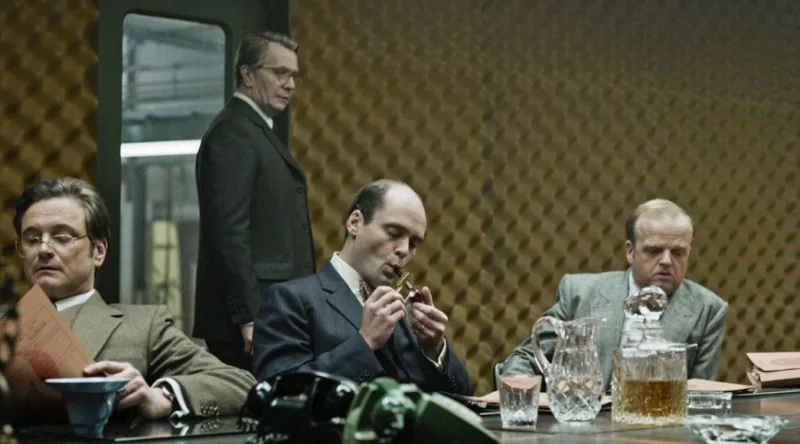
The Tinker Tailor Soldier Spy characters turn John le Carré's 1974 novel into a study of office politics dressed as espionage, and the 2011 film adaptation brought that quiet bureaucratic dread to cinemas. George Smiley, Control, Percy Alleline, Ricky Tarr and Jim Prideaux are not action heroes but civil servants guarding their pensions and their reputations. Their betrayals happen in meeting rooms, not on rooftops. That is exactly why the story still gets under your skin.
Tinker Tailor Soldier Spy follows George Smiley as he hunts a Soviet mole inside British intelligence, likely among four senior men. The story spans the Cold War era and was adapted into a 2011 film. Its characters behave like bureaucrats first and spies second, which is the point.
- John le Carré published Tinker Tailor Soldier Spy in 1974, drawing on his own experience in British intelligence.
- George Smiley, a sidelined veteran, is brought back to identify a mole among the senior ranks of the Circus.
- Control, the aging chief, suspects a traitor before his forced retirement and sets the investigation in motion.
- Percy Alleline rises through class and connections, embodying the polished insider who thrives in any system.
- The 2011 film adaptation stars Gary Oldman as Smiley and Colin Firth as Bill Haydon.
The Spy Who Reads Reports: Why Tinker Tailor Soldier Spy Characters Feel Real
John le Carré published Tinker Tailor Soldier Spy in 1974, and Tomas Alfredson directed the 2011 film adaptation. What makes the Tinker Tailor Soldier Spy characters feel real is that none of them leap from rooftops or crack safes under gunfire. They read reports. They sit in bad chairs. They nurse grudges over office politics, class, and who gets the corner office. That is the whole point.
Movies train us to picture intelligence work as field chases and broken locks. Real life runs differently, and le Carré's story shows it: a bureaucracy with a hierarchy, where the sharpest weapon is a long memory and the patience to notice what everyone else misses.
Take the head of the service, known simply as "C." That letter traces back to Mansfield Cumming, whose initial became the signature for the job. In the story, Control is said to have served as a World War II officer and to have recruited much of his staff from that era, a backstory that shapes his retirement and his loyalties. Treat that detail as reported rather than firmly documented.
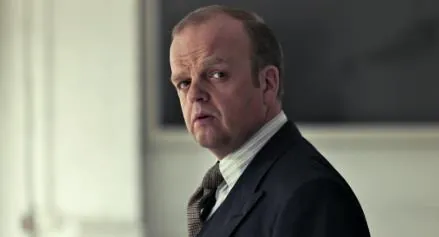
Then there is Percy Alleline, played by Toby Jones in the 2011 film. He came up through the civilian ranks and believes the military old guard should be cleared out. The operation he runs, or thinks he runs, is really a pretext for that purge. He is ambitious enough to work the minister directly. Control's faction reads the fracture and builds its game around it.
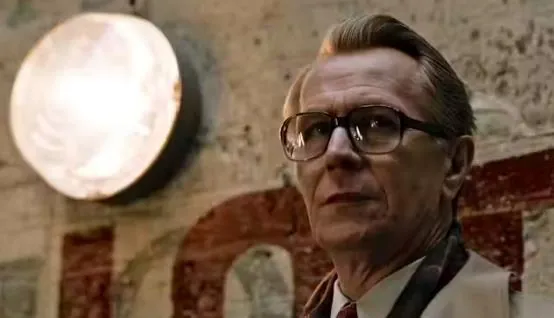
George Smiley is Control's oldest deputy, a civilian too. The novels keep his past thin, but we know he was born in Germany, lived there a while, specialized in languages, and took assignments across Europe before Control pulled him back to headquarters. He is clever, cold-blooded, built for the work. He never flies through the air. He reads for hours and sees what others miss. Smiley is central in some le Carré novels and a supporting figure in others, including The Spy Who Came in from the Cold.
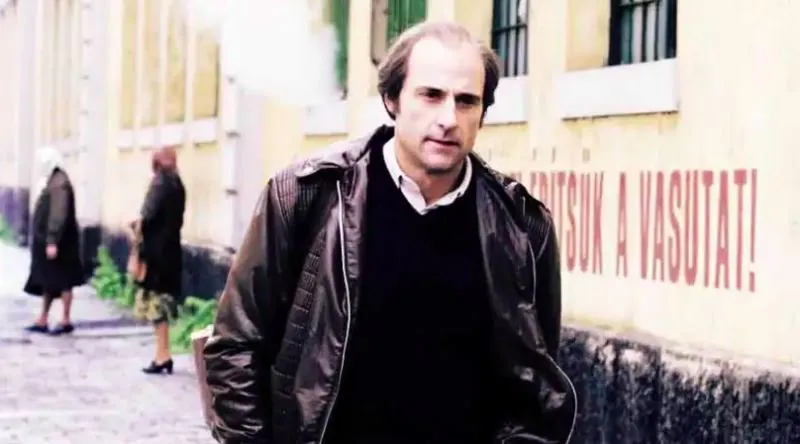
Out in the field sit Ricky Tarr, played by Tom Hardy, and Jim Prideaux, played by Mark Strong. Even they rank against each other. Prideaux is a veteran of the wartime team, seasoned, and more inclined to heed the front office. Tarr calls himself a "scalp hunter": hand him a target, he follows, gathers, and plays rough if things go wrong, as in his Istanbul mission. The film places that mission in Istanbul, while the novel moves it to Hong Kong. Tarr speaks his mind in Smiley's house, and he has a point.
And Haydon's betrayal, as the original account frames it, fits the mood of the era. A wartime intelligence star who watched the West "get ugly," he turns of his own accord. That motive is interpretive rather than established, so read it as one take on an ambiguous character. George Blake told a strikingly similar story, though Blake had communist leanings in his youth and his switch after the Korean War bombing campaign reads as part excuse.
If you want the real side of intelligence work, not the action-movie version, this is the film to watch. Patient readers should pick up the book too. Le Carré asks for patience, and he earns it.
The Old Guard at the Top: Control and the Code Name "C"
The head of British intelligence signs himself "C," a single letter that traces straight back to Mansfield Cumming, the service's first chief. In John le Carré's 1974 novel Tinker Tailor Soldier Spy, and in Tomas Alfredson's 2011 film, that signature belongs to Control, the aging man at the very top of the Circus. He is the one who sets the mole hunt in motion, and he is the one it destroys first.
Watch him in the film and you notice the stillness before anything else. Control sits in a shuttered room with the curtains pulled tight, sorting the threads of his own service like a man checking a wound. He trusts almost no one, and the story makes you understand why: the traitor he is chasing sits close enough to breathe on him.
According to the original account, Control came up as an officer in World War II and pulled a large share of his staff from that same wartime circle. That detail is reported rather than firmly documented, but the story leans on it hard. It explains why the Circus feels less like an institution and more like a reunion of old soldiers who never quite went home. It also explains the fracture. When the war generation holds the top, the people who came up through the civilian side start to feel like guests in their own building.
That is the crack the mole works his way into. Control's network is his strength and his blind spot at once. He can read an enemy across a continent, but he cannot see that the threat has already moved into his own office, sitting in a chair he himself approved.
Percy Alleline, Class Conflict, and the Purge Inside MI6
Percy Alleline, played by Toby Jones in Tomas Alfredson's 2011 film of John le Carré's 1974 novel Tinker Tailor Soldier Spy, came up through the civilian staff of British intelligence rather than the wartime military set. He is convinced the old soldiers who still run the service need to be cleared out, and the operation he thinks he is running is really just cover for that private house-cleaning.
Watch how he works. Alleline does not skulk around the basement; he goes straight to a government minister, ambitious enough to put his own agenda in front of someone with real power. That tells you most of what you need to know about him. The men he wants gone are the "Karla" faction, named for the Soviet spymaster who pulls the strings, and the moment word of that fracture reaches him, he builds his whole game on top of it.
The source also draws a parallel to the late Turkish intelligence figure Hiram Abas, suggesting he held similar views about purging military-era personnel. That specific claim about Abas cannot be reliably confirmed, so it belongs in the realm of parallel rather than proof.
What makes Alleline such a sharp piece of the Tinker Tailor Soldier Spy characters puzzle is the class fault line underneath the spycraft. Control and his people came out of the war years, and they carry that era's loyalties with them. Alleline came up a different way, and he resents the old guard's grip on the building. His maneuver is not really about catching a mole. It is about who gets to stay in the room once the dust settles.
George Smiley: The Realistic Spy Who Never Jumps Out of a Plane
George Smiley is Control's oldest assistant, a civilian in a world of field operatives, and the quiet center of Tinker Tailor Soldier Spy, John le Carré's 1974 novel and Tomas Alfredson's 2011 film. He never leaps from an aircraft or kicks down a door. He sits with reports for hours, and he sees what everyone else walked past.
The novels give you only fragments of his past, but the fragments are telling. He was born in Germany and lived there for a stretch before specializing in languages. Once inside the service he took a string of postings across Europe, and Control eventually pulled him back to headquarters. Smiley is the man built for intelligence work: sharp, cold-blooded when it counts, and patient in a way that unsettles people who aren't.
There's a delicious irony in his standing. He is Control's fate-companion, the one who shares his boss's long fall, and yet he's just as much a civilian as the bureaucrats upstairs. No gunfights, no car chases. Just a middle-aged man in a bad raincoat reading until the pattern clicks.
Smiley's role shifts from book to book, too. In Tinker Tailor Soldier Spy he is the protagonist, the one quietly hunting the mole. In others, such as The Spy Who Came in from the Cold, he is a supporting figure who drifts through the edges of someone else's disaster. If you're mapping out the Tinker Tailor Soldier Spy characters, he's the one who anchors the whole web, even when he's standing off to the side.
Ricky Tarr, Jim Prideaux, and the Hierarchy of the Field
Tom Hardy plays Ricky Tarr and Mark Strong plays Jim Prideaux in the 2011 film, and both men are field operatives who work the sharp end of the trade. Yet even out on the pavement there is a pecking order. Prideaux is the old wartime hand who defers to the management floor. Tarr is the hired blade who trusts no one above him.
Prideaux belongs to that generation of the service that came up during the war, and he listens to the men in the office with a loyalty Tarr would find laughable. When the order comes down, Prideaux goes. That is his tragedy, and it is the reason he ends up carrying the weight of a botched operation while the men who sent him stay warm and safe.
Tarr describes himself as a "scalp hunter," and the phrase fits. Someone hands him a target. He follows it, gathers what he can, and plays rough enough to protect himself if the ground shifts under his feet. His mission unfolds in Istanbul in the film. The novel moves that operation to Hong Kong, so don't expect the two versions to match.
Then there is the scene at Smiley's house, where Tarr speaks his mind without flinching. The service, he says, treats its field men like errand boys. It is a blunt accusation, and he has a point. The officers who read reports in London decide the fates of the people who actually walk the streets, and the ones on the pavement know it all too well.
That contrast is the whole engine of the story. Prideaux trusts the chain of command and pays for it. Tarr trusts nothing but his own instincts and survives. Between the two of them, le Carré draws the line that separates the men who serve the institution from the men the institution uses.
Haydon's Betrayal and the George Blake Parallel
Haydon's betrayal in Tinker Tailor Soldier Spy is presented in the story as a voluntary one, but the motive itself is interpretive rather than established fact. He is one of the wartime intelligence stars, the same generation that shaped Control's circle, and the story has him come to see the West "get ugly" and decide on his own to switch sides. Treat that as one reading of a deliberately ambiguous character, not a settled explanation.
What makes the motive linger is that it echoes a real case. George Blake told essentially the same story about himself: he was persuaded to change sides after the US bombing campaign during the Korean War. That part is documented, and so is the detail that Blake held communist sympathies from his youth, which is why the source treats the Korean War account as at least partly an excuse. The Blake facts stand on their own; reading them straight onto Haydon is the interpretive leap, and the novel leaves the full truth of his reasons in shadow.
That ambiguity is the point. Unlike a villain who simply sells out for money, Haydon is written as someone who could convince himself he was acting on principle, and the story lets you decide how much of that is self-deception.
Frequently asked questions
What is the role of Control in Tinker Tailor Soldier Spy?
Control is the head of British intelligence, the man who signs himself "C," a designation that traces back to Mansfield Cumming's initial. According to the original account, he served as an officer in World War II and drew much of his staff from that wartime circle, a loyalty that shapes the service he runs. In the 2011 film directed by Tomas Alfredson, adapted from John le Carré's 1974 novel, Control is the aging spymaster whose hunt for a mole drives the plot.
How does Percy Alleline represent class conflict in MI6?
Alleline, played by Toby Jones in the 2011 film, came up through the civilian staff of British intelligence rather than the wartime officer corps. He wants the military-era old guard purged, and the operation he builds becomes a pretext for exactly that cleanup. His ambition runs so hot that he will court a government minister to get it done.
Why is George Smiley considered a realistic spy?
Smiley never leaps from rooftops or knocks anyone out. He sits with reports for hours, reads what everyone else skims past, and catches the detail nobody saw. Le Carré places him at the center of some novels and off to the side in others, including The Spy Who Came in from the Cold, and that patient, unglamorous presence is what makes him ring true.
What does Ricky Tarr do in Istanbul?
Tarr, played by Tom Hardy in the 2011 film, works as a "scalp hunter." Hand him a target and he follows it, gathers what he can, and plays rough enough to protect himself when the job turns bad. The film sets his mission in Istanbul, though in le Carré's novel the assignment actually takes place in Hong Kong.
How does Jim Prideaux fit into the hierarchy?
Prideaux, played by Mark Strong, is a veteran of the wartime team, and even among field operatives there is a pecking order. He listens to the management floor more closely than Tarr does, and that instinct to defer to rank sets him apart from the harder, more independent scalp hunters.
What motivates Haydon's betrayal?
As the story goes, Haydon was one of the wartime intelligence stars, then came to see the West "getting ugly" and turned traitor by his own choice. That motive is reported and interpretive rather than firmly established, so treat it as one reading of a deliberately ambiguous character.
Was George Blake a real-life inspiration for Haydon?
The parallel is drawn by the source, but it is interpretive rather than established. Blake, a real spy, did change sides after the US bombing campaign in the Korean War, and he had communist sympathies from his youth. Those facts are documented; reading them straight onto Haydon's betrayal is a step further than the record supports.
Who was Hiram Abas and how is he similar to Alleline?
The source compares the Turkish intelligence figure Hiram Abas to Alleline over the idea of purging military-era personnel. That specific claim about Abas's views is unconfirmed, so it belongs in the realm of parallel rather than proof. What holds up is Alleline's fictional drive to clear out the old guard. Editorial note: Details that remain unconfirmed or drawn from interpretation are presented as such, and readers should treat character motivations as analysis rather than established fact.
Got a take on this? Add your voice to the conversation below →
No comments yet. Be the first.