The Scream's Hidden Message: Munch's 1904 Confession
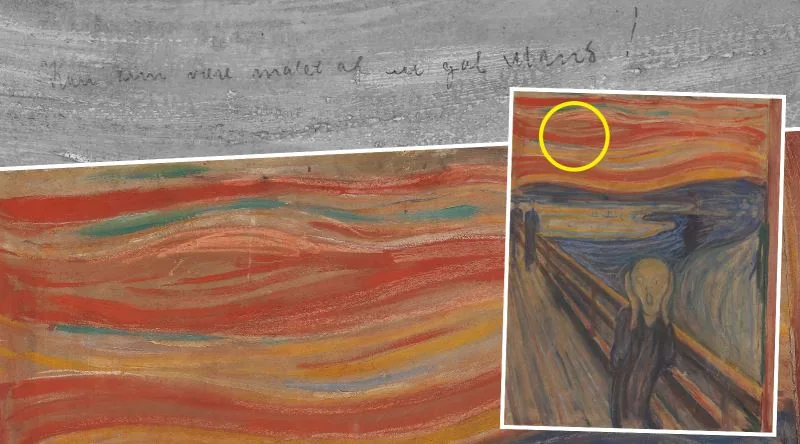
The hidden pencil note on Edvard Munch's iconic painting The Scream, "only a madman could have painted it", was written by the artist himself. This small, almost invisible confession reveals the deep vulnerability behind one of the most recognizable images in art history, a haunting admission that has puzzled viewers and scholars for over a century. The Scream hidden message transforms our understanding of the painting, turning it from a universal symbol of existential dread into a deeply personal cry from an artist who feared his own mind was slipping away.
Norwegian painter Edvard Munch wrote the phrase "only a madman could have painted it" in pencil on the frame of The Scream. The inscription was his own response to public criticism and his private fear of mental illness, discovered decades later when conservators examined the painting at the National Museum in Oslo.
- The pencil inscription "Kan kun være malet af en gal Mand" (only a madman could have painted it) was written by Munch himself on the frame of the painting.
- Munch created four versions of The Scream between 1893 and 1910, with the 1895 pastel version being the one that carries the hidden inscription.
- The inscription was discovered by conservators using infrared photography during examination at the National Museum in Oslo, Norway.
- Munch's lifelong anxiety about hereditary mental illness stemmed from his father's depression and his sister's hospitalization for mental health issues.
- The painting was later condemned as "degenerate art" by the Nazi regime in 1937 and was among works seized from German museums during World War II.
The Scream's Hidden Message: A Confession in Pencil
On the painted sky of Edvard Munch's 1893 masterpiece The Scream, a tiny pencil inscription hides in the upper corner. The words, written in Norwegian, read: "only a madman could have painted it." For decades, this faint scrawl remained one of art history's most tantalizing riddles. The Scream hidden message was eventually confirmed to be Munch's own handwriting, a personal confession etched directly onto his most famous work.
The National Museum of Norway settled the mystery using infrared imaging and detailed handwriting analysis, proving beyond doubt that Munch himself wrote the line. The inscription only came to light in the 1970s, when conservators first noticed it. What drove the artist to write such a stark self-indictment on his own canvas?
The answer lies in the painting's troubled reception. When The Scream first went on display, critics and medical professionals alike attacked it viciously, suggesting Munch's mind was unsound and that he belonged in a hospital. The accusations cut deep for a man who had spent his life terrified of inheriting the mental illness that plagued his family. His father and grandfather both suffered from depression, and his sister had been committed to a psychiatric institution. The harsh words stung so badly that Munch referenced them for years in his letters and diaries, haunted by the fear that the critics might be right.
The Blood-Red Sky and the Birth of a Masterpiece
The moment that birthed The Scream came on an ordinary evening walk in 1892, when Norwegian painter Edvard Munch found himself stopped dead on a path outside Oslo, watching the sky turn the color of fresh blood. In a diary entry written that same year, Munch described the scene with startling clarity: he was strolling with two friends at sunset when the heavens erupted in crimson, a sight so overwhelming he felt physically drained. He leaned against a fence, exhausted, and as his companions kept walking ahead, he stood frozen in place, trembling with fear. Then came the sound that would define his legacy, what he called "the enormous, infinite scream of nature."
That documented moment of visceral dread became the seed of the painting he would complete in 1893, a work so raw it would follow him for the rest of his life. The diary entry captures something deeply personal, a man alone with his anxiety even in company, hearing a cry that no one else around him seemed to notice. Munch's own words from that 1892 account describe flames "like blood and tongues" hanging over the dark blue fjord and the city below, imagery that would translate directly onto canvas the following year. It was not a hallucination or a passing mood; it was a specific, dated experience that Munch himself chose to record, and he returned to that vision again and again in the four versions of the composition he created over the years that followed.
Cruel Critics and a Family's Fear of Madness
When The Scream first hung in public in 1893, the backlash was brutal. Art critics and physicians alike looked at the wailing figure and saw not genius but sickness, declaring that Edvard Munch had a troubled mind and belonged in an institution. The Norwegian painter, then thirty years old, heard those words and felt them land like stones on a wound he had carried since childhood.
Munch had spent his whole life dreading the very thing the critics accused him of. His father and grandfather had both suffered from depression, and his sister had been committed to a psychiatric hospital. Madness ran through his family like a river he could not cross, and every sneer about his mental state only confirmed his deepest fear that he might be next. The cruelty of the reviews stung so sharply that he kept returning to them in letters and diaries for decades afterward, unable to let the words go.
That fear proved prophetic. In 1908, after a nervous breakdown fueled partly by alcoholism, Munch voluntarily checked himself into Dr. Jacobson's clinic in Copenhagen. He was forty-five years old and exhausted, finally surrendering to the illness he had spent a lifetime running from. The stay lasted eight months and changed him, but the scars of those early reviews never fully healed.
It was this collision of public humiliation and private terror that likely drove him to pick up a pencil and scratch those six words into the painting's frame: "only a madman could have painted it." The message reads less like confession and more like defiance, a man throwing the accusation back at his tormentors while secretly wondering if they might be right. The handwriting on that tiny inscription belongs to Munch himself, confirmed through infrared imaging and handwriting analysis conducted by the National Museum of Norway. He wrote it not as an afterthought but as a quiet act of self-defense, a whispered retort to everyone who had ever doubted him.
Tulla Larsen and the Shot That Ended It All
Edvard Munch was 35 years old when he met Tulla Larsen, the 29-year-old daughter of a wealthy wine merchant, and their turbulent relationship would burn for four years before ending in bloodshed. Munch, who believed women drained men's creative energy like vampires, deliberately pushed Tulla away with coldness and cruelty. He wrote to her once suggesting she take up printmaking, telling her she needed to develop her soul because it had never developed, an insult made stranger by the fact that Tulla had actually studied graphic art.
In 1902, Munch received a letter from a friend saying Tulla had attempted suicide, with doctors reportedly finding two empty morphine bottles beside her bed. The relationship staggered on for a few more months, but the end came violently in late 1902. During a quarrel at Munch's home, a pistol discharged, wounding Munch's hand. Nobody knows exactly what happened in that room, but the couple separated permanently, and Munch's injured finger remained slightly shorter for the rest of his life.
Munch took a strange revenge on the portrait he had painted of the two of them together: he cut it in half. The British Museum later acquired both pieces and exhibited them side by side in 2019, letting viewers see the severed halves of a relationship that destroyed itself. The wound on his hand healed, but the wound of that love affair never did. Munch carried the scars of Tulla Larsen with him into every painting he made afterward, proof that some fires burn long after the pistol falls silent.
Nazis, the Spanish Flu, and an Enduring Legacy
Even as Munch's reputation grew, trouble kept finding him. In 1937, the Nazi regime confiscated 82 of his works as part of their "Degenerate Art" campaign, branding one of Norway's greatest painters a cultural enemy. Two years earlier, in 1919, Munch had contracted the Spanish flu at age 55, surviving the pandemic that swept across Europe. The man who painted anxiety itself seemed to live inside a storm that never fully cleared.
Yet the painting that critics once used to question his sanity would outlive them all. A pastel version of The Scream sold at Sotheby's in May 2012 for $119.9 million, setting a record for any artwork sold at auction. Today, the four versions of The Scream are spread across different homes: the National Museum of Norway holds one, the Munch Museum in Oslo holds two, and one remains in a private collection. The painting that doctors once said proved Munch belonged in a hospital now hangs in the world's most prestigious galleries, a masterpiece worth more than most people can imagine.
Munch himself seemed to understand what his struggles meant for his art. "My fear of life is necessary to me," he once wrote, "my suffering is part of myself and my art." The Scream hidden message scrawled in its corner, the crippling anxiety, the family history of mental illness, all of it became fuel for work that would define an era. The critics who called him mad are long forgotten, but the trembling figure on that bridge still speaks to anyone who has ever felt the world close in.
Frequently asked questions
What is the hidden message on The Scream painting?
The hidden message on The Scream is a small pencil inscription in the painting's upper left corner that reads "kan kun være malet af en gal Mand," which translates to "only a madman could have painted it." The Norwegian National Museum confirmed through infrared imaging and handwriting analysis that Edvard Munch wrote this message himself.
Who wrote only a madman could have painted it on The Scream?
Edvard Munch himself wrote the inscription "only a madman could have painted it" on his masterpiece The Scream. Researchers at the National Museum of Norway used infrared imaging and handwriting analysis to verify that the pencil markings were made by Munch's own hand, settling decades of speculation about the message's origin.
Why did Edvard Munch write that message on The Scream?
Munch wrote the message in response to harsh criticism. When The Scream was first exhibited, both art critics and medical professionals publicly declared that Munch had a troubled mind and should be institutionalized. These attacks stung deeply, especially since Munch feared inheriting the mental illness that plagued his family, his father and grandfather suffered from depression, and his sister was committed to a psychiatric hospital.
How did critics react when The Scream was first exhibited?
Critics were brutal. When The Scream debuted, art critics and physicians alike suggested that Munch's mind was unsound and that he belonged in a hospital. The Norwegian artist carried these wounds for years, frequently referencing the criticism in letters and diary entries. He even voluntarily checked into a mental health clinic in Denmark in 1908 after a nervous breakdown partly fueled by alcoholism.
What was Edvard Munch's relationship with Tulla Larsen?
Tulla Larsen, the daughter of a wealthy wine merchant, met Munch when she was 29 and he was 35. Munch was deeply wary of women, believing they drained men's creative energy like vampires. He deliberately acted cold, rude, and sometimes aggressive toward Larsen to push her away, yet she remained obsessively committed to him for four years. In 1902, Munch received a letter saying Larsen had attempted suicide, with doctors reportedly finding two empty morphine bottles beside her bed. Months later, during a quarrel at Munch's home, a pistol discharged and injured his hand, the couple separated permanently. Munch later cut in half a portrait he had painted of the two of them together; the British Museum reassembled the two pieces and exhibited them in 2019.
How did the Nazis treat Edvard Munch's art?
In 1937, Hitler's government confiscated Munch's works and branded them "degenerate art." A total of 82 Munch pieces were seized as part of the Nazi regime's campaign against modern art. Even after his death, the Nazis reportedly used his funeral for propaganda purposes, though the artist could no longer defend his legacy.
Did Edvard Munch survive the Spanish flu?
Yes, Edvard Munch contracted the Spanish flu in 1919 at age 55 and survived. The pandemic swept across Europe, and Munch was among those who fell ill but recovered. He continued painting for decades afterward, until his death in 1944. A pastel version of The Scream later sold at Sotheby's auction in May 2012 for $119.9 million, making it one of the most expensive artworks ever sold.
Got a take on this? Add your voice to the conversation below →
No comments yet. Be the first.