The Matrix Marxism: How the Film Exposes Worker Exploitation
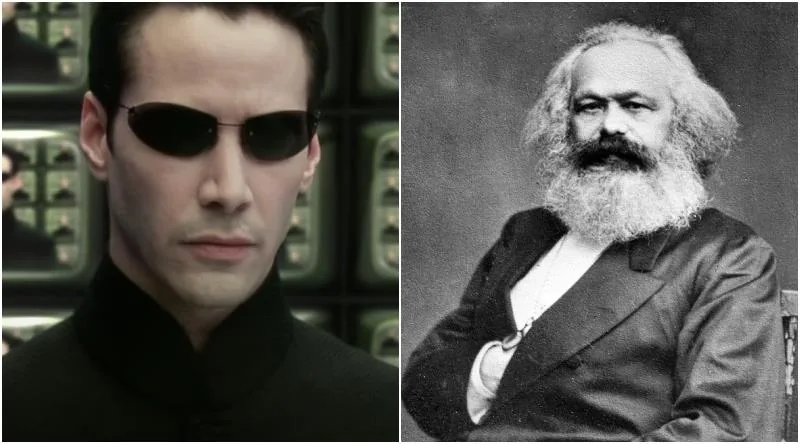
The Matrix is more than a sci-fi action spectacle; it is a dramatization of ideas that resonate with Karl Marx's writings on worker exploitation, alienation, and technological surveillance under modern capitalism. The film's central image of humans as living batteries, plugged into a machine system that feeds on their labor, invites viewers to reconsider their own relationship with the workplace and the systems that govern their daily lives. This is a story about waking up to the reality that the world you are told is natural is, in fact, a construct designed to keep you docile and productive.
The Matrix uses the metaphor of a simulated reality to depict worker exploitation, where humanity's vital energy is harvested by machines. The film explores alienation as workers are disconnected from their true potential and are subjected to technological surveillance that enforces compliance, mirroring Marxist critiques of capitalist labor relations.
- The film centers on the character Neo as he discovers the simulated reality of the Matrix.
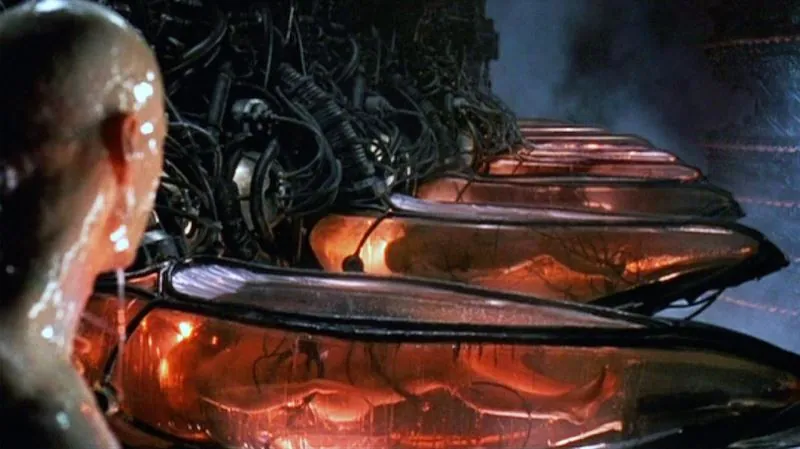
- In the movie, humans are kept in pods where their body heat and electrical energy are harvested by sentient machines, a visual metaphor that resonates with Marxist critiques of labor exploitation.
- The character Morpheus explains that the Matrix is a system designed to keep the human population passive and unaware of their true enslavement.
- The film depicts a resistance movement that fights to free minds from the system, mirroring revolutionary class consciousness.
- The narrative concludes with Neo's promise to show the machines a world without rules, implying a potential for systemic change and liberation from oppressive structures.
The Matrix Marxism: A Surprising Lens on an Iconic Film
The Matrix works remarkably well as a dramatization of how the average American worker was exploited in the late 20th and early 21st centuries, viewed through a Marxist lens. The film never explicitly references Marx, yet its central metaphor of humans reduced to living batteries for machines resonates with the philosopher's critique of capitalism. Watching it with fresh eyes reveals a story about labor, alienation, and control that feels less like science fiction and more like a documentary of modern office life.
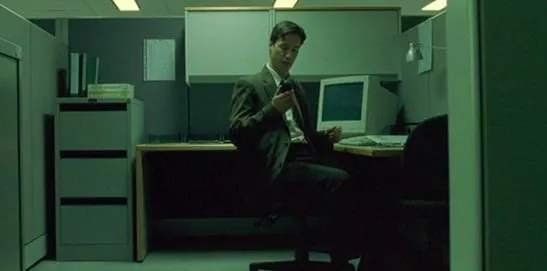
The film opens a door to what we might call The Matrix Marxism, a reading that finds economic theory hiding inside a blockbuster action movie. Think about the cargo workers in the film, their handheld devices tracking location and the time between deliveries. Think about the data entry clerks whose keystrokes are logged minute by minute, or the customer service representatives whose call counts are monitored. These are not futuristic inventions. They are descriptions of workplaces that existed when the film premiered, and they have only intensified since. In the 20th century, the clock hung on the factory wall served as the symbol of capitalist pressure. Today's management software tracks every movement an employee makes, both inside the office and beyond it, differing from that old wall clock only by a degree. Marx wrote about workers being subjected to increasing control by machines, and The Matrix offers a dystopian picture of where that trend leads.
Marx argued that workers under capitalism become alienated from the realities of their labor. They cannot see the relationship between the work they perform and the capital it produces, and they fail to recognize that they are being forced to work at all, believing instead that they freely sell their labor in an open market. In truth, they are exploited, with no say over when or how they work, forced to accept whatever terms employers and capital owners dictate. The Matrix dramatizes this with brutal clarity. Neo and his fellow humans believe they are living ordinary lives, unaware that their bodies are plugged into machines, their energy harvested, their choices predetermined. The film's battery metaphor can be read as expressing Marxist concerns about workers who provide power for machines, comparable to slaves or conscripts, though the specific details of that reading remain open to interpretation.
Workers Under Surveillance: The Matrix's Dystopian Mirror
The cargo worker glances at the handheld device in their palm, watching the timer count down between deliveries. The data entry clerk types furiously, knowing every keystroke lands in a log file reviewed at the end of the shift. The customer service representative takes call after call, acutely aware that the total number of answered phones becomes a metric by Friday. This is the working world of The Matrix, and it looks remarkably familiar to anyone who has held a modern job.
These scenes from the film are not incidental background details. They dramatize exactly what Karl Marx described in the mid-1800s: machinery subjecting workers to intensified control and monitoring. Marx argued in Capital that as technology advances under capitalism, it does not liberate the laborer but rather tightens the grip of oversight. The machine becomes a supervisor that never blinks, never takes a coffee break, and never forgets a single mistake.
Consider the shift from the 20th-century factory wall clock to today's management software. In the 1900s, the clock hanging above the workshop door symbolized capitalist pressure. Punch in, punch out, and every minute in between belonged to the employer. That same logic now lives inside the software tracking employees both inside and outside the office. The only difference between the wall clock and the modern dashboard is a matter of degree, not of kind. The warehouse worker's handheld scanner, the remote employee's mouse movement tracker, the delivery driver's GPS route monitor. Each one extends the reach of surveillance further into the worker's day.
Marxists have long flagged this escalating control by machines as a core concern. The Matrix offers a dystopian mirror of that ongoing trend. The film's surveillance state reflects a reality where workers cannot escape the watchful eye of the system. The cargo workers, the data entry staff, the customer service representatives. They are all plugged into a network that records their every action, just as the film's characters are plugged into a simulated reality that monitors their every move.
The irony cuts deep. These workers believe they are simply doing their jobs, earning their wages, participating in a free market. Marx would recognize the alienation immediately. The laborer cannot see the relationship between their effort and the capital it generates. They cannot perceive that their work is compelled, not freely chosen. The surveillance is the visible thread connecting their daily grind to the larger machinery of profit. And in The Matrix, that thread becomes a cable, and the worker becomes a battery.
Alienation and the Invisible Chains of Labor
Karl Marx argued in his Economic and Philosophic Manuscripts that workers under capitalism are alienated from the realities of their work, unable to see the relationship between their own labor and the capital it produces. This is the invisible chain that The Matrix Marxism commentary loves to spotlight, and for good reason. The film turns that abstract philosophical knot into something you can watch on screen.
Here is the strange trick of it all. Workers believe they are freely selling their labor in an open market, striking a fair bargain with whoever signs their paycheck. Marx saw through that illusion in the 1840s, and the filmmakers brought it to life on screen. The worker cannot decide when to show up, how to do the job, or what gets made. The employer sets every condition, and the employee either accepts those terms or finds another boss to answer to. That is not freedom. That is exploitation dressed up in the language of choice.
Now think about what the machines do to humanity inside the Matrix. The film presents humans as living power sources, bodies plugged into pods and harvested for the energy the machines need to keep running. The film's battery metaphor, a phrase not actually spoken in the movie itself, is often read as a stand-in for workers supplying power to capital the way slaves or conscripts might. The comparison is contested, but the reading has stuck because it maps so neatly onto Marx's description of labor power being bought, used up, and discarded.
Morpheus never gives Neo a lecture on surplus value. He does not have to. The image of a human body wired into a machine, generating electricity it will never benefit from, says everything Marx wrote about alienation in a single frame. The worker produces, the system takes, and the worker cannot even see where the product goes or who ultimately profits from it. That is the invisible chain, and the film wraps it around every sleeping human in those pods.
Add to that the surveillance. Marx wrote in Capital about machinery subjecting workers to intensified control and monitoring, and the film delivers that nightmare visually. Cargo workers tracked by handheld devices showing their location and the time between deliveries. Data entry clerks whose keystrokes are logged minute by minute. Customer service representatives whose call counts are watched. The wall clock of the 20th century factory was a sign of capitalist pressure, but the management software tracking every movement inside and outside the office today differs from that clock by only a degree. The Matrix simply pushes that trend to its dystopian endpoint, where the monitoring is absolute and inescapable.
The Communist Manifesto Meets Morpheus's Warning
Karl Marx and Friedrich Engels published the Communist Manifesto, and buried inside its second chapter is a passage that could pass for a description of the Matrix's human power plants. "Modern industry has transformed the small workshop of the patriarchal master into the great factory of the industrial capitalist," they wrote. "The masses of laborers, crowded into the factory, are organized like soldiers. They are not only slaves of the bourgeois class and of the bourgeois state; they are daily and hourly enslaved by the machine, by the overlooker, and above all by the individual bourgeois manufacturer."
Read that again with the film in mind. Workers packed into rows, monitored by machines, overseen by figures who answer to a higher authority. The filmmakers never name Marx on screen. But the resonance is hard to miss, and it is exactly what makes the movie such a rich text for Marxist readings of late 20th century American labor.
Now bring in Morpheus. In the film's most quoted scene, he tells Neo: "The Matrix is a system, Neo. That system is our enemy." The line lands like a thesis statement for the entire movie. What follows in the actual script, though, is often misremembered. Contrary to popular summaries, Morpheus does not list specific professions like businessmen, teachers, lawyers, or carpenters as the people they are trying to free. The dialogue as written jumps from declaring the system the enemy to asking Neo what he sees when he looks around. The catalog of professions is a popular embellishment, repeated in countless summaries and memes, yet it is not in the source material.
That distinction matters for anyone exploring The Matrix Marxism connection. The verified line about the system being the enemy is pure, unadorned, and devastating. The invented add-on about specific professions, however accurate it feels to the film's spirit, is not something Morpheus actually says. The movie trusts its audience to understand that the system enslaves everyone, from the office worker to the delivery driver, without needing a roll call of job titles.
What the Manifesto and Morpheus share is a diagnosis: the system organizes people, extracts their labor, and calls it freedom. Marx described the factory floor in the 1800s. Morpheus described the simulation in the film. Both point at the same mechanism of control, just dressed in different metaphors.
Frequently asked questions
How does The Matrix portray worker exploitation?
The film depicts exploitation through its battery metaphor, where humans are harvested for their bioelectric energy to sustain the machine civilization. This imagery parallels Karl Marx's argument that workers become commodities whose labor power is extracted for the benefit of capital owners. The constant surveillance in the film reinforces this exploitation, echoing Marx's observation about machinery increasing control over workers.
What is the significance of the human battery metaphor?
The human battery metaphor can be read as representing workers providing power for machines, a condition some interpret as akin to slavery or conscription. This reading expresses Marxist concerns about workers' plight under industrial capitalism. However, the specific interpretation remains contested, as the film never explicitly names Marxism or its concepts.
How does The Matrix relate to Marx's theory of alienation?
In Marx's Economic and Philosophic Manuscripts, he argued that workers under capitalism are alienated from the realities of their work. The Matrix visualizes this through humans who cannot see the connection between their labor and the capital they produce. Like Marx's workers, the humans in the pods believe they freely sell their labor when they are actually being exploited, unable to decide when or how they work.
What does Morpheus's speech say about capitalism?
Morpheus tells Neo that the Matrix is a system and that system is their enemy. Contrary to some popular versions, he does not list specific professions like businessmen, teachers, lawyers, or carpenters as the people they are trying to free. The speech does convey that people remain trapped within the system until their minds are liberated from its control.
How does The Matrix comment on technological surveillance?
The film shows workers under constant monitoring, paralleling Marx's argument about machinery increasing control over labor. This mirrors real workplace surveillance, from data entry workers whose keystrokes are recorded minute by minute to customer service representatives whose call counts are tracked. Marx wrote about this trend over a century ago, and The Matrix presents its dystopian implications.
Why is The Matrix considered a Marxist film?
The Matrix is considered a Marxist film because it dramatizes exploitation, alienation, and systemic control through its narrative. The Communist Manifesto, co-authored by Marx and Friedrich Engels, describes how modern industry transforms small workshops into great factories where workers are organized like soldiers and enslaved by machinery. The film translates these concepts into a science fiction framework that resonates with viewers. Editorial note: Any facts which remain unconfirmed are presented as such, hedged to reflect the interpretive nature of film analysis.
Got a take on this? Add your voice to the conversation below →
No comments yet. Be the first.