Severance MK-Ultra Theory: Lumon Is Kier's Brain
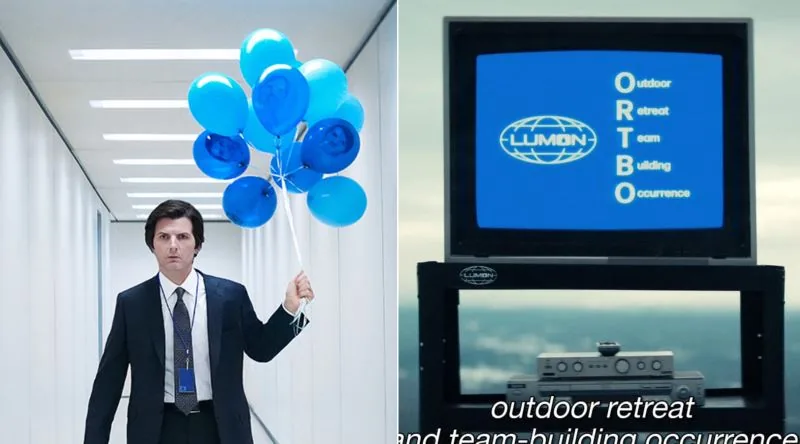
The Severance MK-Ultra theory suggests that Lumon Industries is not just a corporation, but a literal representation of founder Kier Eagan's brain, with the severed floor acting as his subconscious and the outside world as his conscious mind. This fan interpretation, which gained traction following the Severance season 2 ending, paints the entire series as an elaborate, ongoing experiment in mind control and resurrection. It reframes the show's most disturbing moments, from the MDR team's mysterious work to the haunting imagery of the opening credits, as pieces of a single, chilling biological puzzle.
The Severance MK-Ultra theory posits that the Lumon building is a physical model of Kier Eagan's brain, with each department representing a different cognitive function. The innies are essentially worker cells inside this organ, tasked with processing data that relates to Kier's memories and consciousness, all as part of a plan to resurrect the founder.
- The Severance opening credits show Mark's head splitting open and him descending into a miniature cityscape, which theorists interpret as a visual map of the Lumon brain-building.
- The Macrodata Refinement (MDR) team sorts numbers into bins labeled with emotions like "WO" and "FC," which fans believe are the building blocks of Kier Eagan's memories.
- The Cold Harbor file, central to the Severance season 2 ending, is theorized to be the final piece of Kier's consciousness that needs to be completed for his resurrection.
- Some fans believe the show's creator drew inspiration from the CIA's real-world MK-Ultra program, though no reliable evidence confirms this connection to Lumon's unethical psychological experiments.
- The perpetuity wing's wax statues and the Eagan family history suggest that Lumon's goal is not just corporate control, but the literal reincarnation of its founder.
The Iceberg Theory: Why Severance Is Hiding Something Bigger
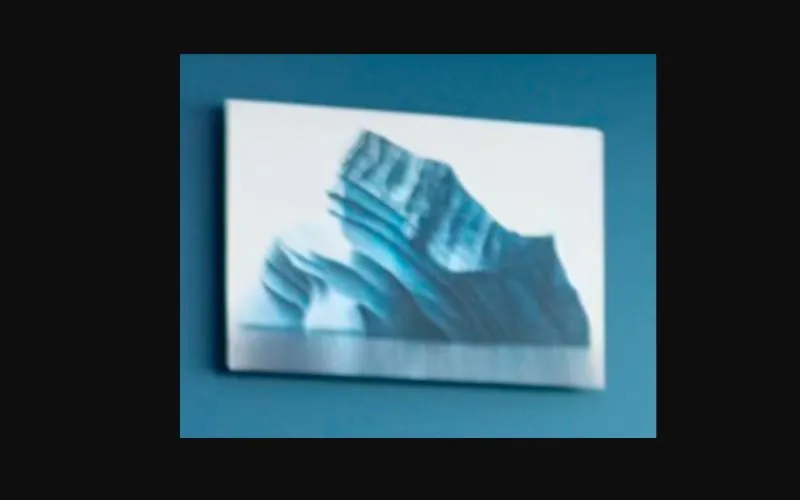
If you have watched Severance, Apple TV+'s mind-bending series about employees who surgically split their work and personal memories, you have seen the painting. It hangs in the office, a stark image of an iceberg floating in dark water. The message is simple and deliberate: what you see on the surface is only the tip. The part that matters, the part that could sink you, is submerged and invisible.
That iceberg is the perfect metaphor for the show itself. On the surface, the plot seems straightforward. People get chips implanted in their brains, they ride an elevator, and their consciousness splits into an "innie" who only knows the office and an "outie" who lives a normal life. But fans have spent hours picking apart every frame, and many now believe the series is pointing at something far more disturbing than a quirky workplace drama. The theory that keeps surfacing connects Lumon Industries to the CIA's notorious MK-Ultra mind-control experiments, a real program the agency ran between 1950 and 1970, though no reliable evidence confirms the creators explicitly cited the program as an inspiration.
According to the original account that sparked this line of thinking, the show draws heavy inspiration from those experiments, though the creators have never confirmed this. The CIA's goal back then was to manipulate the human mind, often with LSD, to create obedient individuals who would follow any command. The idea was to turn people into, for all practical purposes, robots. It is not hard to see why a show about a corporation that surgically severs your brain into two separate selves would invite that comparison.
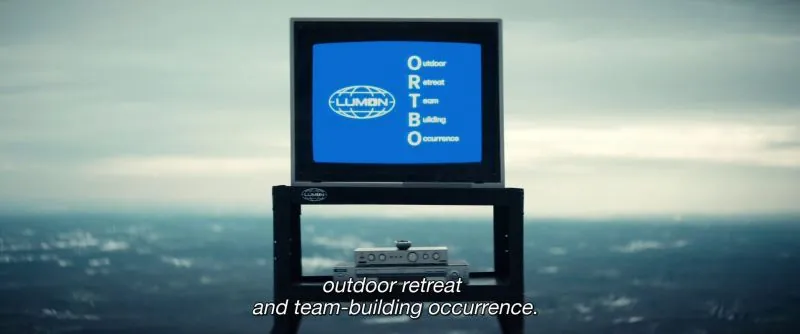
Fans have found other clues that seem to reinforce the connection. In season 2, episode 4, the team goes on what is called the ORTBO, which stands for Outdoor Retreat Team Building Occurrence. Some viewers have claimed that ORTBO is an anagram of "robot." That is a fun idea, but it does not hold up. ORTBO has an extra O, so it is not a true anagram. It is a fan misreading, nothing more.
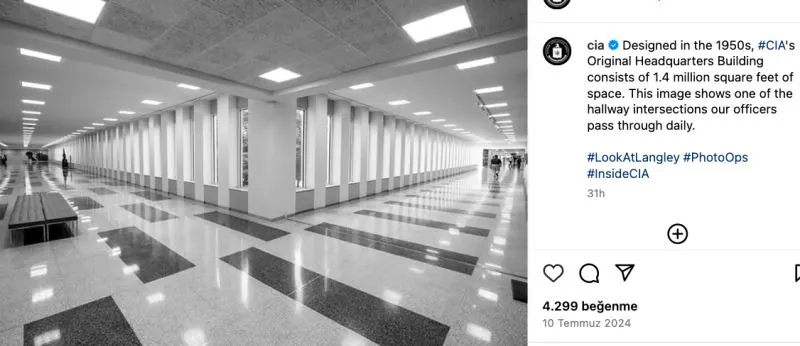
There is also the building itself. The Lumon headquarters, with its stark white facade and imposing symmetry, has been compared by some fans to the CIA headquarters in Langley, Virginia. Side by side, the resemblance is striking to some eyes, but that comparison is subjective. There is no documented evidence that the production team intentionally modeled the set on the CIA building.
What does hold up is the naming. "Lumon" is a clear near-derivation of the Latin word "lumen," which means light. And the word "Illuminati," which the show heavily evokes through the Eagan family's secretive, almost cult-like structure, comes from the Latin verb "illuminare," meaning to light up or illuminate. The linguistic breadcrumbs are there, and they point toward a theme of enlightenment, or perhaps a twisted version of it, that runs through the entire series.
So whether or not the creators intended a direct MK-Ultra parallel, the pieces fit together in a way that is hard to ignore. The iceberg painting is not just set dressing. It is an invitation to look deeper, to question what Lumon is really building, and to wonder what lies beneath the floor of that eerie, green-lit office. The visible story is compelling, but the hidden one, the one fans are still excavating, is where the real terror lives.
Lumon Is Kier's Brain: The Building as a Mindscape
Here is the theory that changes everything about how you watch the show: the Lumon offices are not physical floors at all, but a mental simulation running inside the mind of founder Kier Eagan. The building itself is a brain, and every department you see on screen maps to a specific neurological function. Once you see it, you cannot unsee it.
The opening credits plant the first seed. Mark is shown floating inside a green, pulsing brain, and the office corridors he walks are narrow, maze-like tunnels that curl and bend like the folds of cerebral cortex tissue. The show's own production design leans into this with a sickly green tint on the walls, the same green you see in medical diagrams of neural pathways. The famous "Mind" drawing that appears in the show makes the comparison explicit when placed side by side with an exterior shot of the Lumon tower; the building's silhouette mirrors the contours of a human brain.
Each department appears to handle a different cognitive job. Macrodata Refinement, where Mark and his team sit at their screens, corresponds to the prefrontal cortex, the seat of logic and decision-making. Optics & Design, the art-and-print shop run by Burt, maps to the visual cortex. The Wellness Center, where Ms. Casey runs her soothing sessions, is the limbic system, the home of emotion and memory. Milchick's Security office is the amygdala, the fear and threat detector. The Perpetuity Wing, Kier's shrine of wax figures and relics, is the hippocampus, which stores identity and personal history. The Testing Floor and its Break Room are the basal ganglia, the region that governs habit and behavioral control. Storage, where forgotten files go to die, is the subconscious. A hypothetical medical wing would be the brain stem, the most primitive controller of physical function.
The work itself fits this reading. Mark and his colleagues stare at screens full of numbers and sort them into boxes, but they do it by feel. Some numbers read as scary, others as calming, still others as angry. They are not doing data entry. They are processing emotional content, tagging memories and experiences by their affective charge, feeding raw material into Kier's vast mental architecture. The narrow corridors, the endless identical doors, the sense of being trapped in a labyrinth that never quite makes sense, all of it points to the same conclusion: these characters are not walking through a building. They are walking through a mind.
The Resurrection Plot: Kier Eagan, Cold Harbor, and the Global Plan
Kier Eagan is dead, but Lumon refuses to let him stay that way. The company's founder, who died long before the events of the series, is portrayed throughout the Severance building with statues, paintings, and teachings that elevate him to something closer to a god or prophet than a corporate pioneer. And the more you look at how Lumon operates, the clearer it becomes that the entire Severance procedure is one long, painstaking attempt to bring Kier back.
The painting called "Kier Taming the Four Tempers" is the clearest window into this ambition. Look at it closely and you will notice the cave in the background is not just any cave. It is shaped like the Severance building itself. The frightened figures huddled inside that cave are the employees, and Kier stands before them as a glowing source of light, as if he alone can guide them out of darkness.
Kier's own words reinforce the image. He spoke of entering the cave of his own mind and taming the tempers there, adding that when you tame your anger like his, the world will feel like an extension of your own body. That is not gentle philosophy. That is a declaration of control, a promise that the employees who submit to Lumon will lose themselves entirely and become part of one unified will, Kier's will.
Drummond, a senior Lumon executive, reportedly described the completion of the Cold Harbor file, which sat at 85 percent, as "one of the greatest moments in the planet's history." The quote comes from the show's dialogue, though the exact wording is hard to pin down from memory. What matters is the weight Lumon places on that file. Cold Harbor first concerns Gemma, the woman Mark knows as Ms. Casey, and only after her does it turn to Kier himself. Gemma is the test run. Kier is the destination.
The company's logo carries a world symbol, and that detail hints at the true scale of the plan. Lumon is not interested in controlling one office floor or one town. The long game appears to be global. The obedient innies, stripped of their own desires and trained to follow orders without question, would become the vehicle for delivering immortality to the elite, the executives and the wealthy few who can afford it.
Think of it as a worldwide extension of the MK-Ultra experiments, a systematic effort to bend human consciousness to a single purpose. The Severance MK-Ultra theory suggests that Lumon's technology is not merely a workplace tool but a prototype for mass mind control, something that could one day be applied to all of humanity. The employees in the building are test subjects, and their suffering is the price of perfecting the system.
Exactly how this plays out remains to be seen. The source speculates that future seasons will reveal the full scope of the resurrection plan, but only a third season has been confirmed so far. What is certain is that Lumon's founder is not resting in peace. Every file refined, every number sorted, every innie shaped and molded is another step toward pulling Kier Eagan back into the world of the living.
Simulation or Reality? The Red and Blue Color Clues
Are the innies really walking through Lumon's hallways, or is something far stranger happening? The strongest fan theory says the severed employees never physically enter the building at all. Instead, their consciousness is uploaded into a simulated environment, a digital workspace that exists entirely inside their own minds.
Think about the elevator ride for a moment. When Mark and his coworkers step into that elevator at the end of each workday, the doors close, the bell rings, and their consciousness flips. But what if the elevator never actually moves? What if the physical body stays put while the chip inside the brain simply switches modes, like toggling between two apps on a phone?
The show drops visual hints everywhere if you know where to look. The outside world, the world of the outies, is bathed in warm red tones. The inside, Lumon's office floors, leans heavily into cool blues. It is a deliberate color language that echoes The Matrix, where Morpheus offers Neo a choice between a red pill and a blue pill. The red pill reveals the harsh truth of reality. The blue pill lets you stay comfortably asleep inside the simulation. Severance seems to be playing with that exact same visual vocabulary, painting the "real" world red and the "artificial" work world blue.
Then there is the Exports Hall, that long black corridor that appears in key moments of season two. Fans read it as the transition point, the one place where the two consciousness states can actually touch. It is a kind of bridge between the simulated floor and the outside world, a space where innies and outies might briefly connect. In episode 2x5, Mark passes through this corridor and sees Casey, the woman he knew as Gemma in his outie life. That moment only works if the corridor functions as something more than a physical hallway. It becomes a portal where the boundaries of the simulation start to blur.
The theory gains more traction when you notice how the show borrows from other mind-bending films. The opening credits of season two show Mark diving into a green brain, surrounded by fluids and strange balloon-headed figures. The office walls themselves are painted in that same sickly green, a color that reads more like a computer motherboard than a corporate workspace. It all points toward a single conclusion: Lumon is not a place you commute to. It is a state of mind you log into.
Decoding the Opening Credits: Every Frame Tells a Story
The opening title sequence for Season 2 of Severance is not just a stylish introduction. It is a miniature roadmap for the entire season, packed with clues that only become clear on a second or third viewing. Watching it frame by frame reveals the show's central anxieties about identity, control, and what Lumon is really building inside those walls.
Scene one opens with outie Mark waking up in bed. Then a balloon-headed version of Mark descends from above, a visual shorthand for his innie. The company literally gave the team blue balloons with their own faces on them in one episode, and the credits repurpose that image to show how Lumon sees its workers: hollow, floating, and easily manipulated. The elevator that follows shows the upper floors, but Mark only goes down, surrounded by more balloon heads. It echoes the staircase in The Truman Show, where the hero finally realizes his entire world is a constructed set.
Then Mark is inside a green brain. The office corridors are bathed in that same sickly green light, suggesting the whole floor exists inside a mind. The liquid environment references the drop in the Lumon logo, and in its reflection, two women appear: Helly and Casey. Their mirrored presence hints at their shared fate long before the plot catches up.
Mark wakes again among featureless babies in suits. These blank-faced infants represent the workers as tabula rasa, empty slates waiting to be filled. John Locke argued that the human mind starts blank and is shaped only by experience. Lumon does exactly that to its innies, filling their heads with company doctrine. A gravestone in a dream sequence in episode 5 shows the age 3, which some fans have misread as a statement about Irving's death, though it is a surreal image from a nightmare, not a real biography. Mark then looks in a mirror and finds his own face missing, driving the same point home.
Mark jumps into his own brain and transforms into a goat, then into a mountain painting. The goat appears to be a deliberate manipulation, an image inserted into his consciousness. The Montauk sequence follows, with swelling heads that signal the outdoor retreat was never real. It was a mental exercise, a nod to Eternal Sunshine of the Spotless Mind, where memories and perceptions are surgically altered. Ben Stiller has said the film influenced his directing choices, and the credits wear that influence openly.
Back at his desk, Mark faces pills and unappealing liquids. The elevator light points downward as the curtain parts, signaling a transition to reality. The names John Turturro and Christopher Walken appear on screen here, a deliberate choice that points to Irving and Burt's eventual role in crossing between worlds. A green notebook represents the manipulation program itself, while Patricia Arquette's character holds a light, guiding Mark toward the Exports Hall, where he will meet Casey. Her role as a guide is written into the very credits.
The final image shows baby Kier appearing before Mark in bed. This is the season's biggest clue. Once Gemma reaches 100 percent completion on the Cold Harbor file, the founder Kier Eagan may be resurrected. The baby is the promise of that rebirth, built inside a manufactured consciousness. The credits do not just summarize the season. They tell you exactly where it is heading, if you know how to look.
Frequently asked questions
What is the Severance MK-Ultra theory?
The Severance MK-Ultra theory suggests the Apple TV+ series draws inspiration from the CIA's real MK-Ultra mind-control experiments conducted between 1950 and 1970. No reliable evidence confirms the creators explicitly cited MK-Ultra as an influence, but the parallels are striking. The theory frames Lumon Industries as a modern vehicle for brain simulation and behavioral manipulation, turning workers into obedient figures much like the CIA's documented ambitions with LSD and psychological conditioning.
Why does the Severance opening credits show a brain?
The opening credits show Mark submerged inside a green, fluid-filled brain, a visual that supports the theory Lumon operates as a mindscape rather than a physical workplace. The green tint mirrors the office interiors, suggesting the severed floor exists entirely within a constructed consciousness. This imagery aligns with the broader idea that employees never physically travel anywhere, their minds simply shift into a new mode when they enter the elevator.
Who is Kier Eagan in Severance?
Kier Eagan is the founder of Lumon Industries, depicted throughout the series as a god-like figure through statues, paintings, and teachings. The theory proposes the entire Lumon building represents Kier's mind, with each department corresponding to different brain functions. His famous quote about entering the cave of his own mind and taming the four tempers reinforces this interpretation. Employees are essentially working inside the consciousness of a dead man being prepared for resurrection.
How does Severance connect to Eternal Sunshine of the Spotless Mind?
Both stories center on memory manipulation and mental intrusion. The season 2 episode featuring the ORTBO outdoor retreat includes a reference to Montauk, a location central to the 2004 film Eternal Sunshine of the Spotless Mind starring Jim Carrey and Kate Winslet. Ben Stiller has reportedly mentioned drawing inspiration from that film and Inception for his directorial techniques. Both films unfold inside the mind, just like Severance, reinforcing the theory that the Lumon experience is purely psychological.
What does the Cold Harbor file mean in Severance?
Cold Harbor is a data file connected to Gemma, Mark's presumed-dead wife who appears on the severed floor as Ms. Casey. As Mark refines the file and completion percentages climb, Gemma becomes more defined and clear. A senior Lumon executive named Drummond reportedly described completing Cold Harbor as one of the greatest moments in the planet's history, though the exact quote cannot be independently confirmed. The theory suggests finishing the file will lead to Kier Eagan's resurrection.
Is Lumon Industries based on the CIA building?
Some fans have pointed out architectural similarities between the Lumon headquarters and the CIA building in Langley, Virginia. This resemblance is subjective and has not been documented as intentional production design. The comparison feeds into the broader Severance MK-Ultra theory, but treat it as fan observation rather than confirmed fact. The visual echoes are intriguing, yet no official source has verified that the set designers modeled Lumon on the CIA campus.
What does the goat scene in Severance symbolize?
The goats remain one of the show's most debated mysteries. The opening credits show Mark transforming into a goat before shifting into a mountain rendered as a painting, suggesting the imagery ties into manipulation themes. Some viewers speculate the goats relate to sacrifice or breeding programs, but the source material offers no definitive conclusion. The creators have deliberately left this thread open, so any interpretation stays speculative until future episodes provide answers.
Does Severance reference The Truman Show?
Yes, the opening credits include a staircase scene that fans compare to Truman's escape in the 1998 film The Truman Show starring Jim Carrey. In the credits, Mark descends past the upper floor into a crowd of balloon-headed figures, visually echoing Truman climbing stairs toward an exit he does not yet understand. The comparison reinforces the theme of manipulation, suggesting Mark, like Truman, lives inside a constructed reality designed to control his perception and choices. Editorial note: This article presents a fan theory based on visual and narrative clues from the show; any facts which remain unconfirmed are presented as such, and the interpretation is offered as speculation rather than established canon.
Got a take on this? Add your voice to the conversation below →
No comments yet. Be the first.