Robert Redford's 5 Best Movies: A Farewell to a Legend
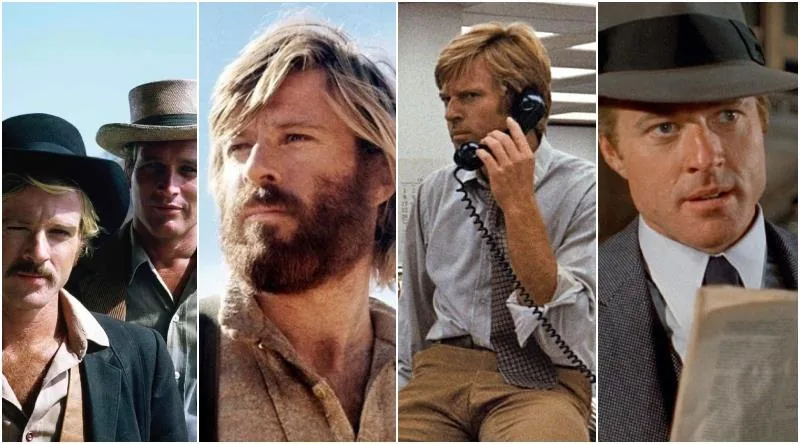
Robert Redford, the golden-haired icon of American cinema, built a five-decade legacy defined by his striking good looks, quiet intensity, and a fierce independent streak that reshaped Hollywood. From his breakout role as the Sundance Kid in 1969 to his Oscar-winning directorial debut in 1980, Redford's career is a masterclass in choosing stories that matter, and these five films capture the very essence of his enduring appeal.
Robert Redford's best movies span from the 1969 western classic Butch Cassidy and the Sundance Kid to his 1994 directorial triumph Quiz Show. These five essential films showcase his range as a charismatic leading man and a thoughtful filmmaker, cementing his status as a true Hollywood legend.
- Butch Cassidy and the Sundance Kid (1969) paired Redford with Paul Newman, creating one of the most beloved buddy films in cinema history.
- The Sting (1973) reunited Redford and Newman in a caper that won the Academy Award for Best Picture.
- All the President's Men (1976) cast Redford as Washington Post reporter Bob Woodward, dramatizing the Watergate scandal that ended a presidency.
- Jeremiah Johnson (1972) showcased Redford's physicality and range in a haunting mountain-man tale set in the 1830s Rockies.
- Quiz Show (1994) marked Redford's directorial peak, earning him an Oscar nomination for Best Director.
Introduction: A Hollywood Legend
Robert Redford, the actor, director, and founder of the Sundance Film Festival, has been a defining presence in American cinema for decades. That sun-bleached blond hair and easy grin came to define what it meant to be a leading man. He wasn't just handsome; he carried a quiet intelligence that made every role feel lived-in, from bank robbers to journalists to washed-up baseball players.
If you never quite got around to exploring his filmography, now is the moment. His career spans more than fifty years, but a handful of performances stand tall above the rest. These are the pictures that cemented his legend, the ones that show why he became one of the most beloved figures in Hollywood history.
So grab some popcorn and settle in. Here are five essential Robert Redford films, plus a bonus pick that shows off his skill behind the camera.
5. Jeremiah Johnson (1972): A Man vs. Nature
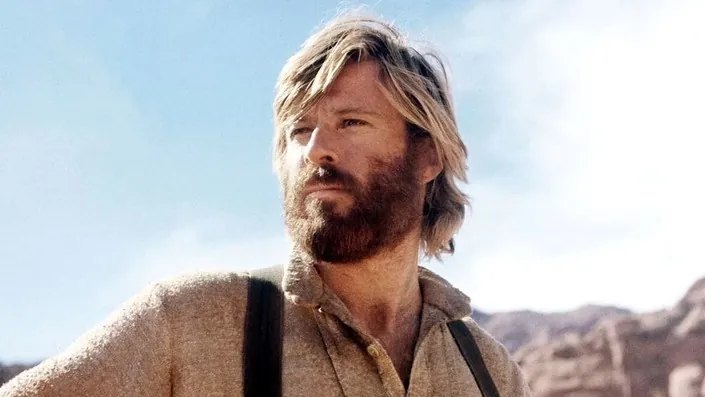
Directed by Sydney Pollack in 1972, Jeremiah Johnson stars Robert Redford as a mountain man who walks away from civilization to live alone in the Rocky Mountains. It is the rare western that trades gunfights for survival, and it remains one of the most quietly powerful films in Redford's career.
There is almost no dialogue in the traditional sense. Redford's character learns to trap beaver, build shelter, and navigate snowstorms that could swallow a man whole. The film's central conflict is not with another outlaw or a sheriff, but with the brutal indifference of nature itself. Watching it, you feel the cold. You feel the hunger. You understand why the man stops talking so much.
Pollack and Redford did not have an easy shoot. The production clashed with Warner Bros. over filming on location instead of on a studio set, and the weather turned vicious. A popular anecdote claims Pollack went so far as to mortgage his own house to keep the production funded, though no reliable source confirms that detail. What is certain is that the finished film captures something raw, and Pollack himself reportedly marveled at why audiences never got bored watching a cowboy ride silently through snowy mountains. He credited Redford's on-screen magnetism, what one writer called "the devil's charm," for holding it all together.
The human versus nature theme lands hard because Redford never overplays it. His Jeremiah is tough but not invincible, capable but not superhuman. That restraint is what makes the film work, and it is why Jeremiah Johnson still gets rediscovered by new generations of viewers who come for the scenery and stay for the quiet power of a man alone in the wild.
4. The Natural (1984): More Than a Baseball Movie
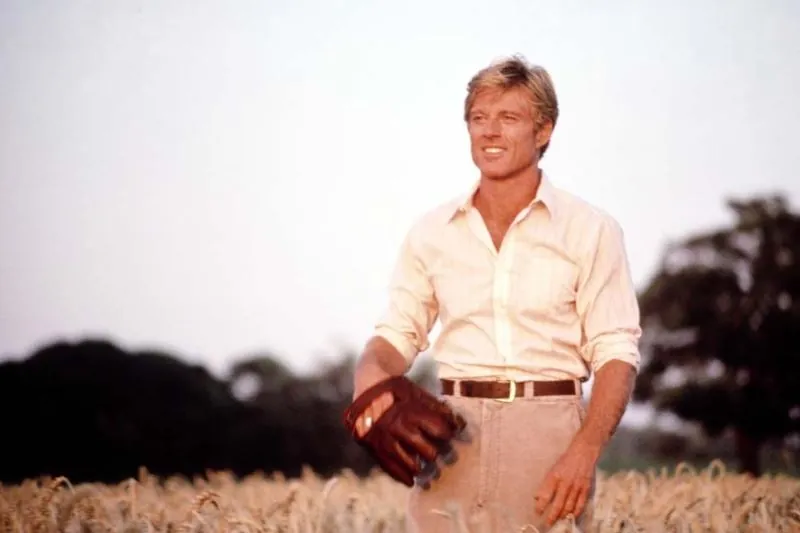
Robert Redford stars as Roy Hobbs in The Natural, released in 1984, and it is anything but the predictable sports triumph you might expect walking in. You sit down thinking, "Here we go, another underdog story where a washed-up player saves a sorry team." The film has other plans for you.
What unfolds instead is a meditation on how one impulsive decision made in the heat of youth can ripple outward and cost multiple lives. Roy Hobbs carries that weight with him, and Redford plays the quiet burden beautifully. The movie refuses to give you the easy catharsis of a simple win. It asks what happens when talent meets tragedy, and whether redemption is even possible when the damage is already done. The baseball diamond becomes a stage for something far more personal, and that is precisely why the film lingers long after the credits roll.
3. All the President's Men (1976): The Watergate Investigation
In 1976, Robert Redford brought the Watergate investigation to the screen in All the President's Men. The film won four Academy Awards and remains one of the most powerful portrayals of investigative journalism ever committed to celluloid.
The story begins on June 17, 1972, when several men linked to the Republican Party broke into the Democratic National Committee headquarters at the Watergate complex in Washington, D.C. Their mission was to plant listening devices. What seemed like a botched burglary would unravel into a constitutional crisis that forced Richard Nixon to become the first American president to resign from office.
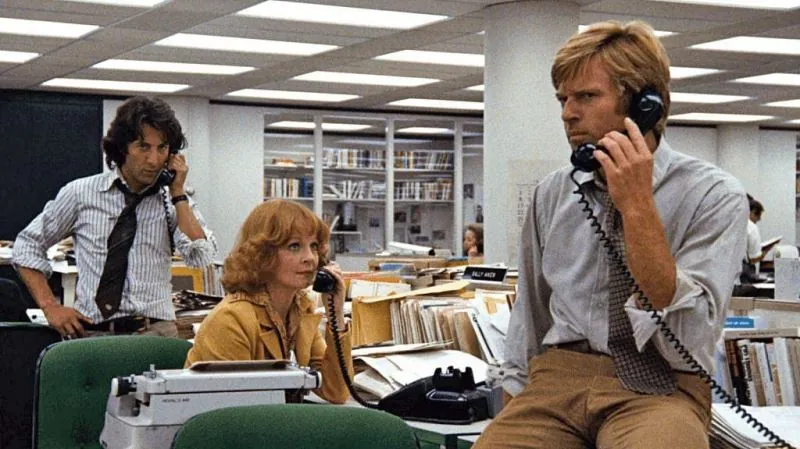
Redford plays Bob Woodward, while Dustin Hoffman takes on the role of Carl Bernstein, the two young Washington Post reporters who chased the story with detective-like persistence. Their reporting connected the break-in to the highest levels of the Republican Party, a revelation that shook the nation's faith in its leadership.
Director Alan J. Pakula built the film around the grinding, unglamorous reality of newspaper work. The newsroom scenes buzz with typewriters and cigarette smoke, and the tension builds not through car chases but through phone calls, doorsteps, and whispered sources. The famous parking garage meetings between Woodward and the anonymous informant known as Deep Throat still send chills down the spine.
What makes the film endure is its faith in the press. At a moment when cynicism about institutions runs high, All the President's Men shows what the media can accomplish when it takes its watchdog role seriously. The film won Oscars for Best Supporting Actor, Best Adapted Screenplay, Best Art Direction, and Best Sound, and decades later it still stands as a masterclass in journalistic integrity.
2. The Sting (1973): Newman and Redford Reunite
If there is one film that proves the magic of Paul Newman and Robert Redford together, it is The Sting, released in 1973. This heist picture, set in the 1930s, brought the pair back to the screen four years after Butch Cassidy and the Sundance Kid, and it remains a pure joy from start to finish.
The plot is a beautifully layered con game, one that keeps the audience guessing until the final moments. Newman plays an aging grifter, Redford the young and cocky newcomer, and their chemistry is the engine that makes every twist land. The film is often considered a grandparent of the modern twist-ending thriller, the kind of movie that makes you want to leap to your feet and shout when the last piece clicks into place.
Beyond the clever mechanics, the performances carry a theatrical charm that never feels dated. The banter between the two leads is sharp, the period detail is rich, and the whole affair simply radiates warmth. It took home the Academy Award for Best Picture that year, a rare honor for a comedy caper.
For many in Turkey, The Sting holds a special nostalgic place. It used to air on TRT on Sunday mornings, and a whole generation born around 1970 remembers sitting down to watch it, convinced they were seeing it for the first time, only to realize scene by scene that they already knew every beat. That sense of rediscovery, of a familiar friend appearing on the small screen, is part of why this film is so dearly remembered. It is a picture you do not just watch; you revisit, and you smile all over again.
1. Butch Cassidy and the Sundance Kid (1969): The Classic Western
George Roy Hill's 1969 western pairs Paul Newman as Butch with Robert Redford as the Sundance Kid, and it remains one of the most beloved films of its era. The casting almost went differently, though. Hill reportedly pushed aside Steve McQueen, known in Hollywood circles as a difficult personality, to give Redford the role that would cement his stardom.
The movie draws from the real lives of outlaws who made their living robbing trains across the American West. When the law caught up with them and the old ways of doing things started to fade, they packed up and headed to Bolivia, hoping for easier pickings in a more rugged landscape. The story unfolds through sharp dialogue and character moments rather than constant gunplay, which is part of why it still feels fresh today.
Film historians often point to this picture as one of the last great examples of classic Hollywood cinema. The chemistry between Newman and Redford crackles from the first scene, and Hill lets their friendship carry the weight of the narrative. It is the kind of movie where two people talking in a room feels just as thrilling as any chase sequence, and that quiet confidence is exactly what made it a landmark.
Bonus: Quiz Show (1994), Redford as Director
In 1994, Robert Redford stepped behind the camera to direct Quiz Show, a film that earned him four Academy Award nominations, including Best Director and Best Picture. The film didn't take home a single Oscar that night. It competed in a crowded field that included films like Four Weddings and a Funeral, Pulp Fiction, and The Shawshank Redemption, all of which were also nominated that year.
The movie digs into the real-life television quiz show scandal of the 1950s, when contestants on the popular game show Twenty One were secretly fed answers to boost ratings. Ralph Fiennes plays Charles Van Doren, the charming Columbia University professor who became the face of the show. John Turturro takes on the role of Herbert Stempel, the former contestant whose conscience led him to expose the fraud. Stempel himself reportedly makes a brief cameo appearance in the film, appearing as an old contestant during a hearing scene.
Redford's direction brought this dark chapter of television history to life with sharp commentary on how the industry values looks over knowledge, and ratings over integrity.
Frequently asked questions
What are the best Robert Redford movies to watch?
The essential Robert Redford films start with "Butch Cassidy and the Sundance Kid" from 1969, followed by "The Sting" from 1973, "All the President's Men" from 1976, and "The Natural" from 1984. Each showcases a different side of his range, from charming outlaw to dogged journalist to aging baseball player.
Who was Robert Redford's frequent co-star?
Paul Newman was Robert Redford's most famous on-screen partner. The two actors shared the screen in two iconic films directed by George Roy Hill: "Butch Cassidy and the Sundance Kid" from 1969 and "The Sting" from 1973. Their easy chemistry and playful rivalry became the stuff of Hollywood legend.
Why is "All the President's Men" important?
"All the President's Men" from 1976 dramatizes the Watergate scandal that forced President Richard Nixon to resign, making him the first and only US president to do so. The film follows Washington Post reporters Carl Bernstein and Bob Woodward as they uncover the break-in at the Democratic National Committee headquarters on June 17, 1972, and trace it to the highest levels of the Republican Party. It remains a powerful testament to investigative journalism.
Did Robert Redford win an Oscar for acting?
No, Robert Redford never won an Academy Award for his acting work. His only Oscar wins came from behind the camera, specifically for directing "Ordinary People" in 1980. He received nominations for his performances, but the gold statuette eluded him as an actor.
Which Robert Redford film was based on a true story?
Two of his most acclaimed films are rooted in real events. "All the President's Men" from 1976 recreates the Watergate investigation, while "Quiz Show" from 1994, which Redford directed, tells the true story of the 1950s television quiz show scandal involving contestant Charles Van Doren and the rigged game show "Twenty One." Editorial note: Any facts which remain unconfirmed are presented as such, hedged for accuracy where the historical record is incomplete.
Got a take on this? Add your voice to the conversation below →
No comments yet. Be the first.