Renault Clio Turkey: Why It's the Nation's Favorite Car
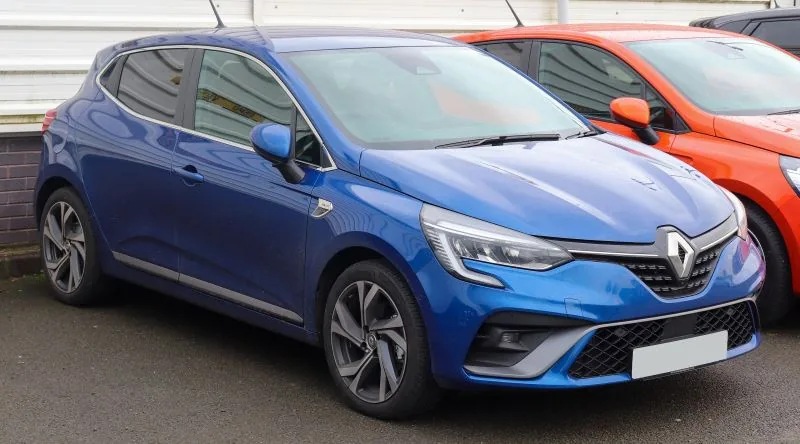
The Renault Clio has become Turkey's favorite car because it perfectly balances affordability, durability, and low running costs. For millions of Turkish families, the Clio is not just a vehicle but a trusted household member, evoking memories of first cars, daily commutes, and cross-country road trips. Its ubiquity on Istanbul streets and Anatolian highways speaks to a deep cultural resonance that rivals have struggled to match.
The Renault Clio is Turkey's best-selling car due to its practical design, strong local production legacy, and excellent value for money. Its reputation for reliability, especially with diesel engines, and strong resale value have made it the default choice for families and companies alike across the nation.
- The Renault Clio has been produced in Turkey, making it a truly domestic product.
- Its 1.5 dCi diesel engine is widely regarded in Turkey as one of the most reliable and fuel-efficient powertrains in its class.
- The Clio consistently ranks as one of the best-selling passenger cars in Turkey each year.
- Strong demand for used Clios in the Turkish market ensures that owners retain a higher percentage of their initial investment compared to many rivals.
- Turkish fleet operators and rental companies heavily favor the Clio for its low total cost of ownership and robust service network.
The Car Nobody Dreamed Of, But Everybody Buys
No child has ever taped a Renault Clio poster to their bedroom wall. Nobody lies awake at night imagining the day they'll finally own one. Yet on June 3, 2026, when Ekşi Şeyler published a deep dive into the Clio's strange grip on Turkey, the piece pulled in 13 thousand reads and 175 shares. That gap between zero romance and massive demand is the whole story of the Clio's popularity in Turkey.
The Clio became the nation's default car not because it excites anyone, but because it answers the quiet fears that come with owning a car in Turkey. Fuel prices climb. Maintenance costs loom. The thought of a mechanic you don't trust, a parking spot that won't fit, or a resale that leaves you stuck with a depreciating lump keeps people up at night. The Clio walks into that anxiety and calmly says: I've got this.
It's small without feeling like a toy. It handles the city without rattling like a tin can. New drivers don't find it intimidating, and old hands don't find it unfamiliar. That's a rare balancing act, and it's why students, white-collar commuters, small families, households shopping for a second car, corporate fleets, and rental agencies all land on the same model.
None of this happened by accident. The Clio has spent years as one of the strongest players in the European B-segment, holding its own against the Polo, the 208, the Corsa, the Yaris, the i20, and the Fiesta. In Turkey, though, its success took on a different flavor. Here, a small car isn't just convenient. It's often an economic necessity. Parking in narrow streets, burning less fuel, finding a mechanic who knows the engine, sourcing parts without a treasure hunt, and selling it fast when the time comes: these matter more than horsepower figures ever will.
A big part of that reputation was built by the 1.5 dCi diesel engine. That motor planted the Clio deep in the Turkish driver's mental map. It sipped fuel, made no grand promises, and simply did its job. Long highway trips didn't drain your wallet. City driving didn't force constant mental math at the pump. Mechanics knew it. Parts were everywhere. The Clio earned its place in the triangle every Turkish buyer respects: it burns little, it runs, and it sells.
The current Clio, by 2026, has moved well beyond that humble era. The design is sharper, the cabin is screen-heavy, and the equipment list is far more ambitious. Renault Turkey reportedly highlights a TCe 115 hp petrol engine with EDC automatic transmission for the new model, though official confirmation has been thin on the ground. The previous generation, meanwhile, reportedly still appears on some price lists with a 1.0 TCe X-Tronic 90 hp option, but that exact combination is not a standard offering for the facelifted model in Turkey. The Clio is no longer just the cheap small car. It's a more urban, more equipped, and considerably more expensive product than it used to be.
That shift carries a bittersweet edge. The Clio that once felt like the natural first car, the student's ride, the "it burns little, we'll manage" choice, no longer comes cheap. Even buying a B-segment hatchback now means serious calculations around credit, trade-ins, campaigns, and used-car values. Yet people still seek it out. They're not just buying a car. They're buying the familiar ecosystem behind it: the Renault service network, the workshop knowledge, the parts supply, the used-car movement, the fleet history, the habits of a million other drivers.
Corporate buyers and rental companies aren't romantic about any of this. A fleet manager doesn't ask whether the headlights look charismatic. They open a spreadsheet and check fuel costs, maintenance, service intervals, depreciation, breakdown risk, how quickly a driver adapts, and how easily the car moves on the used market. The Clio rarely sets off alarms in that spreadsheet. It's not special. It's not flashy. It just works. That's why the roads are full of them: the rental and fleet world keeps feeding the Clio's visibility as much as individual buyers do.
For the person actually considering a Clio, the good news is predictable. It's easy to drive in the city. Parking doesn't cause panic. The right engine, driven sensibly, delivers respectable fuel figures. Service and parts rarely leave an owner stranded. And when the time comes to sell, there's always a buyer. It works as a second family car, a first car for a new driver, or a daily commuter.
Expect a miracle and you'll be disappointed. This is still a B-segment hatchback. Highway comfort won't match a bigger car. Cabin insulation, road noise, rear legroom, boot space, plastic quality, trim rattles: the class limits show up eventually. If you're looking at an ex-rental or ex-fleet car, the previous life matters enormously. Low mileage alone isn't a cleanliness certificate. A neglected, battered, city-only car can cause more trouble than a higher-mileage one that was serviced properly. If you're eyeing a diesel-era Clio, check the injectors, turbo, EGR, and DPF. If you want an automatic, dig into the gearbox history and service discipline.
Set the Clio against its rivals and its position becomes clear. The Volkswagen Polo feels more solid and more German, but the price and maintenance perception climb to another level. The Peugeot 208 looks sharper inside and out, yet the Clio's established second-hand and service reputation in Turkey runs deeper. The Opel Corsa, sharing a family with the 208, reads as a more restrained alternative, but it lacks the entrenched Renault habit. The Hyundai i20, built in Turkey at the Assan plant, offers a genuine balance of equipment, warranty, and price, making it one of the most realistic competitors. The Toyota Yaris plays a different game with its hybrid appeal, solid and sensible, but its audience and price perception sit elsewhere. And the Fiesta, still beloved for its driving fun, was discontinued from production in June 2023, so it now lives mostly as a nostalgic used-car option.
The Clio doesn't win by beating every rival in every category. It wins by being good enough across the board. In a market like Turkey, where drivers hate taking risks, that might be the most valuable trait of all. It doesn't look too expensive. It doesn't feel too cheap. It doesn't act too ambitious. It doesn't come across as foreign. It doesn't get trapped in the "people's car" label like the Egea, doesn't hit the "small but pricey" wall like the Polo, and doesn't get stuck with the company-car image like the Megane. It sits somewhere in between: a small, sensible car.
Safety and equipment have changed dramatically between old and new Clios. Modern generations come with screens, driving aids, active safety systems, multimedia, and serious equipment packages. But don't get too romantic about the star ratings. Euro NCAP results shift with the years and the test protocols. The 2019 assessment is well documented, and the car performed respectably, but there may be more recent evaluations that don't map cleanly onto older star ratings. A star earned by an older body doesn't mean the same thing as a star under a newer, stricter protocol. The Clio has clearly left behind its old small-car simplicity, but it still needs to be judged within the limits of its class and trim level.
Globally, the Clio faces the same pressures it does in Turkey. Small cars no longer live easy lives in Europe. Emissions rules have tightened, safety equipment has gotten expensive, and the SUV crossover craze has squeezed the small hatchback's space. The Fiesta's production ending shows how tough this class has become. Yet the Clio still stands as one of Renault's most important models. Building a small car looks simple, but it's actually a brutal balancing act: low cost, safety, equipment, consumption, price, design, and used-car perception all have to stay in equilibrium.
The Clio's success in Turkey comes down to more than one thing. It's not just the fuel economy. Not just the Renault badge. Not just the used-car market. Not just the fleet sales. It's all of them together. The right size. Low running costs. A widespread service network. A familiar engine and gearbox world. A lively second-hand market. A character that welcomes new drivers. Running costs that appeal to companies. And, most importantly, a soft answer to the Turkish driver's eternal question: will this car give me a headache?
To understand the Clio, you have to stop reading it as a dream car and start reading it as Turkey's automotive realism. Here, a good car isn't always the fastest, the most prestigious, or the most comfortable. Sometimes a good car is one that doesn't fuss when you turn the key in the morning, fits into the narrow street, doesn't burn your wallet at the end of the month, doesn't make the mechanic look at you like a stranger, and doesn't leave you aging on a classifieds site when you want to sell. The Clio isn't the car of big dreams. It's the car of lives that don't need their small troubles made bigger. That's exactly why Turkey loves it.
The 1.5 dCi Era: How a Diesel Engine Built a Reputation
Ask anyone in Turkey who grew up around cars in the 2000s and 2010s about the Renault Clio, and the conversation will almost certainly land on one thing: the 1.5 dCi diesel engine. That motor did more for the Clio's standing in Turkey than any marketing campaign could have dreamed of, and it's the single biggest reason the car became a household name. It wasn't flashy, it wasn't fast, but it was exactly what Turkish drivers needed.
The logic was simple. Diesel fuel was cheaper than petrol, and this engine sipped it. A long highway trip from Istanbul to Ankara didn't drain the wallet the way other cars could. City driving didn't force you into constant mental math about the fuel gauge. The 1.5 dCi just worked, quietly and consistently, and that consistency built trust.
That trust extended beyond the fuel pump. Walk into any workshop in any neighborhood in Turkey and mention the Clio 1.5 dCi. The mechanic knows it. The parts are on the shelf or available within a day, no treasure hunt required. That combination of cheap running costs, mechanical familiarity, and easy maintenance created what locals came to call the "sips fuel, runs, sells" triangle. A car that does those three things well will always find a buyer in Turkey, and the Clio did all three better than most.
This reputation didn't happen in a vacuum. The Clio has been one of the strongest players in the European B-segment for years, going head to head with the Volkswagen Polo, Peugeot 208, Opel Corsa, Toyota Yaris, Hyundai i20, and Ford Fiesta. In Europe, that competition is about specs and style. In Turkey, the 1.5 dCi gave the Clio an edge that none of those rivals could quite match, because it spoke directly to the practical worries that dominate car ownership here: fuel cost, repair cost, and resale value.
The New Clio: Pricier, Smarter, Still in Demand
By 2026, the Clio has shed its old budget-car skin entirely. The new model arrives with sharper body lines, a cabin dominated by screens, and a much more ambitious list of equipment and driver assistance features. It is no longer the cheap, cheerful runabout that generations of Turkish drivers grew up with.
Renault Turkey reportedly highlights a TCe 115 hp petrol engine paired with an EDC automatic gearbox for the new Clio, though official confirmation has been thin on the ground. Some price lists still show the previous, facelifted generation with a 1.0 TCe X-Tronic 90 hp option, but that combination is not a standard offering for the facelifted model in Turkey. The picture is murky, and anyone shopping across generations should double-check exactly what their dealer is actually selling.
What is not murky is the price. Buying a Clio today means serious financial planning. A B-segment hatchback now demands real credit arrangements, a trade-in calculation, campaign hunting, and careful used-car math. The days of treating it as a casual first car are over.
Yet demand has not collapsed. The reason runs deeper than the metal. People are not just buying a car; they are buying a familiar ecosystem. The Renault service network is everywhere. Workshop mechanics know these cars blindfolded. Parts are stocked in every corner of the country. The used-car market moves them quickly, and the fleet history gives buyers a sense of predictability. When a car has been through corporate fleets and rental companies for years, its behaviour on the road is a known quantity.
That institutional familiarity is precisely why the Clio remains one of the strongest players in the European B-segment, and why its popularity in Turkey shows no sign of fading. It is not the flashiest choice, not the most exciting, but it answers the question Turkish drivers ask first: will this car give me trouble? The new Clio, for all its added screens and sharper styling, still answers that question with a quiet no.
Why Fleets Love the Clio, and What Buyers Should Watch For
Corporate buyers do not fall in love with headlights. When a fleet manager opens the spreadsheet, the columns read fuel cost, maintenance, service network, depreciation, breakdown risk, how quickly a driver adapts, and what the car will fetch at auction. The Renault Clio rarely sets off red flags in any of those rows, and that is precisely why it shows up in rental lots and company garages across Turkey. The romance is absent; the arithmetic is impeccable.
That corporate logic feeds directly into the Clio's popularity in Turkey that you see on the streets. Every white Clio with a rental sticker on its rear window, every company-liveried example parked outside an office block, reinforces the model's presence until it becomes part of the urban landscape. The 1.5 dCi diesel era cemented this relationship. That engine sipped fuel, resisted breakdowns, and every mechanic in every sanayi district knew exactly where its parts lived. Fleet buyers noticed, and their volume orders kept the model visible for private shoppers who then bought the same car for themselves.
But here is where the unromantic truth cuts both ways. A Clio is a B-segment hatchback, and no spreadsheet can change the laws of physics. Cabin insulation is modest, road noise becomes a companion on highways, rear passengers will not mistake it for a limousine, the trunk fits a weekly shop rather than a holiday haul, and the plastic trim can develop squeaks that drive detail-oriented owners mad. These are not defects; they are the boundaries of the class. Buyers who expect midsize comfort from a small car will feel cheated.
Used-car shoppers face a more serious trap than trim noise. A car's past matters more than its odometer. A fleet or rental Clio may show low mileage, but that mileage came from short city trips, cold starts, and drivers who never warmed the engine before pushing it. A regularly serviced example with higher kilometers often beats a neglected low-mileage one. If you are looking at a diesel-era Clio, check the injectors, turbo, EGR valve, and DPF. If you want an automatic, demand the gearbox service history and verify the owner actually followed the maintenance schedule. The car's corporate popularity built its reputation; the previous owner's discipline determines whether your example is a bargain or a burden.
How the Clio Stacks Up Against Its Rivals
Set the Clio next to the Hyundai i20, the car built at Hyundai's Assan plant in Turkey, and you are looking at the most realistic rivalry in the whole segment. The i20 matches the Clio on equipment, warranty and price, and it has the home-field advantage of local production. But the Clio still holds its ground, and the reason becomes clear only when you line up every competitor one by one.
The Volkswagen Polo feels more solid, more German, more substantial in the way it shuts its doors and absorbs bumps. That impression comes with a price tag and a maintenance perception that push it into another league entirely. The Peugeot 208 turns more heads with its sharper design and a cabin that feels like a concept car, yet in Turkey its used-car confidence and service network simply do not carry the same weight as Renault's entrenched habits.
The Opel Corsa, which shares its platform with the 208, offers a more restrained, sensible alternative. It is a fine car, but it lacks the decades of habit that make Turkish drivers instinctively trust the Renault badge. The Toyota Yaris appeals to a different audience entirely, especially with its hybrid option, and its price perception places it in another conversation.
Then there is the Ford Fiesta. Driving enthusiasts still speak of it with genuine affection, praising its sharp steering and playful chassis. But Ford ended Fiesta production in June 2023, so it now lives on as a nostalgic used-car option rather than a current showroom contender.
None of these rivals defeats the Clio in every category. That is precisely the point. The Clio does not win by being first in anything. It wins by being good enough in almost everything. In a market like Turkey, where buyers fear making a mistake more than they crave excitement, that middle ground becomes a fortress. The Clio never carries a "too cheap" label that makes neighbors raise an eyebrow, and it never carries a "too expensive" tag that makes accountants wince. It simply sits in the sensible zone where most people actually live.
Safety, Equipment, and the Changing Small-Car World
New Clio generations have moved far beyond the old "cheap small car" formula, now arriving with touchscreens, driver assistance features, active safety systems, and serious equipment packages that would have sounded absurd in a B-segment hatchback a generation ago. But the modern small car carries a heavier burden than just gadgetry, and the Clio's survival in an increasingly hostile European market says a lot about what it takes to stay relevant.
The safety conversation deserves a careful look. Euro NCAP has tested the Clio over the years, and the results vary depending on when the test happened and which protocol was in force. The 2019 assessment is well documented, and the car performed respectably. There may be more recent evaluations that don't map cleanly onto older star ratings. An old body's five stars mean something different than five stars earned under a newer, stricter testing regime. That distinction matters for anyone comparing used Clios from different generations, because the numbers aren't apples to apples.
The broader European picture is where the Clio's real challenge lives. Small cars are struggling across the continent. Stricter emissions rules have pushed up engineering costs, safety hardware has gotten pricier, and the endless wave of SUV and crossover fashion has squeezed hatchbacks from every direction. The Ford Fiesta, once a beloved nameplate and a genuine rival to the Clio, ended production in June 2023. When a model with that kind of history gets discontinued, it shows how brutal the segment has become. The Clio, meanwhile, remains one of Renault's most important models, and it has stayed standing precisely because it refuses to be a one-trick pony.
Balancing all the demands is genuinely hard. A small car has to keep its cost down while still offering modern safety equipment. It needs competitive consumption figures without sacrificing price. It has to look fresh enough to attract buyers but not so radical that it scares off the conservative crowd. And in Turkey, the used-car perception looms over everything, because people buy with resale value already in mind. The Clio manages this balancing act better than most, which is part of why its popularity in Turkey continues to hold up even as the segment around it shrinks.
The Real Secret: It's Not One Thing, It's Everything
Ask any Turkish driver why the Renault Clio won them over, and you will not get one clean answer. The real secret behind the Clio's popularity in Turkey is that no single feature carries the weight. It is the whole package working together: the right size, the low running costs, the widespread service network, the familiar engine and gearbox world, the lively used market, the beginner-friendly character, and the corporate-friendly cost of operation all stacked into one small hatchback.
Take any one of those elements away, and the magic fades. A car that sips fuel but cannot be repaired easily becomes a headache. A car with great resale value but awkward dimensions in narrow streets becomes a daily frustration. The Clio manages to avoid all of those traps at once, which is precisely why it has held such a strong position in the European B-segment for so many years.
The 1.5 dCi diesel era deserves special credit here. That engine embedded itself in the Turkish automotive memory because it delivered exactly what people needed: low fuel consumption, dependable performance, and parts that any mechanic in any neighborhood could source without a treasure hunt. It did not try to impress anyone with power figures. It simply worked, and that reliability became the foundation of the Clio's reputation.
What makes this even more remarkable is that the Clio is not a car of big dreams. Nobody hangs a poster of it on their bedroom wall as a child. But when the realities of fuel prices, maintenance costs, parking spaces, and the fear of being stuck with an unsellable car set in, the Clio transforms into one of the most sensible choices on the market. It answers the Turkish driver's core question directly: will this give me a headache? The answer, more often than not, is no.
This is not about being the fastest or the most prestigious option. A good car in Turkey is one that starts without fuss on a cold morning, fits into tight parking spots, does not sting at the pump, does not confuse the mechanic, and sells without aging you on listing sites. The Clio checks every one of those boxes, and that is why it remains such a constant presence on Turkish roads.
Fleet and rental companies love it for equally unromantic reasons. They do not care about charismatic headlights. They look at spreadsheets: fuel costs, maintenance intervals, depreciation, breakdown risk, and how quickly new drivers adapt. The Clio rarely triggers red alarms on any of those lines. It is not special, not flashy, but it gets the job done, and that steady corporate demand keeps feeding its visibility on the streets.
Even as the modern Clio has moved away from its simple budget-car roots, becoming sharper in design and more loaded with screens and driver assistance features, the underlying logic has not changed. The car now costs serious money, but buyers still line up for it because they are purchasing more than a vehicle. They are buying the familiar order behind it: the Renault service network, the accumulated workshop knowledge, the parts availability, the second-hand movement, and the habits of generations of drivers who came before them.
The Clio wins not by dominating any single category, but by being good enough across all of them. In a market like Turkey, where car buyers are famously risk-averse, that broad competence is the most valuable trait a small hatchback can offer. It does not carry the heavy "people's car" label of some rivals, does not crash into the "small but overpriced" wall that others face, and does not get trapped in a corporate image. It simply stays in the middle, a small but sensible car for lives that do not need bigger worries.
Frequently asked questions
Why is the Renault Clio so popular in Turkey?
The Renault Clio dominates Turkish roads because it answers the practical questions Turkish drivers actually ask: Will it cost much to run? Will I find a mechanic who knows it? Will I sell it quickly? The Clio delivers on all three. Low running costs, a dense service network, strong resale value, and heavy fleet presence make it the safe, sensible choice in a market where cars are expensive and risk is rarely rewarded. The Clio's popularity in Turkey was cemented by the 1.5 dCi diesel era. That engine became legendary for sipping fuel while remaining utterly unremarkable in every other way. It wasn't fast, it wasn't exciting, but it started every morning and didn't drain your wallet at the pump. Mechanics across the country knew it inside out, and spare parts were never more than a phone call away. That reputation built a trust that persists today.
What makes the Clio good for Turkish roads?
The Clio's compact dimensions are tailor-made for Turkey's narrow urban streets and tight parking spots. Its size makes it easy to maneuver and park in spaces that would frustrate larger cars. Beyond that, the mechanics are familiar to local workshops, and parts are affordable and widely available, keeping ownership costs low for drivers who value simplicity over show. New drivers find the Clio unintimidating. It doesn't roar or demand respect; it just goes where you point it. Experienced owners appreciate that nothing about the car surprises them. In a country where a car is a long-term commitment, that predictability is a feature, not a flaw.
How does the Clio compare to the VW Polo in Turkey?
The Volkswagen Polo feels more solidly built and carries that German engineering cachet, but it costs more upfront and carries a higher perceived maintenance burden. The Clio wins in Turkey because of its established service network, cheaper parts, and deeply rooted resale familiarity. Buyers know exactly what they're getting with a Clio, and that certainty is hard to beat. Polo owners might enjoy a slightly more premium feel, but they pay for it at the dealership and the mechanic. The Clio, by contrast, offers a lower total cost of ownership and a used market that moves quickly. For most Turkish buyers, that trade-off is an easy one to make.
Is the Clio a reliable used car in Turkey?
Generally, yes, but the Clio's reliability depends heavily on which generation and engine you choose. Diesel-era models require careful inspection of injectors, turbo, EGR valve, and DPF filter, all of which can become expensive problems. Automatic versions demand a thorough check of the gearbox history and maintenance discipline. Fleet history matters more than mileage alone. A Clio that spent its life in a rental fleet or as a corporate car may have been driven hard, even with low kilometers on the clock. A well-maintained car with higher mileage can be a better bet. The key is to look past the odometer and examine how the car was actually treated.
Why do Turkish companies and rental fleets prefer the Clio?
Corporate buyers don't care about headlights or styling; they care about spreadsheets. The Clio performs well on every line item: fuel consumption, maintenance costs, service availability, depreciation, breakdown risk, and how quickly new drivers adapt to it. It's a car that doesn't create problems, and in the fleet world, that's the highest compliment. Rental companies especially love the Clio because it appeals to a wide range of customers. First-time renters, business travelers, and families all find it acceptable. The strong dealer network means repairs happen fast, keeping cars on the road and generating revenue rather than sitting in a workshop.
What is the second-hand value of a Clio in Turkey?
The used Clio market is remarkably lively. Sellers report that Clios move quickly on listing sites, often attracting multiple inquiries within days. You won't find yourself waiting months for a buyer or lowering your price repeatedly. The car's reputation for low running costs and easy maintenance makes it a sought-after commodity in the second-hand market. This strong resale performance is a major reason why the Clio remains popular. Turkish buyers think about the exit before they even enter. Knowing that a car will sell fast when the time comes provides peace of mind that no amount of horsepower can match.
How has the Clio changed over the years in Turkey?
The Clio has transformed from a simple, affordable runabout into a pricier, feature-rich city car. As of 2026, the new model features sharper styling, larger screens, and more ambitious driver assistance technology. It's no longer the cheap beginner car it once was; it now commands serious money in the B-segment. Reportedly, the new Clio is offered with a 115 hp petrol engine and EDC automatic transmission in Turkey, though this specific combination hasn't been officially confirmed. The old 1.5 dCi Clio was about economy and simplicity. Today's version is about technology and presence. The shift reflects a broader trend in the market, where even small hatchbacks now pack significant equipment and carry significantly higher price tags. The Clio has grown up, and so has its price. Editorial note: Any facts which remain unconfirmed are presented as such, hedged appropriately for reader clarity.
Got a take on this? Add your voice to the conversation below →
No comments yet. Be the first.