An Lushan Rebellion: The 755 Uprising That Killed 1/6 of Humanity
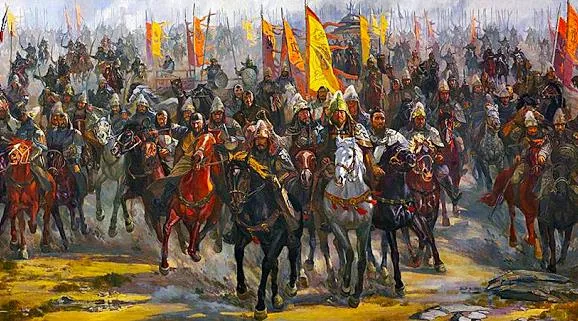
The An Lushan Rebellion was a massive civil war that erupted in 755 CE when the Sogdian-Turkic general An Lushan turned against the Tang Dynasty, possibly killing as many as 40 million people and shattering China's golden age. This nearly eight-year catastrophe, which convulsed the empire until 763 CE, remains one of the deadliest conflicts in human history, yet it is often overshadowed by the very dynasty it nearly destroyed. For the people who lived through it, the rebellion was a sudden, terrifying unraveling of a world that had seemed unbreakable, and its scars would shape China for centuries to come.
The An Lushan Rebellion began in late 755 CE when the powerful frontier general An Lushan launched a revolt against the Tang Dynasty. The rebellion lasted until 763 CE, toppled the capital at Chang'an, and caused a demographic catastrophe of staggering proportions, with death toll estimates ranging from 15 to 40 million people.
- The rebellion began in late 755 CE, when An Lushan launched his revolt in northern China and soon declared himself emperor of a new Yan dynasty.
- The Tang capital Chang'an fell to rebel forces in late 756 CE, forcing Emperor Xuanzong to flee the city.
- The conflict lasted until 763 CE with the defeat of the rebel forces, but the Tang Dynasty never regained its former power.
- The death toll is estimated at between 15 and 40 million people, though these figures are disputed by modern demographers.
- The rebellion's aftermath left the Tang Dynasty weakened and vulnerable, leading to the Tibetan Empire's capture of Chang'an in 763 CE.
The Rebellion That Shook the World
In late 755, a trusted Tang Dynasty general named An Lushan turned against his emperor and ignited a civil war that would last until 763. The An Lushan Rebellion did not just topple a dynasty's confidence; it may have killed more people than any conflict the world had ever seen up to that point.
Modern estimates place the death toll somewhere between 15 and 40 million people. Some popular accounts claim that represented one-sixth of the entire global population at the time, though reliable demographic modeling does not support that dramatic fraction. What is not in dispute is the scale of devastation: this was a catastrophe that shattered China's political order, wrecked its economy, and left entire regions in ruins.
The man behind it all was an unlikely rebel. An Lushan was born to a Sogdian father and a Turkic mother, a mixed heritage that placed him outside the traditional Chinese elite. He grew up near Mongolia, joined the military, and eventually settled in China, where he climbed the ranks with remarkable speed. Emperor Xuanzong came to trust him completely, showering him with titles and military commands across multiple garrisons in the northern frontier.
That trust proved to be the dynasty's undoing. While the emperor believed he was rewarding a loyal servant, An Lushan was quietly building a massive army, preparing for the moment he would strike. When that moment came in the final days of 755, his forces moved swiftly, capturing the eastern capital of Luoyang and declaring himself emperor of a new Yan Dynasty. The Tang court, caught completely off guard, watched as their world began to collapse around them.
The Rise of An Lushan: A General of Mixed Heritage
An Lushan, the man who would shake the Tang Dynasty to its core, was born into a world of two cultures. Historical records describe him as the son of a Sogdian father and a Turkic mother, a blend that shaped his path from the steppes to the heart of imperial China. He grew up in the region near Mongolia, far from the glittering courts of the Tang emperors, but his life was about to take a dramatic turn.
Young An Lushan joined the army and eventually made his way into Chinese territory, where he proved himself a capable and ambitious soldier. Emperor Xuanzong, who ruled the Tang Dynasty in the 8th century, took notice. Over time, An Lushan rose through the ranks, becoming one of the emperor's most trusted military commanders. He was appointed governor of three garrisons, a position of immense power that placed vast armies under his personal control. This appointment came gradually over several years rather than as a single event, and by the 750s he commanded the northern frontier, a role that made him indispensable to the empire.
Rumors swirled about his lifestyle. His residence was said to be a dazzling display of gold and silver, a home fit for a man who lived like a prince. Whether that was true or simply the gossip of the capital, it painted a picture of a general who had risen far beyond his steppe origins. The emperor trusted him, the court feared him, and no one seemed to notice the storm brewing behind his loyal facade. An Lushan was quietly preparing for something far bigger than garrison duty, and the Tang Dynasty would soon learn just how dangerous its favorite outsider had become.
The Rebellion Ignites: From Luoyang to Chang'an
The An Lushan Rebellion turned into a full-scale war in the final days of 755, when An Lushan marched his army out of the region near modern-day Beijing and headed straight for the heart of the Tang Dynasty. By early 756, he had captured the eastern capital Luoyang and crowned himself emperor of a new Yan Dynasty, a direct challenge to the ruling house that had trusted him with so much power.
The speed of his advance caught the Tang court completely off guard. Luoyang was one of the empire's most important cities, a hub of commerce and administration that had stood for centuries. Taking it sent a clear signal that this was no border skirmish; this was a bid for the throne itself. An Lushan did not pause to consolidate. He turned his forces westward, aiming for the ultimate prize: Chang'an, the imperial capital and the largest city in the world at the time.
Chang'an in 756 was a marvel of urban planning, with wide avenues, bustling markets, and a population that reportedly approached two million souls. When word arrived that An Lushan's army was approaching, Emperor Xuanzong made a fateful decision. Rather than defend the capital, he fled southwest to Sichuan, leaving his throne and his city behind. The imperial retreat was chaotic, and along the way the emperor was forced to order the execution of his favorite consort, Yang Guifei, whose family's corruption had helped stoke the rebellion in the first place.
In the chaos, Xuanzong's son Li Heng took matters into his own hands. He declared himself emperor in Lingzhou, a city far to the northwest, and began assembling a resistance. His first move was to appoint two of the dynasty's most capable commanders, Guo Ziyi and Li Guangbi, to lead the fight against the rebels. These were not court favorites; they were seasoned generals who understood the grim reality of what they faced.
By late 756, An Lushan's forces entered Chang'an almost unopposed. The fall of the capital was a psychological blow that echoed across the empire. The city's population dropped dramatically in the aftermath of the rebel occupation, with some estimates suggesting that only around 800,000 residents remained from the nearly two million who had once called it home. Those figures are contested by historians, but what is not in dispute is the devastation. The greatest city of its age had fallen, and the Tang Dynasty's grip on power hung by a thread.
The Turning Tide: Foreign Aid and An Lushan's Death
By the late 750s, the Tang court had run out of domestic options, so they swallowed their pride and looked beyond their borders for help. The Uyghur Turks answered the call, and the Abbasid Caliph Mansur, ruling from Baghdad, dispatched thousands of mercenaries to fight alongside the imperial forces. With fresh troops and revised battle plans, the Tang army finally cracked the rebel defenses at Tongguan Pass, the mountain gateway that An Lushan's forces had held so stubbornly.
What happened next reads like a Shakespearean tragedy stripped of its poetry. In 757, An Lushan, the self-declared emperor of the Yan Dynasty, was killed by his own second son, An Qingxu. The historical record points firmly at An Qingxu as the one who ended his father's life. The rebellion, however, did not die with its founder. Shi Siming, a close associate of An Lushan, picked up the banner and kept the Yan cause alive.
Shi Siming's grip on power proved no more durable than his predecessor's. As Tang forces pressed toward Luoyang to reclaim the city, Shi found himself cornered. Rather than face capture and certain humiliation, he chose suicide. The An Lushan Rebellion, which had convulsed China since late 755, finally sputtered toward its end by 763, leaving the Tang dynasty permanently weakened and the map of East Asia redrawn in its wake.
Aftermath: The Tang Dynasty's Fall and Tibet's Advance
The An Lushan Rebellion left the Tang Dynasty a shadow of its former self. When the fighting finally stopped in early 763, the empire that had once commanded the loyalty of millions was bleeding territory and credibility. The most humiliating blow came that very year, when the Tibetan Empire marched into Chang'an and seized the Tang capital without meeting serious resistance.
The Tibetans didn't just raid and retreat. They occupied Chang'an, the city that had been the beating heart of Chinese civilization for centuries. The source also claims they swept through Central Asia in the same push, though historians debate just how much of that vast region actually fell under Tibetan control in 763. What's not in dispute is the symbolic weight of the moment: a foreign power holding the Tang throne city was unthinkable before the rebellion.
The dynasty never really recovered. Emperor Suzong, who had taken charge during the chaos, and his successor Emperor Daizong both spent their reigns trying to patch up an empire that was coming apart at the seams. The Tang would limp along for another century and a half, but the golden age was over. The rebellion had drained the treasury, shattered the army's prestige, and revealed that the central government could no longer protect its own borders.
What made it worse was how the Tang had won. They had to call in the Uyghur Turks and even the Abbasid Caliph Mansur, who sent thousands of mercenaries to help crush the uprising. Winning with borrowed armies came at a price. The Uyghurs, in particular, expected rewards and deference, and they got both. The Tang looked less like an imperial power and more like a kingdom begging for help.
Regional governors who had once answered to the emperor now acted like independent warlords. The rebellion had proven that the center could be challenged and that the periphery could survive on its own. For the rest of the dynasty's existence, the throne in Chang'an would be fighting a slow, losing battle to hold the empire together. The An Lushan Rebellion wasn't just a bloody chapter in Chinese history. It was the turning point where the Tang Dynasty's greatness began to slip away, and a new, more fragmented era took its place.
Frequently asked questions
What was the An Lushan Rebellion?
The An Lushan Rebellion was a massive uprising in Tang Dynasty China that erupted in late 755 and lasted until 763. Led by a trusted frontier general named An Lushan, the revolt tore through the empire, claiming millions of lives and permanently crippling a dynasty that had once ruled one of the world's most advanced civilizations.
Who was An Lushan?
An Lushan was a general of mixed Sogdian-Turkic descent, born to a Sogdian father and Turkic mother. He grew up near Mongolia, joined the military, and rose through the ranks to become one of Emperor Xuanzong's most trusted commanders before turning against his imperial master and declaring himself emperor of a rival Yan Dynasty in early 756.
Why did the An Lushan Rebellion start?
The rebellion ignited in late 755 when An Lushan, who had accumulated enormous military power as governor of three garrisons, launched a surprise attack near Beijing. Court intrigue and personal ambition appear to have driven his decision, though the exact tipping point remains murky. What is certain is that he had been quietly building his army for years before striking.
How many people died in the An Lushan Rebellion?
Estimates for the death toll range from 15 to 40 million people, which some claim represented roughly one-sixth of the world's population at the time. These figures are disputed by modern demographers, but even conservative estimates place the loss of life in the millions, making it one of the deadliest conflicts in human history.
How did the An Lushan Rebellion end?
The Tang Dynasty eventually suppressed the rebellion with help from the Uyghur Turks and the Abbasid Caliph Mansur, who sent thousands of mercenaries. An Lushan himself was killed by his second son, An Qingxu, in 757. His successor, Shi Siming, later chose suicide over capture as Tang forces closed in on Luoyang.
What was the impact of the An Lushan Rebellion on the Tang Dynasty?
The rebellion shattered the Tang Dynasty's power. The empire lost vast territories, its economy collapsed, and in 763 the Tibetan Empire seized the capital city of Chang'an. Though the Tang would limp on for another century and a half, it never recovered the strength and prestige it had enjoyed before 755. Editorial note: Any facts which remain unconfirmed are presented as such, including the precise death toll, which historians continue to debate.
Got a take on this? Add your voice to the conversation below →
No comments yet. Be the first.