Battle of Myriokephalon: The 1176 Clash That Sealed Anatolia
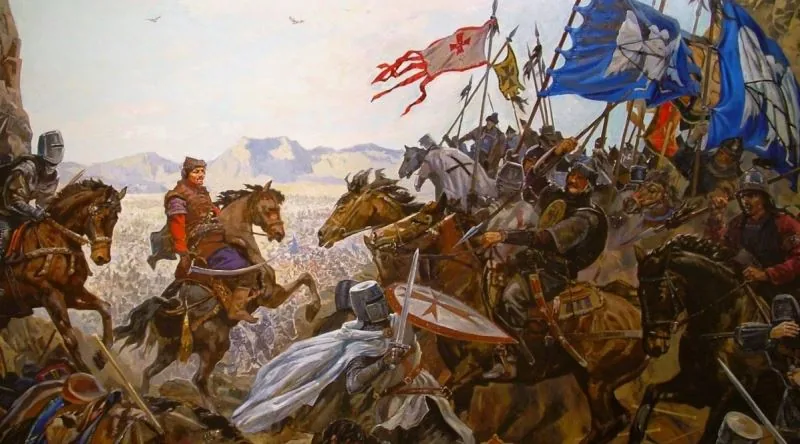
The Battle of Myriokephalon in 1176 saw Seljuk Sultan Kilij Arslan II ambush Emperor Manuel I Komnenos's massive Byzantine army in a narrow mountain pass near Denizli, a defeat that permanently sealed Turkish dominance over Anatolia. For the Byzantines, this was not just a lost battle; it was the shattering of a meticulously planned campaign, a dream of reconquest that died in a cloud of dust and arrows, and the beginning of a long, slow decline that would eventually erase their empire from the map.
In September 1176, Emperor Manuel I Komnenos led a vast Byzantine army into a mountain pass near Denizli, where Sultan Kilij Arslan II's Seljuk forces ambushed them. The Byzantine army was routed, and Manuel was forced to retreat, conceding Anatolia to the Turks and ending any real chance of Byzantine reconquest.
- The battle took place on 17 September 1176 in the Düzbel Pass near modern-day Denizli, Turkey.
- Emperor Manuel I Komnenos personally led the Byzantine campaign against the Seljuk Sultanate of Rum.
- Sultan Kilij Arslan II sprung a devastating ambush on the Byzantine column as it struggled through the narrow pass.
- The Byzantine army suffered catastrophic losses, and Manuel barely escaped with his life.
- The defeat forced Manuel to dismantle his frontier fortifications and effectively ended Byzantine attempts to reclaim the Anatolian heartland.
A Mountain Pass That Changed Everything: What Was the Battle of Myriokephalon?
The Battle of Myriokephalon was the 17 September 1176 clash between Seljuk Sultan Kilij Arslan II and Byzantine Emperor Manuel I Komnenos, fought near the Düzbel Pass in Çivril, Denizli. It is the pivotal moment that cemented Turkish dominance in Anatolia, often called the "title deed" of the region.
Picture a narrow, steep mountain pass in western Anatolia, its slopes crowded with hidden archers and its floor choked with a massive, slow-moving army. That was the setting on that September day in 1176, when two empires collided in a fight that would decide who truly owned the land between them.
The Byzantine emperor, Manuel I Komnenos, had marched east from Constantinople with a colossal force. He wanted to crush the Seljuk Sultanate of Rum once and for all, to push the Turks back and reclaim Anatolia for Christendom. The Seljuk sultan, Kilij Arslan II, had other plans. He knew the terrain, he knew his enemy's weaknesses, and he had chosen his ground carefully.
Historians often compare this battle to the earlier disaster at Manzikert in 1071, when another Byzantine emperor was captured and the empire's grip on Anatolia began to slip. But Myriokephalon was different in one crucial way. At Manzikert, the Byzantine forces scattered and abandoned their emperor. Here, at Myriokephalon, the defeated Byzantine soldiers held their lines together and protected their ruler, even as the Seljuk forces swarmed around them.
The name itself tells part of the story. Myriokephalon means "a thousand heads" in Greek, and the pass near Düzbel in modern-day Çivril, Denizli, was about to earn that name in blood. The Seljuk army, though reportedly smaller than the Byzantine force in some accounts, had the advantage of mobility and surprise. They waited on the ridgelines above the pass, watching the long Byzantine column stretch out below them, ready to spring their trap.
When the attack came, it was devastating. The Seljuk forces poured down from the heights, sealing both ends of the pass and turning the narrow valley into a killing ground. The Byzantine army, strung out over many kilometers, could not maneuver or support itself. Units were cut off from one another, and chaos quickly spread through the ranks.
By nightfall, the Battle of Myriokephalon was effectively over. The Byzantine army had been shattered, its siege engines destroyed, and its dreams of conquering Konya, the Seljuk capital, lay in ruins. Manuel himself was reportedly so shaken that he sat down on the ground and refused to move, until his officers convinced him to rally what remained of his forces.
In the aftermath, Kilij Arslan II offered peace terms. The Byzantines would be allowed to retreat unharmed, but only if they dismantled the fortresses of Eskişehir (Dorileon) and Sublaion. Manuel accepted, though he would later break his word about one of those fortresses. The battle marked the end of Byzantine offensive ambitions in Anatolia and sealed the fate of the region for centuries to come.
Why Did Manuel March to War? The Road to Myriokephalon
Emperor Manuel I Komnenos had simply had enough. By the early 1170s, the Byzantine ruler in Constantinople was exhausted by the endless Turkish raids slicing into his Anatolian provinces, and he saw a window of opportunity swing open in 1174. That was the year Nur ad-Din, the powerful Zengid ruler of Aleppo, died, and his successor Saladin turned his gaze firmly toward Egypt. The Seljuk Sultanate of Rum, so Manuel reasoned, had just lost its most formidable Muslim ally.
The emperor wasted no time. He sat down and wrote to the Pope, arguing that the moment was ripe for a fresh crusade, and he made a bold promise: the road through Anatolia would at last be secured. With that letter on its way, Manuel began assembling his forces for what he intended to be a decisive campaign.
Word of these preparations reached the Seljuk court quickly. Sultan Kilij Arslan II, who ruled from Konya, sent envoys to Constantinople proposing peace and the renewal of an earlier treaty. His message was simple: let us remain friends. Manuel, however, was not interested in friendship on those terms. He set conditions that were almost designed to provoke. The sultan would have to halt all Turkmen raids into Byzantine territory, surrender the Danishmend lands, and hand over two specific refugees sheltered in Byzantine lands: the Danishmend emir Zünnun and the prince Shahinshah, both of whom had fled there after losing their territories.
Kilij Arslan's response was blunt. No such thing, he said. Instead of negotiating, the sultan dispatched cavalry forces that tore through Byzantine lands around Denizli, leaving a trail of destruction. Manuel countered by sending Zünnun and Shahinshah back toward Anatolia under Byzantine escort, but Kilij Arslan's forces smashed those attempts, sending both men fleeing back to Byzantine protection once more.
Even then, the sultan tried again. He sent another round of envoys, practically pleading with Manuel to reconsider. But the emperor's mind was set, and he rejected the second peace offering outright.
In the summer of 1176, Manuel launched his campaign. He split his forces into two prongs. One army, commanded by his cousin Andronikos Vatatzes, marched toward Amasya in the north, aiming to strike at Seljuk territory from that direction. Manuel himself led the main force, a massive column that included Frankish, Pecheneg, Hungarian, and Serbian contingents, and he pointed it straight at Konya, the Seljuk capital. The road to the Battle of Myriokephalon was now open, and neither ruler was willing to step aside.
The Trap at Düzbel: How the Seljuks Ambushed the Byzantine Army
By the summer of 1176, Emperor Manuel I Komnenos had assembled one of the largest armies the Byzantine Empire had fielded in generations, a force so vast that contemporary accounts describe its marching column stretching more than 15 kilometers along the road from Constantinople. The army was a true coalition of the empire's fighting men: Frankish knights, Pecheneg horse archers, Hungarian auxiliaries, and Serbian contingents all marched under the imperial banner. Baldwin of Antioch, the emperor's brother-in-law and a Frank by birth, commanded the left wing with the pride of a man eager to prove himself in Anatolia.
Before the main force even reached the Seljuk frontier, disaster had already struck one of its supporting arms. Emperor Manuel had dispatched his cousin Andronikos Vatatzes with a separate army toward Paphlagonia, but in early September that force was crushed before the walls of Niksar. The Seljuks sent Vatatzes's severed head back to Sultan Kilij Arslan II as a trophy, a grim warning of what awaited the main invasion force.
Manuel pressed on regardless, driving his enormous column toward the Seljuk capital of Konya. The road took the Byzantines through the Tribritze pass, a narrow defile in the mountains near modern-day Çivril in Denizli province. At the pass's exit stood the ruined fortress of Myriokephalon, a broken stone skeleton that gave the coming battle its name. The terrain was brutal: steep slopes rose on either side of a cramped, sunken track, perfect ground for an army that wanted to fight from above.
Kilij Arslan II had positioned his forces precisely there. The sultan's army, reportedly smaller than Manuel's host and more poorly equipped, had occupied the slopes and peaks overlooking the pass. The Seljuk plan was simple: let the enemy march into the trap, then close the jaws.
On 17 September 1176, the Byzantine vanguard forced its way into the defile. The advance guard and the main column passed through with only light losses, and the Seljuks initially fell back into the mountains, letting the Byzantines believe the way was clear. But when the baggage train and the massive siege engines lumbered into the pass, strung out in a vulnerable line stretching the full 15 kilometers of the defile, the Seljuks sprang their ambush. Warriors poured down from both slopes, sealing the pass and attacking the trapped column from every direction.
Baldwin of Antioch, commanding the right wing, led a desperate cavalry charge against the descending Seljuks. It was a brave gesture and a fatal one. Baldwin and all his men were cut down, their bodies left among the rocks. On the other side of the column, the commander John Kantakouzenos also fell, killed by Seljuk blades as his unit disintegrated around him.
To make matters worse, the weather turned. A thick dust storm swept through the pass, blinding the Byzantine soldiers and drowning out the shouted orders of their officers. The panic that followed was total. Soldiers could not tell whether the next attack would come from the front or the rear, and the narrow confines of the pass made organized resistance nearly impossible.
Emperor Manuel himself lost all composure. He sat down on the ground amid the chaos, passively waiting for whatever fate had in store, his morale shattered by the scale of the disaster unfolding around him. His staff officers had to physically and verbally force him back to his feet, pressing him to reorganize his remaining troops. Eventually Manuel pulled himself together, forming his surviving soldiers into defensive groups that managed to fight their way through the carnage and out of the pass.
Here, the Battle of Myriokephalon differed sharply from the disaster at Manzikert in 1071. At Manzikert, the defeated Byzantine army had scattered in all directions, leaving Emperor Romanos Diogenes to be captured by the Seljuks. At Myriokephalon, the broken units rallied around their emperor. The vanguard and main column, which had already cleared the pass, established a fortified camp, and the rearguard under General Andronikos Kontostephanos slipped through relatively unscathed to join them. The Byzantine army held together and protected its sovereign.
That protection was needed more than anyone knew. Reportedly, once the initial shock wore off, Manuel briefly considered abandoning his troops and fleeing to avoid capture. He was dissuaded only by the harsh words of an unnamed soldier and General Kontostephanos, who shamed the emperor into staying with his army. The Seljuks pressed their attacks through the night with arrows, but the Byzantine defensive lines held.
When dawn came, the full extent of the catastrophe became clear. Every single siege engine the Byzantines had brought for the conquest of Konya lay smashed and irreparable in the pass. The dream of taking the Seljuk capital, and from there pushing on to Antioch, was dead. Manuel's army limped back toward Byzantine territory, harassed by Turkmen raiders along the way, and the emperor sent messengers ahead to Constantinople with a grim accounting of what had been lost.
The Price of Defeat: Peace Terms and the 'Title Deed' of Anatolia
Kilij Arslan II knew he could not destroy the entire Byzantine army, so on the evening of the battle he sent an envoy named Gabras to the emperor's camp with a Persian warhorse and a sword as gifts. The message was simple: dismantle the fortresses of Dorileon and Sublaion, and the surviving Byzantines could march home unmolested. Manuel I Komnenos, the Byzantine emperor who had marched toward Konya with dreams of conquest, accepted on the spot.
The deal opened the valleys of the Sakarya and Büyük Menderes rivers to Seljuk raiders and Turkoman migrants. Manuel had Sublaion destroyed immediately, a fortress east of Uluborlu, but he balked at demolishing Dorileon near modern Eskişehir. That hesitation had consequences. In 1177, Kilij Arslan II pushed a large army deep into Byzantine territory along the Menderes valley, sacking the important cities of Yalvaç, known in antiquity as Antioch in Pisidia, and Aydın, the ancient Tralles. The Byzantines managed one small victory early on, but it did not save those two cities from being plundered. Even so, the campaign never became more than a year-long raid. No permanent Seljuk administration took root in the captured lands, and the walls of Dorileon stayed standing.
A popular story claims the Byzantines also paid a massive war indemnity of 100,000 gold pieces to the Seljuks. This is a later invention, not supported by any contemporary source. The peace terms centered entirely on the fortresses, not on gold.
The broader consequences reshaped the balance of power in Anatolia. Before Myriokephalon, Manuel had pursued an aggressive, expansionist strategy against the Seljuks. Afterward, the Byzantine army became a purely defensive force, guarding its borders rather than pushing into enemy territory. The political and military initiative passed decisively to the Seljuk Sultanate of Rum. Kilij Arslan II pressed his advantage quickly, capturing Malatya in 1178 and bringing the Danishmend dynasty to an end, a move that consolidated Seljuk control over central Anatolia.
One claim often repeated in popular accounts holds that European historians only began calling Anatolia "Turkey" after this battle. That is not accurate. The term was already in use well before 1176, so Myriokephalon cannot take credit for introducing it to European maps or chronicles. The battle did mark a turning point in who held power on the ground, but the name had been circulating for generations.
Frequently asked questions
What was the Battle of Myriokephalon?
The Battle of Myriokephalon was a major military clash fought on 17 September 1176 between the Byzantine Empire and the Anatolian Seljuk Sultanate. It took place near the Düzbel Pass in Çivril, Denizli, in what is now modern Turkey. The battle ended in a decisive Seljuk victory that permanently shifted the balance of power in Anatolia away from Byzantium.
Who fought in the Battle of Myriokephalon?
The battle was fought between the Byzantine Empire, led by Emperor Manuel I Komnenos, and the Anatolian Seljuk Sultanate, commanded by Sultan Kilij Arslan II. Manuel had assembled a massive army that included Frank, Pecheneg, Hungarian, and Serbian contingents. Kilij Arslan II countered with his Seljuk forces supplemented by auxiliary troops from smaller Anatolian beyliks, or principalities.
How did the Seljuk army defeat the Byzantines at Myriokephalon?
The Seljuk army won by ambushing the Byzantine column inside the narrow, steep-walled Düzbel Pass. As the long Byzantine formation stretched through the defile, Seljuk forces hidden on the slopes and summits above swept down to attack both ends of the pass, trapping the enemy inside. The Byzantines, unable to maneuver in the confined space, broke into isolated pockets and suffered heavy losses.
What were the consequences of the Battle of Myriokephalon?
The defeat forced Emperor Manuel I Komnenos to accept peace terms requiring the dismantling of the Byzantine fortresses at Dorileon (Eskişehir) and Sublaion. The victory allowed Kilij Arslan II to pursue unification of Anatolia under Seljuk rule, culminating in his capture of Malatya in 1178, which ended the Danishmend dynasty. After this battle, the Byzantine army largely shifted to a defensive posture along its Anatolian borders, ceding the strategic initiative to the Seljuks.
Where did the Battle of Myriokephalon take place?
The battle occurred near the Düzbel Pass in the Çivril district of Denizli Province, in southwestern Anatolia within modern Turkey. The site was called Tribritze Pass at the time, and near its exit stood the ruined fortress of Myriokephalon, which gave the battle its name. The narrow, rugged terrain of this mountain pass proved decisive in enabling the Seljuk ambush.
Did Manuel I Komnenos survive the Battle of Myriokephalon?
Yes, Emperor Manuel I Komnenos survived the battle, though his army did not escape intact. During the height of the fighting, he reportedly sat down on the ground in despair, waiting passively for the outcome. His staff officers eventually persuaded him to rally the remaining troops, and he established defensive formations that allowed the survivors to fight their way out of the pass. Editorial note: Any facts which remain unconfirmed are presented as such, hedged appropriately throughout the narrative.
Got a take on this? Add your voice to the conversation below →
No comments yet. Be the first.