Project Hail Mary Review: Ryan Gosling's Cosmic Friendship
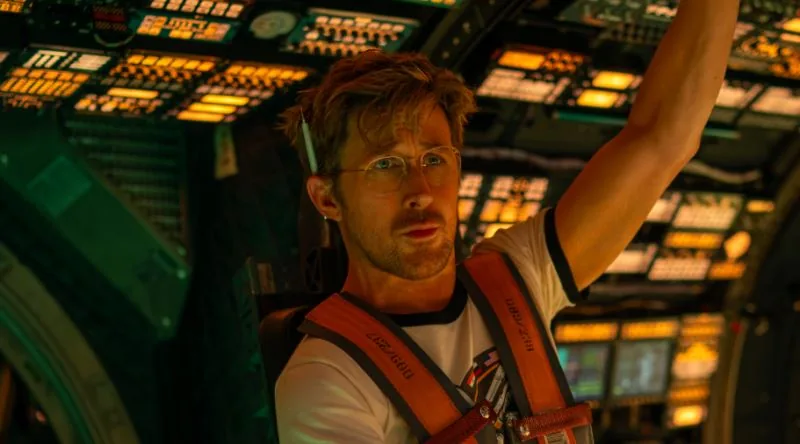
This Project Hail Mary review looks at the 2026 film adaptation starring Ryan Gosling as a lone astronaut who wakes with no memory aboard a ship far from Earth. The story asks what a man is worth when he remembers nothing, and then it answers with warmth instead of dread. Gosling carries long stretches alone, and the film's real spark arrives when he meets Rocky, an alien engineer who becomes a genuine friend. It is a big, hopeful science fiction movie that trusts its audience to enjoy watching smart people solve problems.
Project Hail Mary is a 2026 science fiction film starring Ryan Gosling as an amnesiac astronaut sent to save Earth. Stranded far from home, he befriends an alien engineer named Rocky. The movie blends hard science puzzles with emotional warmth, leaning into optimism rather than doom.
- The film is a 2026 adaptation of Andy Weir's novel, directed by the team behind Spider-Man: Into the Spider-Verse.
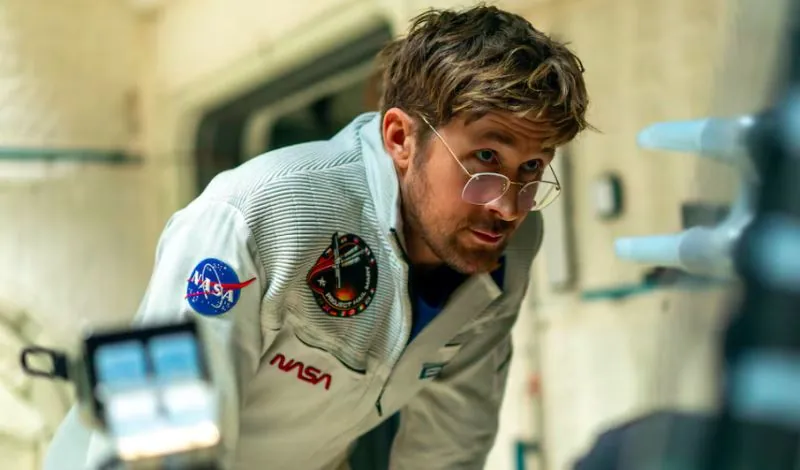
- Ryan Gosling plays Ryland Grace, a teacher who wakes on a spacecraft with no memory of how he got there.
- Much of the story unfolds in deep space, where Grace must piece together a mission to save humanity.
- The emotional core is his friendship with Rocky, an alien engineer he learns to communicate with.
- The cast also includes Sandra Hüller as Eva Stratt, the official who drives the mission forward.
A Sci-Fi Movie That Dares to Be Hopeful
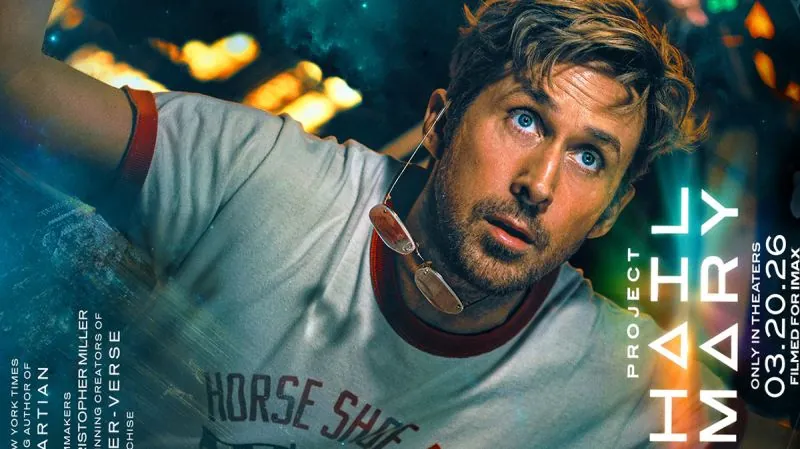
Phil Lord and Christopher Miller directed Project Hail Mary, with Ryan Gosling starring as Ryland Grace. The screenplay comes from Drew Goddard, adapting Andy Weir's 2021 novel of the same name. The film was scheduled for a theatrical release on March 20, 2026, though an actual release could not be confirmed.
Here is the thing about most science fiction of the past decade: it wants you to feel small. Cold corridors, failing systems, a universe that is either indifferent or actively cruel. Project Hail Mary walks into that room and opens a window. Lord and Miller, back behind the camera after roughly a decade away from directing together, build something the genre has been missing for a long while, and one reviewer reached for a big phrase to describe it: a kind of existential hope.
The premise sounds like doom. Microorganisms called astrophage are draining energy from the solar system, and Earth is losing its light. That is a global apocalypse on paper. But the film refuses to stay at that scale. It shrinks the catastrophe down to one man's memory and one unlikely friendship, and that is where its real success lives. Science stops being cold rationality here. It becomes the most human way to survive, and to find meaning, in the dark.
The original review does not pull its punches. It calls Project Hail Mary one of the best science fiction films of the 21st century, and pairs that claim with a sharp observation: this is a radical rejection of the dystopian, claustrophobic mood that has dominated the genre lately. That ranking is one critic's opinion, not a settled consensus, so take it as a strong recommendation. What is not in dispute is the ambition. Lord and Miller are swinging for something Spielberg-shaped, warmth and wonder included, and they are doing it with a straight face.
Gosling anchors it. He plays Grace not as a polished action hero but as someone who panics, jokes too much, and cannot quite stop talking. That ordinariness is the point. It is what makes you think you might feel exactly the same way if you woke up alone in a spaceship with no idea who you were.
Waking Up With No Name: Memory and Identity Aboard the Ship
The film opens on a man who cannot tell you his own name. Ryan Gosling's Ryland Grace comes to in what looks like a hospital bed aboard a silent spacecraft, two bodies lying nearby, his memory wiped clean to the studs. He has no past, no context, no idea why he is there. And on a whiteboard, he writes the one thing he can manage: Who am I? That question, scrawled in marker in an empty room, is the engine of the whole movie.
It is a clever piece of storytelling, because it resets the audience to zero along with him. We learn nothing Grace does not learn. Every corridor he stumbles down, we stumble down too. The amnesia is not a gimmick to be solved and forgotten; it is the structural device that makes a man's private search for self the same thing as the plot's forward motion.
Then there is the way memory returns. Grace does not simply remember in neat chronological order. Each time a problem flares up on the ship, a matching memory from Earth surfaces to meet it. A mechanical crisis triggers a lab memory. A question about the mission pulls up a face. The flashbacks behave less like a biography and more like leaks, seeping in exactly where they are needed.
What those leaks eventually reveal complicates the hero's story. Grace was a biologist who got pushed out of academia, and the blank slate lets him come back to science as pure curiosity again, unburdened by the old grudges. But the man on the ship is also caught between two identities that do not quite fit together: the middle-school teacher he had settled into being, and the top-level molecular biologist the mission actually needed. That gap between who he thought he was and who he turns out to be carries the film's dramatic weight.
By the end of this opening stretch, the question has quietly changed shape. Who am I? gives way to something harder and more human: what would I sacrifice for someone else? It is the first real sign that this is a film about character, not just a survival puzzle. The answer, as Grace discovers, is not something you remember. It is something you decide.
Rocky: The Alien Who Becomes a Mirror
Rocky is a rock-like, spider-like alien with five limbs, and he comes from the Tau Ceti system. He is the other survivor at the heart of Project Hail Mary, the one Grace meets in the dark of deep space. And he is not a digital confection. He is a physical puppet on set, built to be touched, which gives Ryan Gosling's performance a tactile reality you can feel through the screen.
That design choice matters because Rocky refuses every anthropomorphic shortcut. No soft face, no human eyes, no familiar body to read. Just a carapace of stone and five arms, genuinely alien in a way that makes the first contact feel earned. The source reports that James Ortiz handled both the voice and the lead puppeteer duties on set, though this specific credit could not be reliably confirmed, and the result is a creature that breathes in the same air as the actor standing across from him.
Then there's the language. Rocky speaks in a melodic, whistle-like register, and Grace, a biologist by training, does what scientists do: he builds a translation program from scratch. What follows is the most pleasurable stretch of the film. Math and physics become the shared tongue between two species, a universal grammar that needs no dictionary. Numbers, equations, the plain logic of the universe, all of it turned into a bridge.
The bond that grows from that bridge is where Project Hail Mary earns its warmth. The fist bump is the moment it clicks. A tiny cultural exchange, almost silly, and yet it proves something enormous: these two beings, biologically nothing alike, share an emotional spectrum. Rocky becomes Grace's moral mirror, too. Against the harsh, unyielding governance of Eva Stratt back on Earth, Rocky offers a gentler counterweight, a naive but brilliant engineer who solves problems by working alongside someone rather than ordering them around. If you are reading this review, the friendship is the part you will carry home.
The IMAX Vision, the Soundscape, and the Handmade Look of Space
Cinematographer Greig Fraser, the eye behind Dune (2021) and The Batman (2022), shot Project Hail Mary, and he gives the film a striking contrast between the endless reach of space and the tight, cramped interiors of the ship. The source describes a possible aspect-ratio scheme, with the Earth flashbacks reportedly sitting in a narrow 2.39:1 frame while the space sequences open up to IMAX formats such as 1.90:1 or 1.43:1, though this could not be reliably confirmed. The idea is easy to feel, even so. On Earth, Ryland Grace's world is boxed in. Out in the dark, the screen itself seems to exhale.
What you notice first is the color. Instead of the usual gray, shadowed sci-fi palette, the film leans on turquoise and vivid hues, so the universe reads as inviting as it is intimidating. The light play around the Tau Ceti system and the infrared trail left by the astrophage turn the frame into something like a cosmic aquarium. A big part of that warmth comes from the physical craft. Rocky, the five-limbed, rock-like, spider-like Eridian, was brought to life on set as a puppet rather than a purely digital creation, which gives Ryan Gosling's performance a tactile, touchable reality to play against.
Daniel Pemberton's Score and the Sound of the Void
Composer Daniel Pemberton builds a score that fuses cosmic depth with a "Schoolhouse Rock" kind of joy, heavy on plucking techniques. During the scenes where Grace and Rocky grope toward a shared language, those rhythmic structures pull you into the mental puzzle yourself. The sound design does the rest: the metallic groans of the ship, the true silence of vacuum, and the "toot tooting" of the astrophage, all of it making the void feel like a living, breathing mechanism.
Lord and Miller spend that technical firepower on feeling. The silent space funeral is the clearest example, a scene where the absence of sound carries more weight than any music could. That is the trick of the whole film: the craft never shows off for its own sake. It turns a spectacle into something you live through, and it is a big reason this review keeps circling back to the sensory details long after the credits.
Eva Stratt and the Ethics of Pragmatism
Sandra Hüller plays Eva Stratt, the woman world governments hand unlimited authority to save humanity at any cost. Hüller's cold, uncompromising performance drops a slab of hard realism into the film's hopeful glow. And that's the point: Project Hail Mary refuses to tell you whether Stratt is a hero or a tyrant. It just puts her in the room and lets you squirm.
Watch how she treats Ryland Grace. To Stratt, he is a tool, a resource to be measured and deployed. That's a biopolitical argument dressed in a lab coat, the idea that a human life can be reduced to data and slotted into a spreadsheet of survival. It should feel monstrous. Hüller makes it feel almost reasonable, and that's what unsettles you on the drive home.
The "state of emergency" framing lands close to home. Anyone who lived through a pandemic or watched climate policy grind against short-term politics will recognize the machinery: emergency powers, triage, decisions made for the many at the expense of the few. The film holds a mirror up to modern crisis management and doesn't flinch at what looks back.
Then there's the karaoke scene. Out of nowhere, the armor cracks, and you glimpse the weight pressing down on her. It's a small moment, but it matters. A one-dimensional villain would have been easy. A woman who sings badly because the alternative is screaming is something else entirely.
Stratt is the film's purest utilitarian: the majority's good justifies sacrificing the individual. The question is whether that math ever stops being math.
That question detonates when the truth about how Grace got into space comes out. Consent, free will, the difference between volunteering and being volunteered. The revelation reframes everything you thought you knew about the mission, and about the woman who built it.
But Grace gets the last word on Stratt's philosophy. He transcends the forced heroism she engineered by choosing, freely, to act for Rocky. Stratt's world treats love and friendship as luxuries. Grace learns, at the far edge of the solar system, that they were the whole point. That contrast is where the film earns its warmth: not in the science, but in the choice.
Scientific Optimism and the Case for Cosmic Solidarity
Phil Lord and Christopher Miller built Project Hail Mary around a thesis that runs against the grain of most modern science fiction: science is not cold rationality. It is the most human way we have of surviving and of finding meaning. In their film, adapted by Drew Goddard from Andy Weir's novel, the tools of physics and biology are not instruments of dread. They are a hand extended across the dark.
You can feel the 1960s space race in it. That pure, uncomplicated thrill of watching people solve a problem because solving it matters, because the next discovery is worth the risk. Lord and Miller bottle that excitement and pour it into a story that could easily have drowned in despair.
The optimism has a carrier, and his name is Ryan Gosling. His Ryland Grace is not a polished action hero. He is afraid. He makes mistakes. He talks too much and cannot seem to stop, and he is joyful in a way that catches you off guard. There is a moment where he all but shouts the question of whether he is even smart, and it lands because he means it. His ordinariness is the point. You believe you would feel exactly what he feels if you woke up out there.
The sacrifice that only counts when it is freely chosen
The film's real philosophy settles on the nature of sacrifice. Is giving something up worth more when you have no choice, or when every escape route is still open and you choose to stay anyway? Lord and Miller answer that in their final sequences, and they answer it with tears and with a smile at the same time. Grace's choice, made with the door unlocked, is the film's moral center.
That is where the film's idea of heroism quietly rewrites the rulebook. Sandra Hüller's Eva Stratt embodies the other path, the forced version, the arithmetic of necessity. Grace, out past the edge of the solar system, discovers that the forced version was never the real thing.
A lineage stitched from a dozen great films
Watch closely and you can name the ancestors. The Martian's rational intelligence. Interstellar's cosmic scale. E.T.'s timeless sentimentality. Arrival's thrill of linguistic discovery. 2001: A Space Odyssey's visual awe. Cast Away's absolute solitude. The film fuses Isaac Asimov's solution-oriented rationalism with Arthur C. Clarke's evolutionary curiosity, then folds in Contact's first-contact electricity, Gravity's physical claustrophobia, and Europa Report's methodological rigor.
And Rocky, that five-limbed, rock-like Eridian from the Tau Ceti system, redraws the cinematic "other." The lineage runs from The Abyss's curious alienness to Star Trek's cultural-diplomacy idealism, and Rocky lands somewhere in between, a stranger you come to love.
What all of this adds up to is a paradigm shift. Lord and Miller push aside the gray, nihilistic aesthetic of cosmic horror and set down something else in its place: cosmic solidarity. Their film is a laboratory for how humanity might stand against a collective crisis. Grace and Rocky's grave cooperation in the Tau Ceti system argues that a friendship reaching past biological difference is the one force able to hold against universal entropy.
Frequently asked questions
What is Project Hail Mary about?
Project Hail Mary follows Ryland Grace, a man who wakes on a spaceship with no memory of who he is. He slowly pieces together that he must save the solar system from energy-draining microorganisms called astrophage. Along the way he forms an unlikely friendship with an alien named Rocky. The film adapts Andy Weir's 2021 novel of the same name.
Who stars in Project Hail Mary?
Ryan Gosling leads the cast as Ryland Grace, the amnesiac scientist at the story's center. Sandra Hüller plays Eva Stratt, the hard-edged administrator running Earth's desperate response. The alien Rocky is brought to life through puppetry, with James Ortiz reportedly handling the voice and lead puppeteer duties on set. Phil Lord and Christopher Miller directed.
How does Project Hail Mary compare to The Martian?
Both films adapt Andy Weir novels and share a love of problem-solving science, with characters who think their way out of impossible corners. The Martian kept its hero alone on Mars, while Project Hail Mary adds a cross-species friendship and a set of ethical questions about sacrifice, duty and what we owe each other.
What is the relationship between Ryland Grace and Rocky?
Grace and Rocky build a radical, cross-species friendship on a shared language of math and physics. Rocky is a five-limbed, rock-like, spider-like Eridian from the Tau Ceti system, and the two meet far from home with the same goal: saving their own people. Rocky becomes Grace's moral mirror, and their bond carries the film's emotional weight.
Why is Project Hail Mary considered scientifically optimistic?
The film treats science as a human, hopeful way to survive and find meaning, a sharp turn away from the dystopian and claustrophobic mood of much recent science fiction. Even with the solar system losing energy to astrophage, the story insists that curiosity, cooperation and careful thinking can answer the biggest threats.
Was Project Hail Mary filmed for IMAX?
The source describes IMAX-format space scenes that expand from a narrower 2.39:1 frame in the Earth flashbacks to 1.90:1 or 1.43:1 in space, though the exact aspect-ratio scheme is reported rather than confirmed. Cinematographer Greig Fraser, who shot Dune and The Batman, designed the visuals. Daniel Pemberton composed the score.
What role does Eva Stratt play?
Eva Stratt, played by Sandra Hüller, is the cold, utilitarian administrator handed unlimited authority to save humanity at any cost. She represents hard pragmatism set against Grace's humanism, and her choices push the film's questions about consent, free will and how far morality can bend when extinction is on the table.
Did Project Hail Mary receive positive reviews?
The source reviewer calls it one of the best science fiction films of the 21st century. That is one critic's opinion, not a verified critical consensus, so treat the praise as a strong recommendation rather than a settled verdict. The film adapts Andy Weir's novel, with a screenplay by Drew Goddard, and was scheduled for a March 20, 2026 release. Editorial note: Details that remain unconfirmed, including specific plot points and release particulars, are presented here as tentative rather than settled fact.
Got a take on this? Add your voice to the conversation below →
No comments yet. Be the first.