Popeye's Spinach: Was It Really Marijuana?

The enduring claim that Popeye's spinach was secretly marijuana is a colorful urban legend with no factual basis, yet it has persisted since the 1930s because of an alleged sailor slang term, a dog sometimes misidentified as Birdseed, and a misunderstood nutrition myth. The story feels so plausible to many fans that it has become a staple of internet folklore, even as historians and Popeye experts point to the cartoon's wholesome origins. What makes this myth so sticky is how neatly it ties together vintage slang, a clever creator, and a genuine scientific error from the 1800s.
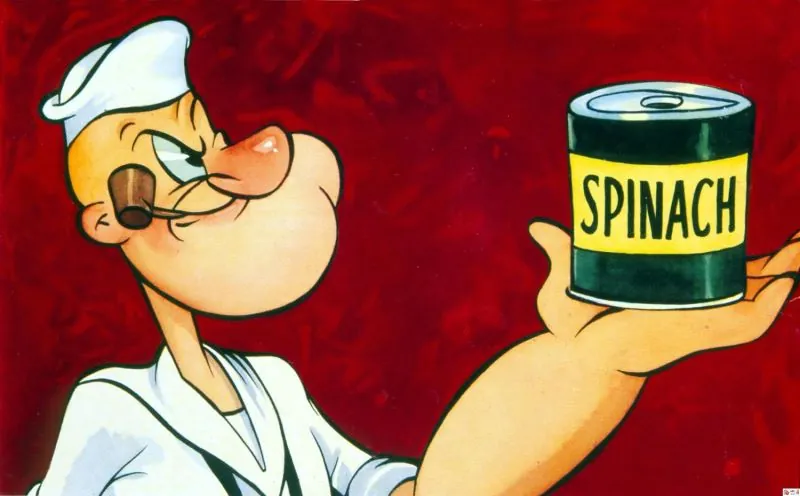
Popeye's spinach was never marijuana. The rumor stems from an unverified 1930s slang claim, a dog whose name is often wrongly given as Birdseed, and the debunked iron content myth. Creator E.C. Segar chose spinach to promote a healthy vegetable to children, and the cartoon's hero gained strength from the leafy green, not any cannabis product.
- Popeye first appeared in the Thimble Theatre comic strip in 1929, and his spinach-powered strength became a defining trait by 1931.
- The myth gained traction online in the 2010s, fueled by unverified claims that 1930s sailors used the term "spinach" as slang for marijuana.
- Popeye's dog, Eugene the Jeep, was introduced in the 1930s, and the claim that his name was Birdseed is a fabrication with no documented connection to hemp seeds or cannabis.
- The spinach iron myth is often attributed to a misplaced decimal point in an 1870s German study, which was corrected decades later but never affected Popeye's choice.
- Creator E.C. Segar is often credited with promoting spinach as a healthy food for children, and the character's spinach consumption was a public health endorsement.
The Rumor That Won't Go Away: Was Popeye's Spinach Actually Marijuana?
No, Popeye's spinach was not marijuana. The Popeye spinach marijuana myth has circulated online for years, but it falls apart under scrutiny. The beloved sailor man, who first appeared in the comic strip Thimble Theatre in 1929 and became a cultural phenomenon throughout the 1930s, was powered by plain, ordinary spinach. The rumor is a fun piece of pop culture trivia, but it simply doesn't hold up to historical fact-checking.
Here's how the story goes, and it's a wild one. According to the original account, sailors in the 1930s used "spinach" as a code word for marijuana. The claim suggests that Popeye, being a sailor himself, would have been in on this slang. He wasn't buying his greens from a regular grocer, the story insists. Instead, he was supposedly packing his pipe with something far more potent than leafy vegetables, which would explain his sudden bursts of superhuman strength and his eagerness to knock out his rival Bluto.
But here's where the tale starts to unravel. Contrary to what the rumor suggests, there is no reliable historical or lexicographical evidence that "spinach" was ever slang for marijuana in sailor culture. It appears to be a modern internet fabrication. And the claim that American sailors were the first in the United States to use marijuana? Also false. Marijuana was used in the US for medicinal, industrial, and recreational purposes well before the 20th century, with no evidence pointing to sailors as the pioneering users.
The rumor even drags Popeye's dog into it. One version claims his pup was named Birdseed, nodding to the fact that hemp seeds were historically used as bird feed. But Popeye's dog is actually named Eugene the Jeep. While hemp seeds have indeed been used as bird feed, the dog's name doesn't support the drug theory at all.
So where does this leave us? With a beloved cartoon character who genuinely loved his spinach, just as generations of kids were told. The Popeye spinach marijuana myth is a creative piece of storytelling, but it's just that: a story. The real magic behind Popeye's strength wasn't a controlled substance. It was a marketing campaign that convinced a generation of children to eat their vegetables, one can of spinach at a time.
The 1930s Sailor Slang Theory: Fact or Fabrication?
No, the claim that "spinach" was 1930s sailor slang for marijuana does not hold up. No reliable historical or lexicographical evidence supports that usage, and it appears to be a modern internet fabrication. Popeye himself is real, but the slang connection is not.
Here is where the story gets interesting. Popeye the Sailor first appeared in the Thimble Theatre comic strip in 1929, created by cartoonist Elzie Crisler Segar. Throughout the 1930s, the character became a massive cultural figure in the United States. So the timeline works for the myth: the character existed in the 1930s, and marijuana was certainly known in America then. But the supposed slang link between the vegetable and the drug? That part of the legend simply does not exist in any credible dictionary, sailor memoir, or historical record from that decade.
The myth also leans on another shaky claim: that American sailors were the first people in the United States to use marijuana. That idea is false. Marijuana had been used in the US for medicinal, industrial, and recreational purposes well before the 20th century. Hemp was a common agricultural crop, and cannabis-based medicines were sold in pharmacies in the 1800s. Sailors were not the pioneers of American cannabis use.
According to the original account, the theory goes further, suggesting that because Popeye was a sailor, he would have been familiar with exotic herbs and plants. The story even claims that Popeye's dog was named Birdseed, tying into the fact that hemp seeds were historically used as bird feed. But the dog's actual name is Eugene the Jeep, not Birdseed. So while hemp seeds did serve as bird food in reality, the character detail is simply wrong.
When you pull the threads, the Popeye spinach marijuana myth unravels quickly. The character is real, the era is right, but the slang connection is a fabrication that has been passed around the internet without evidence to back it up.
Popeye's Pipe and His Dog Birdseed: More Drug References?
No, Popeye's dog is not named Birdseed. The famous canine companion is actually called Eugene the Jeep, a name that has appeared in the cartoons and comics since the 1930s. The claim that his dog was named after bird feed is a fabrication that has been repeated in online circles, but it simply does not hold up against the actual source material.
The dog name mix-up is just one piece of a larger puzzle that fans of the Popeye spinach marijuana myth like to point to. According to the original account making the rounds, the theory goes that Popeye's pipe contained cannabis and that his dog's name, Birdseed, was a nod to hemp seeds being used as bird feed. There is a kernel of truth buried in there: hemp seeds have indeed been used historically as bird feed, a fact that checks out. But the connection to Popeye's dog is where the story falls apart.
Eugene the Jeep made his first appearance in the Thimble Theatre comic strip in 1936, several years after Popeye himself debuted in 1929. The character was a yellow, magical creature with a fondness for orchids, not a commentary on the contents of his owner's pipe. The name "Jeep" actually came from the popular culture of the time, drawn from a character in the Popeye comics themselves, and later inspired the nickname for military vehicles.
When you start pulling at these threads, the whole theory begins to unravel. The spinach slang claim, the sailor connection, and now the dog's name all turn out to be either unverified or outright incorrect. What remains is a fun piece of internet folklore that has been passed around for years, but the evidence simply is not there to support it.
It is worth noting that Popeye did grow spinach in his pipe in some storylines, which is where the confusion likely started. But growing vegetables in a pipe for comedic effect is a far cry from smoking them. The character's creator, Elzie Crisler Segar, was known for his whimsical humor and wordplay, and the pipe was simply a visual gag that fit the sailor archetype.
So while the Birdseed claim adds a tempting layer to the Popeye spinach marijuana myth, it is a detail that does not survive contact with the actual cartoons. The real Eugene the Jeep would probably be amused by the confusion, if he could talk.
The Spinach Iron Myth and Why the Legend Persists
Before the marijuana rumors took root, another spinach story had already been floating around for decades, and it's a perfect example of how food myths refuse to die. The claim that spinach is packed with iron is often attributed to a misplaced decimal point in early research, and it stuck in the public imagination for generations. Experts eventually pointed out that spinach doesn't contain the mythical iron levels, but the correction never quite landed the way the original claim did.
The original 1870 study by German chemist Erich von Wolf reported iron content of 3.5 milligrams per 100 grams of spinach. A transcription error later shifted the decimal point, making it 35 milligrams, and that inflated figure became the accepted truth. Popeye's creators seized on it in the 1930s, and the sailor's spinach habit cemented the false belief in millions of households. By the time researchers corrected the record, the damage was done, and the spinach lobby jokes wrote themselves.
Here's where the Popeye spinach marijuana myth gets interesting. The same cultural machinery that turned spinach into a superfood also made Popeye the perfect vessel for speculation. Popeye first appeared in the comic strip Thimble Theatre in 1929, and throughout the 1930s he became a cultural phenomenon. He smoked a pipe constantly, he had a strange diet, and he was a sailor, which in the popular imagination of the era suggested a certain worldliness. The pieces seemed to fit together for conspiracy-minded fans, even though the historical record shows no evidence that "spinach" was ever slang for marijuana in sailor culture.
The rumors grew bolder as they spread online. Some claimed American sailors were the first in the United States to use marijuana, a notion that falls apart quickly since cannabis had been used for medicinal and industrial purposes well before the 20th century. Others pointed to Popeye's dog, claiming the pup was named Birdseed because hemp seeds were used as bird feed. The dog's actual name is Eugene the Jeep, and while hemp seeds have historically been used as bird feed, the connection to Popeye's pet is pure invention.
What makes these legends so sticky? Popeye himself was inspired by a real person, a bartender named Frank Fiegel from Chester, Illinois, whose distinctive face and one-eyed squint caught cartoonist Elzie Crisler Segar's attention. When a character has that kind of real-world origin story, it invites further speculation. If Popeye came from a real man, why couldn't his spinach have a hidden meaning too?
The truth is simpler and more mundane. Popeye ate spinach because it was cheap, healthy, and easily recognizable to Depression-era audiences. The pipe was a common prop for sailors in cartoons of the time. But the myth persists because it's more fun than the reality, and because a good story, once told, is very hard to untell.


Frequently asked questions
What is the urban legend about Popeye's spinach being marijuana?
The urban legend claims that Popeye's spinach was actually cannabis, suggesting that in the 1930s, "spinach" was slang for marijuana among sailors and that his pipe contained the drug. This theory is unsupported by any reliable evidence and appears to be a modern internet fabrication with no historical basis.
Why do some people believe Popeye's pipe contained cannabis?
The theory rests on two incorrect premises: that "spinach" was sailor slang for marijuana in the 1930s, and that Popeye's dog was named Birdseed, supposedly referencing hemp seeds used as bird feed. Both claims are factually wrong. Popeye first appeared in the comic strip Thimble Theatre in 1929, but no credible source connects his spinach habit to drugs.
Was "spinach" actually slang for marijuana among 1930s sailors?
No. There is no reliable historical or lexicographical evidence that "spinach" ever served as slang for marijuana in sailor culture or anywhere else in the 1930s. The claim appears to be a modern internet fabrication with no support from dictionaries, historical records, or contemporary accounts from that era.
How does Popeye's dog Birdseed relate to the cannabis theory?
The theory claims Popeye's dog was named Birdseed as a reference to hemp seeds being used as bird feed. This is false. Popeye's dog is actually named Eugene the Jeep. While hemp seeds have indeed been historically used as bird feed, the dog's actual name has nothing to do with any cannabis reference.
Did Popeye's creator intend any drug references in the cartoon?
There is no evidence that creator E.C. Segar intended any drug references in the cartoon. The legend is purely speculative and not supported by historical records. Segar created Popeye as a tough sailor character, and the spinach was simply a running gag about a food that gave him strength.
What is the real story behind the spinach iron content myth?
The myth that spinach is exceptionally high in iron is often attributed to a misplaced decimal point in early research, but this is separate from the marijuana legend. The two stories are frequently confused online, yet they have entirely different origins and should not be conflated.
Who was Popeye's character based on in real life?
Popeye was inspired by a real bartender named Frank Fiegel, a one-eyed, pipe-smoking man from Chester, Illinois, where creator E.C. Segar grew up. Fiegel's distinctive appearance and personality directly influenced the character design, though there is no record of him having any connection to cannabis. Editorial note: Any facts which remain unconfirmed are presented as such, hedged clearly in the text above.
Got a take on this? Add your voice to the conversation below →
No comments yet. Be the first.