Orhan Veli: The Poet Who Fell Into a Pit
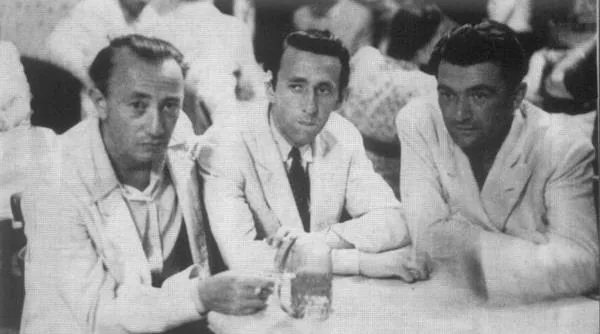
Orhan Veli, one of Turkey's most beloved modern poets, died in Istanbul on November 14, 1950, at the age of 36, after falling into an uncovered pit in Ankara. He had spent his life dodging one misfortune after another, from a childhood burn to a car crash, and his friends had grown used to a man who kept getting back up. What makes his death so hard to accept is how ordinary it was: a walk at night, a hole in the ground, a hemorrhage that nobody caught in time. For readers of his poems, the loss still lands like a line that ends too early.
Orhan Veli died on November 14, 1950, at age 36, days after falling into an uncovered pit in Ankara. He was taken to a hospital in Istanbul, where he died of a brain hemorrhage. According to accounts of his life, the bleeding was not recognized early enough.
- Orhan Veli was born in Istanbul in 1914 and became a leading figure of the Garip movement in Turkish poetry.
- As a child he suffered a serious burn, and he later contracted measles and scarlet fever, illnesses that shaped a lifelong fragile health.
- In 1939 he was injured in a car crash near Çubuk, outside Ankara, and survived despite serious injuries.
- On the night of November 8, 1950, he fell into an unmarked pit in Ankara and was seriously hurt.
- He was transferred to Cerrahpaşa Hospital in Istanbul, where he died on November 14, 1950.
A Poet Who Couldn't Catch a Break
Orhan Veli was born on 13 April 1914 and died on 14 November 1950, at just 36 years old. He is remembered as one of Turkey's most celebrated modern poets. Yet his biography reads less like a literary life and more like a medical file that kept getting thicker.
From childhood onward, misfortune seemed to follow him. At around age 5, he leaned in close to a pan where meatballs were frying, hoping to spear one with his fork. The fork slipped, the hot oil tipped, and he was badly burned. Long treatment saved him. According to one unverified interview account, his sister Füruzan Yolyapan said that he carried permanent burn scars on his back from that day.
More trouble followed. At 7, some accounts say, he was circumcised at Yıldız Palace in a ceremony organized by Caliph Abdülmecit Efendi. At 9 he was said to have come down with measles. At 10, the story goes, he tried to frighten the housemaid Fatma Hanım with a gun, and it went off, seriously wounding her in the abdomen. At 12 he was said to have torn his kneecap on barbed wire while playing in Beykoz meadow. At 17, scarlet fever.
Adulthood brought no relief. In August 1939, unverified accounts place him in a car accident in Çubuk, Ankara, badly hurt and said to have spent 20 days in a coma at Numune Hospital. In 1943, during military service, he was said to have been injured falling from a horse in Gallipoli.
Then came the night in 1950. On a dark street in Ankara, he fell into an unmarked pit that the municipality had opened and left without warning signs. His head struck the ground. Two or three days later in Istanbul he fell ill. At the hospital, doctors treated him for alcohol poisoning. In fact, he was bleeding in his brain, and nobody recognized it. That same day he slipped into a coma and never came out. He died at Cerrahpaşa Hospital.
How does a man survive hot oil, gunshots, barbed wire, and car wrecks, only to be killed by a hole in the street?
A Childhood of Burns, Illnesses, and Near-Misses
Orhan Veli, born in Istanbul on 13 April 1914, packed more accidents and illnesses into his first seventeen years than most people collect in a lifetime. The very first one nearly killed him before he could read.
He was five years old, and someone in the kitchen was frying meatballs in a pan of hot oil. He crept up beside the stove, fork in hand, hoping to spear one. The fork slipped, the pan tipped, and the scalding oil poured over him. The burns were severe enough to demand a long recovery, and he only survived it after extended treatment. According to an unverified interview account, his sister Füruzan Yolyapan said that her brother carried permanent burn scars on his back from that day.
Two years later, at seven, came the circumcision ceremony. Some accounts say it was held at Yıldız Palace and organized by Caliph Abdülmecit Efendi, with Orhan Veli and other boys circumcised together. The family's ties to the last caliph make the setting plausible, but the age, the palace, and the caliph's role are all reported rather than verified.
Then the pattern kept repeating. At nine he was said to have come down with measles. At ten, according to the accounts, he tried to frighten the housemaid Fatma Hanım with a gun. The weapon went off on its own, and she was seriously wounded in the abdomen. At twelve, playing in Beykoz meadow, he caught his kneecap on barbed wire and injured it badly. By seventeen he had contracted scarlet fever.
Burn, ceremony, measles, gunshot, barbed wire, fever. Read as a list, it sounds less like a childhood and more like a series of warnings that went unheeded.
Car Crashes, Horses, and a Coma
By the time Orhan Veli was a grown man with published poems behind him, his body was still collecting damage. In August 1939, the Turkish poet was riding through Çubuk, a district on the northern edge of Ankara, when the car he was in crashed. Unverified accounts say he was hurt badly enough that he spent 20 days in a coma at Numune Hospital. Treat that detail as the story goes rather than settled record: a serious accident in the late 1930s is part of his biography, but the exact date, the location, the length of the coma and the hospital named have never been firmly confirmed.
Four years later, the pattern held. In 1943, while Orhan Veli was serving his military stint, he was said to have fallen from a horse near Gallipoli and been injured. Again, the shape of the story is familiar, a young man in uniform and a spill from an animal, but the specifics stay soft. His service around 1942 and 1943 is sometimes mentioned, and a horse-related injury with it, yet no account pins down the day, the unit or the severity.
What stands out is not any single mishap. It is the drumbeat. The boy who was scalded by hot oil, who was burned and cut and shot and sick through his childhood, grew into a man who kept getting thrown, crashed and concussed. Orhan Veli wrote some of the plainest, lightest verse in modern Turkish literature, lines that sound like a man strolling through Istanbul with his hands in his pockets. The life underneath the poems was a different thing entirely, a body that seemed to move through the world with a target on it.
He was born on 13 April 1914, which means the Çubuk crash caught him at 25 and the fall from the horse at 29. He had roughly seven years left. In 1950, on a dark street in Ankara, he would step into an unmarked pit dug by the municipality and strike his head, and that fall, not the car or the horse, would be the one that finished the story.
The Pit That Killed Him
In 1950, on a dark street in Ankara, Orhan Veli fell into an unmarked pit that the municipality had dug and left without any warning sign. He hit his head. It was a stupid, ordinary accident, the kind of thing that happens on any unfinished street in any city, and it is what killed him.
Two or three days later, he was in Istanbul and he fell ill. He went to a hospital. There, the doctors treated him for alcohol poisoning. He was actually bleeding inside his skull from the fall, a brain hemorrhage no one recognized. Unverified accounts say he slipped into a coma at 20:00 that same day and died at 23:20 at Cerrahpaşa Hospital without ever regaining consciousness. The precise times and the coma detail come from the story as it has been passed down, so treat them as the account rather than the record.
He was 36 years old. A man who had survived a scalding at five, a gunshot accident he caused at ten, a coma of twenty days after a car crash in 1939, and a fall from a horse in Gallipoli in 1943, died because a hole in the ground had no sign over it and a doctor read the wrong chart. The poet who gave Turkish verse its plainest, most human voice was gone because of a missing warning sign and a missed diagnosis.
There is a line in the old telling of this that stings: he took two glasses of alcohol and they treated him for alcohol poisoning. That is the whole tragedy in one sentence. Not fate, not some grand illness. A pit, a headache, a misread symptom, and a night that ended at 23:20.
Frequently asked questions
What caused Orhan Veli's death in 1950?
Orhan Veli died on 14 November 1950 at Cerrahpaşa Hospital in Istanbul at the age of 36. In late 1950, he fell into an unmarked, uncovered pit dug by the municipality on a dark street in Ankara and struck his head. The resulting brain hemorrhage went unrecognized, and doctors instead treated him for alcohol poisoning.
How did Orhan Veli's fall into a pit lead to his death?
He hit his head when he tumbled into the uncovered street-works pit in Ankara. He seemed to recover at first, but two or three days later in Istanbul he fell gravely ill. The blow had triggered a cerebral hemorrhage, and by the time its true cause was clear, it was too late to save him.
Was Orhan Veli misdiagnosed with alcohol poisoning?
Yes. According to standard accounts, when he was hospitalized in Istanbul after collapsing, doctors treated him for alcohol intoxication. In reality he was suffering a brain hemorrhage caused by the earlier fall. The misdiagnosis meant the real injury went untreated until he died on 14 November 1950.
What childhood accidents did Orhan Veli survive?
He survived a remarkable string of mishaps. At age 5 he was badly burned when hot oil spilled on him while meatballs fried in a pan. Around age 10 he accidentally shot a housemaid with a gun, and at 12 he injured his kneecap on barbed wire. As the story goes, he also weathered measles and scarlet fever.
Where did Orhan Veli die and at what age?
Orhan Veli died at Cerrahpaşa Hospital in Istanbul on 14 November 1950. He was 36 years old, born on 13 April 1914. His death came just days after the head injury he suffered falling into an uncovered pit in Ankara, a loss that stunned Turkey's literary world.
Did Orhan Veli have a car accident in 1939?
According to unverified accounts, in August 1939 he was seriously hurt in a car accident in Çubuk, Ankara, and was said to be in a coma for 20 days at Numune Hospital. These specific details, including the coma's length, come from retellings rather than confirmed records, though a serious late-1930s accident is widely mentioned. Editorial note: Details that remain unconfirmed in the record, including the exact circumstances of the pit and the sequence of his medical care, are presented here as reported accounts rather than settled fact.
Got a take on this? Add your voice to the conversation below →
No comments yet. Be the first.