Nardugan Festival Myth: Why It's Not Ancient Turkish
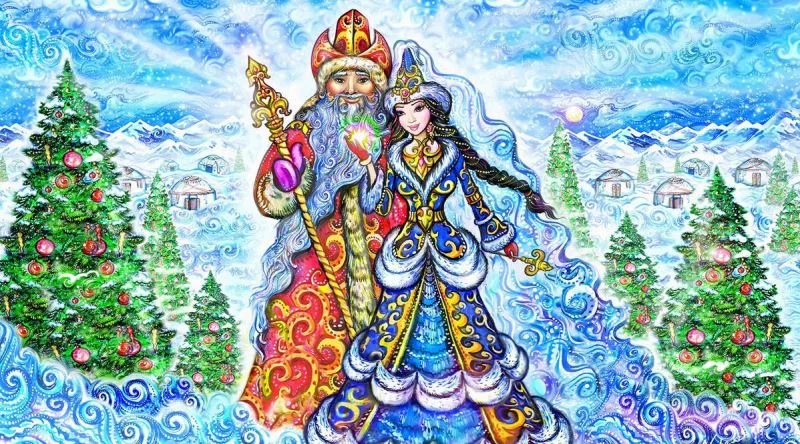
The Nardugan festival myth, which claims a pre-Islamic ancient Turkish New Year celebration with decorated pine trees, is not supported by historical evidence; scholars and historians trace the story to a 1990s marketing invention, not to genuine Turkic traditions from Anatolia or Central Asia. For decades, you may have seen social media posts and festive articles painting a romantic picture of ancient Turks gathering around a sacred pine tree in late December, but the reality is far more complex and, frankly, more interesting once you peel back the layers of modern folklore.
The Nardugan festival myth is a modern fabrication popularized in the 1990s, not an ancient Turkish holiday. Historians find no evidence of a pre-Islamic Turkic winter solstice festival involving pine trees. The character Ayaz Ata derives from Soviet-era influences, not ancient mythology, and the claim of a traditional "Beyaz Bayram" in February is not supported by historical records.
- The Nardugan festival myth first appeared in Turkish popular culture in the 1990s through commercial marketing campaigns, not through historical records.
- No archaeological, linguistic, or written evidence from pre-Islamic Turkic societies supports the existence of a winter solstice festival called Nardugan.
- The claim of a "Beyaz Bayram" (White Holiday) observed in February is not supported by any historical or ethnographic record.
- Ayaz Ata, often presented as a Turkish counterpart to Santa Claus, traces his origins to Soviet-era children's literature from the 1930s, specifically the Russian character Ded Moroz.
- The claim that Nardugan involved decorating a pine tree has been debunked by historians, as pine trees hold no special significance in documented ancient Turkic winter practices.
The Nardugan festival myth claims ancient Turkish roots, but historians say it's pure fiction
Every December 21, the Nardugan festival myth resurfaces across social media with a bold claim: ancient Turks celebrated a grand New Year festival on the winter solstice, and the Christmas tree tradition was stolen from their "akçam" (white pine) custom. Historians who specialize in Turkic studies say this is simply not true. The story has no basis in any historical document, and its most prominent advocate was not even a Turkologist.
The figure most responsible for popularizing this idea was Muazzez İlmiye Çığ, a respected Sumerologist who spent her career studying ancient Mesopotamian tablets. Her expertise lay in Sumerian civilization, not in the Turkic world, yet she built a sweeping narrative connecting Sumerian texts to Turkish culture thousands of years later. The academic community has not embraced her theory, and for good reason: no Hun, Göktürk, or Uyghur document mentions anything resembling Nardugan or a December 21 tree-decorating ritual.
The actual source of this myth traces back to romantic and fictional history writers like Murad Adji, not to scientific evidence. Adji's works, popular in certain circles, wove imaginative tales about Turkic history that later found their way into social media posts and even some popular history channels. When scholars like Prof. Dr. Ahmet Taşağıl, who has dedicated his life to translating Chinese chronicles about Turkic peoples, examined the claim, his verdict was blunt: "safsata," meaning pure nonsense.
Consider what we know from verified sources. The Chinese dynastic histories, which documented Hun, Göktürk, and Uyghur customs in remarkable detail, contain no mention of Nardugan or any winter solstice tree festival. Kaşgarlı Mahmud's Divânu Lügati't-Türk, the 11th-century encyclopedic dictionary of Turkic languages, has no entry for the word "Nardugan" whatsoever. If this had been a major pan-Turkic celebration, Mahmud, who cataloged Turkic vocabulary exhaustively, would almost certainly have recorded it.
What ancient Turks did have was a sacred tree cult centered on the holy birch, and the cosmological concept of the "ulukayın" or world tree that connected earth and sky. But decorating a pine tree with ornaments and placing gifts beneath it? That tradition reportedly passed to the West from the Phrygians, an ancient Anatolian people, not from the Turks, according to Taşağıl's research. The distinction matters: revering trees as sacred spaces and decorating them for a commercial holiday are two very different practices.
What Chinese chronicles and Kaşgarlı Mahmud actually say about Turkish winter customs
The most damning evidence against the Nardugan festival myth comes from someone who has spent his entire career inside the primary sources. Prof. Dr. Ahmet Taşağıl, a historian who has devoted his working life to translating Chinese documents about Turkish history, dismisses the entire Nardugan claim with a single word: "safsata," meaning nonsense.
Taşağıl's authority matters because of what those Chinese annals actually contain. Thousands of pages of chronicles describe the Huns, the Göktürks, and the Uyghurs in meticulous detail, recording their battles, their rituals, their daily habits, even their clothing. Nowhere in that vast record is there a single line about Turks decorating pine trees on December 21 or placing gifts beneath them. Not one sentence. If such a practice had existed as a major festival, the Chinese court historians, who were famously thorough observers of the nomadic peoples on their borders, would have noted it.
The silence extends to the foundational text of Turkish culture itself. Kaşgarlı Mahmud's Divânu Lügati't-Türk, an eleventh-century dictionary and encyclopedic survey of Turkic languages compiled in 1072, contains no entry for the word "Nardugan" anywhere in its pages. Taşağıl's point here is simple and devastating: Kaşgarlı Mahmud was a meticulous collector of Turkic vocabulary, customs, proverbs, and songs. If a festival called Nardugan had been a genuine, widely celebrated event among the Turks, he could not possibly have missed it.
What the sources do show is a genuine reverence for trees, but of a very different kind. Ancient Turks held the birch tree, known as kayın, as sacred, and a broader tree cult existed throughout their cosmology. As the story goes, some researchers have suggested that the practice of decorating trees may have passed to the West from the Phrygians, an ancient people of Anatolia, rather than from the Turks, though direct evidence for that specific origin claim remains speculative. What is certain is that the decorated evergreen associated with Christmas has no documented ancestor in Turkic winter practice.
The scholars who searched Turkish mythology and found no Nardugan
When historian Bahaeddin Ögel published his monumental work Türk Mitolojisi, he devoted page after page to the sacred trees of the ancient Turks, yet he never once described anyone placing gifts beneath a fir branch on December 21. Ögel's magnum opus details the ulukayın, the world tree that serves as a cosmological ladder connecting earth and sky, where spirits climb between realms. He mapped the tree cult with painstaking care, tracing every branch of its symbolism across Turkic cultures. Nowhere in those thousands of pages does a pine-decorating, gift-giving winter celebration appear.
Abdülkadir İnan's Tarihte ve Bugün Şamanizm, the foundational study of shamanic practice, walks readers through seasonal ceremonies and ritual calendars in exhaustive detail. İnan describes how worshippers tied cloth strips to branches, a practice called yalama, but he is explicit about what that act means: a votive offering, a wish carried upward to the spirits. It is prayer, not party decoration. The distinction matters because the Nardugan festival myth leans heavily on tree imagery, yet the actual documented rituals point to reverence, not celebration. Fuad Köprülü, the towering figure of early Turkish historiography, likewise left no trace of any festival bearing that name from the Göktürk era through the Uyghur period.
The silence across these three giants of the field is deafening. Kaşgarlı Mahmud's Divânu Lügati't-Türk, the eleventh-century dictionary that catalogues Turkic vocabulary with obsessive completeness, contains no entry for Nardugan whatsoever. Had such a festival existed as a universal Turkic tradition, the word would appear somewhere in those pages. The absence speaks volumes.
Ayaz Ata: a Soviet-era invention, not an ancient Turkic figure
Prof. Dr. Tufan Gündüz doesn't mince words. "We have no festival called Nardugan and no character called Ayaz Ata," the historian states flatly. "Ayaz Ata is the leading lie." The friendly, gift-giving winter figure so popular on social media every December 21 was never part of ancient Turkic tradition.
The cozy Ayaz Ata that Turks and Central Asians now recognize was actually born in the Soviet era. Soviet authorities deliberately created him as a local stand-in for Ded Moroz, the Russian "Grandfather Frost," and imposed this character on Central Asian Turkic peoples. He was a political invention dressed in folk costume, not a figure passed down through generations of Turkic storytelling.
Here's the twist: Turkic mythology does have an Ayaz Han. But he is nothing like the jolly gift-bringer. Ayaz Han is the lord of winter's killing, freezing cold, the master of the kind of bitter frost that could end a traveler's life on the steppe. He is a force to be respected and feared, not a character who slides down chimneys with presents.
The Nardugan festival myth collapses under the same weight. Neither the Chinese chronicles documenting the Huns, Göktürks, and Uyghurs nor Kaşgarlı Mahmud's Divânu Lügati't-Türk, the 11th-century compendium of Turkic language and culture, contains any mention of Nardugan or of tree decorating on December 21. If this were truly an ancient, widespread Turkic celebration, the silence would be impossible to explain. According to the original account, even the claim that tree-decorating tradition passed from the Phrygians of Anatolia to the West remains speculative, lacking direct evidence.
The real Turkish winter practices, and why the Nardugan myth persists
If you have heard that ancient Turks celebrated a "Beyaz Bayram" (White Holiday) around February 20, you have heard a claim that no historical or ethnographic record actually supports. The Tonyukuk inscription, carved in the early 8th century in Mongolia, contains no reference to any White Holiday or festival whatsoever. The attribution of this supposed celebration to Tonyukuk excavations and Mongolia research appeared in the Türk Yurdu journal in April 2017, but fact-checkers have contested that attribution as unsupported by the actual archaeological and textual evidence.
What is documented is something quieter and more sacred. Turks tied cloth to trees and poured saçı, offerings of milk, food, or drink, at their bases as a form of worship. This was a request for "kut," the divine blessing that flows from spirits, not a Western-style Christmas celebration with decorated evergreens and wrapped gifts. The tree was a conduit between earth and sky, a ladder for souls, not a prop for seasonal commerce.
So why does the Nardugan festival myth keep circulating every December 21? Because it feeds a romantic narrative of "everything came from us." The notion that Christmas trees and holiday cheer were stolen from ancient Turkic tradition feels good to share, even when no Hun, Göktürk, or Uyghur chronicle, and no page of Kaşgarlı Mahmud's Divânu Lügati't-Türk, mentions the word "Nardugan" at all. That pull toward cultural ownership, as the source argues, dilutes rather than serves Turkish culture. It replaces the real, documented practices of cloth-tying and offering with a fantasy that needs no evidence to spread, only a willing audience.
Frequently asked questions
What is the Nardugan festival claim?
The Nardugan festival claim holds that ancient Turks celebrated a New Year festival on December 21 by decorating pine trees and exchanging gifts beneath them. Historians who specialize in Turkic sources say there is zero evidence for this. The word "Nardugan" itself does not appear anywhere in pre-Islamic Turkic texts, making the entire story a modern reconstruction rather than a documented tradition.
Who is Ayaz Ata and where did he come from?
Ayaz Ata is a Soviet-era invention modeled directly on the Russian Ded Moroz, the equivalent of Santa Claus. He was not an ancient Turkic figure at all. The genuine Turkic winter deity is Ayaz Han, who rules over the deadly, freezing cold of winter rather than handing out gifts to children. The cuddly, present-carrying Ayaz Ata persona emerged when Soviet authorities promoted him as a Turkic counterpart to Ded Moroz across Central Asia.
Why do historians say Nardugan is not an ancient Turkish holiday?
Historians reach this conclusion because the primary sources simply never mention it. The Chinese chronicles documenting the Huns, Göktürks, and Uyghurs contain no reference to Nardugan or to tree decorating on December 21. The Tonyukuk inscription from Mongolia is equally silent, and Kaşgarlı Mahmud's Divânu Lügati't-Türk, the eleventh-century compendium of Turkic language and culture, has no entry for the word whatsoever.
Did ancient Turks decorate pine trees for New Year?
No, they did not. No primary source about ancient Turks attests to decorating pine trees for any New Year celebration. The claim that tree decorating originated with the Phrygians, an ancient people of Anatolia, remains speculative since no direct evidence links the Phrygians to this practice either. What is documented is a Turkic tree cult centered on the sacred birch, involving cloth ties and offerings, not ornaments and tinsel.
What was the traditional Turkish winter festival called?
The claim that a festival called "Beyaz Bayram" or White Holiday was celebrated around February 20 is not supported by any historical record. The Tonyukuk excavations and research in Mongolia do not back this up either, as the inscription contains no reference to any such holiday. What is documented in Turkic practice is tree worship with cloth ties and offerings, which functioned as a ritual of asking blessings from spirits, not a gift-giving winter celebration.
Got a take on this? Add your voice to the conversation below →
No comments yet. Be the first.