Maus Review: A Holocaust Graphic Novel Without Hollywood Gloss
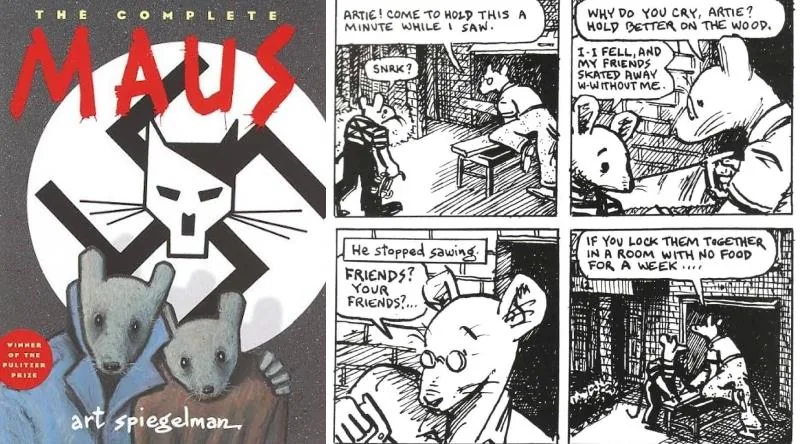
Art Spiegelman's Maus, a graphic novel that redefines Holocaust storytelling through its raw, unheroic portrayal of survival, was published in installments between 1980 and 1991 and later collected into two volumes. The book, which uses animals to represent different ethnic groups, strips away the Hollywood gloss of films like Schindler's List to reveal the painful, complicated truth of his father Vladek's experiences in Auschwitz. Reading it feels less like consuming a polished narrative and more like sitting in a cramped room with a difficult old man who refuses to make his trauma easy for you.
Art Spiegelman's Maus is a Pulitzer Prize-winning graphic novel that tells the true story of his father Vladek's survival of the Holocaust. Serialized between 1980 and 1991 and later collected into two volumes, it uses animal metaphors to strip away sentimentality, presenting an unglamorous, deeply human account that contrasts sharply with Hollywood depictions of the era.
- Maus was the first graphic novel to win a Pulitzer Prize, receiving the award in 1992.
- The narrative alternates between Vladek Spiegelman's past in 1940s Poland and the strained present-day relationship with his son Art in the 1970s and 1980s.
- Spiegelman draws Jews as mice, Germans as cats, and Poles as pigs, a metaphor that reinforces the predator-prey dynamic of the Holocaust.
- The artwork is stark black-and-white, deliberately crude and unpolished, avoiding the visual grandeur that characterizes Hollywood Holocaust films.
- Vladek is portrayed not as a saintly hero but as a shrewd, sometimes miserly and difficult man whose survival instincts shaped his postwar personality.
A Holocaust Story Without the Hollywood Gloss
Art Spiegelman's Maus is the rare Holocaust narrative that skips the melodrama entirely. This two-volume autobiographical graphic novel, serialized between 1980 and 1991, tells the story of Spiegelman's father Vladek through stark black-and-white panels where Jews appear as mice, Germans as cats, and Poles as pigs. For anyone worn out by cinematic treatments of the Holocaust, this book delivers something far more honest.
The reviewer behind this Maus graphic novel review came to the work with serious baggage. They describe themselves as someone who, since childhood, has been saturated with what they call "Hollywood Holocaust propaganda" and who reflexively rates such films a 1 on IMDb out of protest. Their grievances are specific: Adrien Brody's perpetually sorrowful eyebrows in The Pianist, rising like a stock chart, and the heroic framing of Schindler's List. To them, these films wrap tragedy in what they bluntly call an "arabesk" tone, a Turkish term for over-the-top melodramatic sentimentality that turns real suffering into manipulative spectacle.
That deep skepticism explains why the book sat unread on their shelf for five years. They finally picked up The Complete Maus, the edition that collects both volumes in a single binding, and finished it in one swift sitting. The verdict came quickly: this is the most informative, least sentimental, and most fact-grounded Holocaust work they have ever encountered. Far from the polished heroics of film, Spiegelman's protagonist is his own father Vladek, a man the author openly admits he never loved, a cold, money-obsessed Machiavellian figure who exhausted everyone around him. And that uncomfortable honesty, the refusal to soften a survivor into a saint, is precisely what makes the work ring true.
Vladek Spiegelman: The Unheroic Survivor
Meet Vladek Spiegelman, the man at the center of this story, and he is about as far from a Hollywood hero as a person can get. He is not handsome in that plastic, movie-star way, and he is certainly not filled with noble, selfless goodness. Instead, the Vladek we meet is a man obsessed with money, a Machiavellian figure whose sharp edges have worn down everyone around him, including his own son.
The man who brings Vladek to us is Art Spiegelman, his son and the author of the Maus graphic novel review you are reading now. Art and Vladek never had an easy relationship, and that tension crackles through every page. Art sat his father down, switched on a tape recorder, and asked him to walk through his experiences during the Holocaust, day by day, from the very first moment to the last. What emerges is not a tale of heroism but a raw, unfiltered account of survival.
Vladek's survival, as the story unfolds, comes down to a brutal combination of luck, a fierce survival instinct, and, in his own words, being "self-interested and selfish." He is not the type to sacrifice himself for others. In fact, his worldview is captured in a chilling line he delivers to his son early on: "Friends? Friends? Lock them in a room with no food or water for a week; then you'll see what a friend is." It is a cynical, cold perspective, but it is also the lens through which Vladek saw the world and managed to live through it. This is not a story about a hero; it is a story about a man who survived, and the uncomfortable truth of how he did it.
Why Mice, Cats, and Pigs? The Animal Metaphors Explained
The most famous signature of Art Spiegelman's Maus graphic novel review conversations is its animal cast: Jews appear as mice, Germans as cats, and Poles as pigs. This isn't a gimmick. It's the book's emotional armor, the mechanism that lets you keep turning pages through some of the darkest material ever committed to paper.
Spiegelman, who wrote and drew this autobiographical work between 1980 and 1991, made a deliberate choice. The metaphor works brilliantly for the central conflict: Jews scurry from hiding spot to hiding spot like terrified rodents, while Nazis hunt them with a cat's casual cruelty, viewing Jews as vermin to be exterminated. The predator-prey dynamic lands with gut-level clarity.
Where it gets contested is with the supporting cast. Many readers, including this reviewer, find the Poles-as-pigs, French-as-frogs, and Americans-as-dogs depictions underdeveloped. The mouse-cat axis carries the story's emotional weight; the other animals feel like labels rather than lived metaphors.
But here's the defense, and it's a compelling one. The story's content is so brutal that human faces might make it unbearable. The atmosphere of routine atrocity is very real, and the animal masks let readers absorb it without breaking.
The metaphor becomes a shield. You watch mice suffer instead of people, and somehow that gap between image and reality gives you room to keep reading, to stay present for the story that needs telling.
The Final Verdict: 8/10 Despite Weak Artwork
Art Spiegelman's Maus graphic novel review lands at 8.0 out of 10, with the story earning a strong 8.5 while the illustrations limp in at just 5.0. That gap between narrative power and visual execution defines the entire reading experience, and honestly, it works in the book's favor more than you might expect.
The black-and-white panels are genuinely underwhelming. There isn't a single memorable frame or creative composition that sticks with you after closing the book, and for a medium built on visual storytelling, that feels like a real missed opportunity. The animal metaphors, with Jews drawn as mice and Germans as cats, carry the conceptual weight, but the execution stays flat and functional rather than striking. You can almost feel where a more inventive artist would have turned these pages into something transcendent.
What saves the book, and then some, is how it reads less like a comic and more like a dense novel you cannot put down. The pages turn themselves, driven by Vladek Spiegelman's harrowing account of surviving the Holocaust through a combination of luck, survival instinct, and a frankly selfish, calculating nature that makes him deeply unlikable yet utterly compelling. The story moves with a literary rhythm that makes you forget you are looking at drawings at all.
As for the book's popularity, the numbers reportedly speak for themselves. Goodreads shows a rating of 4.58 based on 261,000 ratings, and the complete edition runs about 296 pages, though those figures shift depending on the edition and when you check. The publisher is sometimes listed as Penguin Books, but the standard US publisher is actually Pantheon Books, which has handled the complete Maus since its original release.
Here is the thing though. Despite the weak artwork, this book deserves a place on your shelf whether you read comics or not. It tells a true story with an honesty and rawness that Hollywood treatments never approach, and it does so without the sentimental polish that usually coats Holocaust narratives. This is history told by someone who was there, filtered through a son who did not like his father but refused to soften him. For anyone interested in history, not just comic fans, this is essential reading.
Frequently asked questions
What makes Maus more authentic than Hollywood films?
Maus feels more authentic than Hollywood Holocaust films because it refuses to make its protagonist a hero. Instead of melodrama and swelling music, Art Spiegelman presents his father Vladek as a difficult, calculating man who survived through luck and self-interest. This unglamorous portrayal carries more emotional truth than any polished cinematic tribute.
Who is Vladek Spiegelman?
Vladek Spiegelman was Art Spiegelman's father, a Polish Jew who survived the Holocaust and later moved to the United States. In Maus, he emerges as resourceful but selfish, a man who hoards wire and complains about matchsticks even decades later. His survival came from a mix of luck, sharp instincts, and a willingness to put himself first.
Why does Spiegelman use animals?
Spiegelman draws Jews as mice, Germans as cats, and Poles as pigs to create emotional distance from unbearable events. The metaphor lets readers process atrocities that would be overwhelming with human faces. As the story goes, this distancing device was controversial among readers who found it weak, but it allowed Spiegelman to depict brutality without turning the book into something unreadable.
What is the Goodreads rating?
Readers on Goodreads have reportedly rated the complete Maus at 4.58 out of 5, based on roughly 261,000 ratings. These figures shift constantly as new reviews come in, so treat them as a snapshot rather than a fixed verdict. The consistently high score does reflect the book's enduring reputation across decades of readers.
Why are the black-and-white illustrations criticized?
The reviewer behind this particular account found the black-and-white artwork underwhelming, noting few memorable panels or creative compositions. The drawings are functional rather than flashy, serving the story without drawing attention to themselves. Even with this criticism, the book reads quickly and grips you like a novel, proving that strong storytelling can carry modest artwork.
Got a take on this? Add your voice to the conversation below →
No comments yet. Be the first.