Mad Men 1960s Norms That Shock Modern Viewers
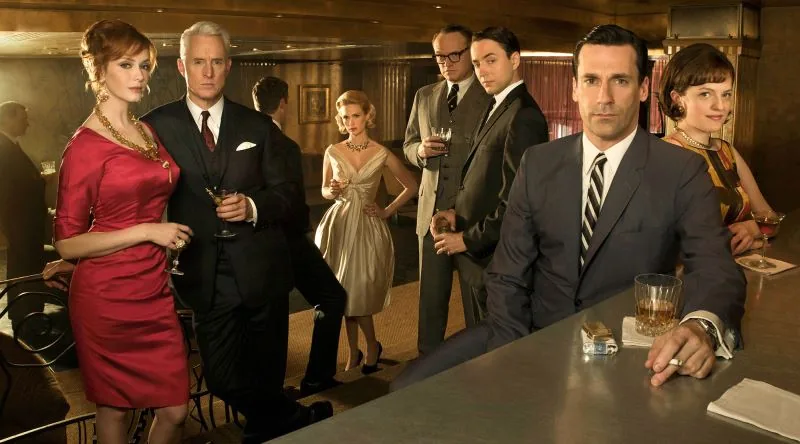
Mad Men 1960s norms, from relentless smoking and casual sexism to unchecked workplace harassment, are dramatized so vividly in the AMC series that they routinely shock modern viewers, even though the show's creators meticulously verified these behaviors against the historical record of New York City's advertising industry. Watching Don Draper light up in a hospital bed or Peggy Olson navigate a gauntlet of leering executives feels less like fiction and more like a time capsule that makes you grateful for the social progress of the last sixty years. The show's power lies in its refusal to flinch, forcing us to confront how recently these Mad Men behaviors normal in 1960s were simply part of the daily grind.
Mad Men depicts the casual sexism, heavy smoking, and routine harassment that defined white-collar American workplaces in the early 1960s. The show's creators based these scenes on documented accounts from the era, making the discomfort viewers feel today a direct measure of how much workplace culture has changed in the decades since.
- The series is set primarily in a Madison Avenue advertising agency in New York City, with its first season taking place in 1960.
- Characters smoke cigarettes in nearly every scene, including in offices, elevators, restaurants, and even hospital rooms, reflecting the era's widespread tobacco acceptance.
- Female secretaries are routinely subjected to unwanted physical advances and explicit comments from male executives, with no HR department or legal recourse available to them.
- Peggy Olson, a secretary who rises to copywriter, faces persistent condescension and must navigate a workplace that openly questions women's intellectual capabilities.
- The show's creator, Matthew Weiner, used archival materials and interviews with former advertising professionals to ensure the authenticity of these Mad Men 1960s norms.
Introduction: Why Mad Men Feels Like a Time Capsule
Mad Men, which aired on AMC from 2007 to 2015, drops viewers into the heart of 1960s America, and the workplace and social norms it portrays feel almost alien to modern eyes. Watching it today, you catch yourself doing a double take at behaviors that were once completely ordinary. The show doesn't just tell a story; it opens a window into a world where the rules of daily life operated very differently.
The series follows the lives of advertising executives on Madison Avenue in New York City, but its real subject is the culture surrounding them. Office scenes are thick with cigarette smoke, and the casual sexism is so pervasive it becomes background noise. Women navigate a landscape where their professional contributions are routinely dismissed, and their personal choices are scrutinized in ways that feel jarring to a contemporary viewer.
What makes the show so effective as a time capsule is its unflinching detail. A young woman asking for birth control faces judgment rather than medical advice. A wife needs her husband's permission to see a psychiatrist, and the doctor then reports her private sessions back to him. These moments aren't played for shock value; they're presented as the unremarkable fabric of everyday life in that era.
The social hierarchy is starkly visible in every interaction. Divorced women are treated as threats by their married neighbors. Black characters appear almost exclusively in service roles. An openly gay European visitor shocks his colleagues with his honesty, admired by one man for his courage while others call him a pervert behind his back. Each scene builds a picture of a society with rigid expectations and harsh judgments.
Perhaps most striking is how the show captures the emotional distance of the time. Parents are physically punitive and emotionally unavailable, leaving their children to grow up with visible trauma. An elderly secretary dies at her desk, and the office simply continues working around her. These details, rendered with quiet precision, show a world where personal struggles were private burdens rather than public conversations.
The contrast with today is stark enough that viewers often find themselves gasping at what was once accepted as normal. The show's power lies in making that historical distance feel tangible, one uncomfortable scene at a time.
Women's Bodies Were Not Their Own: Birth Control, Abortion, and Doctors
In the America of Mad Men 1960s norms, a woman asking her gynecologist for birth control pills could be accused of prostitution to her face. That is exactly what happens to Peggy Olson in Season 1, Episode 7, when the doctor refuses her request and lectures her as if she were a sex worker. The scene lands like a slap because it is so matter-of-fact: the man holds the prescription pad, the woman holds nothing.
Peggy's boss and colleague Don Draper, meanwhile, controls his wife Betty's access to mental health care entirely. When Betty, feeling unwell, is advised to see a psychiatrist in Season 1, she must first get Don's permission. He grants it, but the psychiatrist then reports every word of Betty's sessions back to Don without her knowledge or consent. Doctor-patient confidentiality simply does not exist for a married woman in this world; her body and her mind belong to her husband.
The pattern repeats when Betty becomes pregnant in Season 3 and tells her doctor she wants an abortion. He judges her openly, telling her that terminating a pregnancy is something only unmarried women who conceived by accident do, and pressures her to carry the baby to term. Her own feelings about her body are not part of the equation.
By Season 5, after Betty learns that a cancer scare is benign, her first thought is not relief about her health. It is worry about her weight. The show makes the point quietly but devastatingly: even a woman facing a potentially fatal illness has been trained to measure herself by the mirror first. The medical system around her, run by men, has spent years telling her that her appearance matters more than her wellbeing, and she has internalized every word.
The Office: Harassment, Sexist Jokes, and a Death That Didn't Stop Work
Walk into the Sterling Cooper office in the 1960s and the first thing you notice is the smoke. The second thing is how the men treat the women. Single women in particular were seen as fair game, and the men believed they could do just about anything to them. The women, in turn, had no real way to push back. Objecting openly meant risking their jobs, so they learned to smile, deflect, and carry on.
That dynamic plays out painfully in Season 1 when Joan and Peggy sit down with a pantyhose client. The conversation is supposed to be about stockings, but the men at the table keep cracking lewd, sexist jokes. Joan and Peggy have to sit there and take it. Neither of them can afford to snap back, because they clawed their way into those positions and a single wrong word could end it all. So they force polite smiles and steer the talk back to nylon.
The same office that demands that kind of endurance from its women also refuses to take them seriously. Men in the office genuinely believed women could only handle the simplest tasks. When a woman did land a tougher assignment, her suggestions were treated less like input and more like an insult to the men around her. It was a loop with no exit: women were given trivial work, then dismissed as capable of nothing more.
Then there is the day Miss Blankenship, the elderly secretary, dies right at her desk. In Season 3, she simply goes quiet mid-task, and the office keeps humming along as if nothing happened. People keep typing, keep talking, keep going about their business. It is Joan who steps in and arranges for the body to be removed, while everyone else carries on with the workday. The surreal normalcy of it captures something essential about the era: even death could not interrupt the machine, and it fell to a woman to handle the messy human reality everyone else preferred to ignore.
Marriage, Divorce, and Double Standards at Home
In the world of Mad Men 1960s norms, a man could stray as often as he liked, but a woman who dared to want out of her marriage was branded a whore. The Draper household ran on this crooked logic, and the show exposed it episode after episode. Don cheated on Betty constantly, yet when Betty finally admitted she loved someone else and asked for a divorce in Season 3, Don's response was to call her a whore. His infidelity was a private matter; her desire for freedom was a crime.
Betty's own lawyer reinforced the trap. When she sought legal advice about leaving Don, the lawyer told her not to divorce him, as long as he treated her well and earned good money. The law offered her no path to independence, only a recommendation to tolerate the lies for financial comfort. The message was clear: a woman's security mattered more than her dignity.
The same double standard followed Don into his second marriage. In Season 5, his wife Megan kissed an actor for a commercial, a routine professional move. Don exploded and called her a prostitute, even though he was the one cheating. A man's wandering eye was expected; a woman's scripted kiss was unforgivable.
Even outside the Draper home, the rules stayed twisted. In Season 1, Don's boss Roger Sterling made advances toward Betty, and when she tried to navigate the awkwardness, Don blamed her for flirting. The man who made the pass faced no consequences, while the woman who endured it became the accused. And in the neighborhood, a divorced woman like Helen Bishop was treated as a threat by the other wives, who saw her as a predator eyeing their husbands. A woman alone was dangerous, simply for existing.
Smoking, Racism, and Homophobia: Everyday Prejudices
The Mad Men 1960s norms are nowhere more jarring than in the smoke-filled air of every office, restaurant, and living room in the show. Everyone lights up constantly, and pregnancy barely slows anyone down. Betty Draper, pregnant in Season 3, still has a cigarette in hand, a sight that would stop traffic today but barely raised an eyebrow back then. The ashtrays were always full, the air always hazy, and nobody thought twice about a mother-to-be puffing away.
Race relations on the show are just as stark. Black characters appear almost exclusively in service roles, running errands or fetching things for white bosses. In one telling moment, Roger Sterling's Black girlfriend is mistaken for a servant by Don's daughter, Sally. The child simply cannot imagine any other reason a Black woman would be standing in a white man's home. Nobody corrects her assumption quickly enough, and the awkwardness hangs there, exposing how deeply segregation had shaped even the most innocent minds.
In Season 2, a gay European client walks into the office and openly states his sexuality. The room freezes. Salvatore Romano, the Italian art director who has been hiding his own truth, quietly admires the man's courage. But the moment the client leaves, the other men start muttering, calling him a pervert behind his back. The contrast between Sal's silent respect and the others' casual cruelty captures the era's homophobia perfectly.
Children in the show rarely get warmth from their parents. Don and Betty Draper keep their kids at arm's length, dispensing orders and punishments rather than hugs. Physical discipline is routine, and the emotional distance leaves their children visibly damaged. Sally Draper especially grows up anxious and desperate for affection, a direct result of parents who saw children as furniture to be managed rather than people to be nurtured.
By the later seasons, as the 1970s creep in, the show lets some of these attitudes soften. Divorce becomes less scandalous, Black characters start appearing in professional roles, and the smoking finally begins to fade. But the early seasons capture a world where these prejudices were simply the air everyone breathed, as ordinary and unexamined as the cigarette smoke itself.
Frequently asked questions
How did Mad Men depict workplace sexism in the 1960s?
Men in the office harassed single women freely and expected them to tolerate it without complaint. When Joan and Peggy discussed stockings with a pantyhose client in Season 1, the men made lewd sexist jokes and the women had to ignore them to protect their positions.
Did pregnant women really smoke in Mad Men?
Yes, smoking was so pervasive that even pregnant women lit up constantly, with Betty shown smoking while pregnant in Season 3. The show reflects an era when tobacco was heavily marketed and its health risks were widely downplayed or unknown.
How did Mad Men show the lack of privacy in marriages?
Betty needed her husband Don's permission to see a psychiatrist, and the doctor reported her session details back to Don without her consent. This arrangement treated the husband as the authority over his wife's medical care and personal thoughts.
What happened when Peggy Olson asked for birth control in Mad Men?
In Season 1, Peggy's doctor refused to prescribe birth control and accused her of being a prostitute for asking. The scene captures how single women faced moral judgment from medical professionals for seeking contraception.
How were divorced women treated in Mad Men's 1960s setting?
Divorced women were stigmatized, with Helen Bishop in Season 1 treated as a threat by neighborhood wives who feared she might pursue their husbands. Her mere presence unsettled everyone, though later seasons show divorce becoming more accepted as the show moves into the 1970s.
How did Mad Men handle LGBTQ themes?
A gay European client in Season 2 openly announced his sexuality, shocking colleagues who called him a pervert behind his back after he left. Salvatore Romano, a closeted art director, privately admired the man's courage while hiding his own identity.
What did Mad Men show about parenting in the 1960s?
Parents remained emotionally distant and preferred scolding and physical punishment over showing affection, leaving children to grow up with trauma. The show presents this as the standard approach rather than an exception.
How did Mad Men portray the double standard around infidelity?
Don cheated on Betty repeatedly without consequence, but when Betty wanted a divorce because she loved another man, Don called her a whore. Later, when his second wife Megan kissed someone for an acting role, Don called her a prostitute, while his own affairs continued.
Got a take on this? Add your voice to the conversation below →
No comments yet. Be the first.