Learning Styles Myth: Why It Persists Despite 2004 Debunking
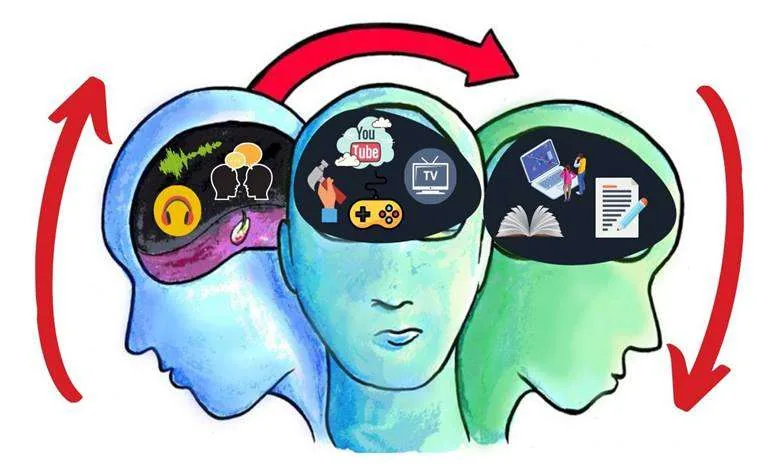
The learning styles myth, the idea that students learn best when taught in their preferred visual, auditory, or kinesthetic mode, has been thoroughly debunked by research, yet it still shapes classrooms worldwide. For years, researchers have shown that matching instruction to a student's self-reported style makes no difference to learning outcomes, and the persistence of this neuromyth costs time, money, and genuine educational progress. The story of how a well-meaning but unproven theory outlived its own refutation is a cautionary tale about intuition, marketing, and the slow crawl of science into practice.
Research has found no scientific evidence that matching teaching to a student's preferred learning style improves outcomes. Despite this ongoing debunking, the learning styles myth remains widespread in schools and teacher training programs. Evidence-based strategies like spaced practice and retrieval testing work far better than style-based instruction.
- Comprehensive reviews have found no empirical support for the learning styles hypothesis, concluding that matching instruction to preferred style does not enhance learning.
- Despite the debunking, surveys show that over 90 percent of teachers in multiple countries still believe in learning styles, and the theory appears in most teacher education textbooks.
- The myth persists partly because of the Hawthorne effect, where students perform better simply because they receive personalized attention, not because the style matching works.
- Researchers have offered cash rewards to anyone who could demonstrate a measurable benefit from style-based instruction, and no one has ever claimed the prize.
- Evidence-based alternatives such as retrieval practice, interleaving, and spaced repetition have repeatedly shown stronger learning gains than style-based approaches.
What Are Learning Styles, Really?
Learning styles theory holds that each person takes in, processes, and recalls information differently, and that teaching to those preferences makes learning more effective. The idea usually sorts people into three buckets: visual learners who thrive on images, diagrams, and graphs; auditory learners who absorb information best by listening; and kinesthetic learners who learn through doing and hands-on experience.
It sounds reasonable enough. The core assumption, though, is that tailoring instruction to a student's preferred style boosts their results. That's where the whole framework falls apart. Decades of research have failed to show that matching lessons to a student's style actually improves outcomes. The brain simply doesn't process information in neat, separate channels. It's far too interconnected for such sharp categories, which is why many researchers now treat the learning styles myth as more of a comfortable story than a scientific reality.
Yet the belief persists stubbornly. Surveys conducted in the UK and the Netherlands found that over 90% of teachers endorse the concept. In one study, more than 60% of teachers said they believed that teaching according to students' learning styles makes learning easier. That's a striking number for an idea with so little empirical support behind it.
Why Do So Many Teachers Still Believe?
Walk into almost any staff room in the UK or the Netherlands and you will find true believers: surveys published in Frontiers in Psychology in 2013 found that 93 to 96 percent of teachers endorse the idea of learning styles. That staggering number has barely budged despite years of debunking, which tells you this myth runs on something far stronger than evidence.
So what keeps it alive? For starters, the theory sounds scientific. It borrows the vocabulary of neuroscience, and people instinctively trust anything wrapped in brain-related terminology. That veneer of credibility does a lot of heavy lifting.
There is also something deeply human at play here. People like being sorted into categories. Calling yourself a "visual learner" or an "auditory learner" gives you a neat little identity, a tribe to belong to. It validates the feeling that you are unique, that your brain works in its own special way. That emotional pull is hard to argue with, even when the science says otherwise.
Then there is the money. A whole commercial ecosystem has grown up around learning styles, churning out books, tests, and classroom materials. That industry has a vested interest in keeping the myth alive, and it has done a spectacular job of it.
Teachers themselves add fuel to the fire with anecdotal reports. They try a "kinesthetic" activity, see improvement in their students, and conclude the theory works. But as the story goes, that improvement may just be the Hawthorne effect, the boost you get from any change, regardless of whether the change itself is meaningful.
For the record, the debunking was not a single dramatic event. It was a gradual process, with the most definitive review arriving in 2008. And contrary to the popular version, no standing cash reward has been waiting unclaimed since 2004. The only known challenge was a personal $10,000 offer made by psychologist Daniel Willingham around 2010, reportedly, to anyone who could prove learning styles work. No one has collected it yet.
Why Believing in Learning Styles Can Hurt Students
The damage starts the moment a student picks up a label. A teenager who decides she is a "visual learner" starts turning down chances to learn by listening, by moving, by doing, because none of those match her self-image. She is not protecting a strength; she is quietly shutting doors on her own development.
Teachers who embrace the learning styles myth do their students no favors either. When an instructor sorts a classroom into visual, auditory, and kinesthetic boxes and teaches each group accordingly, everyone involved gets a warm feeling of progress. That feeling is often an illusion. The real work of education, the slow grinding through deep thinking and problem-solving, gets pushed aside in favor of matching activities to supposed preferences. Both students and teachers end up congratulating themselves for a system that has no evidence behind it.
Part of what keeps the myth alive is anecdotal evidence. A teacher tries a new method tailored to a student's declared style, sees improvement, and takes it as proof. But that improvement may have nothing to do with the style match at all. Psychologists call this the Hawthorne effect: when people know they are being observed or when something changes in their routine, they often perform better simply because of the novelty and attention, not because of the specific nature of the change. The new colorful diagram or the fresh audio lesson might work not because it fits a "visual" or "auditory" brain, but because it is new and the student is suddenly being paid attention to.
The label itself becomes a limit. Surveys conducted in the UK and the Netherlands found that more than 90% of teachers believe in learning styles, and according to some reports, over 60% think teaching to a student's style makes learning easier. Yet the science does not back them up. The brain does not process information through such neat, separate channels, and the more researchers look, the more the categories blur. Believing in the myth does not just waste time; it actively narrows what students try, what teachers attempt, and what both sides think is possible.
What Works Instead? Evidence-Based Teaching
Real learning happens when students actively wrestle with ideas, think critically, and engage meaningfully with the material, not when teachers sort them into visual, auditory, or kinesthetic boxes. The learning styles myth persists largely because it feels intuitive, but the evidence simply is not there to support tailoring lessons to a child's supposed style. What deserves our attention instead is teaching grounded in what cognitive science actually shows us about how brains take in and retain information.
Here is the uncomfortable part: surveys conducted in the UK and the Netherlands found that more than 90% of teachers believe in learning styles. That is an astonishing number for a theory with so little empirical support. The belief is so entrenched that it has survived decades of scrutiny, even as researchers have repeatedly pointed out that the brain does not process information in neatly separated channels. The way we learn is far more interconnected, drawing on multiple senses and cognitive processes simultaneously.
Part of the myth's staying power comes from how it feels to hear it. Neuroscience-flavored explanations carry an automatic credibility, even when the underlying claim has not been proven. People want to feel seen in their individuality, and the promise that "you are a visual learner" offers a tidy label that validates personal experience. It also feeds a genuine and healthy desire for individualized education, which is real and important. But the conclusion drawn, that instruction must match a fixed style, does not follow from the evidence.
What does follow? That teaching should be built on strategies with demonstrated effectiveness: active participation, critical thinking, and meaningful interaction with the material. These are not flashy or new, but they are the approaches that consistently show up in research as making a difference. The goal is not to abandon individual attention, but to base it on something real, not on a myth that has been debunked for years.
Educators deserve better than a framework that feels good but does not hold up. The learning styles myth asks teachers to invest time and energy in categorizing students in ways that do not improve outcomes. The alternative asks them to focus that energy on the hard, rewarding work of helping students think deeply and engage fully. That is where the real gains are, and that is where our collective attention should go.
Frequently asked questions
What is the learning styles myth?
The learning styles myth is the widespread but scientifically unsupported belief that people learn best when teaching matches their preferred sensory modality, typically categorized as visual, auditory, or kinesthetic. Research has consistently failed to show that matching instruction to a student's declared style improves outcomes, making this a neuromyth rather than an evidence-based teaching principle.
Why do teachers still believe in learning styles?
Surveys conducted in the UK and Netherlands found that 93-96% of teachers endorse the learning styles concept. The idea persists partly because it feels intuitive, partly because it validates individual differences, and partly because a substantial commercial industry of books, tests, and training materials keeps promoting it. The packaging also borrows neuroscience-sounding language that makes the claims seem credible.
Was there a cash reward for proving learning styles work?
No standing cash reward exists. Contrary to claims of an ongoing prize since 2004, the only known offer was a personal challenge by psychologist Daniel Willingham around 2010, who reportedly put up $10,000 for anyone who could demonstrate that matching instruction to learning styles improves outcomes. That specific challenge went unclaimed, but no perpetual reward fund was ever established.
How can the learning styles myth harm students?
When students label themselves as "visual learners," they may refuse to engage with auditory or kinesthetic material, limiting their own development. Teachers who tailor lessons to perceived styles risk neglecting other effective approaches, and both parties develop a false sense of success. The labels can also prevent students from building skills in areas where they feel weaker, locking them into narrow learning habits.
What is the Hawthorne effect?
The Hawthorne effect describes how people improve simply because they know they are being observed or because something new has changed, not because the change itself works. Teachers who see improvement after adopting learning styles methods may actually be witnessing this effect, where novelty and attention boost motivation temporarily rather than the specific approach producing real gains.
Are there evidence-based alternatives to learning styles?
Yes. Active participation, critical thinking exercises, and meaningful interaction with the material have stronger research support than matching content to a preferred sensory style. The most definitive review of learning styles research was published in 2008, and since then, educators have been encouraged to focus on strategies like retrieval practice, spaced repetition, and varied multimodal instruction rather than pigeonholing students into fixed categories.
Got a take on this? Add your voice to the conversation below →
No comments yet. Be the first.