Krzysztof Kieślowski: The Three Colours Master
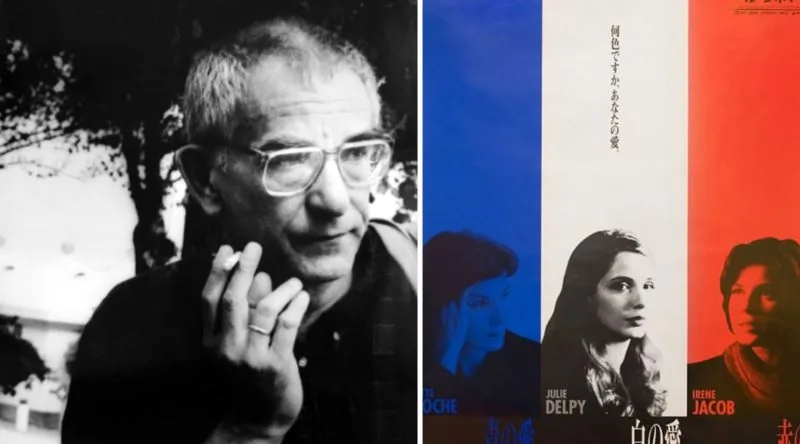
Krzysztof Kieślowski was a Polish film director who died in Warsaw on 13 March 1996, at the age of 54, just as international acclaim for his Three Colours trilogy was reaching its peak. He had spent decades documenting ordinary lives before turning to fiction, and the films he made in his final years turned quiet, private dilemmas into something audiences everywhere recognized. His death came during heart surgery, shortly after he had announced his retirement from filmmaking. He left behind a body of work that still shapes how directors think about moral choice, chance and the small moments that decide a life.
Krzysztof Kieślowski was a Polish director known for Dekalog and the Three Colours trilogy. He died in Warsaw in March 1996 during heart surgery, shortly after announcing his retirement. His films, often written with Krzysztof Piesiewicz, explore chance, ethics and everyday life.
- Krzysztof Kieślowski studied theatre technology in Warsaw and graduated from the State Theatre and Film College in Łódź in 1968.
- He began his career making documentaries about Polish working life in the 1970s, many of them for Polish television.
- Dekalog, his ten-part series loosely based on the Ten Commandments, was made for Polish television and released in 1988 and 1989.
- The Three Colours trilogy, Blue, White and Red, was released in 1993 and 1994, with Red earning Kieślowski an Academy Award nomination for Best Original Screenplay.
- He died in Warsaw on 13 March 1996 at the age of 54, during surgery following a heart attack.
The Polish Filmmaker Who Turned Moral Questions Into Cinema
Krzysztof Kieślowski did not arrive in film through the front door. Before he ever stood behind a camera on a professional set, he studied theatre technology in Warsaw, learning how stages are built rather than how stories are told. That detour ended in 1968, when he graduated from the State Theatre and Film College in Łódź, the school that would shape a generation of Polish directors.
His earliest work was documentary, and much of it was made for Polish television while he was still a student. That grounding matters. Kieślowski learned to watch real people in real rooms before he ever asked an actor to pretend.
By 1973 he had made Murarz (The Bricklayer), a documentary about a former political activist who walked away from politics and returned to laying bricks. It was the first film of his that carried real weight. Three years later came Szpital (Hospital, 1976), shot partly with a hidden camera, turning its lens on the daily failures and pressures inside the Polish healthcare system. In 1979 he released Z punktu widzenia nocnego portiera (From a Night Porter's Point of View), a short portrait of a night watchman whose worldview leaned unmistakably toward authoritarianism.
His move into fiction kept the same moral pressure. Blizna (The Scar, 1976) was his first theatrical release, built around the friction between management and labor in Polish industry. Then Amator (Camera Buff, 1979), a nearly autobiographical story about an amateur filmmaker discovering what his own artistic expression costs him, brought him attention far beyond Poland.
Today Kieślowski stands among Europe's most influential directors, and his films are studied in university courses around the world. The path there started quietly, in a theatre technology classroom, with a student who had not yet picked up a camera.
From Hidden Cameras to Murarz: The Documentary Years
In 1973, Krzysztof Kieślowski finished a short film about a man who had once been a political activist and then walked away from all of it to lay bricks again. The film was called Murarz, or The Bricklayer, and it was the first time audiences sat up and noticed what this young filmmaker from Łódź was actually doing. He wasn't chasing spectacle. He was watching people.
That instinct carried straight into the rest of the decade. Kieślowski spent the 1970s making documentaries, most of them for Polish television, and the subjects he chose tell you everything about where his mind was. In 1976 he shot Szpital, or Hospital, and he did it partly with a hidden camera. The film followed the daily grind of Polish medical staff and laid bare the cracks in the healthcare system they were working inside. You can feel the tension in every frame: the camera is there, but nobody on screen is performing for it.
Three years later came Z punktu widzenia nocnego portiera, or From a Night Porter's Point of View. The subject was a night watchman, an ordinary man with a job that barely registers, and yet his worldview was rigidly authoritarian. Kieślowski pointed the lens at him and let him talk. The result is one of the most unsettling portraits of the period, precisely because the man is so calm about what he believes.
This is the laboratory where the later fiction was built. The patience, the moral pressure, the refusal to look away: all of it was already there in these short television films, long before the features that made him famous around the world.
Blizna, Camera Buff, and the Turn to Fiction
In 1976, Krzysztof Kieślowski released Blizna (The Scar), his first theatrical feature. The film turns on management-labor relations inside Polish industry, with a factory manager trying to hold a workplace together while the people under him push back. After years of short documentaries, Kieślowski had made the leap to cinema screens.
Three years later came Amator (Camera Buff), released in 1979, the film that brought him worldwide attention. It follows an aspiring documentary filmmaker who discovers, slowly and painfully, what artistic expression actually costs. The story is openly autobiographical: a man behind a camera learning that every frame he shoots has consequences he never planned for.
Then came the film that nearly vanished. Przypadek (Blind Chance) was made in 1981, but it was shelved, and audiences did not see it until 1987. The premise is a single moment stretched into three lives: a medical student races to catch a train, and the film traces three possible directions his life could take from that one sprint to the platform. It marked Kieślowski's full move into narrative experiments, where chance, not documentary observation, drove the story.
That shelving turned out to be a hinge. Kieślowski kept working through the decade, and in 1985 he released Bez końca (No End), the story of a dead lawyer watching over his family as they carry on. It was written with Krzysztof Piesiewicz, and it began the long collaboration that would define the rest of his career.
The Piesiewicz Partnership and the Dekalog
In 1985, Krzysztof Kieślowski released Bez końca (No End), a film about a dead lawyer watching over his family as they try to keep living. It was also the moment his partnership with the lawyer and screenwriter Krzysztof Piesiewicz began. The two men would go on to write almost everything that followed, and their collaboration reshaped what Kieślowski was capable of.
What came next was Dekalog (Decalogue), a television series produced in 1988 and 1989 for Polish television and loosely inspired by the Ten Commandments. Each of the ten hour-long episodes focused on one commandment, but the commandments were never named aloud. Viewers were left to identify the moral or ethical conflict in the story for themselves. It was an unusual gamble for television, and it became one of the most ambitious things Kieślowski ever made.
The series was shown at the 1989 Venice Film Festival, though reports that the full series was a headline event there are contested. As the story goes, some episodes were screened at Venice in 1989, but it could not be confirmed that the entire series was presented as a major event. What is certain is that two episodes were expanded into feature films: A Short Film About Killing and A Short Film About Love, both released in 1988.
These two features carried the moral weight of the series into cinemas, where audiences who had never seen the television version could encounter Kieślowski's questions about violence, desire, and consequence. The collaboration with Piesiewicz gave him a writing partner who could match his obsessions, and the Dekalog became the bridge between his earlier documentary work and the international features that would follow.
The Double Life of Véronique and the Three Colours Trilogy
In 1991, Krzysztof Kieślowski released La double vie de Véronique, known in English as The Double Life of Veronique, and it landed on both sides of the ledger that usually divides filmmakers. Critics adored it. Audiences filled the seats. For a director who had spent two decades working mostly in Polish documentary and television, the international embrace was something new.
The film follows two women, one Polish and one French, who seem to share a soul across a border neither of them can name. It is a movie about intuition, about the strange feeling that you are not entirely alone inside your own life. That mood carried straight into what came next.
Kieślowski and his writing partner Krzysztof Piesiewicz built their next project around the French flag itself. Three Colours: Blue arrived in 1993. Three Colours: White followed in 1994, and Three Colours: Red closed the set the same year. Blue for liberty, white for equality, red for fraternity, the three ideals stitched into the fabric of the French Republic and now into three separate films.
The release schedule was tight. The films came out only a few months apart, close enough that audiences could feel the connections between them while each still worked as a complete story on its own. That was the design. You could watch Blue and walk away satisfied, or you could watch all three and notice how they quietly spoke to each other.
The thread running underneath all of them was the fragility of human connection. It starts with a solitary awakening in Blue, moves through the dry, cutting humor of White, and finally opens into something like symbolic illumination in Red. Three colors, three moods, one emotional arc.
This was the peak. The trilogy cemented Krzysztof Kieślowski as one of the most influential directors in Europe, and his work is still studied in film courses around the world. Red earned him an Academy Award nomination for Best Original Screenplay, shared with Piesiewicz, a recognition that surprised many who had assumed the Academy would overlook a Polish director working in French.
What almost nobody knew was that he had been announcing his retirement from filmmaking for years, on and off, as if testing whether he meant it. Then, at the moment of his greatest visibility, he was already planning the next thing.
The Oscar Nomination, the Sudden Death, and the Films That Outlived Him
When the Academy Award nominations were announced for the film Red, Krzysztof Kieślowski's name appeared in the Best Original Screenplay category, shared with his longtime writing partner Krzysztof Piesiewicz. Contrary to the popular version of the story, he was not nominated for Best Director. The screenplay nod was the American film industry's formal acknowledgment of a filmmaker who had spent two decades working largely outside its orbit.
He had been announcing his retirement from filmmaking for years, and he meant it more seriously each time. But he never actually stopped. At the moment of his death, he and Piesiewicz were at work on a new trilogy drawn from Dante's The Divine Comedy: Heaven, Hell, and Purgatory.
Kieślowski died on March 13, 1996, at the age of 54. The cause was a heart attack during open-heart surgery. Less than two years had passed since he had stepped back from directing, and the trilogy existed only as a plan.
He was buried in Powązki Cemetery in Warsaw. The grave carries a sculpture of two hands, thumb and index finger of each meeting to form a rectangular opening, as if framing a shot.
What happened to the trilogy he never filmed?
Piesiewicz kept writing. Heaven reached screens in 2002, directed by the German filmmaker Tom Tykwer from a screenplay by Kieślowski and Piesiewicz. L'enfer followed in 2005 under director Danis Tanović, and Nadzieja arrived in 2007, directed by Stanisław Mucha.
Piesiewicz is said to have completed screenplays for all three parts, though they were not ultimately filmed as a single unified trilogy across that decade. What survives instead is a set of three separate films, each carrying a piece of the idea forward without the man who conceived it.
Frequently asked questions
Who was Krzysztof Kieślowski and what films did he direct?
Krzysztof Kieślowski was a Polish filmmaker who studied theatre technology in Warsaw and graduated from the State Theatre and Film College in Łódź in 1968. His major films include Blizna (1976), Amator (1979), Bez końca (1985), Dekalog (1988 to 1989), La double vie de Véronique (1991), and the Three Colours trilogy: Blue (1993), White (1994), and Red (1994).
What is the Three Colours trilogy about and what do the colours represent?
The Three Colours trilogy, written with Krzysztof Piesiewicz, maps the colours of the French flag onto three films, each exploring a different ideal: Blue (1993) for liberty, White (1994) for equality, and Red (1994) for fraternity. Each film stands alone, yet together they form a single emotional arc about the fragility of human connection.
How did Kieślowski's documentary background influence his later feature films?
Kieślowski spent the 1970s making documentaries for Polish television, often with a hidden camera, as in Szpital (1976), which exposed problems in the Polish healthcare system. That instinct for observing real people under pressure carried directly into his features, from Blizna to Amator , and shaped his later fiction's quiet, watchful intimacy.
Why did Kieślowski make the Dekalog series for Polish television?
Dekalog (1988 to 1989) was made for Polish television as a ten-part series loosely inspired by the Ten Commandments. Each episode focuses on one commandment without ever naming it, inviting viewers to identify the moral conflict themselves. Two episodes were later expanded into features: A Short Film About Killing and A Short Film About Love , both released in 1988.
What was Kieślowski's relationship with screenwriter Krzysztof Piesiewicz?
Their collaboration began with Bez końca (1985), a story about a dead lawyer watching over his family, and continued through Dekalog , La double vie de Véronique , and the Three Colours trilogy. At the time of Kieślowski's death, the two were working on a new trilogy inspired by Dante's The Divine Comedy .
How did Kieślowski die and where is he buried?
Kieślowski died on March 13, 1996, at age 54, from a heart attack during open-heart surgery. He is buried in Powązki Cemetery in Warsaw. His grave features a sculpture of two hands, thumb and index finger forming a rectangular opening, a frame that echoes his lifelong obsession with looking through a lens.
What films were based on Kieślowski's scripts after his death?
Three films were made from scripts Kieślowski co-wrote with Piesiewicz: Heaven (2002), directed by Tom Tykwer; L'enfer (2005), directed by Danis Tanović; and Nadzieja (2007), directed by Stanisław Mucha. These three titles echo the Heaven, Hell, and Purgatory structure the pair had planned before Kieślowski died.
Was Krzysztof Kieślowski nominated for an Academy Award?
Yes. Kieślowski received an Academy Award nomination for Best Original Screenplay for Red , shared with his co-writer Krzysztof Piesiewicz. Contrary to a common misconception, the nomination was not for Best Director. Editorial note: Details that remain unconfirmed or contested are presented here as such, and readers should treat any hedged claim as open to further verification.
Got a take on this? Add your voice to the conversation below →
No comments yet. Be the first.