Kibar Feyzo: Turkey's Sharpest Feudal Satire
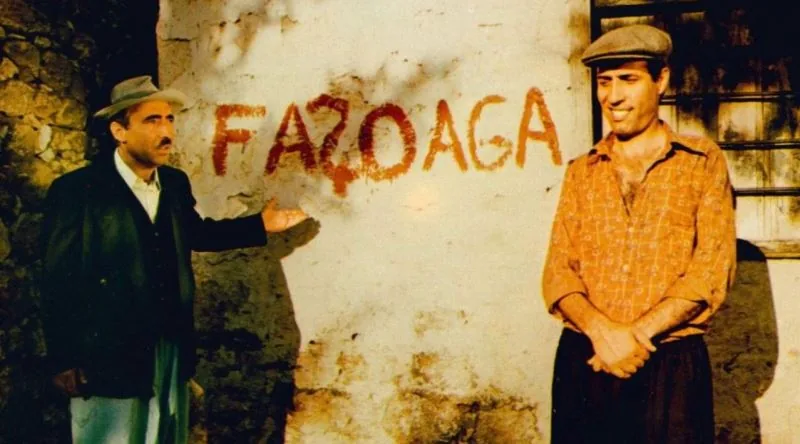
Kibar Feyzo, the Kemal Sunal classic, is Turkish cinema's sharpest attack on feudalism, bride price, and the agha system, set in a Harran village. It follows a poor villager whose quest to marry spirals into a one-man rebellion against a landowner who controls everything, including the right to wed. The film's blend of slapstick and searing social critique has kept it vital for decades, and its final act still stings with relevance today.
Kibar Feyzo tells the story of a poor villager in a Harran village who must pay an impossible bride price to a feudal landlord. The film uses comedy to expose how the agha system trapped workers in debt and dependency. Its ending, which turns tragic, remains a bold statement against unchecked power.
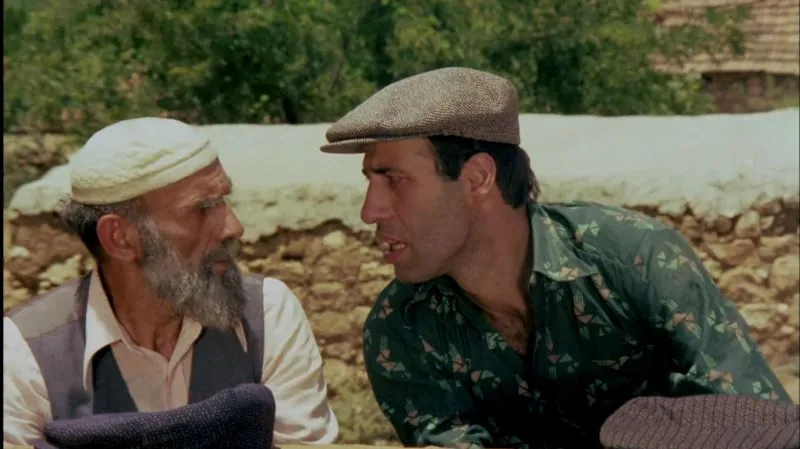
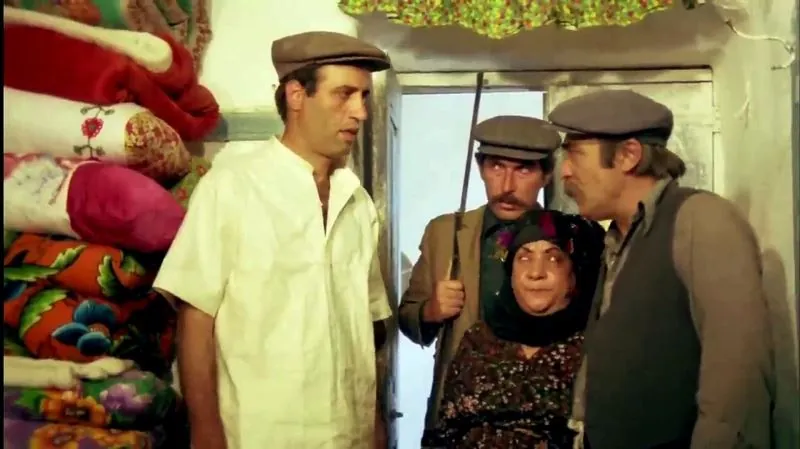
- Kemal Sunal stars as Feyzo, a naive but determined villager whose wedding plans are blocked by the local agha.
- The story unfolds in a Harran village, a region historically associated with large feudal estates.
- The character Maho Agha represents the feudal landlord class, controlling land, labor, and local marriages.
- The film's ending delivers a pointed political statement that transforms the comedy into something darker.
The Opening Scene That Sets the Stage
Kibar Feyzo stands as one of Turkish cinema's sharpest political and sociological critiques, a film that cuts straight to the bone of feudal oppression. The story opens on the Harran plain, a region defined by its vast, flat horizon and its iron grip of feudal landownership. Two villagers, returning from their military service, sprint across that dusty landscape, their feet pounding the earth as they race back toward home. They are not running for the joy of reunion alone. Each man has a specific goal burning in his chest: to buy the woman he loves.
In this world, love is not a matter of the heart but of transaction. Before any marriage can happen, the agha, the local feudal lord who holds power over the village, must give his blessing. The returning men understand this instinctively. They present themselves to the agha, offering gifts to secure his approval, because in that village economy, owning anything, even a wife, requires the master's nod. Feyzo, however, stands apart from the very first moment. His gift is different from the others, a small but telling detail that hints at his unwillingness to follow the expected pattern. The film's opening makes this clear from the start, as Feyzo stands before a judge and declares, "her şeyin başı fukaralıktır," poverty is the root of everything. That single sentence sets the stage for a story about what happens when a man who has nothing begins to question why that must be so.
Buying Gülo: Bride Price and the Promissory Note
In the village where Kibar Feyzo unfolds, a woman's only value is the bride price, the başlık parası, she can bring. Feyzo wants Gülo, and in this world that means a transaction, not a courtship. He pays for her, but the price of the demanded commodity has increased, and Feyzo can't hand over that much cash on the spot. So he signs a promissory note, a senet, to cover the difference.
That piece of paper changes the nature of their marriage. Until every installment is paid, Feyzo doesn't truly own Gülo. He only holds the usage rights, like a commodity, until the payments are finished. The arrangement is cold, transactional, and entirely normal in this feudal setup. The film uses this arrangement to lay bare how the bride price tradition works as a tool of control, keeping landless farmers like Feyzo permanently indebted to the landlord class.
Getting to the point of signing that note was its own battle. Before Feyzo could marry Gülo, he had to get past her mother. It wasn't easy to get the girl; to overcome the bride price obstacle, he first had to get past her mother. Feyzo's strategy mixes bribery with playing mad. He gets what he wants, a small, sly victory that shows Feyzo's cleverness, even as it highlights how absurd the whole system is.
Istanbul Lessons: Workers' Rights and a Changing Mind
Feyzo's escape hatch from the agha's grip turns out to be a trip to Istanbul. With his family's life depending on paying those notes on time, the young villager starts shuttling between the Harran plain and the big city, over and over, each trip funded by whatever day labor he can find.
He arrives uneducated, a man who has only ever known the agha's word as law. But Istanbul does something to him. On construction sites and in crowded worker cafes, he hears talk that simply does not exist back home. Workers' rights. Strike rights. Fair wages. Unionization. The words land on him like rain on dry soil.
Just as striking, he meets women in the city who carry themselves differently. They speak their minds. They walk with purpose. Nobody owns them. In his village, a woman's value is measured in bride price, pure and simple. In Istanbul, he starts to understand that women have worth beyond what they can be sold for. The contrast is dizzying.
Every return to the village carries a little more of that city spark in his chest. He begins to see Maho Agha's authority for what it is: a system built on keeping people ignorant and afraid. The walls he once accepted without question now look like cages.
Then comes the wedding that cracks everything open. Feyzo stumbles upon a ceremony where the bride price has been abolished entirely. Women can be taken "for free," as the saying goes there. No bargaining. No promissory notes. No treating a daughter like livestock at market. For a man drowning in debt from buying his own wife, the news hits like a physical blow. If that village can do it, why not his?
Each Istanbul lesson piles onto the last, and the quiet villager who once offered a fan as tribute to his agha starts to feel something dangerous: the certainty that the order he was born into is not the only order possible. The spark has been lit, and no amount of falaka will snuff it out.
The Rebellion, Falaka, and a Desperate Act
Back in the village of Harran, Feyzo starts rubbing out political slogans scrawled on walls, and somewhere in the process of erasing those words, the meanings behind them begin to sink in. He is no longer the same man who returned from military service eager to buy his bride. Each trip he made to Istanbul had planted something new in him, ideas about workers' rights, about wages, about the value of a woman. Now those ideas are sprouting, and the agha's grip on the village is about to be tested.
The villagers, with Feyzo at the front, launch their rebellion with drums and zurnas filling the dusty air. But the noise is braver than the people making it. They lack the confidence to truly defy the agha, that towering figure who controls every plot of land and every marriage contract in sight. In the front row stands Feyzo's mother, but she remains a traditional and submissive figure, a woman shaped by the very system they are trying to break. The courage to speak up belongs to others, not to her.
The agha does not tolerate insurrection for long. He crushes the rebellion with falaka, the brutal corporal punishment where soles of feet are beaten, and Feyzo finds himself forbidden from ever returning to Istanbul. That door slams shut, the very door that led to wages and learning. With no way to earn money, Feyzo spirals into desperation. His bride price debt hangs over him like a blade, and in a moment of sheer panic, he decides to sell his newborn daughter to settle what he owes. He cannot go through with it. The thought dissolves the moment it meets his eyes.
That failed sale reveals something crucial about Feyzo's fight. This is not true enlightenment, not a genuine awakening to justice and equality. It is simply a challenge to the existing power structure, a rebellion against the agha rather than against the system that created the agha. He wants to change who holds the whip, not abolish the whip itself. The fire he lit with those drums and zurnas has not gone out, but it burns with confusion as much as conviction.
The Killing and the Final Question: "Who Is Guilty?"
The villagers finally break. Tired of Maho Agha's threats to "sell the village," they realize something crucial: the agha is nothing without them. So they pack up and start walking away. When Maho Agha rushes to stop them, Feyzo shoots him dead on the spot. That single bullet sends the story hurtling toward its unforgettable courtroom finale.
What happens next is the film's sharpest twist. Feyzo stands before the judge, ready to accept his punishment, and learns that another agha has already taken over his village. The people traded one master for another. In that moment of devastating clarity, Feyzo asks the question that gives the film its sting: "Who is guilty?" He has killed a man, yet the system that created Maho Agha simply produces a replacement. The judge has no answer, and neither does the audience.
Kibar Feyzo packs its political punch through layers of cultural reference. The script weaves in the Turkish Constitution, a Nazım Hikmet poem about women's rights, and even echoes the chorus structure of ancient Greek theater, where the villagers speak and react as one collective voice. These aren't decorative flourishes; they ground Feyzo's personal struggle in a much larger conversation about power, law, and who gets to write the rules.
Yet for all its weight, the film never forgets to be funny. The satire gives popular culture lines that people still quote decades later: "ağaya beleş" (free for the agha), "kovir misin ağam" (would you roll it over, my agha), and "ağam benle eğlenir" (my agha jokes with me). The humor makes the critique go down easier, but it never dulls the edge. By the final frame, the laughter fades and only that question remains hanging in the air, unanswered, as relevant today as the day the film was made.
Frequently asked questions
What is Kibar Feyzo about?
Kibar Feyzo is a Turkish satire following a poor villager named Feyzo who returns from military service to the Harran plain and rebels against the feudal agha system after learning about workers' rights during trips to Istanbul. The film uses comedy to expose how bride price traditions and debt keep peasants trapped under landlord control.
Who is Maho Agha?
Maho Agha is the oppressive landlord in Kibar Feyzo who controls villagers through inflated bride prices, promissory notes, and physical punishment. He demands gifts and loyalty before allowing anyone to marry or own property. His power rests entirely on the villagers' submission, which becomes clear when he threatens to sell the village itself.
Why is Kibar Feyzo considered a political film?
Kibar Feyzo critiques feudalism, bride price customs, and class oppression through a sharp satirical lens. The screenplay weaves in references to the Turkish Constitution, a Nazım Hikmet poem about women's rights, and even the chorus structure of ancient Greek theater. These elements elevate the village drama into a broader statement about how power operates in rural Turkey.
What does the ending question "suç kimde" mean?
"Suç kimde" translates to "who is guilty?" and it is Feyzo's desperate question to the judge in the final courtroom scene. After killing Maho Agha, Feyzo learns that another agha has already taken over his village. He asks the court to decide whether the blame lies with him or with the system that pushed him to murder.
How does Kibar Feyzo critique the bride price tradition?
The film shows how Maho Agha artificially inflates bride prices and forces grooms to sign promissory notes, keeping families permanently in debt. Feyzo must pay installments for his wife Gülo just as he would for any commodity, and he only gains full rights to her after completing payments. The tradition functions as a tool of economic control rather than a cultural nicety.
Where was Kibar Feyzo set?
The story unfolds in the Harran plain, a region historically associated with feudal landownership and sharecropping. Feyzo lives on one share of the crop produced under the agha's authority, which leaves him no path to earn money except traveling to Istanbul for manual labor. The contrast between the feudal village and the industrial city drives his political awakening. Editorial note: Any facts which remain unconfirmed are presented as such, hedged in the text above.
Got a take on this? Add your voice to the conversation below →
No comments yet. Be the first.