Judy Garland: Tragic Life of Hollywood's Rainbow Girl
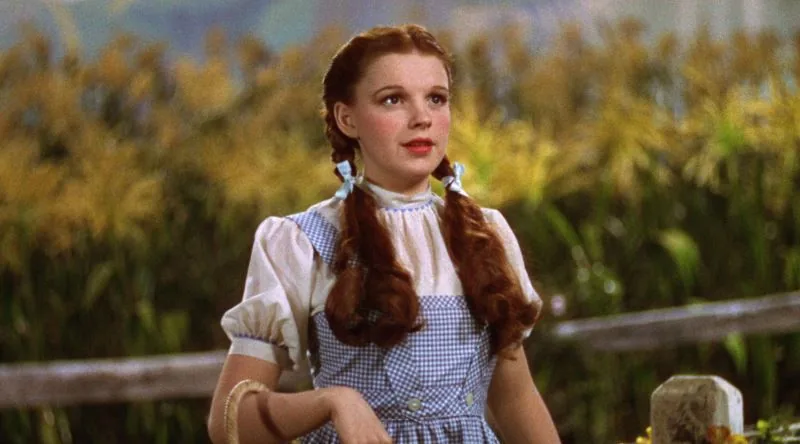
This Judy Garland biography traces the life of the beloved Hollywood star who became a global icon as Dorothy in "The Wizard of Oz" in 1939, yet spent decades battling the crushing pressures of studio life, addiction, and personal turmoil before her untimely death in 1969. Hers is a story of extraordinary talent colliding with a brutal industry, a voice that could break hearts even as its owner struggled to find peace. The same woman who sang "Over the Rainbow" with such aching hope spent her final years fighting a system that had consumed her youth, leaving behind a legacy as luminous as it is sorrowful.
Judy Garland was an American actress and singer who became a worldwide sensation as Dorothy in "The Wizard of Oz" in 1939. Despite her immense talent and legendary live performances, she endured relentless studio control, financial hardship, and addiction throughout her career, ultimately dying of an accidental overdose in London in 1969 at age 47.
- Born Frances Ethel Gumm on June 10, 1922, in Grand Rapids, Minnesota, she began performing on stage as a child alongside her older sisters.
- Her breakout role as Dorothy in MGM's "The Wizard of Oz" in 1939 earned her an Academy Juvenile Award and made "Over the Rainbow" her signature song.
- She delivered one of her greatest career triumphs with a legendary live album recorded at Carnegie Hall in New York City on April 23, 1961.
- Garland died on June 22, 1969, in London, England; the coroner ruled her death an accidental barbiturate overdose.
- She was posthumously awarded a Grammy Lifetime Achievement Award in 1997, cementing her status as one of the most influential vocalists of the twentieth century.
A Star Is Born: Frances Ethel Gumm Becomes Judy Garland
On June 10, 1922, in Grand Rapids, Minnesota, a baby girl named Frances Ethel Gumm came into the world. That name wouldn't last long, but the voice that came with it would echo through Hollywood for generations.
Frances was barely two and a half years old when her parents lifted her onto a vaudeville stage for the first time. The Gumm family act was a family affair, and little Frances fit right in. She sang, she danced, she charmed the crowd, and somewhere along the way, the toddler with the big voice became Judy Garland.
By 1935, when she was just 13 years old, the young performer had caught the attention of Metro-Goldwyn-Mayer. MGM signed her to a contract that year, and the Judy Garland biography as the world knows it truly began. She wasn't just another kid in the studio system. She was the one with the voice that could stop a room cold.
That voice carried her from vaudeville's small-time stages into the golden age of Hollywood. But the road from Frances Gumm to Judy Garland was never a simple one. The name change was just the beginning of a transformation that would make her one of the most beloved entertainers of the twentieth century, even as the pressures of fame mounted around her.
Over the Rainbow: The Wizard of Oz and Hollywood Stardom
When Judy Garland stepped onto the yellow brick road as Dorothy Gale in The Wizard of Oz (1939), she didn't just land a role. She became the heart of Hollywood's golden age, and her rendition of "Over the Rainbow" turned into one of the most beloved songs in cinema history. That single film, released when she was just seventeen, launched her into a stardom that would define the rest of her life.
By then, Garland was already a seasoned performer. She had signed with Metro-Goldwyn-Mayer in 1935 at age thirteen, after years of touring with her family's vaudeville act. The studio saw something special in her. What they didn't anticipate was how completely she would capture the public's imagination. As Dorothy, she sang with a vulnerability that felt utterly real, and audiences never quite let go of that connection.
There's a persistent story that Garland won a competitive Academy Award for Best Child Actress for that performance. The truth is a bit different. The Academy didn't have such a category, and records show she received a special juvenile Academy Award in 1940, an honorary recognition rather than a competitive win. The distinction matters, though it does nothing to diminish what she achieved on screen.
The 1940s became Garland's decade. She starred in Meet Me in St. Louis (1944), where she introduced "The Trolley Song" and "Have Yourself a Merry Little Christmas." Then came Easter Parade (1948) with Fred Astaire, and Summer Stock (1950), which gave audiences her electrifying "Get Happy" number. Those songs didn't just play in theaters. They climbed the charts and settled into American homes, becoming part of the cultural soundtrack of an entire generation.
What made Garland different from other stars of her era was the rawness she brought to everything. She wasn't polished perfection. She was alive, nervous, thrilling. When she sang, you believed every word. That quality, more than any award or chart position, is why her Judy Garland biography remains so compelling. She turned her own longing into art, and millions of listeners felt it right along with her.
The Price of Fame: Studio Pressure and Personal Turmoil
By the time Judy Garland signed with Metro-Goldwyn-Mayer in 1935, she was just thirteen years old, and the studio already had plans for her that went far beyond her singing. MGM enforced strict diets and medications to control her weight and appearance, a practice that would shadow her entire career. The pills kept her thin for the cameras, but they also began a cycle of dependency that wrecked her physical and mental health from the inside out.
The pressure never let up. While she was charming audiences in Meet Me in St. Louis (1944) and Easter Parade (1948), studio doctors were feeding her amphetamines to keep her energized through grueling shoots, then sedatives to help her sleep at night. Her body paid the price, and so did her spirit. The girl who had been performing since age two and a half in her family's vaudeville act was now a product, managed and medicated by executives who cared more about her box office draw than her wellbeing.
Her personal life mirrored the chaos. Garland was married five times in her life, though only four of those marriages ended in divorce; the fifth ended with her death in 1969. Beyond the marriages, financial troubles compounded her difficulties. Despite starring in some of Hollywood's most beloved musicals, she struggled with money throughout her career, often finding herself in debt even at the height of her fame. The golden girl of Hollywood, it turns out, was paying a far heavier price than anyone watching from the theater seats ever knew.
A Comeback and a Tragic Farewell
By the late 1950s, the Hollywood machine that had once adored Judy Garland had turned its back on her, and her film career had faded into the shadows. But she wasn't finished. She pivoted to the stage, where her raw, electrifying voice could reach audiences directly, without the filter of studio control. That decision led to one of the most celebrated nights of her entire life.
On the evening of April 23, 1961, Garland walked onto the stage of Carnegie Hall in New York City for a live concert that would become the stuff of legend. The performance was a triumph, a sweeping showcase of her greatest songs delivered with a vulnerability that left the audience spellbound. The recording of that night, released as *Judy at Carnegie Hall*, became a massive success, and in 1962, it won two Grammy Awards, including the coveted Album of the Year. It was a stunning validation, proof that her artistry had outlasted the studio system that had tried to break her.
Yet the personal battles that had shadowed her for decades never truly loosened their grip. The pills that MGM had pushed on her as a teenager to keep her thin and energetic had become a lifelong dependency, and her health remained fragile. On June 22, 1969, at her home in London, Garland died from an accidental overdose of barbiturates. She was just 47 years old.
The world mourned a voice that had defined an era. In the years since, she has been remembered as "Hollywood's rainbow girl," a nickname that captures both the dazzling Technicolor highs of her career and the stormy weather she weathered along the way. Her legacy, carried in songs like "Over the Rainbow," remains a cornerstone of any serious Judy Garland biography, a story of immense talent and immense pain woven into the same fragile thread.
Frequently asked questions
What was Judy Garland's real name?
Judy Garland was born Frances Ethel Gumm on June 10, 1922, in Grand Rapids, Minnesota. The name "Judy Garland" came later, adopted professionally as her career took off in the 1930s. Her birth name remains a well-documented fact in her official records and biographies.
How did Judy Garland die?
Judy Garland died on June 22, 1969, in London at the age of 47. The coroner ruled her death an accidental overdose of barbiturates. She was found in her rented home in the Chelsea neighborhood, leaving behind a legacy that continues to captivate audiences decades later.
What was Judy Garland's most famous role?
Judy Garland's most famous role was Dorothy Gale in "The Wizard of Oz" (1939). The film made her a global star and introduced the iconic song "Over the Rainbow." Her portrayal of the Kansas farm girl remains one of the most beloved performances in cinema history.
Why did Judy Garland struggle with addiction?
MGM studio pressure played a significant role in Judy Garland's health struggles. Studio executives imposed strict diets and prescribed medications to control her weight and energy levels, starting when she was a teenager. These practices contributed to long-term physical and mental health issues that followed her throughout her career.
When did Judy Garland perform at Carnegie Hall?
Judy Garland performed her famous concert at Carnegie Hall in 1961. The live recording, released as "Judy at Carnegie Hall," captured her at a career peak and became one of her most celebrated works. The performance marked a triumphant return to the spotlight during a difficult period.
What awards did Judy Garland win?
Judy Garland received a special juvenile Academy Award in 1940 for her work in "The Wizard of Oz," and her album "Judy at Carnegie Hall" won two Grammy Awards in 1962. The Carnegie Hall album took home Album of the Year, cementing her status as a recording artist of extraordinary range.
How old was Judy Garland when she died?
Judy Garland was 47 years old when she died on June 22, 1969. Born in 1922, she lived through five decades of American entertainment history. Her death in London marked the end of a life that began on a small-town stage in Minnesota and reached the heights of Hollywood stardom.
Got a take on this? Add your voice to the conversation below →
No comments yet. Be the first.