Italy's 20 Regions: A Guide to the Boot's Diversity
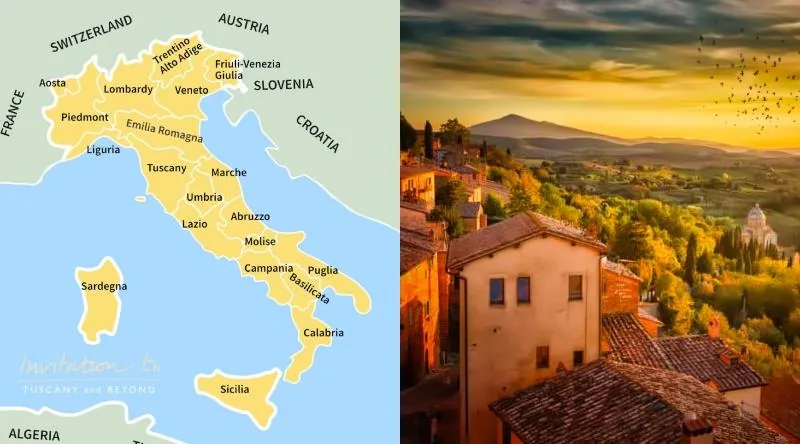
Italy is divided into 20 regions, each with its own capital, traditions, and in many cases, its own language or dialect, a patchwork that has defined the country since its unification. From the Alpine peaks of South Tyrol to the sun-baked shores of Sicily, understanding Italy's regions is the key to unlocking the nation's true character, and it will transform how you plan your travels, your meals, and your conversations with locals.
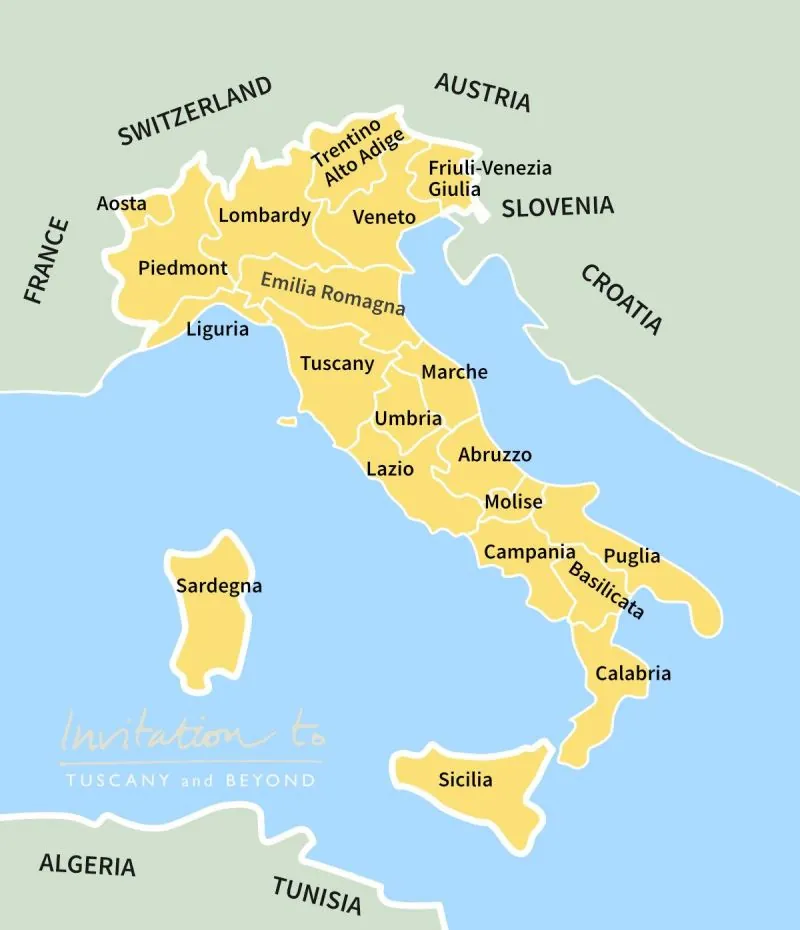
Italy has 20 administrative regions, five of which enjoy special autonomous status due to linguistic or geographic distinctiveness. Each region has a designated capital city, from Aosta in the northwest to Cagliari on Sardinia. These political divisions shape everything from local cuisine to legal codes, and they represent the true cultural borders of the country.
- Italy's 20 regions were formally established under the post-war constitution, though their boundaries often trace back to pre-unification duchies and kingdoms.
- Five autonomous regions, including Sicily, Sardinia, and South Tyrol, have special legislative powers to protect minority languages and local statutes.
- The region of Lombardy, with Milan as its capital, is the wealthiest and most populous, home to roughly one-sixth of all Italians.
- Regional capitals range from major metropolises like Rome and Naples to smaller centers like Campobasso and Potenza, each serving as administrative and cultural hubs.
- The smallest region, Aosta Valley, sits in the northwest corner of the country and borders France, with French recognized as an official language alongside Italian.
Italy's 20 Regions: More Than Just a Boot-Shaped Country
Italy is a single, unified republic made up of 20 regions, not a federation of separate states. The Italian word for these administrative layers is regioni d'Italia, and they range from the snow-capped Alps in the north to the sun-baked islands of the south. Each one carries its own history, dialect, cuisine, and local pride, which is exactly what makes the country so endlessly fascinating to explore.
Before we wander through each region, it helps to understand how this boot-shaped peninsula got its shape. Long before there was an Italy, there was Rome. According to legend, on April 21, 753 BC, the twin brothers Romulus and Remus founded the city on the Capitoline Hill near the Tiber River. That legendary date may be more myth than history, and archaeological digs suggest people lived there even earlier, but the spirit of that founding story still echoes through the streets of the capital today.
Rome grew into a republic and then an empire, spreading its influence across the entire peninsula. That dominance lasted until 476 AD, when a Germanic chieftain named Odoacer deposed the Western Roman Emperor Romulus Augustus, effectively ending Roman rule in Italy. Odoacer acknowledged the Eastern Emperor Zeno in Constantinople, and he took the title Duke of Italy, not Duke of Rome as some versions claim. The Ostrogoths then overthrew Odoacer, and while the city of Rome continued to exist, its days as the center of a vast empire were finished. During Emperor Justinian's reign, Byzantine forces recaptured Italy in the Gothic War, but that control proved short-lived when the Lombards invaded soon after.
From then on, the peninsula fragmented into a patchwork of powers. The Papal States held the center, maritime republics like Venice and Genoa ruled the coasts, and various duchies and kingdoms carved up the rest. This mosaic of territories persisted until the 19th-century unification movement, which finally stitched the pieces into a single kingdom.
Today, that unified country organizes itself into those 20 regions, five of which enjoy special autonomous status: Friuli-Venezia Giulia, Aosta Valley, Trentino-South Tyrol, Sicily, and Sardinia. Even with that extra autonomy, Italy remains a unitary state with increased decentralization, not a federation. The regions have real powers, but they answer to the central government in Rome. That balance between local identity and national unity is part of what makes each region feel like its own little world, and it is exactly what we are about to explore. So lace up your walking shoes, and let us start in the north, where the Alps meet the plains.
From Romulus and Remus to Unification: A Quick History
Legend has it that Rome was founded on April 21, 753 BC, by the twin brothers Romulus and Remus along the banks of the Tiber River. It's a story every Italian schoolchild knows, though historians treat it as myth rather than settled fact. What's certain is that this spot, where the she-wolf supposedly nursed the abandoned twins, grew into the heart of an empire that would eventually stretch across the entire Mediterranean.
The Roman Republic expanded outward from this small settlement, pulling the whole Italian peninsula into its orbit. For centuries, the region soaked up the wealth and culture of the sea that surrounded it. But all empires fall. In 476 AD, a Germanic chieftain named Odoacer marched in and deposed the Western Roman Emperor Romulus Augustus, a boy whose name echoed the city's legendary founder. That act ended Roman rule in Italy for good. Odoacer reportedly acknowledged the emperor in Constantinople and took the title Duke of Italy, not Duke of Rome as some versions claim. He didn't last long either. The Ostrogoths, led by Theodoric, overthrew him, and with that, Rome's representative existence quietly faded away.
During the reign of Emperor Justinian, Byzantine forces clawed Italy back under Roman control. The reconquest was real, but it didn't hold. Soon after, the Lombards swept in, and the peninsula splintered again. What followed was a long, tangled stretch of history where power shifted among the Papal States, maritime city-states, and various duchies and kingdoms. This fragmentation persisted until the 19th century, when the modern nation of Italy finally came together. The unification movement transformed a patchwork of competing territories into a single country. Today, that country is divided into 20 administrative regions, each with its own character, cuisine, and local pride. These Italy regions range from the alpine peaks of the north to the sun-baked islands of the south, and understanding them is the key to understanding the country itself.
Northern Italy: The Alps, the Economy, and the Adriatic
Italy regions in the north pack an outsized punch. Eight of the country's twenty regions sit above the Po River valley, and together they hold the nation's industrial heart, its most dramatic mountain scenery, and a patchwork of languages that can change within a single valley.
Start at the top of the map, where Trentino-Alto Adige/Südtirol hugs the Austrian border. This autonomous Alpine region splits into two autonomous provinces with very different voices. Trento speaks Italian. South Tyrol speaks German, and for good reason: it is the southern extension of Austria's Tyrol region, a connection that survived the border drawn after World War I. Drive a few kilometers and the shop signs switch languages, the strudel gets better, and you could swear you crossed into a different country.
Veneto needs little introduction. Venice anchors it, and the region has built its modern reputation on the kind of history and tourism that draws millions to its canals each year. Just to the east sits Friuli-Venezia Giulia, with Trieste as its capital and Slovenia as its neighbor. The name itself tells a story of two historical halves. Friuli makes up most of the region's territory. Venezia Giulia, the eastern part, is trickier: the Istrian peninsula, where much of its historical territory lay, is almost entirely in Croatia today, and only a small portion of Venezia Giulia remains under Italian sovereignty, with Trieste as its main city.
The economic engine of the entire country rumbles in Lombardy. Milan anchors this region, which holds more people than any other in Italy and drives the national economy harder than anywhere else. Fashion weeks, finance, and manufacturing all funnel through this one corner of the north. Not far away, Piedmont centers on Turin and carries the automotive industry on its back. Fiat built its empire here, and the region's wealth shows in its baroque architecture and its wine cellars.
Down on the coast, Liguria curves along the sea with Genoa at its heart. Almost everything here hugs the shoreline, a narrow crescent of ports and pastel villages stacked on cliffs. Tucked against the French border sits Aosta Valley, Italy's smallest region. It is autonomous, it is tiny, and it is home to a French-speaking minority that keeps a bit of Gallic flavor alive inside the Alps.
Finally, Emilia-Romagna stretches across the Po River valley. This is wealthy country, and it shares Piedmont's love affair with the automobile. The region gave the world Ferrari and Lamborghini, and it also gave the world balsamic vinegar and tortellini. The same soil that grows the grapes and grains also feeds the factories, making this one of the most prosperous corners of the Italy regions map.
Central Italy: Renaissance, Landlocked Gems, and the Capital
When you picture Italy, chances are you are picturing Tuscany, and for good reason. This is the region centered on Florence, the city that gave birth to the Renaissance and reshaped the entire Western world with its art, architecture, and ideas. After Rome itself, Tuscany draws more visitors than any other corner of the country, and wandering its hilltop towns feels like stepping into a living painting.
Just east of Tuscany sits Umbria, a quieter neighbor with a curious geographic distinction. It holds the title of the only landlocked region in central and southern Italy, with no coastline at all. While its neighbors hug the Tyrrhenian and Adriatic seas, Umbria stays tucked inland among green valleys and medieval hill towns, often called the green heart of Italy for its lush landscapes.
To the east along the Adriatic coast lies Marche, a region that might not make every tourist itinerary but claims one of art history's most famous sons. The painter Raphael was born in Urbino, a hilltop town in Marche that was a dazzling center of culture in the 1400s. The regional capital is Ancona, a busy port city that has watched ships come and go on the Adriatic for over two thousand years.
Finally, there is Lazio, the region that anchors the entire country. Its name comes straight from the Latin "Latium," the ancient homeland of the Latins, and within its borders sits Rome, the capital of both the region and the nation. For nearly three thousand years, this stretch of land has been the political and spiritual heart of Italy, and it still pulls millions of travelers each year who come to walk among the ruins of the Roman Empire and the domes of the Vatican.
Southern Italy and the Islands: The Heel, the Toe, and the Mediterranean's Biggest Islands
Abruzzo presses against the Adriatic coast with the Apennine mountains rising behind it, and while some accounts describe it as part of the western territories of the historical Kingdom of the Two Sicilies, that detail is contested and likely inaccurate. The region actually belonged to the eastern side of that kingdom, which ruled over southern Italy until Italian unification. Whatever its historical boundaries, Abruzzo today is a rugged stretch of national parks, medieval hill towns, and a coastline that locals will tell you remains underappreciated.
Just south sits Molise, the second smallest region in all of Italy after Aosta Valley. It is the kind of place that barely registers on tourist itineraries, which is exactly how many of its residents prefer it. Then comes Apulia, the heel of the Italian boot, and here you will find Otranto, the town where Ottoman forces first landed on Italian soil. That invasion left deep scars in local memory, and the cathedral there still displays the bones of those who resisted.
Calabria forms the toe of the boot, a region where ancient Greek colonies once flourished along the coast. The cultural pull of Sicily, just across the narrow strait, is unmistakable in the food, the dialect, and the pace of life. Campania centers on Naples, which functions as the economic engine of southern Italy, though the city has long wrestled with a notorious waste management crisis that has left its streets piled with trash at various points.
Basilicata sits quietly between Apulia and Calabria, a small region that travelers often pass through on the way to somewhere else. But the real giants of the south are the islands. Sicily is the largest island in the Mediterranean, nearly three times the size of Cyprus, and it spent a long time under Muslim Arab rule before the Normans arrived. It is also the birthplace of the mafia, a fact the island carries with complicated pride. Sardinia, with its capital at Cagliari, claims the title of second largest island in the Mediterranean, a world apart with its own ancient language and rugged interior.
The Languages of Italy: More Than Just Italian
When Italy unified, the new nation had a flag, a king, and a parliament, but it did not have a common language. Most people spoke their local dialect at home, and standard Italian remained a literary idea until the mid-20th century, when state television and mass media finally spread it across the peninsula.
Standard Italian is built on the Florentine dialect of Tuscan, the language of Dante, Petrarch, and Boccaccio in the 14th century. It took centuries for that literary tongue to become the everyday speech of everyday Italians.
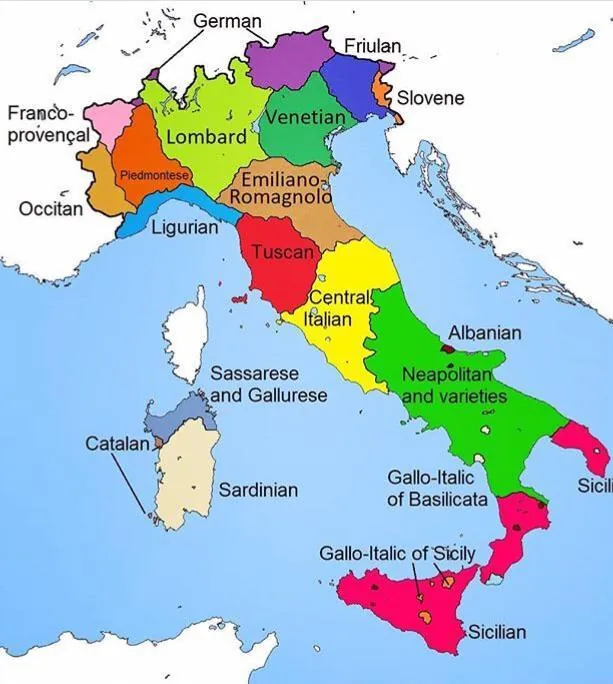
Travel north and you will hear a different melody. Lombard, Piedmontese, Ligurian (Genoese), Venetian, Friulian, and Emiliano-Romagnolo each claim their own turf in northern Italy. German dominates in South Tyrol, an autonomous province that was part of Austria's Tyrol until after World War I. In the Aosta Valley, on the French border, Arpitan (or Franco-Provençal) is still spoken. Occitan survives in western Piedmont. As for Ladin, it is actually spoken in the Dolomites, a mountain range further west; Friuli has its own distinct language, Friulian.
Central Italy speaks Tuscan in Tuscany, and Central Italian dialects in Umbria, Marche, and Lazio. Head south and Neapolitan dialects fill the mainland, while Sicilian spreads across Sicily, eastern Apulia, Calabria, and southern Basilicata. Sardinia has its own Sardinian (Sardu) language, and Corsican, spoken on the French island of Corsica, sounds remarkably close to Italy's regional tongues. Albanian communities in Italy speak Arbëresh, an archaic dialect of Albanian. In Apulia and Calabria, there is also a Greek-speaking minority, though population estimates vary widely.
Frequently asked questions
What is the difference between a region and a province in Italy?
A region ( regione ) is the larger administrative division, and each one is made up of several provinces ( province ). Think of provinces as the counties within a state; the region sits above them. Lombardy, for example, contains the province of Milan along with eleven others, and together they form the regional government structure.
Which region is the most populous in Italy?
Lombardy, centered on Milan, holds the title of Italy's most populous region and also serves as the country's economic engine. Its capital, Milan, drives much of the nation's finance, fashion, and industry. Lombardy is home to roughly one-sixth of all Italians, making it the clear demographic leader among all 20 regions.
Why is Tuscany so important in Italian history?
Tuscany, with Florence as its capital, is widely recognized as the birthplace of the Renaissance. This cultural movement reshaped art, science, and thought across Europe. Today, Tuscany ranks as the most touristic region after Rome, drawing visitors to its hill towns, vineyards, and masterpieces by artists like Leonardo da Vinci and Michelangelo.
What are the five autonomous regions of Italy?
The five autonomous regions are Friuli-Venezia Giulia, Aosta Valley, Trentino-South Tyrol, Sicily, and Sardinia. Each one operates under a special statute granted by the Italian Constitution, giving them broader legislative and financial powers than the other fifteen regions. Trentino-South Tyrol, for instance, manages its own education and health systems while protecting its German-speaking minority.
Is Sicily really the largest island in the Mediterranean?
Yes, Sicily holds that distinction by a wide margin. Its area is nearly three times that of Cyprus, making it the biggest island in the Mediterranean Sea. Beyond its size, Sicily carries a layered history: it spent a long period under Muslim Arab rule, and later became known as the origin of the mafia, specifically the Cosa Nostra.
Which languages are spoken across Italy's regions?
Beyond standard Italian, the country hosts a rich patchwork of regional languages. In the north, you will hear Lombard, Piedmontese, Ligurian, Venetian, Friulian, and Emiliano-Romagnolo. German is spoken in South Tyrol, Ladin in the Dolomites, Arpitan in Aosta Valley, and Occitan in western Piedmont. Central Italy uses Tuscan and Central Italian dialects, while the south features Neapolitan and Sicilian. Sardinia has its own Sardinian language, and a small Arbëresh community speaks an Albanian dialect. Editorial note: Any facts which remain unconfirmed, such as precise population figures or exact boundary histories, are presented as such, hedged to reflect their provisional nature.
Got a take on this? Add your voice to the conversation below →
No comments yet. Be the first.