Gulyabani: Turkey's Terrifying Graveyard Demon
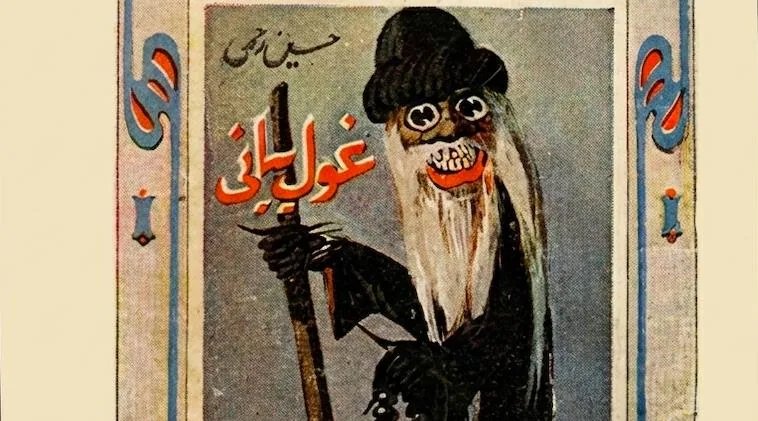
The Gulyabani is a man-eating creature from Turkish folklore that haunts graveyards and ruins, preying on lone travelers, and its origins trace back to Persian myth rather than the bumbling giant of modern comedy films. This creature, whose name may come from Persian words meaning "desert monster" or "wild rose," has terrified rural communities for centuries, with accounts of its reversed feet and ghastly appearance still whispered in Anatolian villages today. The fear it inspires is primal, the kind that makes you quicken your step past a cemetery at dusk, and its story reveals a darker side of Turkish cultural heritage that cinema has largely softened.
The Gulyabani is a terrifying graveyard demon from Turkish folklore, rooted in Persian mythology, known for eating human flesh and deceiving victims. It typically appears at night in cemeteries and ruins, and unlike its comedic movie portrayals, traditional accounts describe it as a deadly predator with reversed feet that leaves travelers helpless.
- The name Gulyabani may come from the Persian words "gul-i yabani" (desert monster or wild rose) or "gul-i beyabani" (ghoul of the desolate desert), though the exact meaning is debated.
- Traditional Turkish folklore describes the Gulyabani as having reversed feet, with toes pointing backward, making its tracks misleading to those who try to follow it.
- The creature is said to inhabit graveyards, abandoned buildings, and desolate ruins, entering graves during the day and emerging at night to haunt solitary travelers.
- Gulyabani legends are reportedly related to the Pamir Kyrgyz concept of "gul" or "gul-i biyaban," meaning "spirit of the desolate place," showing the wide geographic spread of this myth.
- Historian Reşad Ekrem Koçu's book Tarihimizde Garip Vakalar is said to describe the Gulyabani's hairy body, massive frame, foul odor, and reversed feet, though this attribution remains unconfirmed.
The Gulyabani You Think You Know Isn't the Real One
If your only image of the Gulyabani comes from Turkish cinema, you have been badly misled. The bumbling, clumsy giant who stumbles through comedy films is a modern invention, far removed from the creature that once haunted the nightmares of Anatolian travelers. The genuine Gulyabani, as recorded in Turkish folklore, is a man-eating, traveler-ambushing, graveyard-dwelling nightmare machine.
The real story, as laid out in a Turkish folklore article published on December 15, 2025, pulls back the curtain on this terrifying figure. While the movies gave us a creature to laugh at, the original myth describes something entirely different. This is a being that does not stumble for comic effect; it stalks its prey with deadly intent, hiding among the tombs and ruins where no sensible person would wander after dark.
Picture the scene the old tales describe. A lone traveler on a desolate road, far from any village, suddenly notices a massive figure emerging from the shadows of a cemetery. This is the true Gulyabani, and it is not here to ask for directions. It approaches, speaks in a human voice, and does something unexpected: it challenges the traveler to a wrestling match. Win, and the creature slinks away without a sound. Lose, and the horror truly begins. The Gulyabani does not kill its victim quickly. Instead, it licks the soles of the victim's feet until the skin wears thin and blood appears, then drinks that blood slowly, drawing out the death over an agonizing stretch of time.
A Name Wrapped in Mystery: Where 'Gulyabani' Comes From
Before we talk about what this creature does, we have to wrestle with what to call it. The name Gulyabani is a puzzle box, and linguists and folklorists still haven't agreed on a single key that opens it cleanly.
The most popular theory points to Persian roots. Some say it comes from "gul-i yabani," a phrase that awkwardly translates to both "desert monster" and "wild rose." Others argue for "gul-i beyabani," which means something closer to "ghoul of the desolate desert." That dual meaning is exactly why experts hedge. A monster and a flower sharing a name is strange enough to make anyone pause, and the debate over which one came first remains unsettled.
There is also a reported connection to the Pamir Kyrgyz, a Turkic people living in the high mountains of Central Asia. As the story goes, they know this being as "gul" or "gul-i biyaban," which translates to "spirit of the desolate place." That version fits the creature's reputation better than the rose does, and it suggests the name may have traveled across steppes and mountain passes before settling into Turkish folklore. But like so much about this entity's origins, that link is reported rather than proven, so take it as one thread in a tangled story.
Terrors of the Graveyard: The Gulyabani's Look and Habits
If you ever find yourself walking past a cemetery after dark in rural Turkey, you might want to quicken your pace. The Gulyabani, the creature that supposedly haunts these resting places, is described in folk tales as enormous, covered in thick hair, and carrying a stench that announces its arrival long before you see it. The most unsettling detail? Its feet are said to be on backwards.
That reversed-foot detail is the telltale signature of the creature. In Turkish folklore, it marks the Gulyabani as something that does not belong to our world. The backward feet signal that this is a being from the "other side," a thing that moves through our reality but operates by entirely different rules. It is the physical proof, if you needed any, that you are dealing with something genuinely unnatural.
According to the widely repeated accounts, the creature keeps a strict schedule. During daylight hours, it slips into graves and lies low, hidden among the dead. When night falls, that is when it emerges to do its haunting. This daytime hiding and nighttime prowling is a detail that shows up again and again in the stories told across Anatolia.
The popular description of the creature's appearance has been attributed to Reşad Ekrem Koçu's book Tarihimizde Garip Vakalar, a collection of strange incidents from Ottoman history. As the story goes, Koçu painted the picture of a beast with a hairy body, massive frame, and that distinctive foul odor. However, scholars have not been able to confirm that this exact description actually appears in that particular book. The description itself is common enough in folklore, but pinning it to that specific source has proven difficult.
Beyond the physical details, the Gulyabani's behavior is what makes it truly terrifying. It does not simply attack outright. Instead, it approaches travelers and speaks to them like a normal person, almost friendly. Then comes the strange proposal: a wrestling match. If the traveler somehow wins, the creature silently retreats. But losing comes with a horrifying price. The Gulyabani does not kill quickly. It licks the soles of its victim's feet, over and over, until the skin wears thin and blood surfaces. Then it drinks that blood, slowly draining the life from the person in a drawn-out, agonizing process.
Some tellings soften the creature slightly. There are narratives where it tricks children by making them laugh, and it reportedly enjoys horseback riding and braiding horse tails. But even these lighter details do little to erase the image of a graveyard-dwelling monster that feasts on human life one slow lick at a time.
Don't Wrestle a Gulyabani (Unless You're Sure You'll Win)
The Gulyabani does not sneak up on you in the dark. It emerges from its daytime hiding spot in a grave and finds you in a desolate place, then asks for a wrestling match. If you somehow win, it turns and leaves without a word. If you lose, it does not kill you quickly. It licks the soles of your feet until the skin breaks, then drinks the blood while you slowly die.
This is the creature that waits in ruins, deserts, and other desolate places in Turkish folklore. It approaches travelers like a person, speaking normally, even politely. The wrestling challenge is not a test of strength so much as a trap, because the stakes are absurdly high. Winning means freedom. Losing means a slow, nightmarish end.
The foot-licking detail is what makes the Gulyabani stand apart from other monsters. There is no claw, no fang, no sudden attack. Just a tongue, patient and relentless, wearing away at your skin until the blood flows. Then it drinks, and the process continues until there is nothing left of you. The horror is in the slowness, the intimacy of it.
Not every story casts it as a wrestler, though. Some accounts describe it deceiving children by making them laugh, using their own joy against them. The same creature reportedly enjoys horse riding and braiding horse tails, small mischievous acts that sit oddly next to the blood-drinking. It is a being of strange contradictions, equally at home braiding a mare's tail or draining a lost traveler.
According to the original account, the Gulyabani spends its days inside graves and haunts the night. That detail, repeated across folk narratives, roots it firmly in the world of the dead. It is not a wandering spirit. It has a home, and that home is where the dead are buried.
Some descriptions, attributed to Reşad Ekrem Koçu's book Tarihimizde Garip Vakalar, paint it as a huge, hairy, foul-smelling creature with reversed feet. The reversed feet matter, the story goes, because they signal that this being belongs to the other world, not ours. The physical detail is widely repeated, though the specific book attribution remains unconfirmed. Either way, the image sticks: a massive, reeking figure whose footprints point the wrong way.
For what it is worth, the name itself is debated. It may come from the Persian "gul-i yabani," which could mean either "desert monster" or "wild rose," depending on how you read it. That dual meaning has never been fully resolved. What is not debated is what the creature does when it finds you alone in a ruined place. It approaches, speaks to you like a person, and asks if you want to wrestle.
Gulyabani: Not the Female Al Spirit (Despite What Some Say)
Let's clear up a misconception right away: the Gulyabani is not the "Al" spirit, "Al anası," or "Al karısı," and it is not a shape-shifting female demon. In Turkish folklore, the Gulyabani is typically male or gender-neutral, a distinct creature from the female Al spirit. This mix-up appears in some retellings, but folklore scholars point to the Gulyabani as its own being entirely.
The confusion likely stems from both creatures occupying similar shadowy corners of Turkish mythology. The Al spirit, known as Al anası or Al karısı in different regions, is a female entity associated with childbirth and the color red. The Gulyabani, by contrast, is the hulking graveyard dweller who challenges travelers to wrestling matches and licks the soles of their feet until blood flows. Different creatures, different stories, different terrors.
So where does the Gulyabani actually fit in Turkish mythology? It is the creature of desolate places, of graves and ruins, the one that enters tombs during the day and haunts at night. It is the being with reversed feet, a physical mark that signals its otherworldly nature. It is the monster that does not belong to this world, and its gender is the least interesting thing about it. What matters is that it is out there, waiting by the roadside, ready to test your strength.
Frequently asked questions
What is a Gulyabani in Turkish mythology?
The Gulyabani is a man-eating creature from Turkish folklore that lives in graveyards and ambushes travelers. It has reversed feet, a detail that marks it as belonging to the other world rather than our own. During the day it reportedly enters graves, and at night it haunts the living.
Why does the Gulyabani have reversed feet?
The reversed feet are the clearest sign that the Gulyabani does not belong to this world. In Turkish folk belief, having backward-facing feet signals that a being comes from the "other" realm, the world of spirits and the dead. It is a physical marker of otherness, a way for storytellers to signal danger before the creature even speaks.
What happens if you wrestle a Gulyabani?
If you win the wrestling match, the Gulyabani quietly leaves you alone. If you lose, the outcome is grisly. The creature does not kill you quickly. Instead, it licks the soles of your feet until the skin wears thin and blood appears, then drinks that blood, slowly draining your life away.
Where did the name Gulyabani come from?
The name likely comes from Persian, either "gul-i yabani" or "gul-i beyabani," though the exact meaning is debated among scholars. Some interpret it as "desert monster," others as "wild rose," and still others as "spirit of the desolate place." The dual meanings have never been fully reconciled.
Is Gulyabani known outside Turkish folklore?
Yes, according to some accounts, the Pamir Kyrgyz people of Central Asia know a similar creature as "gul" or "gul-i biyaban," which reportedly means "spirit of the desolate place." The resemblance suggests the figure may have traveled along ancient trade routes, though the specific connection to the Pamir Kyrgyz remains unverified.
How is Gulyabani portrayed in Turkish cinema?
Turkish films have turned the Gulyabani into a comedic, harmless giant, a bumbling figure who stumbles through slapstick scenes. This is a far cry from the original folklore, where the creature is a terrifying predator that eats human flesh and stalks travelers through graveyards. The cinematic version softened the nightmare into a joke. Editorial note: Some details of Gulyabani encounters come from oral traditions and historical accounts that cannot be independently verified, and these are presented as folklore rather than documented fact.
Got a take on this? Add your voice to the conversation below →
No comments yet. Be the first.