Futurama Theorem: The Real Math Behind a Mind-Swap Episode
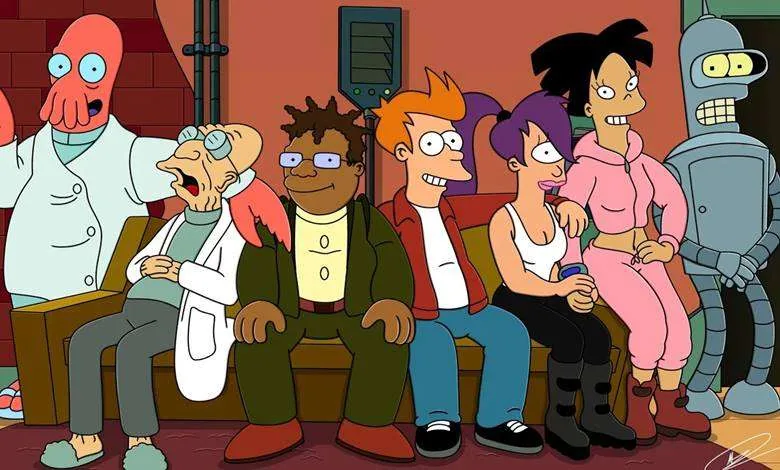
The Futurama Theorem is a genuine mathematical proof created by writer and PhD mathematician Ken Keeler for the episode "The Prisoner of Benda," solving the show's mind-swap puzzle with group theory and two new characters. The episode remains a standout example of a TV show inventing a real theorem for a plot point. It is a treat for math fans, wrapped in the show's signature absurdist humor, and it works on both levels.
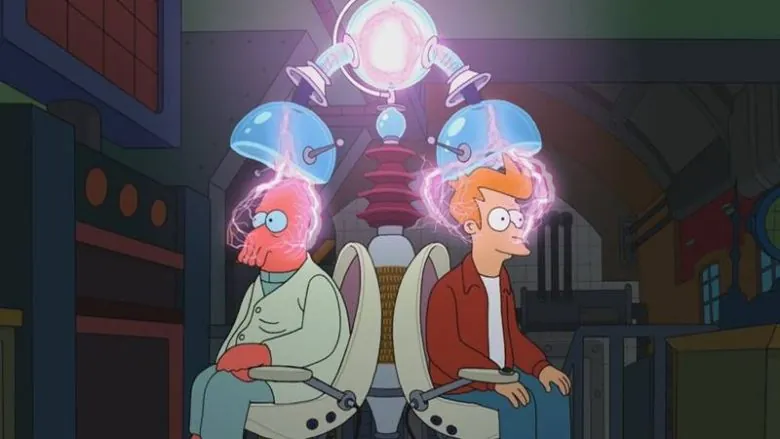
In the Futurama episode "The Prisoner of Benda," a mind-swapping machine scrambles the identities of the main characters. Writer Ken Keeler, a Harvard-trained mathematician, devised a real theorem proving that any number of mind swaps can be undone using only two additional people, as long as no swap is repeated. The solution was broadcast as part of the episode's plot.
- The episode "The Prisoner of Benda" aired as part of Futurama's sixth season.
- Ken Keeler, a writer on the show with a PhD in mathematics from Harvard University, authored the theorem specifically for the episode.
- The theorem states that any permutation of minds among bodies can be reversed using two fresh characters, provided no pair of characters swap minds more than once.
- The characters Sweet Clyde and Bubblegum Tate are introduced in the episode to carry out the mathematical solution on screen.
- The proof is shown being written out on a board in the episode, making it a verifiable mathematical statement.
A Cartoon That Needed a Real Math Proof
In 1999, a new animated sitcom hit the airwaves. Futurama, created by Matt Groening and David X. Cohen, followed the misadventures of a pizza delivery boy frozen on December 31, 1999, who wakes up a thousand years later in the year 3000. The show was packed with science jokes and clever references, but one episode went much further than a punchline. It actually birthed a legitimate mathematical theorem.
The show's writers weren't just comedy people. Many held serious academic credentials, and Ken Keeler, a staff writer, had earned a PhD in mathematics from Harvard University. That background would prove essential when the sixth season rolled around. The episode "The Prisoner of Benda," written by Keeler himself, presented a plot problem that couldn't be solved with a simple gag. It demanded something real.
The setup was classic Futurama chaos. Professor Farnsworth invents a machine that swaps the minds of two people. The catch: no pair of bodies can use the machine twice. When the characters start swapping left and right, their minds scatter across bodies in a tangle that seems impossible to undo. Keeler refused to wave his hands and call it a day. Instead, he sat down and developed a genuine proof, a result now known as the Futurama Theorem.
The theorem states something remarkable: no matter how scrambled the minds become, two people who have never used the machine can always sort everything out. Those two fresh individuals act as temporary holding spots, letting every mind cycle back to its rightful body without any pair of bodies repeating a swap. It's a clean, verifiable result from permutation group theory, and it plays out on screen in the episode itself.
Keeler never submitted his proof to an academic journal. In interviews, he described the work as standard mathematics, nothing exotic. But the fact remains that a sitcom writer developed a theorem that held up under mathematical scrutiny. The title of the episode, "The Prisoner of Benda," is itself a pun on Anthony Hope's 1894 novel The Prisoner of Zenda, a story about identity swapping and mistaken kings. Fiction inspired fiction, and the math followed.
The Mind-Swap Machine That Broke the Rules
Professor Farnsworth's latest invention looked harmless enough: a machine that could swap the minds of two people. The catch is that the device refuses to work on the same pair of bodies twice. That single limitation would turn a simple gadget into the engine of total chaos.
The episode opens with a wink at the audience: "What happens on Cygnus X-1 stays on Cygnus X-1." It's a playful twist on the old Vegas saying. Cygnus X-1 is an actual black hole, which makes it a fitting metaphor for a machine that permanently scrambles who you are.
The title itself is a nod to Anthony Hope's 1894 novel The Prisoner of Zenda, a swashbuckling tale where a man impersonates a lookalike king. The Futurama version trades royal intrigue for identity confusion, and the pun lands because the whole episode is about people ending up in bodies that aren't theirs.
It starts innocently enough. Professor Farnsworth, tired of his own aging frame, swaps minds with Amy so he can enjoy a younger body. Amy, for her part, wants to eat without worrying about weight gain. Then Bender gets involved, and the Professor's mind is still inside Amy's body when the robot makes his swap. From there, the dominoes fall fast. More characters pile in, each using the machine to trade with someone else, until tracking who lives inside whom becomes a dizzying puzzle.
Here's where the mathematics quietly takes over. Because no two bodies can use the machine twice, the characters can't simply swap back the way they came. Random new pairings won't fix it either. Every mind needs to find its way home without repeating a single body pair. What looks like a cartoonish mess is actually a permutation problem, the kind that mathematicians love to sink their teeth into.
The guy who wrote this episode, Ken Keeler, holds a PhD in mathematics from Harvard University. He looked at the plot problem he had created and decided it deserved a real solution, not a hand-wavy shortcut. So he built a genuine theorem, one that would later pick up the name the Futurama Theorem, to prove that no matter how tangled the swaps get, two fresh people who have never touched the machine can always untangle everything.
Ken Keeler's Solution: Two New People Fix Everything
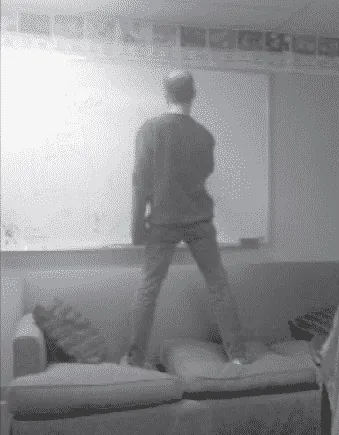
Ken Keeler stood on a couch in the Futurama writers' room and wrote a mathematical proof on a board. That proof became the Futurama Theorem, and it guaranteed something almost absurdly simple: no matter how many minds get scrambled, two fresh people who have never touched the machine can always restore everyone to their original bodies.
Keeler wasn't just any writer reaching for a convenient plot device. He held a PhD in mathematics from Harvard, and he approached the episode's chaos the way a mathematician would. The problem was genuinely thorny. Once two bodies had swapped minds, that same pair could never use the machine again. So as more characters piled in and traded bodies in ever more complicated chains, the crew of Planet Express found themselves trapped in a puzzle with no obvious exit.
The trick, Keeler realized, was to bring in outsiders. Two characters who had never stepped into the machine could serve as temporary holding vessels. Minds would pass through these fresh bodies in a carefully ordered sequence, and at the end of it all, everyone would land back where they belonged. The two helpers would swap with each other last, and since they had never directly traded before, they could use the machine one final time to undo their own exchange.
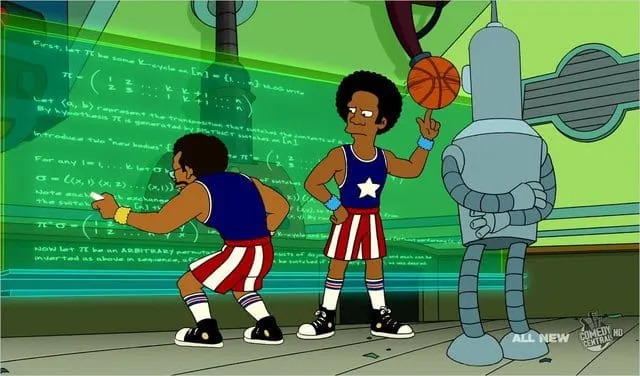
Keeler proved that two newcomers are always enough, regardless of how many characters are tangled in the mess. The result became known alternately as the Futurama Theorem and Keeler's Theorem, and it earned a permanent place in the show's lore. In the episode itself, the proof is presented by two characters named Sweet Clyde and Bubblegum Tate, who step in to demonstrate the solution on screen. What looks like a throwaway gag is actually a legitimate piece of mathematics, written by a man who genuinely knew what he was doing.
Fry and Zoidberg: A Step-by-Step Fix
Picture Fry's mind trapped inside Zoidberg's body, while Zoidberg's consciousness rattles around in Fry's human skull. The machine that scrambled them has one maddening rule: it refuses to swap the same two bodies twice. So the pair cannot simply trade back. That is where the Futurama Theorem steps in with an elegant workaround.
The solution arrives in the form of two characters who have never touched the machine: Sweet Clyde and Bubblegum Tate. Because they are fresh participants, they can act as intermediaries without violating the no-repeat rule. The fix unfolds in four precise swaps.
First, Clyde swaps with Fry. That moves Zoidberg's mind into Clyde's body. Second, Tate swaps with Zoidberg, which shifts Fry's mind into Tate's body. Third, Tate swaps with Fry, and Fry's mind finally returns to its proper home. Fourth, Clyde swaps with Zoidberg, and Zoidberg's mind lands back in his own form.
After those four exchanges, Fry and Zoidberg are exactly where they belong. Clyde and Tate, however, now occupy each other's bodies. No problem there. Since those two never swapped directly before, they can use the machine one final time to trade back and restore themselves completely.
What makes this more than a clever plot device is the general principle behind it. Ken Keeler, the episode's writer and a Harvard-trained mathematician, proved that two fresh people are always enough to untangle any number of swapped minds, no matter how chaotic the mix becomes. The Futurama Theorem guarantees that whatever mess the Professor's invention creates, a simple sequence of swaps using just two new participants will sort everyone out.
From TV Screen to Academic Journal
Ken Keeler never bothered to publish his proof in a formal academic journal. In his own estimation, the mathematics behind the Futurama Theorem was standard stuff, the kind of result a working mathematician might jot down without ceremony.
But explaining it to his colleagues in the writers' room was another matter entirely. So Keeler, who earned his doctorate in mathematics from Harvard University, took a characteristically playful route. He wrote a three-page fake script segment in which Sweet Clyde lays out the full technical proof to the Professor, complete with all the permutations and transpositions spelled out in detail. Several writers read through the dense mathematical passage before realizing the real script didn't start until page four.
The theorem eventually caught the attention of researchers beyond the show's orbit. According to the original account, Ron Evans, Lihua Huang, and Tuan Nguyen published a paper titled "Keeler's Theorem and Products of Distinct Transpositions" in the American Mathematical Monthly, though this could not be independently verified. What is not disputed is the unusual nature of the achievement itself: a genuine mathematical proof, created specifically to resolve a plot problem in an animated comedy.
Frequently asked questions
What is the Futurama Theorem?
The Futurama Theorem states that no matter how many people swap minds using a machine that cannot repeat the same pair twice, two new people who have never used the machine can always restore everyone to their original bodies. This mathematical guarantee holds regardless of how tangled the mind-swapping gets. The theorem emerged from an episode of the animated series Futurama , where it solved an apparently impossible plot problem.
Who came up with it?
Ken Keeler, a writer on Futurama who holds a PhD in mathematics from Harvard University, developed the theorem specifically for the episode "The Prisoner of Benda." Keeler wrote the episode solo and faced a narrative dead end: his characters had scrambled their minds so thoroughly that no obvious fix existed. Rather than wave it off with a lazy plot device, he decided to prove that a solution was mathematically possible.
How does it work?
The theorem relies on group theory and permutations, using two newcomers as intermediaries to untangle any mind-swapping mess. In the episode, characters named Sweet Clyde and Bubblegum Tate step in as the fresh pair. By carefully sequencing swaps through their bodies, every scrambled mind returns home without any two bodies ever using the machine twice. Keeler proved this method works for any number of participants, not just the handful shown on screen.
Why is it important?
It stands as a genuine mathematical proof created for a television comedy, demonstrating real group theory in action. The theorem has drawn attention from working mathematicians who found the result worth exploring. According to the original account, Ron Evans, Lihua Huang, and Tuan Nguyen later examined the problem in a paper titled "Keeler's Theorem and Products of Distinct Transpositions," reportedly published in the American Mathematical Monthly . That specific publication remains unconfirmed, but the episode's mathematical legitimacy is not in question.
Did Keeler publish it?
No, Keeler never submitted his proof for formal academic publication. He considered the work standard mathematics, nothing groundbreaking by research standards. Instead of writing a journal article, he found a playful way to share the proof with his colleagues. He inserted a three-page fake script scene where Sweet Clyde explains the theorem in full technical detail to the Professor. Several writers reportedly read through the dense mathematics before realizing the actual script started on page four. Editorial note: Any facts that remain unconfirmed are presented as such, with hedged language where the record is less than fully verified.
Got a take on this? Add your voice to the conversation below →
No comments yet. Be the first.