Frank Sinatra: The Mafia Role That Revived His Career
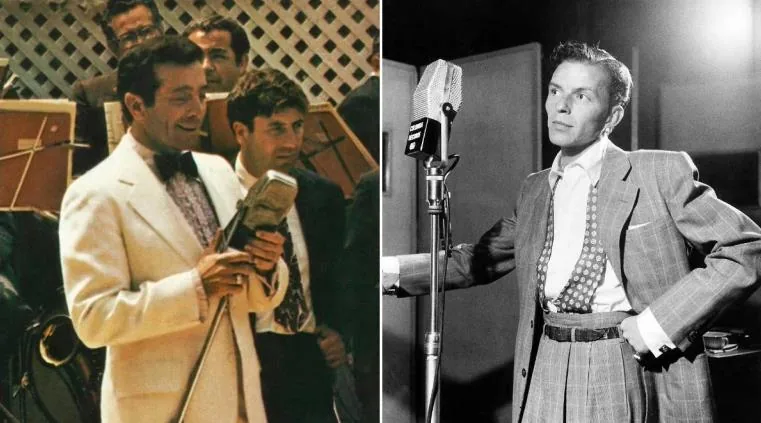
Frank Sinatra won the 1953 Academy Award for Best Supporting Actor for his role as Maggio in From Here to Eternity, a part that rescued a career everyone had written off. By the early 1950s his record sales had collapsed, his marriage to Ava Gardner was unraveling, and studios saw him as washed up. Then came Maggio, a doomed soldier in a Hawaii barracks, and Sinatra played him with a raw desperation that felt less like acting than survival. The Oscar he collected in 1954 didn't just revive his career. It rewrote the story of what he was willing to do to get it back.
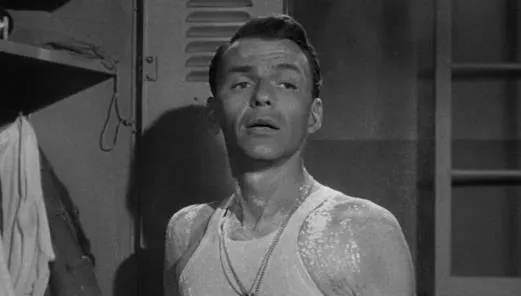
Frank Sinatra won the Best Supporting Actor Oscar in 1954 for playing Maggio in From Here to Eternity, released in 1953. The role revived a career in freefall. Persistent claims that Mafia pressure secured him the part remain unproven, and Columbia boss Harry Cohn was cool toward Sinatra from the start.
- From Here to Eternity premiered in 1953, directed by Fred Zinnemann and based on James Jones's novel.
- Sinatra won the Academy Award for Best Supporting Actor for the role of Private Angelo Maggio in 1954.
- Before the film, Sinatra's recording and film career had slumped badly in the early 1950s.
- Mario Puzo's 1969 novel The Godfather featured Johnny Fontane, a singer widely read as a Sinatra stand-in.
- Columbia executive Harry Cohn, who ran the studio, was cool toward Sinatra and initially resistant to casting him.
Frank Sinatra From Here to Eternity: The Role That Saved His Career
In 1953, Frank Sinatra walked onto the set of From Here to Eternity for a paycheck of $8,000. Seven years earlier, for Anchors Aweigh, he had earned $150,000. That gap says it all about where his career was.
By the early 1950s the voice that had once made bobby-soxers faint was barely working. The records weren't selling. The films weren't calling. The story goes that he couldn't even afford a press agent. This is the man Columbia Pictures boss Harry Cohn reportedly didn't want anywhere near his production. Cohn was cool on Sinatra, resistant to casting him at all, and that resistance is one of the few things about this whole saga that everyone agrees on.
What happened next is where fact and legend start to blur. The popular version says Sinatra leaned on his Chicago acquaintances to muscle his way into the part of Angelo Maggio, the role Eli Wallach was on the verge of landing. That Mafia-influence story is a disputed Hollywood legend, not something anyone has proven. A darker version claims a mob figure named Johnny Rosselli was involved, though his specific connection to the casting has never been confirmed. And the most famous detail of all, the one about a producer's favorite racehorse ending up headless in his bed, has no reliable evidence behind it. Screenwriter Daniel Taradash was associated with the film, and he reportedly insisted the casting had nothing to do with any horse head, though that statement cannot be pinned down with certainty either. So take the whole underworld version with a grain of salt.
Whatever got him there, Sinatra got there. He played Maggio, and he won the Academy Award for Best Supporting Actor. The film itself won eight Academy Awards, a near-sweep, though the exact categories are often misstated. A career that had looked finished was suddenly alive again.
Then came the twist that tied the whole thing into a knot. Mario Puzo's novel The Godfather featured Johnny Fontane, a washed-up singer who gets a Hollywood part through mob help. Puzo effectively confirmed that Fontane was inspired by Sinatra. Sinatra was reportedly furious when the book came out, and accounts describe him confronting Puzo directly, though the scale of the feud is hard to verify. When the book became a film, he allegedly tried to pressure the production to keep Fontane out of it, and this time his reach reportedly wasn't enough. He lost that fight.
Meanwhile, Eli Wallach, the man who nearly got the part, had to wait until The Good, the Bad and the Ugly in 1968 for his own breakout. His career eventually carried him into The Godfather Part III, of all places, playing Don Altobello. The role Sinatra snatched from him became the role that saved Sinatra. The role Wallach lost became a footnote in a legend that may never have been true.
Eli Wallach Was About to Get the Part, Then Sinatra Wanted It Too
Eli Wallach walked into the auditions for From Here to Eternity in 1953 and was reportedly about to get the role. The part of Angelo Maggio was practically his. Then Frank Sinatra decided he wanted it, and the whole thing turned into one of Hollywood's most retold casting stories.
Sinatra wanted that part badly. His career had flatlined by the early 1950s, and Maggio was the kind of role that could pull a man back from the edge. According to the popular but disputed version of events, he leaned on acquaintances from the Chicago mob to help him land it. That detail is a disputed Hollywood legend, not a reliably established fact, so treat it the way you'd treat any story that's been passed around a thousand dinner tables. A Mafia figure named Johnny Rosselli shows up in some of these accounts, though his specific connection to the casting has never been confirmed.
Columbia's head, Harry Cohn, was cool toward Sinatra and initially didn't want him anywhere near the film. That part is solid. What happened next is where the legend takes over. The tale goes that the mob cut off the head of Cohn's favorite racehorse and left it in his bed, after which the role went to Sinatra. There is no reliable evidence for that. Screenwriter Daniel Taradash, who worked on the film, reportedly insisted the casting had nothing to do with any horse head, though even that statement is hard to pin down with certainty.
James Kaplan's biography Frank adds another layer. Kaplan reportedly writes that when Sinatra fell ill, Cohn sat by his hospital bed for hours, though this specific anecdote cannot be reliably confirmed. On the way out, Cohn, protective of his tough-guy image, told Sinatra he'd kill him if he told anyone what they'd discussed. What exactly was discussed isn't clear. The Mafia-threat angle remains a high-probability theory rather than a proven fact, which is precisely why it keeps getting retold.
The Horse Head in Harry Cohn's Bed: Legend or Fact?
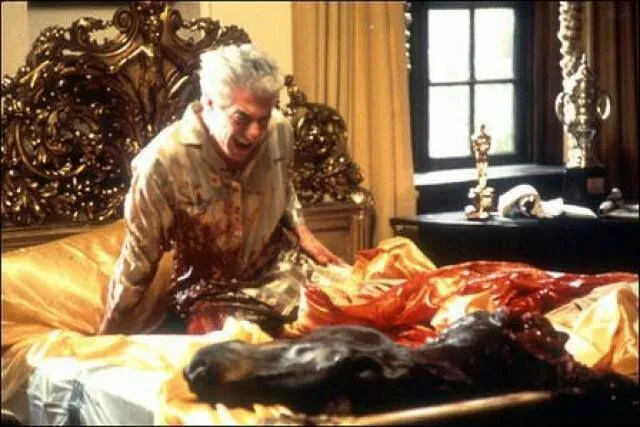
Here is the story as it usually gets told: the Mafia cut the head off Columbia Pictures boss Harry Cohn's favorite racehorse and left it in his bed, and only then did the part go to Frank Sinatra. There is no reliable evidence that any of it happened. It is one of Hollywood's most repeated legends, not a documented event.
What we can say with confidence is that Cohn, the man who ran Columbia, was cool toward Sinatra and initially did not want him in the picture at all. That part of the tale holds up. The horse head does not.
Around the production, other names and claims swirl. A real Mafia figure named Johnny Rosselli gets mentioned in popular accounts of the casting, though his specific connection to the role is not reliably established. Screenwriter Daniel Taradash, who worked on the film, reportedly insisted that Sinatra's casting had "nothing to do with the horse head," but that particular statement cannot be reliably confirmed. James Kaplan's biography Frank contains a vivid anecdote: that Cohn sat by Sinatra's hospital bed for hours and, on leaving, threatened to kill him if he told anyone. The book exists and Kaplan wrote it, yet this specific hospital-bed scene cannot be reliably confirmed either.
So the legend survives on atmosphere, not evidence. A producer who disliked Sinatra, a singer with friends in the wrong places, and a role that changed everything. The story practically tells itself, which is exactly why it has outrun the facts.
Mario Puzo, Johnny Fontane, and Sinatra's Failed Fight Against The Godfather
Mario Puzo's 1969 novel The Godfather introduced Johnny Fontane, a washed-up singer-actor who gets a Hollywood role through mob pressure. Puzo effectively confirmed that the character was drawn from Frank Sinatra, and that single decision lit a fuse. Sinatra was reportedly furious when the book came out, and accounts describe him confronting Puzo directly, though the scale of the feud is hard to verify.
What is documented is the pattern. Sinatra's career had slumped badly by the early 1950s, and he had taken a low $8,000 fee for From Here to Eternity (1953) after earning $150,000 for Anchors Aweigh seven years earlier. The comeback that followed, capped by his Oscar for Best Supporting Actor, is exactly the arc Puzo folded into Fontane. Sinatra knew it. Everyone in Hollywood knew it.
Then came the film. When Paramount adapted the novel for the screen, Sinatra allegedly tried to pressure the production to keep Johnny Fontane out entirely, and the claim that he leaned on Mafia connections to do it is not reliably confirmed. This time his influence reportedly failed. The New York mob reportedly took a keen interest in the shoot, and real Mafia members are said to have appeared on set as extras.
One detail from the popular version deserves correcting. Contrary to the famous story, there is no reliable evidence that the Mafia cut off the head of Columbia producer Harry Cohn's favorite racehorse and left it in his bed to land Sinatra the role. What is true is that Cohn was cool toward Sinatra and initially resistant to casting him. A Mafia figure named Johnny Rosselli has been mentioned in connection with the role, though that specific link is not reliably established, and screenwriter Dan Taradash's insistence that the horse head had nothing to do with it cannot be confirmed either.
The strangest footnote belongs to Eli Wallach, the actor who lost the From Here to Eternity part to Sinatra. Wallach waited years for his breakout, which arrived with The Good, the Bad and the Ugly in 1968. He eventually joined The Godfather Part III as Don Altobello, stepping into the very saga that had started with his own missed role.
Frequently asked questions
Was Johnny Fontane in The Godfather based on Frank Sinatra?
Yes. Mario Puzo effectively confirmed that the character Johnny Fontane, the singer who lands Hollywood work through mob help, was inspired by Frank Sinatra. Puzo's 1969 novel The Godfather put that thinly veiled figure on the page, and it is widely acknowledged that Sinatra was the model behind him.
How did Frank Sinatra get the role in From Here to Eternity?
What is documented is simple: Frank Sinatra played Angelo Maggio in the 1953 film From Here to Eternity and won the Academy Award for Best Supporting Actor. He was paid $8,000 for the part. The story that mob influence won him the role is a disputed Hollywood legend, not established fact.
Did the Mafia threaten Harry Cohn to give Frank Sinatra the part?
There is no reliable evidence for the horse-head story. Columbia head Harry Cohn disliked Sinatra and was initially resistant to casting him, and a real mob figure named Johnny Rosselli appears in popular accounts of the era. But the claim that the Mafia threatened Cohn to hand Sinatra the role is unverified.
Why did Frank Sinatra feud with Mario Puzo over The Godfather?
Sinatra was reportedly angry about the Johnny Fontane character once Puzo's novel was published, and accounts describe him confronting the author. The claim of major, sustained arguments between the two is hard to verify precisely, so treat the scale of the feud as uncertain.
Did Frank Sinatra try to stop The Godfather movie from being made?
As the story goes, Sinatra tried to pressure the production to keep Johnny Fontane out of the film, and he allegedly failed. The specific claim that he leaned on Mafia connections to do it is not reliably confirmed, so the Mafia-pressure version stays unproven.
Who was Eli Wallach and how did he lose the role to Frank Sinatra?
Eli Wallach auditioned for From Here to Eternity and was on the verge of getting the part before Sinatra landed it. Wallach's career later brought him to The Good, the Bad and the Ugly in 1968, and eventually to the cast of The Godfather Part III.
What did Frank Sinatra say about the horse head scene in The Godfather?
The source does not record any specific statement from Sinatra about the horse head scene. What survives instead are secondhand accounts about Cohn, the casting, and the rumors that swirled around the role, not a direct Sinatra comment on the film's most famous image.
How much was Frank Sinatra paid for From Here to Eternity?
Frank Sinatra earned $8,000 for From Here to Eternity in 1953. Seven years earlier, for Anchors Aweigh, he had been paid $150,000. By the early 1950s his career had slumped so far that he had no money to spare even for a press agent. Editorial note: Details that remain unconfirmed, including claims of organized-crime involvement in the casting, are presented here as claims rather than established fact.
Got a take on this? Add your voice to the conversation below →
No comments yet. Be the first.