Fathers and Sons Analysis: Bazarov the Nihilist Anti-Hero
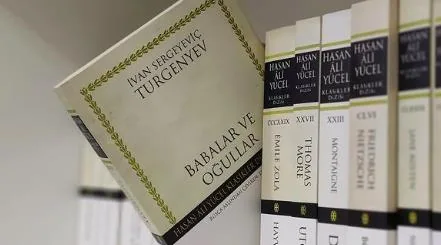
This Fathers and Sons novel analysis examines Ivan Turgenev's 1862 masterpiece, which introduced the world to Bazarov, the nihilist anti-hero, and the generational clash that defined Russian literature. Set against the backdrop of a changing Russia, the story of a son returning home with radical ideas still resonates today. Turgenev captured a moment when the old world met the new, and the collision shattered both.
Ivan Turgenev published Fathers and Sons in 1862, telling the story of Arkady Kirsanov and his friend Bazarov, a self-proclaimed nihilist, as they visit Arkady's rural family estate. The novel dramatizes the ideological rift between an older generation of liberal landowners and a younger generation rejecting all tradition and authority.
- Turgenev wrote Fathers and Sons in 1861 and published it in 1862, during a period of intense social upheaval in Russia.
- The novel's central figure, Yevgeny Bazarov, is a medical student who rejects art, emotion, and all forms of established authority.
- The story unfolds primarily at two rural estates, Maryino and Bazarov's parents' home, where the generational conflict plays out in daily life.
- Bazarov dies at the novel's end from blood poisoning, a death that underscores the limits of his rationalist philosophy.
Meet Bazarov: The Anti-Hero Who Broke with Everything
In 1862, Ivan Turgenev published Fathers and Sons, and Russian literature would never be the same. The novel gave us Yevgeny Bazarov, perhaps the most intriguing anti-hero in Russian fiction, a man who declared war on the Tsarist system, the established order, and every tradition his elders held dear. This is the story of that rupture, and why it still matters today.
Bazarov is not your typical brooding protagonist. Unlike Pechorin from Mikhail Lermontov's A Hero of Our Time, who was cruel and detached but never truly opposed the system, Bazarov actively targets the old generation. He is a nihilist, a man who believes in nothing and questions everything. He does not simply drift through life with quiet cynicism; he confronts, challenges, and dismantles. The break he represents is absolute, a definitive severing from the past that shocked contemporary readers and continues to fascinate us.
What makes this novel so striking is how it captured something real in the air of its time. Turgenev wrote it in 1862, a moment when Russia was simmering with generational tension. The fathers, like the aristocratic Pavel Kirsanov, held onto their elegant manners and their faith in order. The sons, like Bazarov, wanted to tear it all down. The novel was not just fiction; it was a diagnosis of a society on the verge of a seismic shift.
And here is where the story gets almost prophetic. Just 55 years after the novel's publication, in 1917, the Bolshevik Revolution erupted. History, it seems, caught up with Bazarov's radical vision. The old order he despised was toppled, and the ideas he championed, in their most extreme form, reshaped the entire nation. It is tempting to say that Turgenev saw the future coming, and in many ways, he did.
Some readers have claimed that Fathers and Sons was the first Russian novel to be widely studied in the West. That honor actually belongs to earlier works, which had already found audiences and scholars in Europe before Turgenev's novel appeared. The novel's importance is not diminished by this correction; it simply means the groundwork was laid by others first.
What remains undeniable is the power of Bazarov himself. He is uncompromising, sharp, and utterly convinced of his own worldview. He walks into the Kirsanov estate like a storm, and nothing is ever the same again. In him, Turgenev created a figure who does not just represent a generation; he defines it.
The Literary Feud: Dostoevsky vs. Turgenev
The friction between generations that fuels Fathers and Sons was not confined to fiction. The novel's central conflict played out in real life among the giants of nineteenth-century Russian literature, most visibly between Ivan Turgenev and Fyodor Dostoevsky. Their rivalry, simmering with professional jealousy and personal contempt, gives readers a flesh-and-blood counterpart to the ideological clash between Bazarov and the older Kirsanovs.
Turgenev and Leo Tolstoy both found fame in continental Europe with relative speed, their reputations spreading across the continent while they were still in their prime. Dostoevsky, by contrast, lagged behind both men. He had grown up in poverty, and his crippling gambling debts had driven him to leave Russia altogether. The contrast in their circumstances was stark: Turgenev, a count by birth, moved comfortably among European literary circles, while Dostoevsky scraped by on the margins.
The strain between the two writers was well known. There is an unconfirmed story that Dostoevsky, despite his open hatred for Turgenev, once asked his rival for a loan. Whether or not that specific request happened, the tension between them was no secret. Dostoevsky's resentment ran deep, and he saw in Turgenev's success a kind of betrayal, a capitulation to the Western tastes that Bazarov himself would have mocked.
What makes this feud so fitting for a Fathers and Sons novel analysis is how neatly it maps onto the book's themes. Turgenev, the established figure, represented the older generation's cautious engagement with new ideas. Dostoevsky, struggling and bitter, embodied the restless urgency of the younger set, even if his own politics leaned conservative. Their mutual respect never quite extinguished their rivalry, much as Bazarov and Pavel Petrovich circle each other with grudging admiration beneath their hostility.
One popular story claims Dostoevsky wrote in The Idiot that a character was "obsessed with Turgenev's nihilism." That phrase does not appear anywhere in the novel, published in 1869. The two men's real-life animosity has made such apocryphal details easy to believe, but the quote itself is not in the text.
Love, Duel, and the Price of Nihilism
Bazarov, the fierce nihilist who dismisses everything romantic, falls hard for Anna Sergeyevna, a wealthy widow with a reputation as a femme fatale. She is the one person who cracks his armor, forcing him to feel something real. And that feeling, for a man who built his life on rejecting emotion, becomes the beginning of his undoing.
Anna Sergeyevna is not a simple seductress. She is sharp, beautiful, and intelligent enough to match Bazarov's wit. When he meets her, he mocks the idea of love as nonsense, yet he cannot stop himself from being drawn to her estate. She represents everything he claims to despise: refinement, elegance, and the old world's charm. But she also represents something he cannot control, and that terrifies him more than any duel ever could.
His friend Arkady watches this unfold with quiet understanding. Arkady is Bazarov's softer counterpart, a man who tries to bridge the gap between generations rather than burn it down. He is gentle where Bazarov is harsh, patient where Bazarov is impatient. And it is Arkady's older brother, Pavel, who becomes Bazarov's true adversary.
Pavel is the vengeful old generation personified. He is proud, traditional, and deeply offended by Bazarov's dismissive attitude toward everything Pavel holds dear. The tension between them builds slowly, simmering beneath polite conversation until it finally explodes. The duel that follows is not between Bazarov and Arkady. It is between Bazarov and Pavel, two men who can never understand each other.
The duel itself is almost absurdly formal. Two men who despise each other stand in a field, following rules that belong to a world Bazarov claims to reject. It is the perfect symbol of the generational clash tearing through the novel. Neither man truly wins. Pavel is wounded, Bazarov walks away, but the damage is done. The old world and the new world have faced each other, and neither can claim victory.
Contrary to what many readers remember, Bazarov does not die from the duel. He survives that encounter, only to contract typhus later. The disease takes him slowly, and in those final days, his uncompromising stance begins to soften. He faces death not as a nihilist who has all the answers, but as a man who realizes he never had them in the first place.
Arkady, shaken by the tragedy unfolding around him, becomes more cautious and more understanding. He sees what happens when ideology hardens into cruelty, and he chooses a different path. The duel and Bazarov's death mark the end of an era, not just for the characters but for the Russia Turgenev was writing about in 1862.
This is the heart of any Fathers and Sons novel analysis: the recognition that ideas have consequences. Bazarov paid for his nihilism with his life, not because his ideas were wrong, but because he refused to let anything else in. Love, friendship, and even simple human warmth were sacrifices he made at the altar of his own certainty. And in the end, that certainty was all he had left.
Women as the Wall Against Nihilism
Anna Sergeyevna and Fenichka are the two women who quietly dismantle the men around them in Turgenev's 1862 novel. They do not fight in debates or wave ideological banners. Instead, they act as mirrors, forcing Bazarov and the Kirsanov brothers to confront the very flaws their nihilism tries to ignore.
Anna Sergeyevna enters the story as a wealthy widow, sharp and composed, and she immediately unsettles Bazarov. He has built his entire identity on rejecting romance and emotion, yet she awakens something in him that he cannot control. The man who mocked poetry and dismissed love finds himself helpless in her presence. She does not chase him or play games. She simply observes him, and that calm scrutiny exposes the cracks in his philosophy. He falls for her, and in doing so, he betrays his own creed. The woman who never raises her voice becomes the force that brings the great nihilist to his knees.
Fenichka works on a smaller scale but with just as much effect. She is the young servant living in Nikolai Kirsanov's house, the mother of his child, and she moves through the novel with a quiet modesty that disarms everyone. She is not intellectual or calculating. Yet her presence stirs Pavel, the proud, bitter older brother, and it is an encounter with her that leads to the duel between Pavel and Bazarov. Fenichka never intends any of it. She simply exists, and that existence is enough to unravel the men around her. Through her, the novel shows that the old generation's honor and the new generation's cynicism both crumble when faced with simple human warmth.
These women stand as the wall against nihilism. They give the men a chance to see themselves clearly, to recognize their own contradictions. Bazarov dies not from the duel but from typhus, a bitter irony for a man who believed only in science and facts. Anna Sergeyevna attends his deathbed, and in those final moments, the hardened materialist finally admits that he loves her. The women in this novel do not convert anyone. They simply hold up a mirror, and the men cannot look away. For a book so dominated by male arguments about politics and progress, it is the female characters who deliver the most human truths.
From Tanzimat to Today: The Eternal Clash of Generations
The generational war Turgenev staged in 1862 was never just a Russian family quarrel. It was a dress rehearsal for the culture clashes that would sweep across the modern world, from the Ottoman Empire's Tanzimat reforms to the geopolitical standoffs of our own century. The novel's central conflict, the agonizing rupture between fathers who hold tradition sacred and sons who want to burn it all down, turned out to be a prophecy with a remarkably long shelf life.
In the Ottoman lands, the Tanzimat era of the mid-1800s launched a painful Westernization process that tore through families just as violently as Bazarov tore through the Kirsanov household. Turkish readers found their own anxieties mirrored in the novel's pages: young people absorbing European skepticism, elders clinging to familiar ground, and everyone caught in the awkward, bruising space between two worlds. The source notes that this clash carries a distinctly Russian character, colder, harsher, and more uncompromising than the European version. On the steppes, there was no gentle negotiation with progress. There was only rupture.
That harshness proved prophetic. The novel appeared in 1862, and 55 years later, in 1917, the Bolshevik Revolution erupted, vindicating Bazarov's radical rejection of the old order in ways Turgenev could scarcely have imagined. The fictional nihilist's uncompromising stance had become a historical reality.
Today, the pattern repeats on a civilizational scale. Contemporary Russia's posture against Western civilization represents a new generational conflict elevated to the level of nations and cultures. The old battle between fathers and sons has grown into something far larger than any single family or even any single country. The source suggests that modern Russian novelists now face a fresh task: capturing this contemporary clash in their work. The new book of this era, the one that will freeze today's tensions into art the way Turgenev froze his, reportedly has yet to be written. But if history is any guide, it will be.
Frequently asked questions
What is Fathers and Sons by Ivan Turgenev about?
Fathers and Sons, published in 1862, is Ivan Turgenev's examination of the clash between two generations in imperial Russia. The novel pits the older, landowning aristocracy against a new wave of young intellectuals who reject tradition, authority, and sentiment. It is one of Russian literature's most famous works and an essential starting point for any Fathers and Sons novel analysis.
Who is Bazarov in Fathers and Sons and what does he represent?
Bazarov is the novel's central anti-hero, a medical student who declares himself a nihilist, rejecting all established institutions, art, and moral codes. He represents the radical youth of 1860s Russia who wanted to tear down the old order. Unlike Pechorin from Lermontov's A Hero of Our Time, Bazarov is not cruel for sport; his radicalism is ideological, marking a clean break from the previous generation.
Why did Dostoevsky criticize Turgenev's nihilism in The Idiot?
Dostoevsky did not actually use the phrase "obsessed with Turgenev's nihilism" in The Idiot; that specific quote appears nowhere in the novel. What is true is that the two writers had a famously strained relationship. Dostoevsky, who grew up in poverty and fled Russia over gambling debts, resented the aristocratic Turgenev, and the generational tension Turgenev wrote about played out between the novelists themselves.
How does Fathers and Sons reflect the generational conflict in 1860s Russia?
The novel captures the moment when Western skepticism began flooding into Russia, splitting society between the old gentry and the new nihilist youth. The sons mock their fathers with condescension, while the fathers respond with patience and bewilderment. The conflict is not merely domestic; it mirrors the broader struggle over whether Russia would modernize along Western lines or preserve its traditional structures.
What role do women like Anna Sergeyevna play in Fathers and Sons?
Anna Sergeyevna, a poised and enigmatic widow, serves as the wall against which Bazarov's nihilism shatters. She is one of several strong female characters, alongside the servant Feniçka, who force the male characters to confront their own weaknesses. In the novel, women function as mirrors, revealing the emotional blind spots that ideology cannot cover up.
How does the duel between Pavel and Bazarov symbolize the novel's central conflict?
The duel takes place between Bazarov and Pavel, the elder Kirsanov brother, not Arkady as some retellings claim. Pavel represents the proud, wounded old aristocracy, while Bazarov embodies the dismissive new radicalism. The duel is the story's bloody centerpiece, bringing the ideological war into physical form, though neither man dies from it. Bazarov's actual death comes later from typhus, not from the duel.
What parallels exist between Fathers and Sons and Turkey's Tanzimat era Westernization?
During the same period, the Ottoman Empire was undergoing its own Tanzimat reforms, a push toward Westernization that created similar generational fractures. The pain of those reforms finds indirect metaphorical expression in Turgenev's novel, even though the setting is Russian. In both cases, the arrival of Western ideas forced a reckoning between old ways and new thinking.
Was Bazarov's nihilism proven right by the 1917 Bolshevik Revolution?
Some readers argue that history vindicated Bazarov when the Bolshevik Revolution erupted in 1917, exactly 55 years after the novel was written. The old order he despised did collapse. But the novel itself is far more ambivalent, showing Bazarov's ideology crumbling before love and his own mortality. The man who denies everything ends up powerless against a simple fever and an unrequited heart. Editorial note: Any facts which remain unconfirmed are presented as such, hedged appropriately within the analysis.
Got a take on this? Add your voice to the conversation below →
No comments yet. Be the first.